



Working families know that making ends meet is not easy. Low and stagnant wages cannot cover the ever-increasing cost of basic expenses, leaving workers and consumers constantly scraping the bottom of the barrel. Nearly half of all Americans lack the incomes they need to be secure, according to research by Wider Opportunities for Women (WOW).
In Los Angeles, these challenges have inspired a new proposal to give workers in the city’s largest hotels a raise to $15.37 an hour. Across the country there is a growing national movement to raise the federal hourly minimum wage to $10.10.
Renewed attention to issues of economic insecurity and income inequality provide us an opportunity to ask an important fundamental question: what do working families really need to get by?
WOW answers this question by crunching the numbers. Our Basic Economic Security Tables™ measures the incomes that California’s working families need by determining the true cost of households’ basic expenses – such as food,


Two and a half years after the Occupy Movement jolted the country, America is once again abuzz with talk about poverty and inequality. Of course, along with a heightened focus on the problem come lots of ideas for fixing it. Some are smart, others are not, but nearly all of them share one thing in common: They are complicated.
The status quo “solution” isn’t complicated – at least on paper. It’s the one proposed by former Reagan official Herbert Meyer, who, on his website The Cure for Poverty, offers a three-word remedy: the free market.
Meyer, who worked at the CIA, may have been too busy warding off the enemy to notice that market forces have enjoyed one of the most unfettered periods in recent American history, even as poverty and inequality have risen inexorably. But he is surely onto something with his one-step prescription.
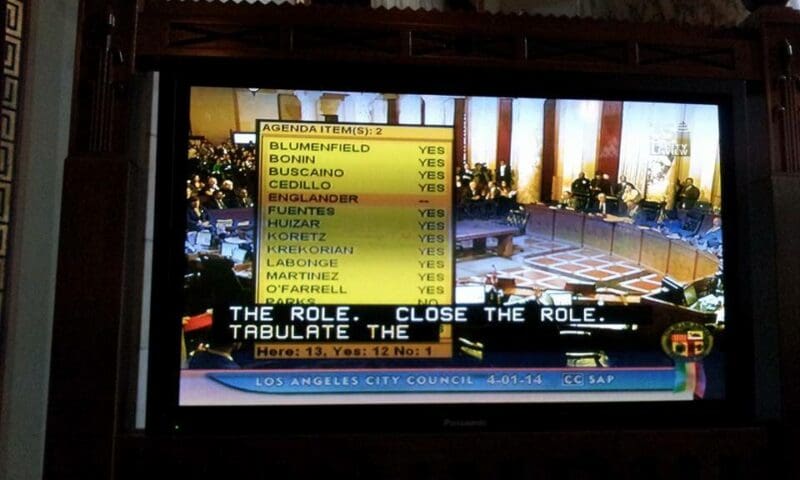


The movement to make Los Angeles the country’s largest city to employ an exclusive franchise system for hauling its commercial and multi-family waste drew tantalizingly close to completion today, as the City Council voted 12-1 to replace the current Byzantine hodgepodge of trash pickup routes servicing businesses and apartment buildings with a completely different model. The historic vote took place this morning, with Councilman Bernard Parks providing the lone dissenting vote. Because the vote was not unanimous, a final vote must take place April 8.
Although the City of L.A.’s Bureau of Sanitation provides hauling service for houses and four-unit apartment complexes, a wild frontier system characterizes the remaining commercial and residential pickups, resulting in fleets of trash trucks, whose owners often pay their workers low wages, crisscrossing the city on uncoordinated schedules. The consequence has been extra wear and tear on roads, and increased air pollution.
The new system will divide the city into 11 pickup zones,
» Read more about: Historic Victory for Zero-Waste Campaign »
The race to replace Zev Yaroslavsky on the Los Angeles County Board of Supervisors is on. Candidates John Duran, Sheila Kuehl, Bobby Shriver and Pamela Conley Ulich are battling to represent the Third District, which includes the wealthy Westside communities of Malibu, Pacific Palisades and Beverly Hills, along with large swaths of the San Fernando Valley. The four debated March 27 at the Los Angeles Press Club‘s Steve Allen Theater in Los Feliz. Hosted by the club and moderated by KPCC contributor Patt Morrison, the debate drew a crowd of journalists and political professionals dressed for the office, sprinkled with more casually clad community members.
Attorney and West Hollywood City Councilman Duran began a round of introductions by describing himself as a “pro-business Democrat” and called attention to his city’s fiscal stability. Former California state Senator Sheila Kuehl emphasized her experience and knowledge of county issues,
» Read more about: L.A. County Supervisor Candidates Debate »


The Passionate Suitcase
I fall out of the door on my way to you, and the passionate
the old one, so many times strapped back together—
comes unstrapped. The leather ties slap at my calves like
tongues. The five silver dollars I got from my uncle for spelling
Mediterranean Sea roll along the ground. I believe the moon
blinks. Once.
I fall out of the door on my way to you one terrible night and the
passionate suitcase unhinges its mouth the way children sob. My
clothes lie in puddles at my feet. Pools of rice, pools of soft
lingerie. Which is more than the traffic of leaving; more than I’d
wanted to kneel, gather up.
I fall out of the door on my way to you with the passionate suitcase
I’ve carried so long flapping its one broken arm in the breeze.


The Language of Health from LAANE on Vimeo.
In California, a state where nearly seven million residents admit to speaking little or no English, having access to a professional interpreter can mean the difference between life and death in hospitals. With so many Californians at daily risk, a new bill would ensure that patients with limited English proficiency receive correct medical treatment. The law, however, will come too late for Guillermo Garcia Rodriguez. In 2011, the then-45-year-old, Oceanside father of three rushed his 42-year-old wife Elizabeth, who had suffered a massive stroke, to Tri-City Medical Center where she was intubated and put on life support.
Talking to Capital & Main through an interpreter, Garcia, who like his wife, speaks no English, describes a bewildering and frightening month-long ordeal in which he could get little information from the mostly non-Spanish-speaking nurses and hospital staff.
» Read more about: The Language of Health: Medical Interpreters Bill Moves Forward »
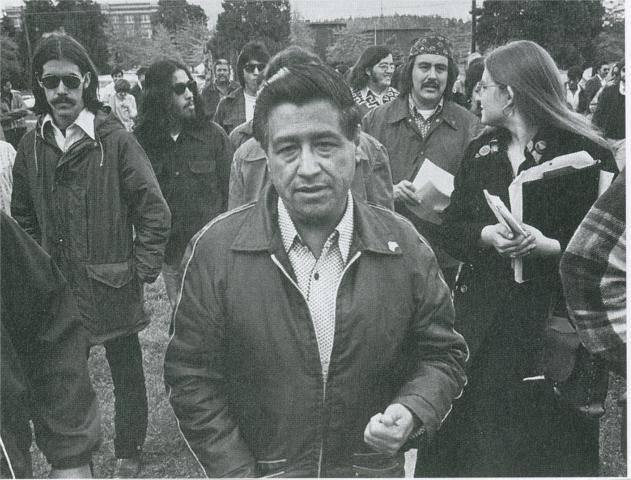
Many people thought Cesar Chavez was crazy to think he could build a union among migrant farmworkers. Since the early 1900s, unions had been trying and failing to organize California’s unskilled agricultural workers. Whether the workers were Anglos, Chinese, Japanese, Filipinos or Mexican Americans, these efforts met the same fate. The organizing drives met fierce opposition and always flopped, vulnerable to growers’ violent tactics and to competition from a seemingly endless supply of other migrant workers desperate for work. So when Chavez left his job as a community organizer in San Jose in 1962 and moved to rural Delano to try, once again, to bring a union to California’s lettuce and grape fields, even his closest friends figured he was delusional.
Within a decade, however, the United Farm Workers (UFW) union had collective bargaining agreements with most of California’s major growers. Pay, working conditions and housing for migrant workers improved significantly.


There haven’t been, to put it mildly, many films about America’s labor movement. Take away Salt of the Earth (1954) and Norma Rae (1979) and what are you left with? Cesar Chavez, then, offers to fill a cavernous void in the public’s knowledge about both union organizing and the history of the country’s mostly Latino agricultural workforce. Directed by the Mexican actor and film producer Diego Luna (Y Tu Mamá También, Elysium), the film follows Chavez (Michael Peña) from the time he parted company with the grassroots Community Service Organization (CSO) to the signing of union contracts with growers following a successful consumer boycott of table grapes.
Working with a screenplay by Keir Pearson, Luna wisely passes on a sweeping Gandhi-style treatment of Chavez’s entire life. This allows Luna and cinematographer Enrique Chediak to linger on the arid poetry of life in California’s Central Valley (played here by Sonora,


When Diego Luna was growing up in Mexico he’d sometimes hear references to Cesar Chavez and the union of farm workers he had organized in America. Luna, who would become one of his country’s leading film stars, remembers being struck as a 13-year-old by television images of Chavez’s funeral – the man was so modest, his coffin was an unpainted wooden box. A few years ago Luna began assembling a production company to film one critical chapter in Chavez’s life – the 10-year period in which he formed the United Farm Workers Organizing Committee and which culminated with the triumph of the consumer grape boycott. Cesar Chavez opens this week and Luna, while in Los Angeles to promote the film, spoke to Capital & Main about the movie, the man and the movement he created.
Capital & Main: Your film is a biography but is there something more behind it?
I think its message is of what we can do when we unite.
» Read more about: Interview With ‘Cesar Chavez’ Director Diego Luna »


Today in Los Angeles attorneys will offer closing arguments in Vergara v. California, a lawsuit funded by Silicon Valley millionaire David Welch and others with ties to the school privatization movement under the banner of a front organization called Students Matter. The suit wrongly attacks as unconstitutional California statutes covering teacher employment, including the current two-year probationary period, the due process protections built into teacher dismissal and layoff procedures that value experience over more arbitrary factors.
That the probationary period is even an issue is a little mind-boggling; if a principal can have a teacher on staff for two years and still have no idea if that teacher is effective, he or she probably has no business being a principal. At trial, award-winning superintendents and principals have testified that two years is more than enough time to decide whether to keep a teacher on staff and,
» Read more about: Vergara Lawsuit Would Hurt California Students »