
When Dan Flaming, the president of the Economic Roundtable research group, describes the tanking of the L.A. economy in the 1990s, he pinpoints the cause to the loss of thousands of aerospace jobs. However, he explains, it was only immigrant migration that rescued Los Angeles financially. The skills, hard work and entrepreneurial energy of the estimated 100,000 immigrants who came here each year between 1989 and 2000 fueled an informal, low wage economy that kept the city humming. (See Flaming discuss L.A.’s present economic climate in the interview above.)
Listen to podcast interview with Dan Flaming
While many people have blamed immigrants for job losses, it was actually the end of the Cold War and subsequent job cuts in aircraft and related industries that led nearly 1.5 million people to leave L.A. for other parts of the U.S.
In their place immigrants arrived and provided work that was completely legal,
» Read more about: Confronting L.A.’s Economy, Past & Present »
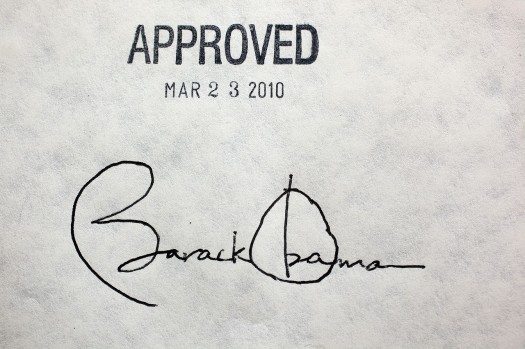
As a writer I bounce from job to job. When not working at LAANE, I have to pay for my own health care – whose monthly premiums, over the past few years, have threatened to surpass my monthly grocery bill. So naturally I was more than glad when the Patient Protection and Affordable Care Act – aka, Obamacare – became law in 2010. I know a bit about what it’s like to have and not have health care. My brother was stricken with a rare form of cancer in his early twenties. He survived against some pretty big odds – but only because of my father’s great health insurance, which allowed my brother to be treated at a leading research hospital. I also lived through the height of San Francisco’s AIDS pandemic and saw what uninsured people went through: days spent in hospital waiting rooms, often minimal care, overcrowded rooms and life-threatening delays for medical procedures.


 As we celebrate Women’s History Month in March, we honor many iconic women workers from past to present, from Rosie the Riveter to Dolores Huerta. But we often forget about the unsung “sheroes,” the women whose toil and dedication help move America, today.
One such group is the women workers who manufacture America’s buses, trains and streetcars for our public transit systems. Khanthaly Ditthiait is a 26-year-old mom of two who works at a bus factory owned by New Flyer Industries in St. Cloud, Minnesota. When Khanthaly was just 18 years old, she got a job as a painter’s assistant at the factory.
“It was 10 years before they hired any women to paint the buses — I was the first girl that they hired,” she says. “It was like, ‘Oh, you can’t do it, you’re short. And you have boobs.’ But I was determined. I was like,
» Read more about: In Praise of Unsung Women and Their Work »
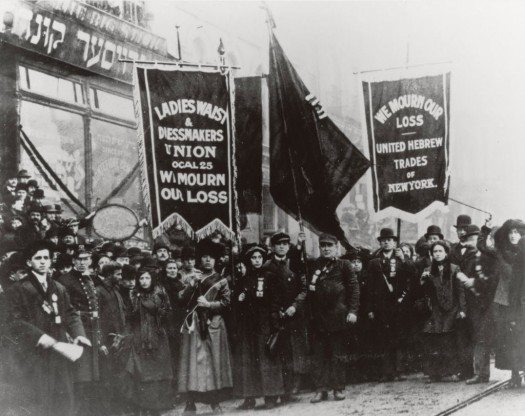
Tuesday is the 103rd anniversary of the Triangle Shirtwaist Factory fire, a major turning point in American labor history. On March 25, 1911, 146 garment workers, most of them Jewish and Italian immigrant girls in their teens and twenties, perished after a fire broke out at the Triangle factory in New York City’s Greenwich Village. Even after the fire, the city’s businesses continued to insist they could regulate themselves, but the deaths clearly demonstrated that companies like Triangle, if left to their own devices, would not concern themselves with their workers’ safety. Despite this business opposition, the public’s response to the fire and to the 146 deaths led to landmark state regulations.
Businesses today, and their allies in Congress and the statehouses, are making the same arguments against government regulation that New York’s business leaders made a century ago. The current hue and cry about “burdensome government regulations”
» Read more about: Remembering the Triangle Fire’s Lessons »


For a long time now, we’ve been a nation of brands. We have our favorite candy bars, sodas, toothpastes and even TV channels. We watch, use and eat “our” brands and leave the others on the shelf. But few of us realize how many of those items we love are actually owned by the same conglomerate – huge financial institutions that consolidate into their systems one product after another.
And often, what we don’t know can hurt our communities. When a handful of companies own all of the most popular brands that Americans use every day, they hold a privileged monopoly on our lives. Capitalism is supposed to offer choice, but more and more the decision is between one huge marketing scheme and another. Capitalism is supposed to foster consumer democracy, but instead it channels our choices into a few mega-corporations that are enriched by our loyalties.
Take media.


 It was a busy time for hard-right politicians visiting the Bay Area this week. First, Kentucky Senator Rand Paul stepped into the lion’s den of Berkeley, where he flashed civil liberties cred by denouncing domestic spying before a University of California audience. He was followed by Texas Governor Rick Perry who, with tax breaks and other incentives, tried to coax some Silicon Valley nabobs into burnishing the “tech” in Texas by relocating there. Although these two Republicans are clearly limbering up for presidential runs in 2016, Perry’s visit got comparatively scant media coverage. One reason may be the perception that Paul, who recently won the Conservative Political Action Conference’s straw poll, is the man on horseback right now while Perry is, well, Rick Perry.
Another reason might be that Perry’s brief visit seemed like a follow-up house call from his widely covered 2013 grand tour, during which he attempted to poach jobs from six states (California,
» Read more about: Rick Perry’s Tall Texas Tales of Job Creation »



The more Miguel Santana forecasts financial apocalypse for Los Angeles, the more the city’s Administrative Officer reminds us of the late Harold Camping, the fundamentalist minister who a few years back predicted the end of the world – erroneously, it turned out, much to the chagrin of disciples who had quit jobs and given away wealth and possessions as they awaited the Rapture.
In a new report issued yesterday by his office, Santana warned L.A.’s leaders against the “temptation” to expand city services, much less think of adding any new ones. And pay raises for city workers? Forget about those. Indeed, Santana recommends cutting entry-level salaries for city workers and raising the health care costs of municipal employees. The reasoning behind Santana’s report is that despite the economic recovery, Los Angeles isn’t out of the woods yet and should only party like it’s 2009 – Year Zero of the Great Recession.
» Read more about: Miguel Santana: Apocalypse Now! (Or Next Year) »
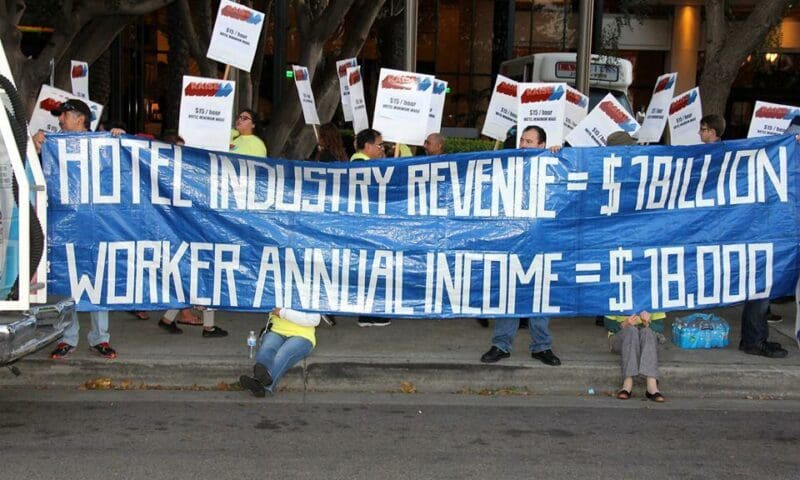

Last week the L.A. Times ran an editorial about the city’s proposed hotel worker minimum wage policy. Given past history—the Times has opposed every local living wage proposal over the past 17 years—it’s natural to see progress in a piece that acknowledges that “persistent poverty” is a “fundamental challenge” and argues that “Creating policies that help lift people out of poverty should be one of government’s top priorities.”
Many have read the Times’ editorial as a call for a broader policy covering more workers, which is a kind of backward endorsement of the Raise LA proposal. In the end, however, the Times stays true to its track record, opposing a $15 minimum wage not only for hotel workers but effectively for others as well.
The point is evident at the bottom of its piece,
» Read more about: L.A. Times’ Double Talk on Raising Wages »


Thirteen years ago Barbara Ehrenreich’s Nickel and Dimed touched off a debate that still rages about the difficulty of low-wage earners – particularly women – to earn a living that merely provides for the basics of existence, let alone its creature comforts. This week the documentary film Paycheck to Paycheck: The Life and Times of Katrina Gilbert continues that debate as it tracks single mother Katrina Gilbert over the course of a year as she tries to pay rent and put food on the table while navigating Tennessee’s social service and health care bureaucracies. If anything, Gilbert’s harrowing story shows how little things have changed for the working- and near-poor since Nickel and Dimed.
One of 42 million American women living on the edge of poverty, Gilbert is a nurse’s aide earning $9.49 an hour in Chattanooga without health care benefits. She suffers from a hyperthyroid condition and is seen deciding which of her many prescriptions she can afford to buy – while also struggling to finish a college education that could lift her living standard beyond the trailer she shares with her three young children.


Beatriz Rios-Nava, 57, has been driving trucks for 10 years. Since starting with a company at the port in Long Beach, she has passed the long hours of waiting in shipping yard queues by taking phone-camera snapshots of her environment: her morning coffee and bread nestled on the dashboard of her truck, her co-workers picketing for unionization outside of their company. Her growing collection of images documenting her life on the piers of Long Beach will be showcased in Solitude to Solidarity, a weeklong group exhibit that runs for the next week. (See information at the end of interview.) I spoke with her at her home in Compton, which she moved into three years ago, hoping to settle somewhere closer to her work. We sat on a black leather sofa in her living room, beneath a hanging dreamcatcher, as she attempted to calm her dog Picasso, who was excitedly bouncing between us.
» Read more about: Beatriz Rios-Nava’s Truck-Driving Odyssey »