Latest News
The Social Care Company Trying to Undermine the U.S. Labor Board
Findhelp is a public benefit corporation that wants the structure of the National Labor Relations Board held unconstitutional. Critics say those things don’t square.

In the world of social services, Findhelp is a big deal. Each year, its digital platform connects tens of millions of people in need to free and reduced-cost resources — food, housing, medical treatment and more — “with dignity and ease,” as the company puts it.
Findhelp is also a big deal in the world of labor: an alleged union-buster that is trying to undermine the federal agency set up to safeguard the rights of workers who want to organize and bargain collectively.
To those familiar with each of these postures, they seem squarely at odds, raising questions about the company’s commitment to social betterment.
“If your intention is that the people you serve have dignity, you need to make sure that the people who deliver those services are treated with dignity,” said Jennifer Abruzzo, an attorney at Bush Gottlieb and senior adviser to the president of the Communications Workers of America who served as general counsel of the National Labor Relations Board from 2021 to 2025. “You need to respect your workers’ voices and their choices.”
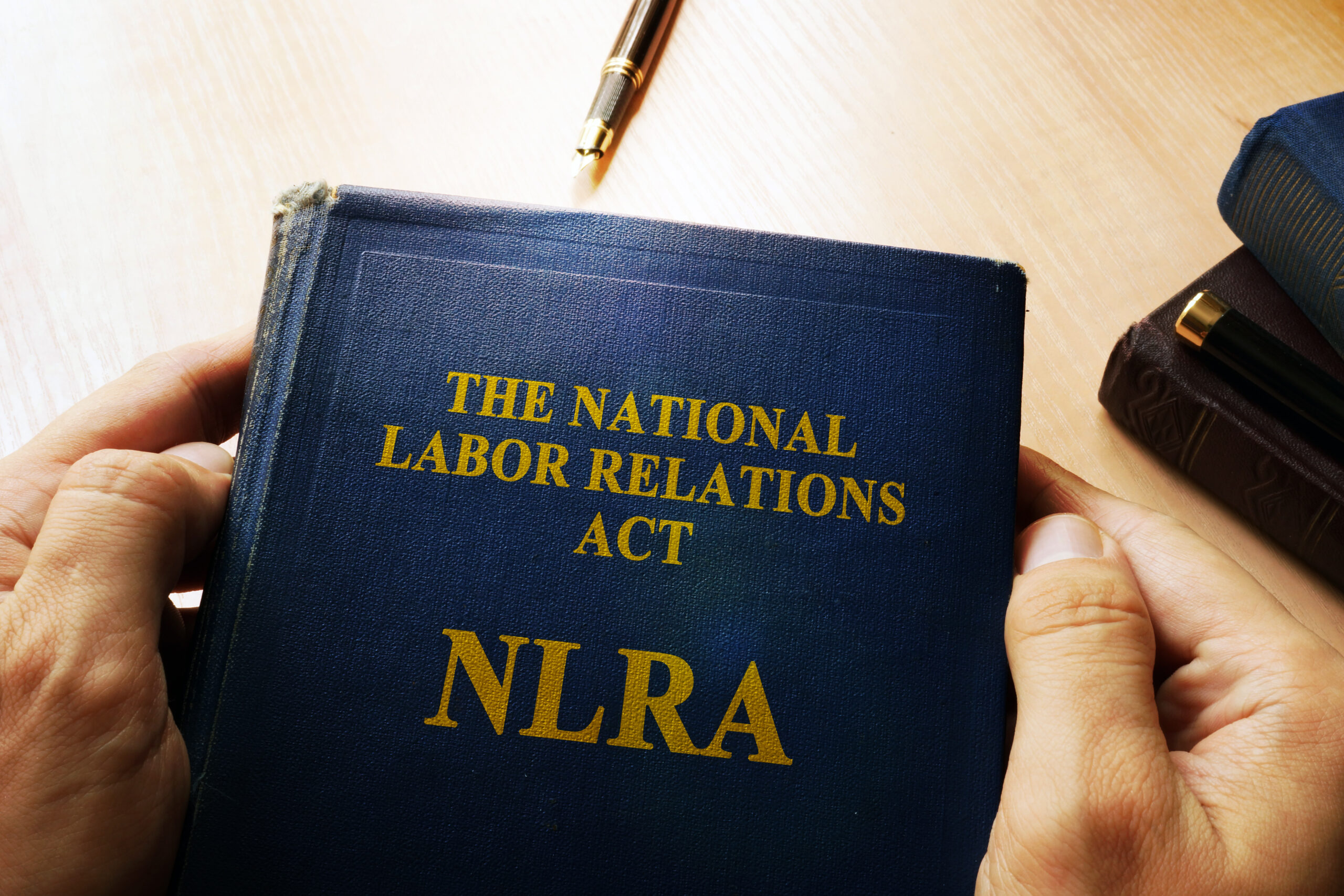
In August 2024, Findhelp filed a lawsuit seeking to have the NLRB’s structure declared unconstitutional — weeks before it faced a hearing to determine if it had illegally surveilled and fired several employees who were leading an effort to be represented by the Office and Professional Employees International Union (OPEIU).
The following month, a federal district judge in Texas granted the company’s request for a preliminary injunction, and last summer the U.S. Court of Appeals for the Fifth Circuit upheld the lower court’s ruling. The effect has been to prevent the NLRB’s underlying unfair labor practices case against Findhelp from moving forward. In legal filings, the company has denied any wrongdoing.
Findhelp’s suit has placed it in league with other companies and institutions accused of violating labor law — SpaceX, Amazon, Trader Joe’s and the University of Southern California, among them — that have also attacked the NLRB on constitutional grounds.
* * *
So far, Findhelp’s clash with the NLRB hasn’t seemed to affect its business.
Earlier this month, the asset management firm TPG announced that one of its arms, The Rise Funds, was investing about $250 million in Findhelp as part of its mission to improve access to health care for vulnerable populations. Findhelp’s technology underlies a suite of tools used by more than 800 community organizations, government agencies and other customers to, among other things, help tackle their clients’ needs for food, housing, utility assistance, transportation and other essentials; track trends and measure impact; and aid enrollment for Medicare and Medicaid.
Findhelp declined to comment for this story. TPG didn’t respond to requests for comment.
What isn’t clear is how much attention Findhelp’s customers have paid to its antiunion stance. (My own company, Bendable Labs, stopped using the Findhelp platform last September after learning of the NLRB case.)
Contacted by Capital & Main, several entities that have contracts with Findhelp said they were unaware of the litigation with the NLRB and would look into the matter. These include the 1199SEIU Benefit Funds, which provide hospital, medical, prescription, dental, vision and quality-of-life benefits to more than 450,000 active and retired union members in the health care industry in New York; L.A. Care Health Plan, where County Supervisor Hilda Solis, a former U.S. labor secretary, sits on the board; and NYC Health + Hospitals, the massive municipal system in a city where another former labor secretary, Julie Su, is now deputy mayor for economic justice.
“Under this administration, we will ensure that we align our spending with our values, stand with working people and ensure public dollars support fair wages, strong labor standards and dignity on the job,” a spokesperson for New York Mayor Zohran Mamdani said. “New York is a union town, and every city contract should reflect these values.”
* * *
Findhelp, which has about 250 employees, often touts that it is registered as a public benefit corporation, a type of company that blends traditional corporate profit-seeking with a mission-driven purpose. It is also a B Corp, a designation given to businesses that meet verified social, environmental and governance standards — all in pursuit of “a more inclusive, equitable and fair economic system.”
Holly Ensign-Barstow, the co-executive director of B Lab, which oversees B Corp certification, said that the organization doesn’t comment on a specific company’s actions. But she pointed out that a formal complaint process is available should anyone believe a B Corp is not adhering to requisite standards. These standards have evolved to require that companies be in “full compliance with national legislation regarding workers’ freedom of association and collective bargaining.”
“We believe that our latest standards speak loudly and clearly on this subject,” she said.
For its part, Findhelp has said that its issue is “not that we find the NLRB itself unconstitutional.” Rather, it is taking on two particular concerns: namely, that members of the board and its administrative law judges shouldn’t be independent and should be subject to removal by the president, and that the company should be entitled to a regular jury trial and shouldn’t have to go through the NLRB’s administrative law proceedings.
Yet at the same time, Findhelp is trying to have the NLRB permanently enjoined from ever prosecuting its unfair labor practices charges against the company. “They are not just seeking to appear before accountable officials; they are seeking to never have to appear before anyone,” said Maneesh Sharma, a lawyer with the AFL-CIO, which assisted OPEIU in filing a friend-of-the-court brief opposing Findhelp’s position. “Granted, they say things like they are not seeking to have the NLRB declared unconstitutional, but that’s just gaslighting.”
* * *
While there are a number of companies seeking to invalidate the structure of the NLRB on constitutional grounds, Findhelp stands apart because of the way it has spoken glowingly about the board.
“Nearly a hundred years ago, against the backdrop of violent union-employer conflicts, the NLRB’s mission was clear — to protect labor peace by enforcing the law’s collective bargaining requirements,” Findhelp wrote on Glassdoor in 2024, in response to a negative review of the company by an anonymous former employee. “That was and is an important and noble mission, and one that we support.”
In fact, Findhelp’s CEO, Erine Gray, has said that Frances Perkins, President Franklin Roosevelt’s labor secretary, who helped set up the NLRB in 1935, is a “hero” of his.
The company has even drawn a parallel between the incident that caused Gray to embark on the career path that led him to found Findhelp and an event that inspired Perkins to fight for workers’ safety and health.
In his case, he was a young software developer getting ready to visit a client at the World Trade Center on Sept. 11, 2001, only to see the towers felled by a terrorist attack. In her case, it was witnessing another tragedy that unfolded in Manhattan 90 years earlier: the Triangle Shirtwaist Fire, in which 146 workers perished, most of them young women, some of them trapped behind locked doors.
Gray’s “conversion experience,” the company said for a podcast that it produced called “American Compassion,” prompted him to go on to earn a master’s degree in public affairs from the LBJ School at the University of Texas at Austin. In 2010, he launched FindHelp (originally called Aunt Bertha, as in “Aunt Bertha picks up where Uncle Sam leaves off,” Gray has explained).
* * *
Former employees recalled that Findhelp hung a portrait of Perkins in the lobby of its headquarters in Austin and Gray named a conference room for her.
But for at least some of these workers, Findhelp’s professing to have built “a culture of purpose,” the trumpeting of its B Corp status, the lionizing of Perkins — all of it rings hollow.
“The hypocrisy was very obvious to us,” said Matt Smith, whom the NLRB asserted was unlawfully fired by Findhelp because of his union activities.
Danielle Nasr, another former Findhelp employee who along with Smith was part of the OPEIU organizing committee, said that she and her colleagues began agitating for union representation largely because they felt that they didn’t have enough of a say in things — despite management’s claims of always having an open door. One source of contention was a post-COVID return-to-office mandate that, Nasr said, “was not done in a thoughtful or compassionate way.” Another was that the company seemed to give short shrift to a diversity, equity and inclusion initiative.
Gray tried to squash the union drive. “We take pride in having fostered an environment where any employee can come directly to leadership with ideas,” he wrote in an internal email in January 2023, ticking off some of the perks that he said had resulted from such exchanges: a parental-leave policy, four weeks of vacation, a mental health assistance program and more. He went on to add that “we acknowledge that employees have the right” to form or join a union, but Findhelp “does not believe it is in our employees’ best interest” to do so.
In April 2023, workers voted 95 to 52 to join OPEIU. “I am optimistic we can look forward to a constructive and fruitful bargaining process between the collective bargaining committee and management,” one of the organizers said.
It wasn’t to be. Jane Barker, an attorney for OPEIU, said Findhelp kept stalling in reaching a contract — a common employer tactic. By January 2025, the delays had cost OPEIU so much goodwill that it was forced to withdraw as the workers’ representative. “People lose confidence in the union’s ability to protect their rights,” Barker said. “It’s human nature.”
In a court filing, Gray said that Findhelp was “committed to bargaining in good faith” with OPEIU.
Next, Findhelp stymied the NLRB with its constitutional challenge. “We knew there was going to be some pushback, but we were surprised when they took the Amazon-SpaceX approach,” said Sanam Tiffany, a former Findhelp employee whom the NLRB said was also illegally fired for her union advocacy.
Less surprised was Sharma, the AFL-CIO attorney. “Employers are employers,” he said. “When it comes to unions, they’re mostly the same.”
* * *
If the NLRB’s structure is ultimately deemed unconstitutional, it could effectively eviscerate the National Labor Relations Act, the New Deal-era law that not only gave workers the right to unionize but made “encouraging the practice and procedure of collective bargaining” the official policy of the United States. Played out to their extreme, Sharma said, the cases from Findhelp, Amazon and the rest could be “an existential threat” to organized labor.
But he and other union proponents don’t think that’s going to happen. More likely, they say, is that the Supreme Court will rule that the independence of the NLRB’s members and judges is improper — allowing the president to dismiss them for any reason at any time — and leave the rest of the act intact.
Even that, however, could have a chilling effect. “You’ll wind up with an NLRB whose decision-makers now have to look over their shoulder,” said Abruzzo. “Am I going to get fired? Do I have to align more with corporate interests?”
In the end, this prospect makes it hard for Abruzzo to reconcile Findhelp’s stated commitment to advancing the public good with its quest to upend a body vital to upholding workers’ rights.
“If you’re going to talk the talk,” she said, “then walk the walk.”
Abruzzo, it might be noted, was honored in 2023 with a Steadfast Award from the Frances Perkins Center.
Copyright 2026 Capital & Main.
Rick Wartzman is co-president of Bendable Labs, a technology and consulting firm, and is the author of five books on the intersection of business and society. He is also on the board of Capital & Main.


-

 Column - State of InequalityMay 21, 2026
In California Governor’s Race, Xavier Becerra Walks Away From Single-Payer
-

 Latest NewsMay 22, 2026
Where California’s Gubernatorial Candidates Stand on Climate and Taking Big Oil Money
-

 The SlickMay 20, 2026
70-Foot Wastewater Geyser Reflects New Mexico’s Latest Oilfield Challenge
-

 The SlickMay 29, 2026
Feds to Open Tens of Thousands of Acres of Colorado Wilderness to Oil Drilling
-

 Latest NewsMay 18, 2026
Budget Cuts Threaten Program That Doubles Food Dollars for Californians in Need
-
 Deadly Dust: The Silicosis EpidemicMay 27, 2026
California Moves to Ban Quartz Countertop Fabrication to Combat Silicosis Epidemic
-

 Latest NewsMay 26, 2026
Conditions at California ICE Detention Centers Are Getting Worse, Inspections Find
-

 Imperial DivideJune 3, 2026
California’s Lithium Valley Dreams Meet Reality at the Only Restaurant in Town