
Latest News
Budget Cuts Threaten Program That Doubles Food Dollars for Californians in Need
Market Match program could disappear — unless lawmakers step in to fund an initiative that boosts access to farmers’ markets and supports small farms.
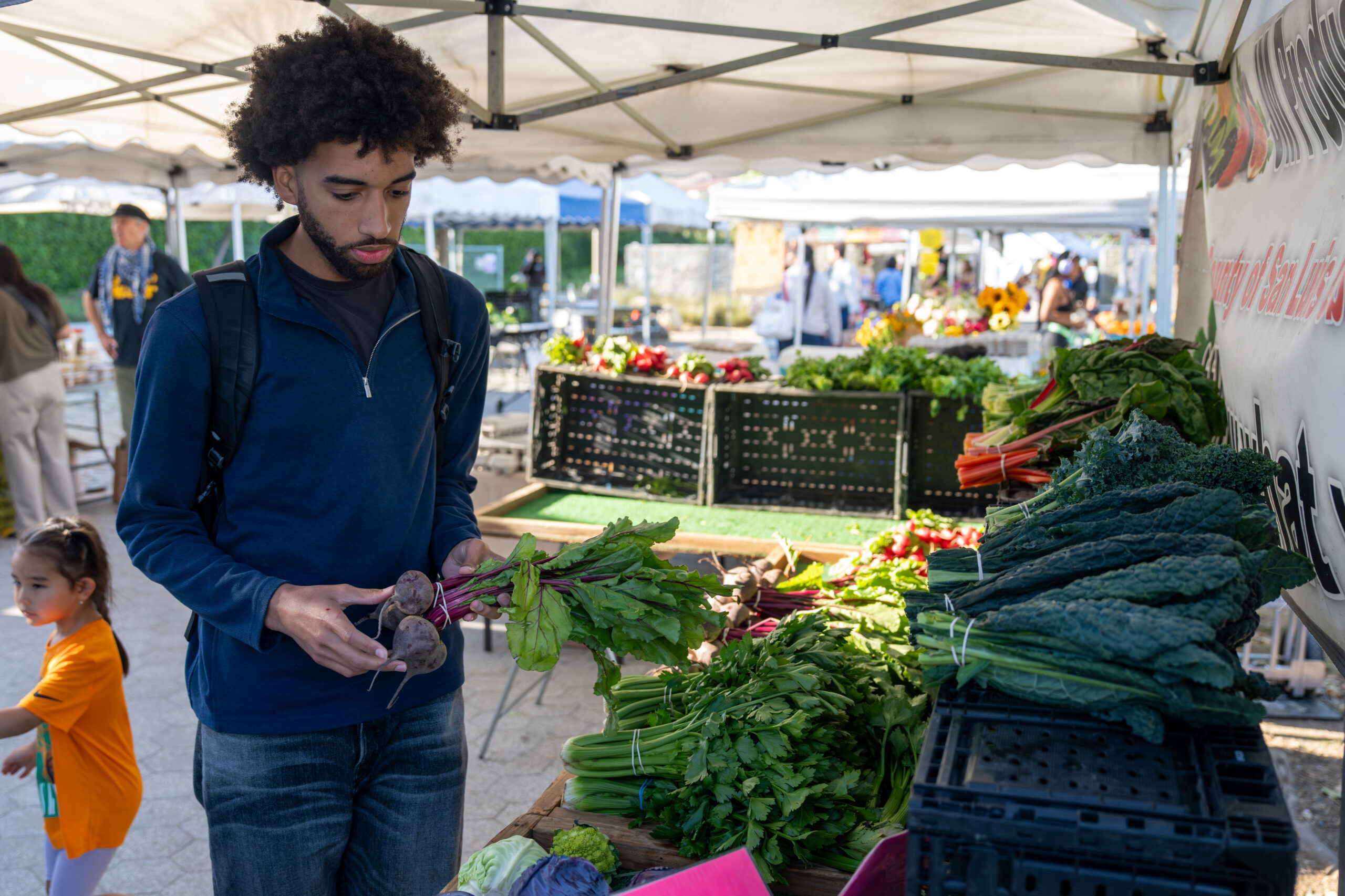

Every time Sean Bickety attends the LA River Farmers’ Market in Los Angeles’ Chinatown and pulls out his EBT card, he initiates a process that advocates say has become a quietly effective part of California’s push to provide its lower-income residents with access to healthy food.
The debit card carries Bickety’s electronic balance of funds from CalFresh, the state’s version of the federal Supplemental Nutrition Assistance Program, or SNAP. But when he swipes the card for $15 worth of produce at LA River, his money is instantly doubled to $30 thanks to a program called Market Match.
For a college student on a tight budget, it can be a game-changer.
“As I’ve gotten more used to using it, it’s become a much bigger percentage of my groceries for the week,” said Bickety. “And I feel happier with myself for it, because I’m shopping locally instead of in some giant grocery monopoly.”
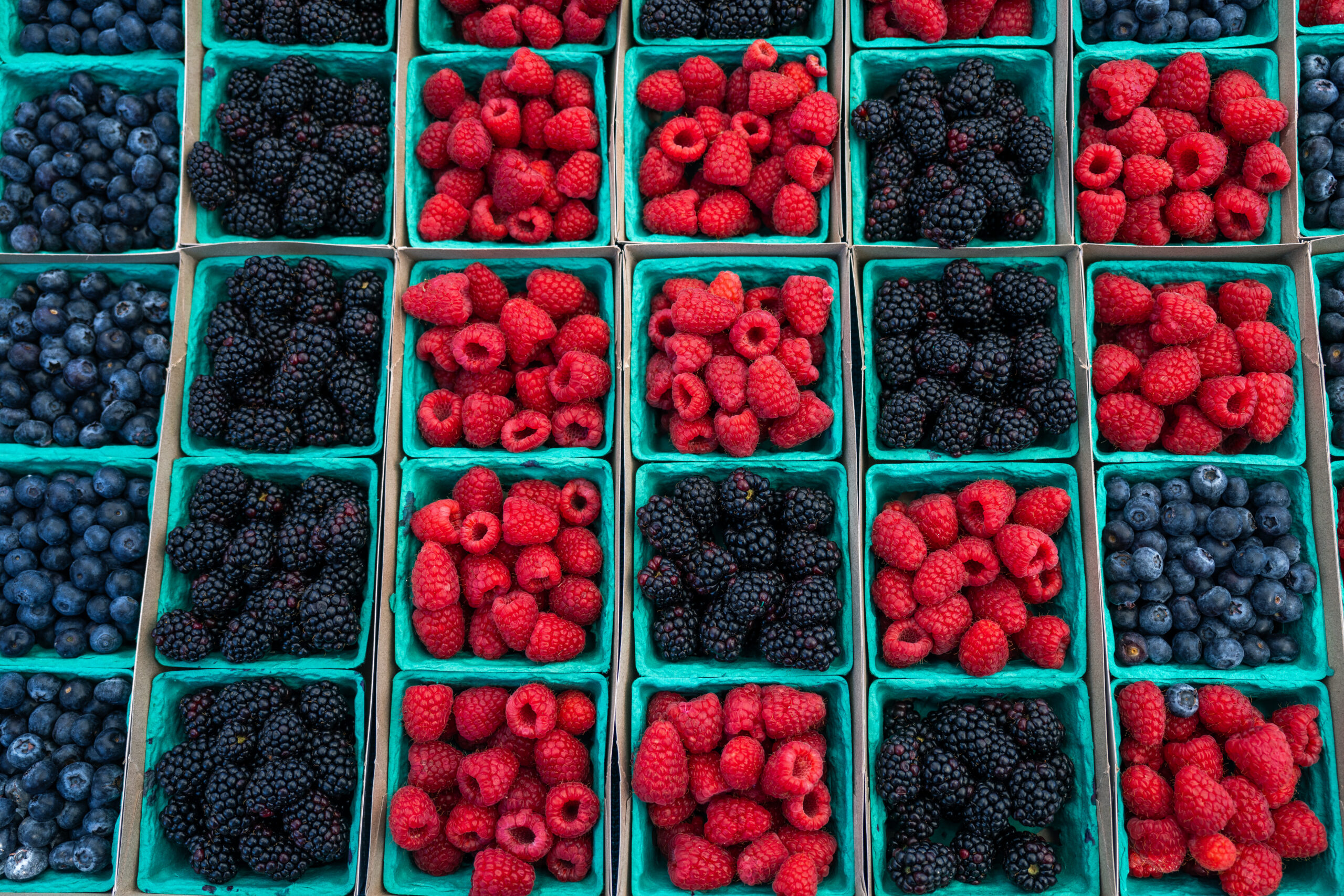
Berries for sale at LA River Farmers’ Market in Los Angeles. Photo: Irfan Khan for Capital & Main.
A decade into its existence, Market Match is a low-key success story with a hazy future. Even its relatively modest funding — $35 million spread over the past three fiscal years — is not being replenished in Gov. Gavin Newsom’s proposed budget for 2026-27. The current funding will be exhausted by next March, advocates say.
For those who support the program, with its proven record of benefitting both low-income shoppers and the local farmers from whom they buy fresh produce, Newsom’s exclusion of Market Match is a blow. That’s especially true at a time when the Republican-controlled Congress is initiating a series of severe budget cuts to Medicaid and SNAP that directly threaten the health of millions of Californians.
“The way we look at it is, California can’t afford not to support this program,” said Martin Bourque, executive director of The Ecology Center in Berkeley, which helps distribute Market Match funding to farmers’ markets up and down the state. “It’s a win-win-win.”
* * *
According to a coalition of food access groups, farmers’ markets and the growers themselves, Market Match supported more than 627,000 lower-income California shoppers in 2025 alone, who bought an estimated 45 million servings of fresh produce.
It did so on a remarkably simple premise: If you qualify for CalFresh, otherwise known as food stamps, you can double your money by shopping at a farmers’ market that participates in Market Match. The program limits the matching funds to $15 per visit, and the resulting $30 can be spent only on fresh fruits and vegetables inside the market.
Market Match shoppers also put dollars directly into the hands of small farms when they buy local — money that’s used by some of those farms to meet their payrolls or other obligations while they wait for delayed payments from larger grocery chains.
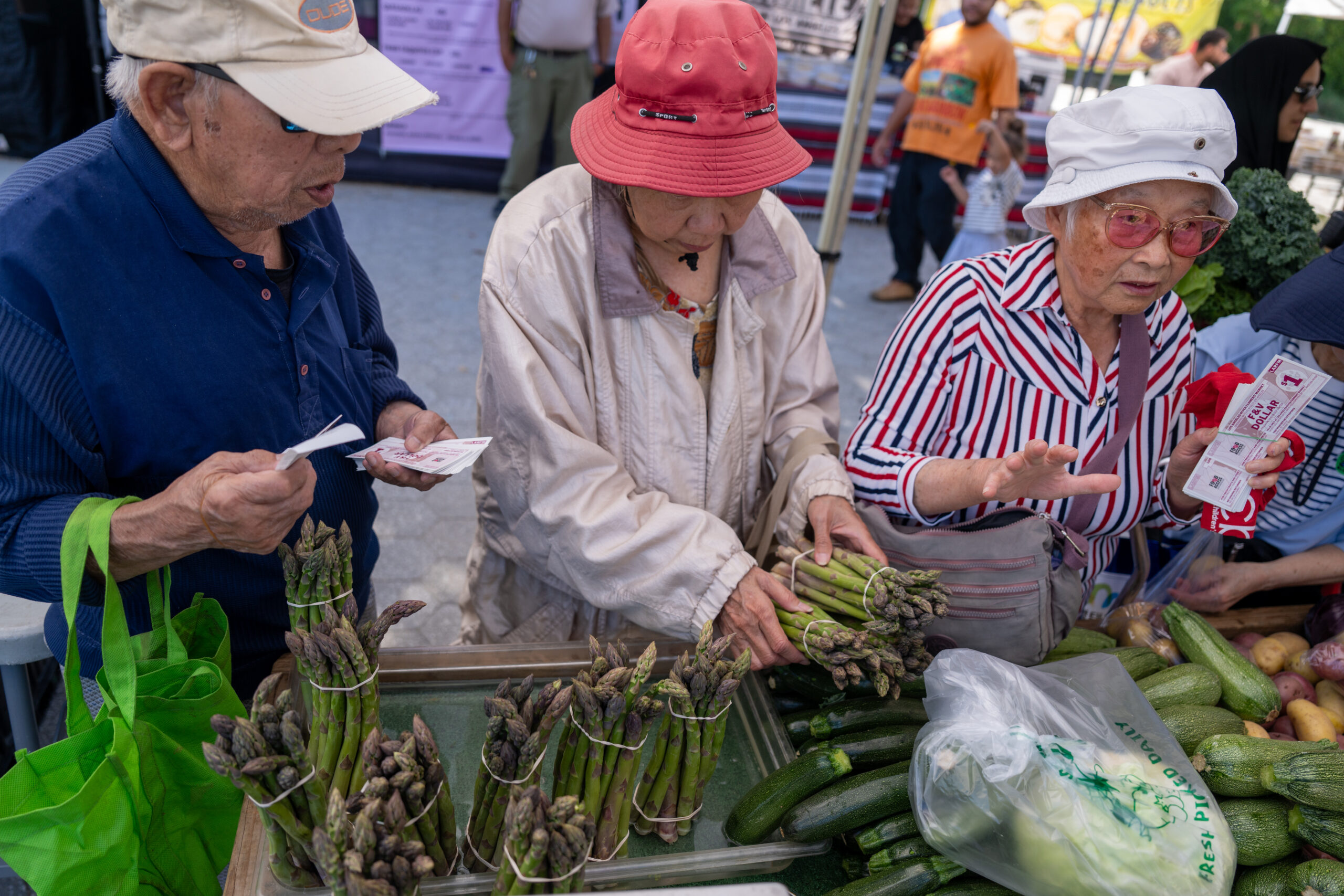
Shoppers use Market Match vouchers to buy produce at the LA River Farmers’ Market. Photo: Irfan Khan for Capital & Main.
But its funding primarily comes from the state via the California Nutrition Incentive Program. CNIP’s funding for Market Match is depleted, said Assemblymember Damon Connolly (D-Marin), a strong supporter of the program.
“We recognize that we’re in tough budget numbers, especially against the backdrop of the outrageous proposed cuts by the federal government through H.R. 1,” Connolly said. He was referring to the so-called Big Beautiful Bill passed by Congress last year, which includes deep cuts to food assistance programs like CalFresh.
Between those reductions and the restrictive new federal rules on who can qualify, upward of 3 million Californians are at risk of losing some or all of their food assistance, according to estimates.
Connolly has spearheaded an appeal to the Assembly Budget Committee to establish permanent state funding that would allow the nutrition program, and Market Match by extension, to carry on even in the absence of federal money. The funding would begin at $20 million per year and ramp up to $50 million in the third year. A similar effort on the Senate side is being championed by Sen. Josh Becker (D-Menlo Park).
“It’s no small change,” Connolly said of the budget request, which would have to pass through a couple of committees before reaching the full Legislature for a vote. “But we feel, in this instance, the state should find a way to fill the gap. The energy and momentum around this program at the local level is huge — because it works. The positive results are known.”
* * *
The benefit of Market Match to a person like Bickety is obvious enough. As he cut back on work hours while becoming a full-time student at Pasadena City College, the 25-year-old’s income dipped to levels that qualified him for the CalFresh program. A Los Angeles city internship exposed Bickety to the farmers’ market system and showed him how far his money could go.
“It doesn’t sound like that much money until it’s all you have,” said Jennifer Grissom, executive director of Food Access LA, which operates nine farmers’ markets in the Los Angeles area. “It is really impactful when you’re counting every penny, and I think that unless you’ve been in that situation, it’s hard to know what that truly feels like.”
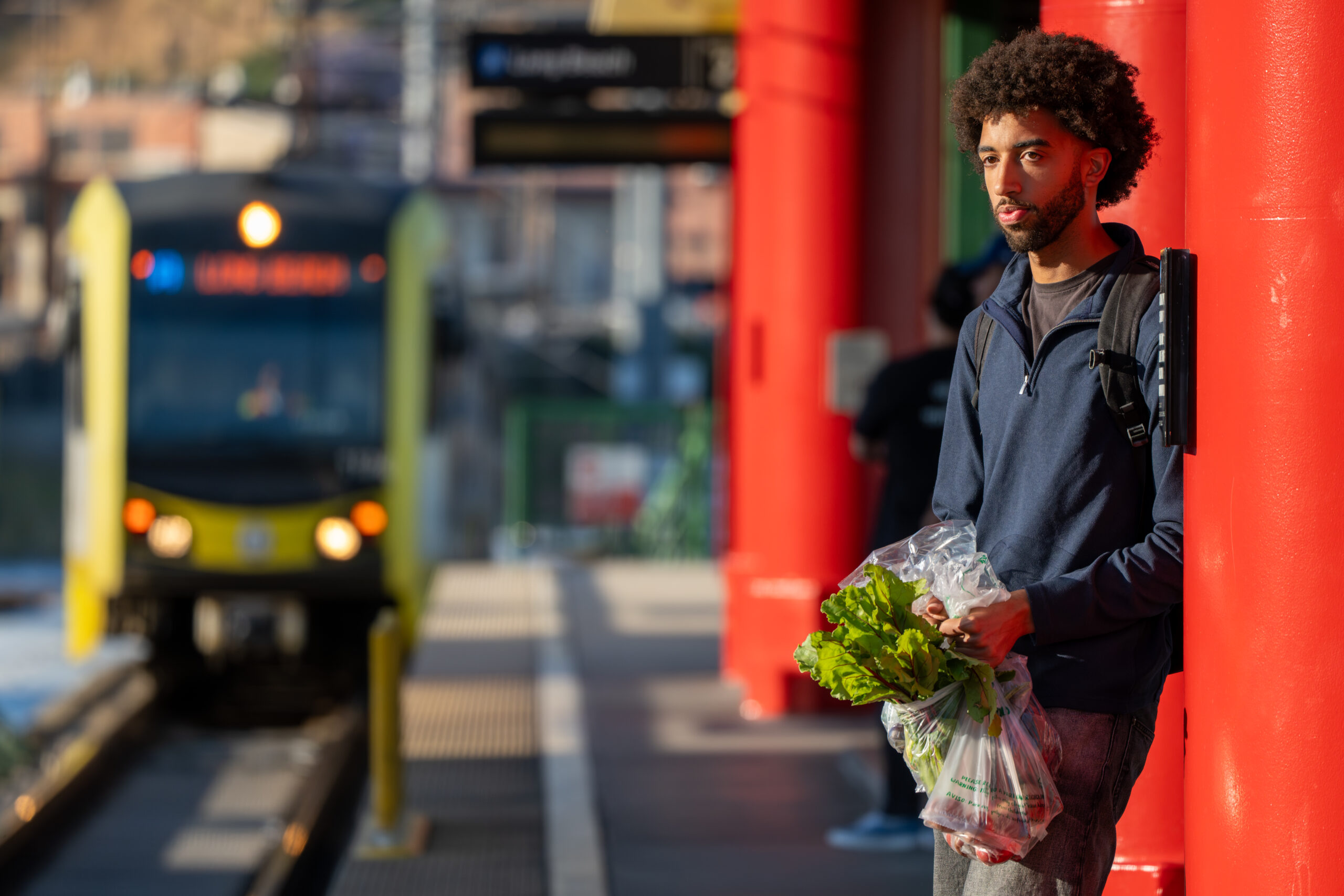
Sean Bickety heads home after buying fruits and vegetables for the week. Photo: Irfan Khan for Capital & Main.
All of the farmers’ markets run by Food Access LA offer Market Match, but that’s not the case around the state. Only about 300 of California’s estimated 650 markets participate in the program, largely because there isn’t enough funding to fully build it out.
Part of the request for permanent state funding is to make Market Match “commonplace and ubiquitous” at all farmers’ markets, said The Ecology Center’s Bourque. The funding would also allow the program to increase its match from $15 to $20 per shopper per visit.
In the past, the state applied to the federal government for matching funds that help run the program. But if there’s no state budget for it, there is also no access to federal funds, Bourque said. That leaves low-income Californians on the outside looking in.
“For many of them, that’s the difference between being able to buy fresh food and vegetables and only being able to purchase high-calorie, high-salt, high-fat, ultraprocessed food,” Bourque said. “This is real money for folks on a tight food budget, and it’s also giving them access to the kind of food that prevents disease, prevents chronic illness.”
There’s another clear benefit, proponents say. According to the U.S. Department of Agriculture, only about 12 cents of every dollar spent on food by consumers actually goes to farmers, with the rest bound up in transportation, processing, storage, wholesaling and retailing. When growers sell at local farmers’ markets, on the other hand, that figure jumps to 80% or more.
For a grower like Sunrise Organic Farm, which works 400 acres in Santa Barbara County, “Any ounce of funding enables us to keep doing what we do,” said Sam Watson, who handles brand development and sales for the farm.
“Farmers work on the smallest margin, and they’re the last to get paid,” Watson said, referring to farms that work with wholesalers, retailers and grocery chains. “Going direct to our consumers helps. If we don’t have funding like this, like SNAP and EBT and Market Match, these farmers — especially the smaller ones — would cease to exist. The margins are that thin.”

A customer uses Market Match vouchers to buy produce. Photo: Irfan Khan for Capital & Main.
* * *
Newsom’s $349 billion May budget revision does not include new funding for CNIP and the Market Match program. That means the scramble is on to find a way to keep the program alive.
In response to Capital & Main’s questions about why Newsom’s budget does not include money for the nutrition program, a spokesperson said CNIP “has historically been funded by one-time investments, not through an ongoing or continuous appropriation.” It is that issue that Connolly, Becker and other supporters are trying to address by persuading fellow legislators to write permanent CNIP funding into their final budget agreement with Newsom in June.
In the meantime, Connolly has introduced one of several bills intended to find new revenue sources for the state — in his case, by closing a corporate tax loophole. California faced an estimated $18 billion budget deficit for 2025-26, and although recent financial updates have been rosier, Newsom is calling for more cuts to protect against future tech or AI market crashes.
Connolly hopes that an initial request for $20 million, out of a state budget of nearly $350 billion, is seen as a wise investment in Market Match. To the program’s supporters, the value is clear.
“Even in the current climate, we are seeing more people show up to use the program,” said Food Access LA’s Grissom. “To have something like this be secure in its funding, I can’t imagine the relief it would give to everybody who is a part of it.”
Copyright 2026 Capital & Main.
This post has been updated to clarify that the Big Beautiful Bill Act significantly reduced funding for the Supplemental Nutrition Assistance Program, known as CalFresh in California.



-
 Imperial DivideJune 3, 2026
California’s Lithium Valley Dreams Meet Reality at the Only Restaurant in Town
-

 Latest NewsJune 1, 2026
Deep Cuts to Civilian Support Staff for Families of Deployed Marines Raise Concerns
-

 Column - State of InequalityJune 4, 2026
California’s Economy Runs on Labor Trump Wants to Deport
-

 Featured VideoJune 5, 2026
At This New Mexico Park, Mountain Bikers Pedal Amid Hundreds of Oil Wells
-
 The SlickJune 10, 2026
Data Centers Are on the Ballot — This Pennsylvania Candidate Won Her Primary Keeping Them Top of Mind
-

 Latest NewsJune 9, 2026
Ousted by the Trump Administration, U.S. Immigrants Remain Locked up in African Kingdom
-
 Latest NewsJune 12, 2026
California Town Lets Private ICE Detention Centers Police Themselves
-

 Latest NewsJune 8, 2026
The Glacier May Be Gone, but the Love Isn’t