
Latest News
Salvadoran Man Says He Suffered Stroke While Awaiting Deportation to Torture Prison
The man believed he would be sent to supermax prison where the Salvadoran government, paid by the U.S., tortured Venezuelan deportees last year.
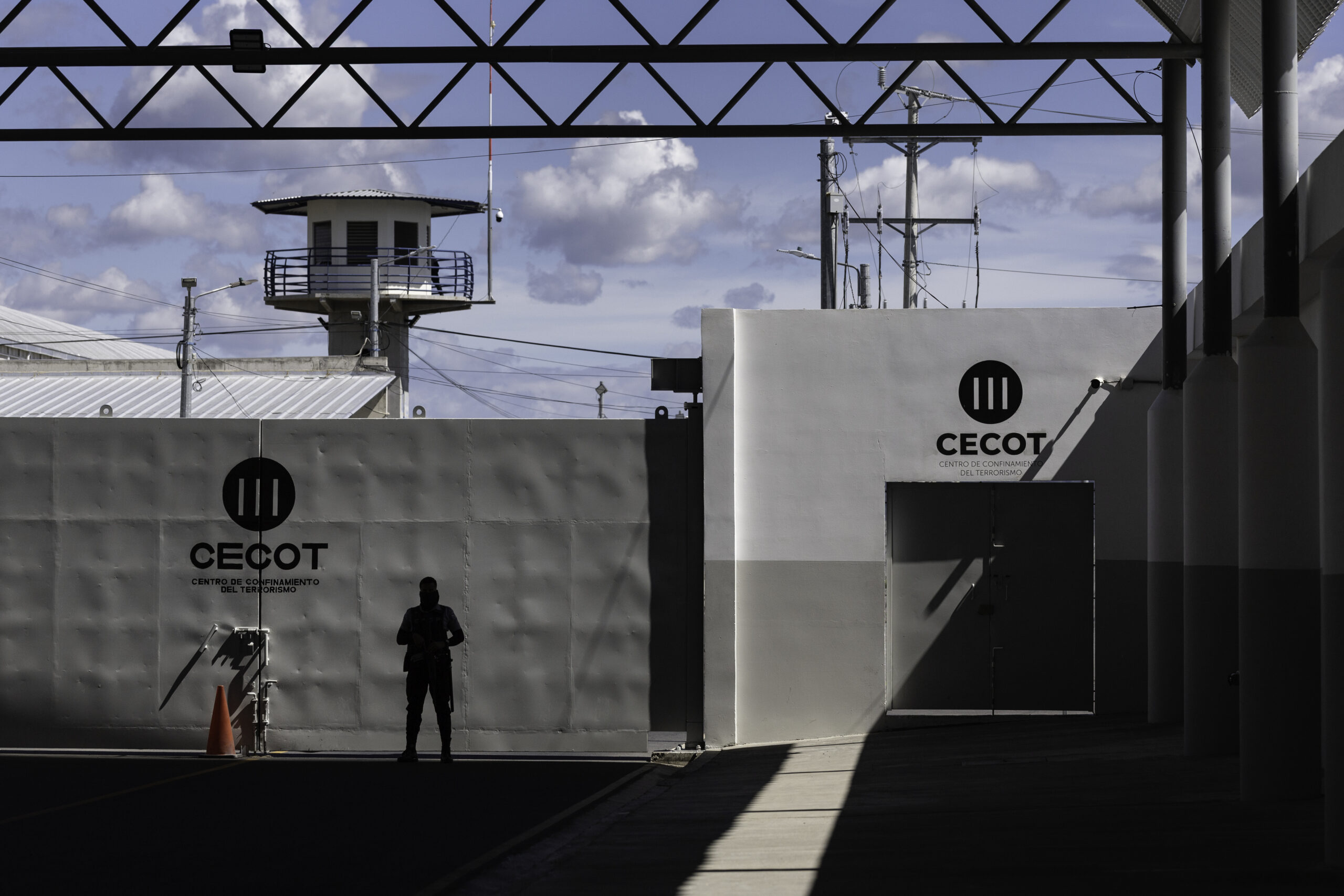

Elenilson Armando Coto Delgado believed that he would be imminently deported to El Salvador when he had a medical emergency in late April while in the custody of Immigration and Customs Enforcement.
Coto Delgado feared that the Salvadoran government would send him to a notorious prison called Centro de Confinamiento del Terrorismo, or CECOT, where guards have tortured U.S. deportees. Now he and his family are worried that he will be discharged from the hospital and deported, only to be tortured while still recovering from what he told his family was a stroke.
“They don’t care what we suffer,” his mother said in Spanish through tears. “There’s no love. There’s no compassion. There’s pure racism now.”
She asked not to be identified for fear of retaliation from the U.S. government. She is also afraid that if she’s forced to return to El Salvador, its government will come after her.
Join our email list to get the stories that mainstream news is overlooking.
Sign up for Capital & Main’s newsletter.
Coto Delgado still has pending motions with the Ninth Circuit Court of Appeals, but, without explanation, the court lifted a stay on his deportation in January. The Ninth Circuit had earlier blocked ICE from removing him while the case is pending, according to court records. Records show the court has not approved his attorney’s renewed requests to block his deportation, with the most recent decision coming at the end of April, the same day he said he had a stroke.
Since 2002, according to court records, the Ninth Circuit has generally granted temporary stays of deportation for immigration cases, but that may be changing. This year, some of the court’s appellate judges have indicated a desire to rethink the practice.
Coto Delgado and his family believed ICE was preparing to deport him from the Northwest ICE Processing Center in Tacoma, Washington. On April 30, he called a loved one and said his face had twisted up uncontrollably when he went to brush his teeth and that he’d felt confusion and a lot of pain in his head.
He said that facility officials had waited four or five hours before getting him medical attention and that he was eventually hospitalized. His mother said that ICE is severely limiting his ability to communicate with his family and that it hasn’t allowed him to sign documents that would enable doctors to apprise them, his attorney or members of Congress of his medical condition.
“The worst is that they don’t let him talk to us,” his mother said. “We don’t know anything about him.”
GEO Group, the private prison company that operates the detention center in Tacoma, said that medical staff at the facility are directly employed by ICE through the ICE Health Service Corps and deferred to the agency when asked for comment on the situation. ICE did not respond to a request for comment about Coto Delgado’s health condition.
Detainees at the facility, including Coto Delgado, have complained of worsening conditions — including a lack of access to medical care — since the Trump administration began increasing the number of people taken into ICE custody.
State health inspectors have gone to federal court to try to get access to the facility to review conditions. Health inspectors have been denied access to the detention center 10 times since 2023.
At least 18 people have died in ICE custody so far in 2026, and 51 in total during the second Trump administration, according to ICE. Doctors said they have found signs of medical neglect in many of those cases.
Coto Delgado told his loved ones in a short telephone call from St. Joseph Medical Center in Tacoma that he’d had a stroke.
When asked about the situation, the hospital said that it does not comment on or share details about its patients’ care.
“We understand that questions sometimes arise when patients are in the custody of law enforcement or are otherwise detained,” said Deepak Devasthali, president of St. Joseph Medical Center. “Our focus in every situation is the same: ensuring patients receive appropriate medical care in a safe and respectful environment.”
Nurses at the hospital have complained about ICE interfering with treatment. Some have asked that ICE officers be removed from the hospital.
“Here they have me tied up at my feet and hands,” Coto Delgado told a loved one in a phone call, according to a recording of the conversation reviewed by Capital & Main. “I can’t move. Even to eat, they only unlock one of my hands.”
The family has asked the office of Rep. Troy Carter, a Democrat from Louisiana who has accused the Trump administration of violating the rights of immigrants, to look into the case since Coto Delgado most recently lived in Louisiana and his children are there. Retired Louisiana state Sen. John Alario Jr., who served most recently as a Republican, sent a letter on Coto Delgado’s behalf to ICE in February.
In March, when Capital & Main first learned that Coto Delgado might soon be deported, ICE said through an unnamed spokesperson that journalists had “wasted countless hours drumming up sympathy for criminal illegal aliens like Elenilson Armando Coto Delgado.” The agency accused him of being a member of the MS-13 criminal gang because of his tattoos.
In court filings related to his immigration case, Coto Delgado explained that he got several gang-related tattoos at age 14 or 15 while detained at the California Youth Authority.
“Although he never officially joined a gang, he spent time with people who were,” a court document asking for his release from custody says.
Coto Delgado has been in ICE custody for more than six years after he requested protection at the San Ysidro Port of Entry at the San Diego-Mexico border in 2019.
He initially came to the U.S. as a child fleeing war in El Salvador in the 1980s, growing up in Los Angeles. He was working in construction when Hurricane Katrina devastated Louisiana in 2005, and he moved to New Orleans to help rebuild.
While there, he said he fought off someone who robbed him and ended up being charged with second-degree battery. He said he didn’t realize the U.S. would deport him for pleading guilty to the charge.
Deported to El Salvador in 2013, he said police there tortured him and left him for dead by a river because of his tattoos. After someone helped him recover and flee the country, he said he was also kidnapped and tortured in Mexico. That experience made him feel that the only place he could be safe was back in the U.S., so he returned in 2019.
An immigration judge denied his initial request for protection, according to court records.
His case has been slowly moving through the appeals process, with his attorney arguing that conditions in El Salvador changed in 2022 in a way that makes his return even more dangerous due to the country’s “state of exception,” which suspended civil rights and resulted in the imprisonment of thousands without thorough evaluation of innocence or guilt, according to court documents. Changing country conditions allow attorneys to make motions to reopen a case to evaluate those new circumstances.
To further bolster Coto Delgado’s claims, the attorney filed another set of evidence with documentation of deported Venezuelans tortured in Salvadoran prison after the U.S. paid El Salvador to imprison them. But the Board of Immigration Appeals denied the motion to reopen without including any of that evidence in the official record. The attorney is now trying to correct that record through the Ninth Circuit, according to court documents.
Meanwhile, Coto Delgado’s loved ones helped him clean up his record. By arguing that the attorney in his New Orleans criminal case had provided ineffective counsel because she didn’t tell him that he could be deported for accepting a plea deal, he convinced a Louisiana judge to vacate the conviction in February, according to court records.
His mother prays daily that her son will be allowed to return to his family, she said. He has several U.S. citizen children who have autism, and she wants him to be able to be with them.
“What can one do except trust in God that he has mercy?” she said. “The only thing we will trust in is God. We can’t trust people anymore.”
Copyright 2026 Capital & Main



-

 The SlickMay 29, 2026
Feds to Open Tens of Thousands of Acres of Colorado Wilderness to Oil Drilling
-
 Deadly Dust: The Silicosis EpidemicMay 27, 2026
California Moves to Ban Quartz Countertop Fabrication to Combat Silicosis Epidemic
-
 Latest NewsMay 26, 2026
Conditions at California ICE Detention Centers Are Getting Worse, Inspections Find
-
 Imperial DivideJune 3, 2026
California’s Lithium Valley Dreams Meet Reality at the Only Restaurant in Town
-

 Column - State of InequalityMay 28, 2026
Top Democratic Candidates Agree on Housing Urgency, Not the Fix
-

 Latest NewsJune 1, 2026
Deep Cuts to Civilian Support Staff for Families of Deployed Marines Raise Concerns
-

 Column - State of InequalityJune 4, 2026
California’s Economy Runs on Labor Trump Wants to Deport
-

 The SlickJune 5, 2026
At This New Mexico Park, Mountain Bikers Pedal Amid Hundreds of Oil Wells