
Deadly Dust: The Silicosis Epidemic
California Moves to Ban Quartz Countertop Fabrication to Combat Silicosis Epidemic
The incurable lung disease has killed 31 countertop workers and sickened 560, numbers that are expected to keep climbing while regulators draft emergency rules.
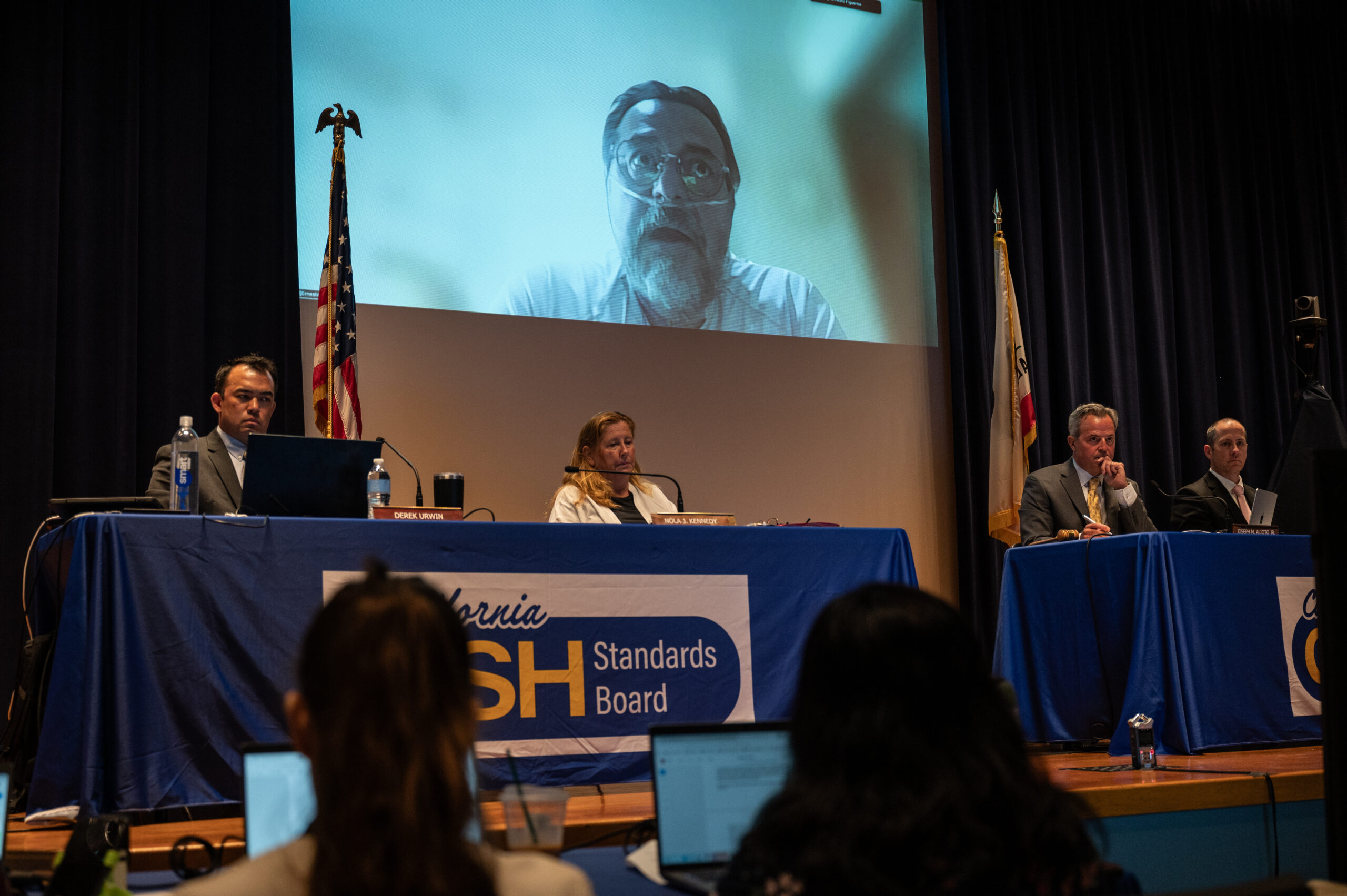

California regulators have taken the first step toward banning the fabrication of engineered quartz countertops in an attempt to curb a growing silicosis epidemic that has killed more than 30 stone fabricators and sickened hundreds more.
The state Occupational Safety and Health Standards Board’s vote last week to adopt a petition to ban engineered stone containing more than 1% crystalline silica marked a victory for workers who cut, grind and polish quartz and are at risk of contracting the incurable lung disease.
But the decision is only the first step in a lengthy rulemaking process, and public health experts warn that cases and deaths will keep rising among California workers until a ban is in place and adequately enforced by regulators. Doing so would make California the first state to overcome industry opposition and stop the fabrication and installation of a highly toxic material that has become popular in kitchens and bathrooms nationwide.
At the center of the health crisis regulators are responding to is a vulnerable workforce that in California is made up mostly of immigrant Latino men, many of them undocumented. Workers in fabrication shops can inhale tiny crystalline silica particles that scar their lungs, making breathing extremely difficult. A lung transplant is often the only treatment, a risky and expensive procedure that may only extend workers’ lives by an average of six years.
The board’s decision followed a daylong hearing in Los Angeles where members heard emotional testimony from advocates, public health experts and workers urging immediate action. Sickened workers called into the May 21 hearing from job sites, hospitals and their homes to describe the physical pain and emotional toll silicosis has inflicted on them and their families.
One worker said he feared that he wouldn’t wake up when he went to sleep. Another described not being able to play with his children after he received a lung transplant, for fear of contracting an infection. A third, who testified in person while using supplemental oxygen, said the disease has put an expiration date on his life.
“How many more of us have to die?” asked one worker in Spanish. “You have to do something to stop this evil.”
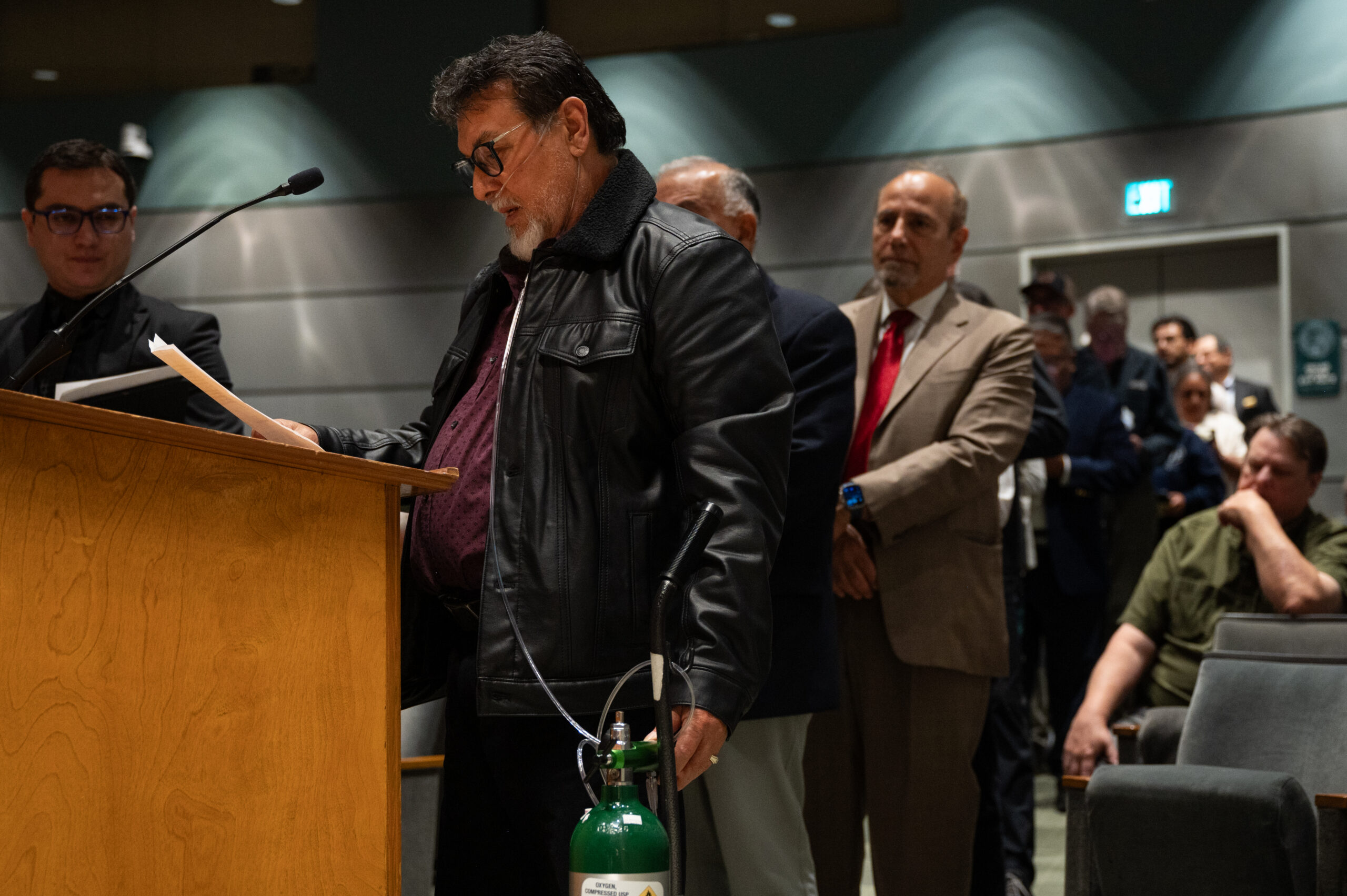
Jose Luis Martes, a stone fabrication worker diagnosed with silicosis, testifies at a meeting of the Occupational Safety and Health Standards Board.
The rise in silicosis cases has coincided with the growth in popularity of engineered stone, Elizabeth Noth, an industrial hygienist with the state’s Division of Occupational Safety and Health, or Cal/OSHA, said at the hearing. The material, she said, is much more toxic because of its high silica content, added volatile chemicals and nano-sized dust particles that can bypass most respirator masks.
Silicosis cases from engineered stone have grown exponentially, with over 560 cases and 31 deaths since 2019, according to the California Department of Public Health (CDPH).
“As alarming as these numbers may be, they are likely an underestimate,” said Amy Heinzerling, chief of the department’s Emerging Workplace Hazards Unit. Those numbers have doubled since she first spoke to the board in 2024, despite valiant efforts from the state to increase engineering controls, she added.
“It is time to consider other approaches to address this public health crisis,” said Heinzerling.
After hours of public testimony at the May 21 hearing, member of the Occupational Safety and Health Standards Board Derek Urwin thanked workers, calling their comments “courageous” and “impactful.”
“We’re hearing loud and clear from the workers and the CDPH that control measures are not working and it’s not the fault of the workers,” Urwin said.

A public meeting attendee holds white flowers representing workers who have died from silicosis.
The vote was nearly derailed by Chairman Joseph Alioto Jr., who suggested that an advisory committee and science subcommittee provide more research before any emergency ruling. But the two other board members present, Urwin and Nola Kennedy, pushed for immediate action on the petition. In the end, the board voted unanimously to adopt the petition, while also directing Cal/OSHA to convene advisory committees.
“This is just the first step, but it is a good step,” said Robert Blink, occupational medicine physician and spokesperson for the Western Occupational and Environmental Medicine Association, the public health group that filed a petition for a ban on engineered stone in December.
“It moves us forward and begins the road to rule-making, which will protect California workers from exposure to this incredibly dangerous substance,” Blink added.
But Blink warned that even with the vote, California can expect to see increased silicosis cases over the next seven to 10 years, as people who’ve already been exposed continue to get sick.
The board directed Cal/OSHA to draft an emergency temporary standard prohibiting workers from cutting or installing engineered stone, which would be in place for a year while the agency develops permanent regulations. A committee of physicians, scientists and industry representatives will advise the agency in drafting the decision.
The emergency rules will probably take a few months to draft, and even a ban may not be immediate. The agency could decide to phase in the ban or delay its implementation to give industry time to transition to safer countertop materials.
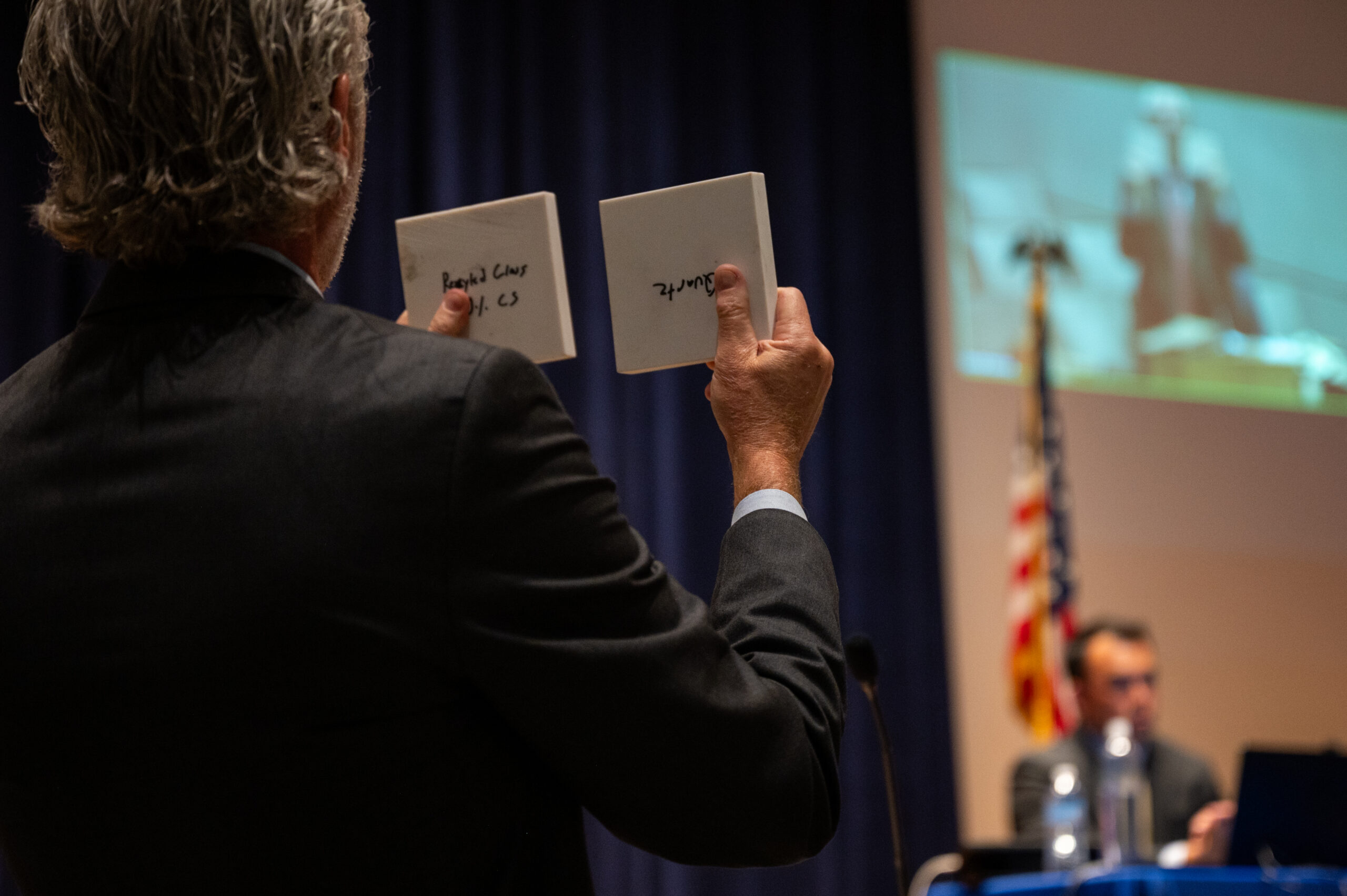
James Nevin, an attorney representing over 700 workers with silicosis, holds up samples of low-silica stone and engineered quartz at a public hearing in Los Angeles.
In 2024, Australia became the first country to ban engineered stone containing more than 1% crystalline silica.
The industry, which has fought the proposal for California to follow suit, claims engineered stone can be safely fabricated and has blamed the silicosis epidemic on noncompliant fabrication shops.
This includes Cosentino, one of the world’s largest engineered stone manufacturers, a representative of which spoke against the ban at the May 21 hearing. The company is headquartered in Spain, which has recorded over 2,500 industry-related silicosis cases between 2007 and 2024, according to that country’s Instituto Nacional de la Seguridad Social.
“Banning the product to compensate for failed enforcement is irresponsible,” said Matt Thurston, regional director of Cosentino North America, during the public meeting.
Enforcement of existing workplace safety standards has been a major obstacle to controlling the silicosis epidemic. In February, board chair Alioto suggested partnering with local law enforcement agencies and district attorneys to help crack down on noncompliant fabrication shops.
California has the strictest regulations for working with the material in the nation, which require wet-cutting methods and respirator masks, but public health experts argue these do not go far enough and that the state has failed to properly enforce them.
The majority of inspected fabrication shops were already failing to comply with updated standards, Eric Berg, Cal/OSHA deputy chief of health and research and standards, told the board at the hearing. Since the end of 2023, he said, the department has found violations at 72% of the 181 fabrication shops where inspections have been completed, resulting in 32 stop-work orders and about $1.9 million in penalties.
Inspected shops represent only about 13% of the estimated over 1,300 operations in the state, but Cal/OSHA staff suspect the majority of uninspected shops are likely also operating with multiple violations.
An analysis by board staff suggested a “prohibition may be the quickest and most cost-effective way to achieve a reduction of silicosis cases here in California,” Marjon Juybari said at the hearing.
But state officials acknowledged that a ban could also “unintentionally push parts of the industry further into hiding, where safety protections are absent and health risks are even greater.”
Most fabrication shops in California are small operations, with a median of five workers. Cal/OSHA reported that employers often misclassify workers as independent contractors “to escape liability for employee health and safety,” since independent contractors fall outside the purview of Cal/OSHA enforcement.
Still, a prohibition could be easier to enforce as Cal/OSHA would only need to determine whether the product is being used, not how it is being handled, according to agency staff.
Though under a ban it would be illegal to install engineered stone within a home, consumers could potentially still have access to the material in the state. Cal/OSHA can only enforce workplace regulations, and can’t prohibit sales, imports or distribution, as Australia was able to two years ago when it banned the sale and use of engineered stone.
That means the success of a ban in California will to some extent lie in the hands of consumers.
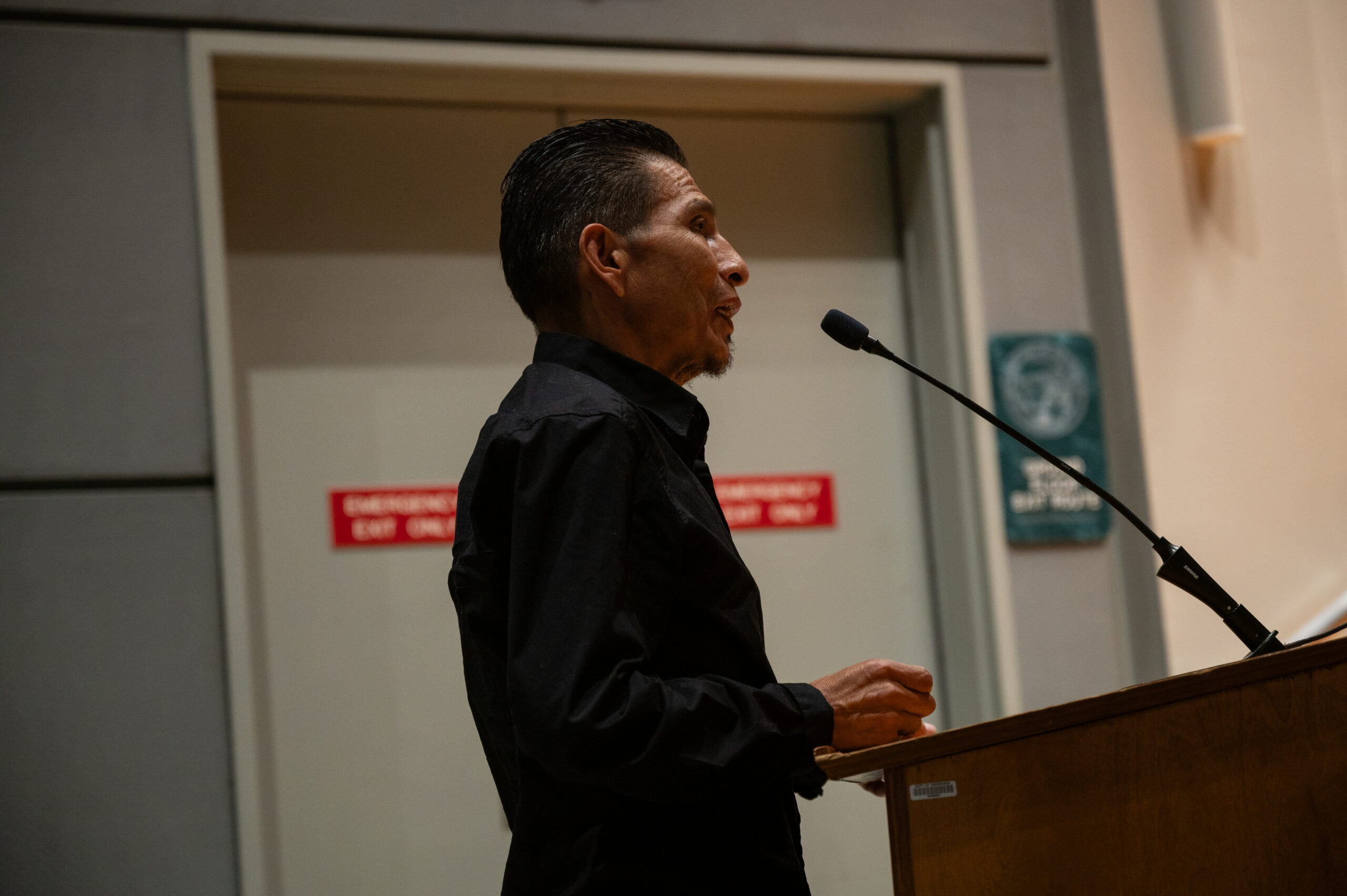
Hilario Rivera, a stone fabrication worker diagnosed with silicosis, testifies at the hearing.
Countertop worker Hilario Rivera, 57, encouraged customers to be aware of the impact that engineered stone has on workers and to choose safer alternatives.
Rivera, who worked in the industry for 30 years, said that when engineered stone began to replace natural stone, fabrication workers were not warned of the dangers. Though he always used wet-cutting and masks, he was diagnosed with silicosis earlier this year.
“I’m glad they’ve made this decision,” said Rivera after the vote. “Because what I’d really like is for no more people to get sick.”
Copyright Capital & Main 2026


-

 Column - State of InequalityMay 21, 2026
In California Governor’s Race, Xavier Becerra Walks Away From Single-Payer
-

 Latest NewsMay 22, 2026
Where California’s Gubernatorial Candidates Stand on Climate and Taking Big Oil Money
-
 The SlickMay 20, 2026
70-Foot Wastewater Geyser Reflects New Mexico’s Latest Oilfield Challenge
-
 The SlickMay 29, 2026
Feds to Open Tens of Thousands of Acres of Colorado Wilderness to Oil Drilling
-

 Latest NewsMay 18, 2026
Budget Cuts Threaten Program That Doubles Food Dollars for Californians in Need
-
 Latest NewsMay 26, 2026
Conditions at California ICE Detention Centers Are Getting Worse, Inspections Find
-
 Imperial DivideJune 3, 2026
California’s Lithium Valley Dreams Meet Reality at the Only Restaurant in Town
-

 Column - State of InequalityMay 28, 2026
Top Democratic Candidates Agree on Housing Urgency, Not the Fix