Imperial Divide
California’s Lithium Valley Dreams Meet Reality at the Only Restaurant in Town
How Vicky Hernandez and her customers at the Buckshot Deli & Diner in Niland view plans to turn Imperial Valley into a green energy hub.
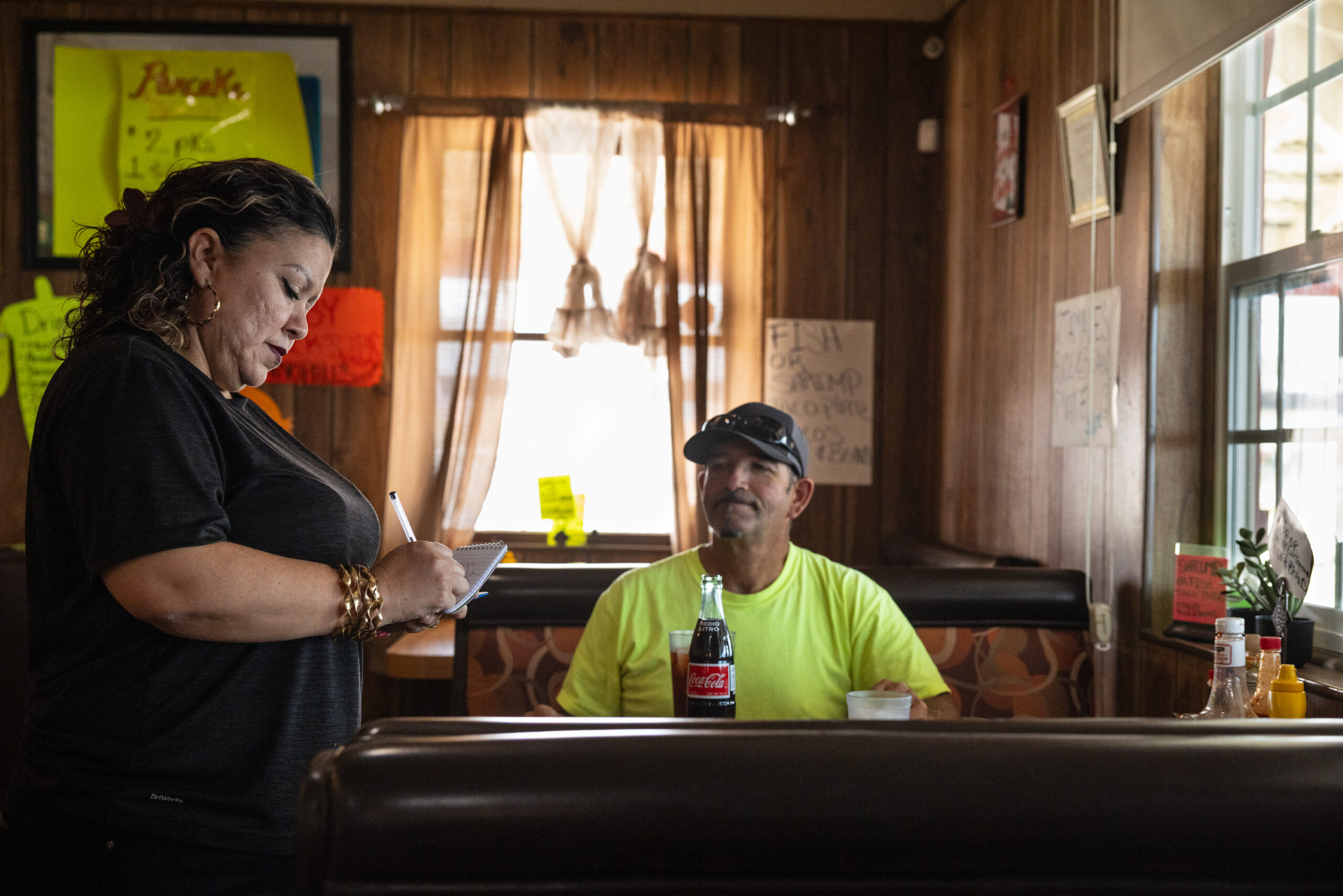

The Buckshot Deli & Diner is an oasis along the sun-blasted California highway that runs from Calexico to Coachella, the only remaining restaurant in the desert hamlet of Niland.
The boxy diner with a red door and red trim strung with Christmas lights is named for the hunters who shoot ducks and geese near the southeastern shores of the Salton Sea. When Vicky Hernandez bought the restaurant about a dozen years ago, she kept the name and decor — a mounted deer head and geese hang from the ceiling above wood-paneled walls — and added handwritten signs advertising birria, tamales and other Mexican specialties.
Recent years have proven challenging for the Buckshot. First came the pandemic, then a fire that destroyed dozens of homes and drove people out of town. Next was another blaze that burned the post office, then recent heavy flooding that damaged yet more homes. Hernandez and her husband have at times run the restaurant with just one other employee. Utilities are expensive, taxes are high, she said, and bills piled up.
Amid it all, a new type of customer started frequenting the diner. Niland — population 1,116 — is the closest community to so-called Lithium Valley, where an underground reservoir of geothermal brine near the Salton Sea contains one of the world’s largest lithium deposits. Supervisors would visit the project area, where Imperial County is proposing to develop 51,000 acres of mostly undeveloped land along the Salton Sea for renewable energy, lithium extraction and associated infrastructure, Hernandez recalled, and stop by the diner afterwards for lunch.
“They weren’t the type of people who would ask, “How much does it cost?’” Hernandez said in Spanish. She wears her hair pulled away from her face, big gold hoop earrings and a warm smile that makes restaurant patrons feel like family. “They were very, very good customers, ordering big plates of food.”
“It was like a glimmer of hope,” she said.
But that business has mostly dried up. The lithium mining plans, which three companies are pursuing, may not be fully realized for decades. Two nonprofits have sued over what they believe were shoddy environmental reviews, and the county and the Imperial Irrigation District, the major utility in the region, disagree over how to supply the huge amounts of water and power necessary for lithium extraction.
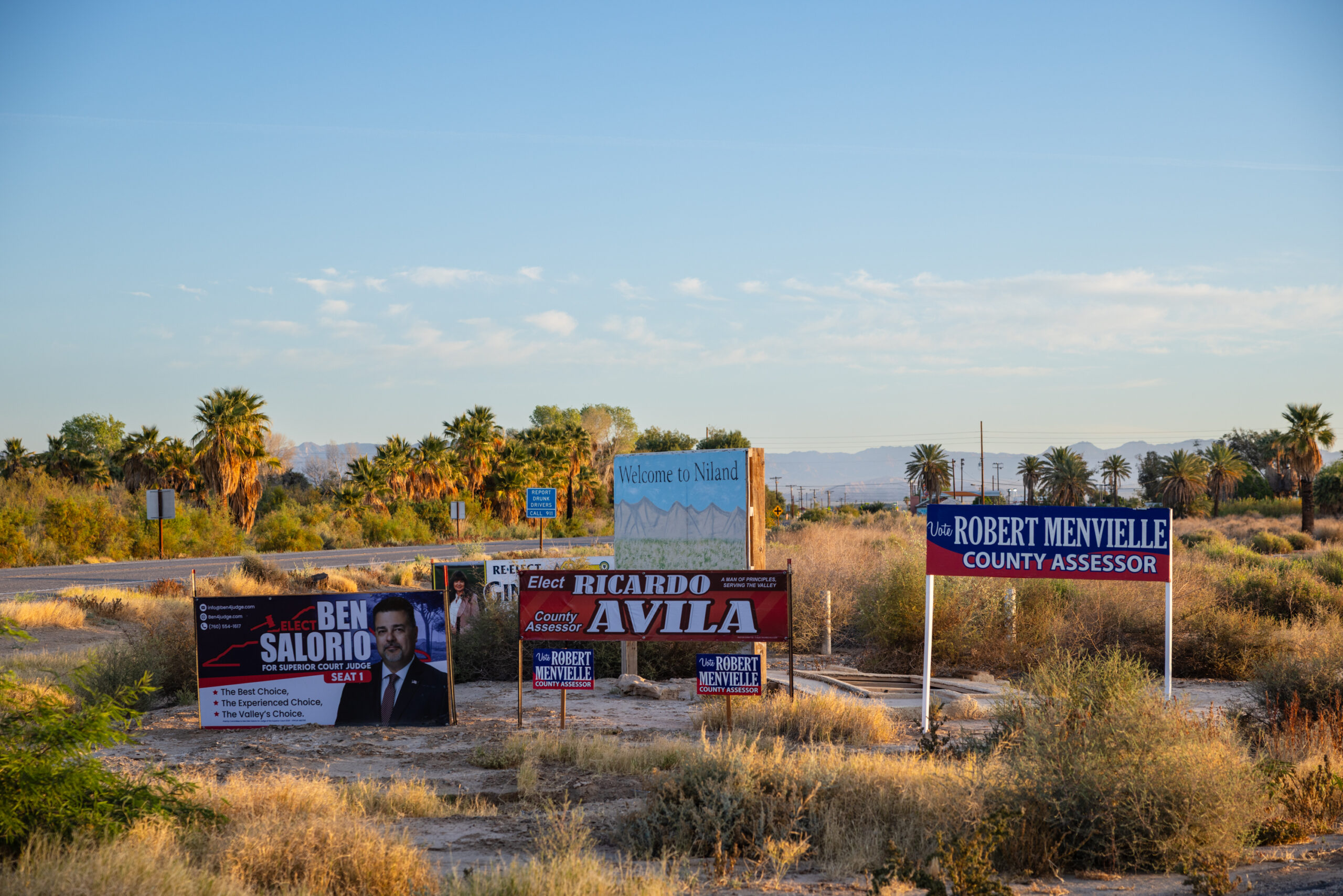
Political signs for upcoming elections fill a corner at the entrance to Niland on April 24.
The area’s economic future hinges on plans, long promoted by politicians and businesses, to transform Imperial Valley into a green energy hub where lithium mining and battery manufacturing, as well as solar projects and geothermal energy production, would turn this neglected corner of California into a critical supplier for a global economy that is transitioning toward electric vehicles. Imperial County’s ambitious plans, spelled out in two reports that combined exceed one thousand pages, propose fast-tracking a wide range of industrial projects for Lithium Valley.
Supporters have promised that benefits would trickle down to area residents. Some five miles from the Buckshot, Gov. Gavin Newsom stood in front of a lithium processing project during a 2023 press conference and touted that equity, inclusion and economic opportunities are embedded in plans for Lithium Valley. But in a place where pledges of new industries, jobs, services and amenities have failed to materialize before, many in the community are mistrustful of policymakers’ promises.
In other parts of the county, meanwhile, developers are making similar promises of a brighter future as they pitch data centers, water and power-hungry facilities that have been met with fierce resistance by local residents and advocates.
Capital & Main spent two days in mid-April at the Buckshot — the center of this unincorporated community that lacks a city hall or public park — to gauge residents’ sentiments about the plans for Lithium Valley and other developments proposed for the area. Views ranged from tempered optimism to deep resignation.
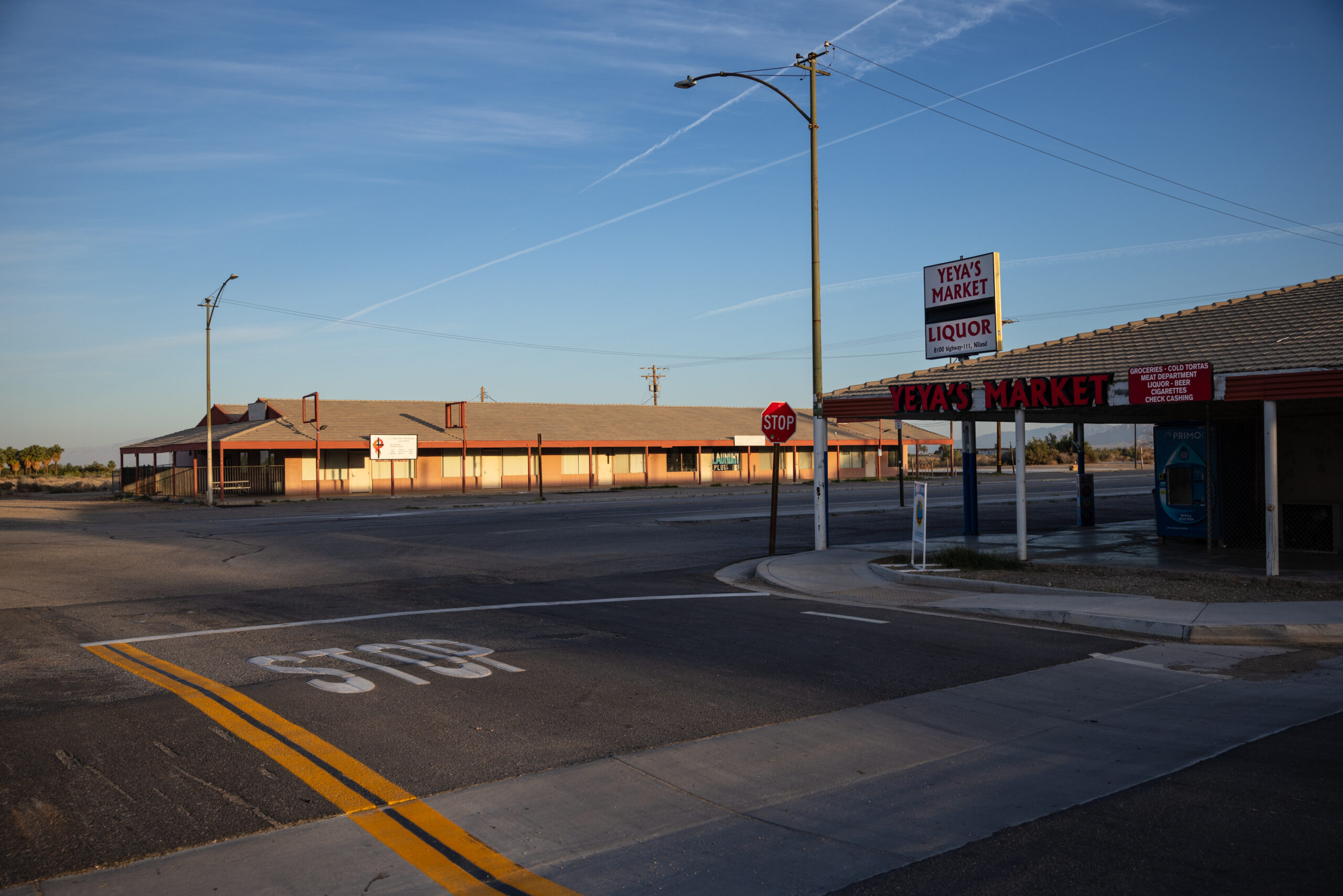
With the exception of a few businesses, the buildings in downtown Niland are vacant.
Some, like Hernandez, have already experienced at least a temporary boost from what’s been called a “white gold” rush to extract lithium, a silvery-white mineral used in rechargeable batteries. Others expressed confidence that it would bring much-needed jobs and amenities to the southeastern corner of California. They shrug off concerns about the project’s environmental impacts, pointing out that the rural region is already plagued with high rates of asthma, allergies and particulate pollution, toxic dust from the receding Salton Sea and acrid odors from large-scale cattle feedlots and the crop dusters that fly overhead.
Some customers voiced general concerns about the project’s health and environmental impacts. But there was near-unanimous agreement on one thing: the need for more investment in Niland.
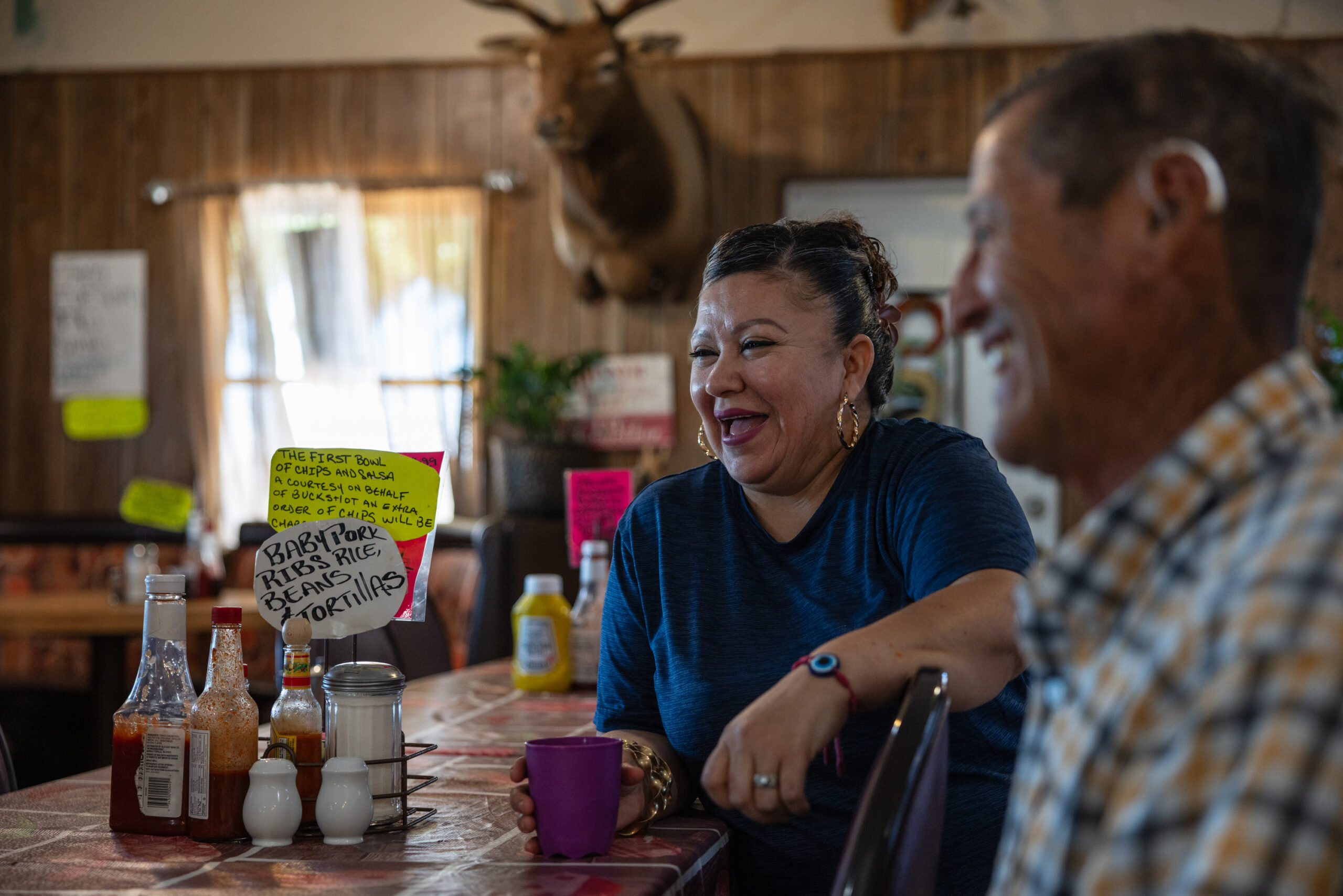
Vicky Hernandez laughs with a table of regular customers.
* * *
Hernandez and her family moved from bustling Mexicali on the other side of the U.S.-Mexico border to tiny Niland nearly three decades ago. Her husband was working at a local ranch, she said, and had grown weary of waiting in line to cross the border each morning and evening.
“No way,” she remembers thinking when they first arrived.
Since then, she and her husband raised their two children here. Their son now works as a correctional officer at nearby Calipatria State Prison. Their daughter serves in the U.S. Air Force. Her aging parents live with them, too.
She has come to love how peaceful Niland is, and that everyone knows them.
“Look at me now,” said Hernandez, “the happiest woman in the world here.”
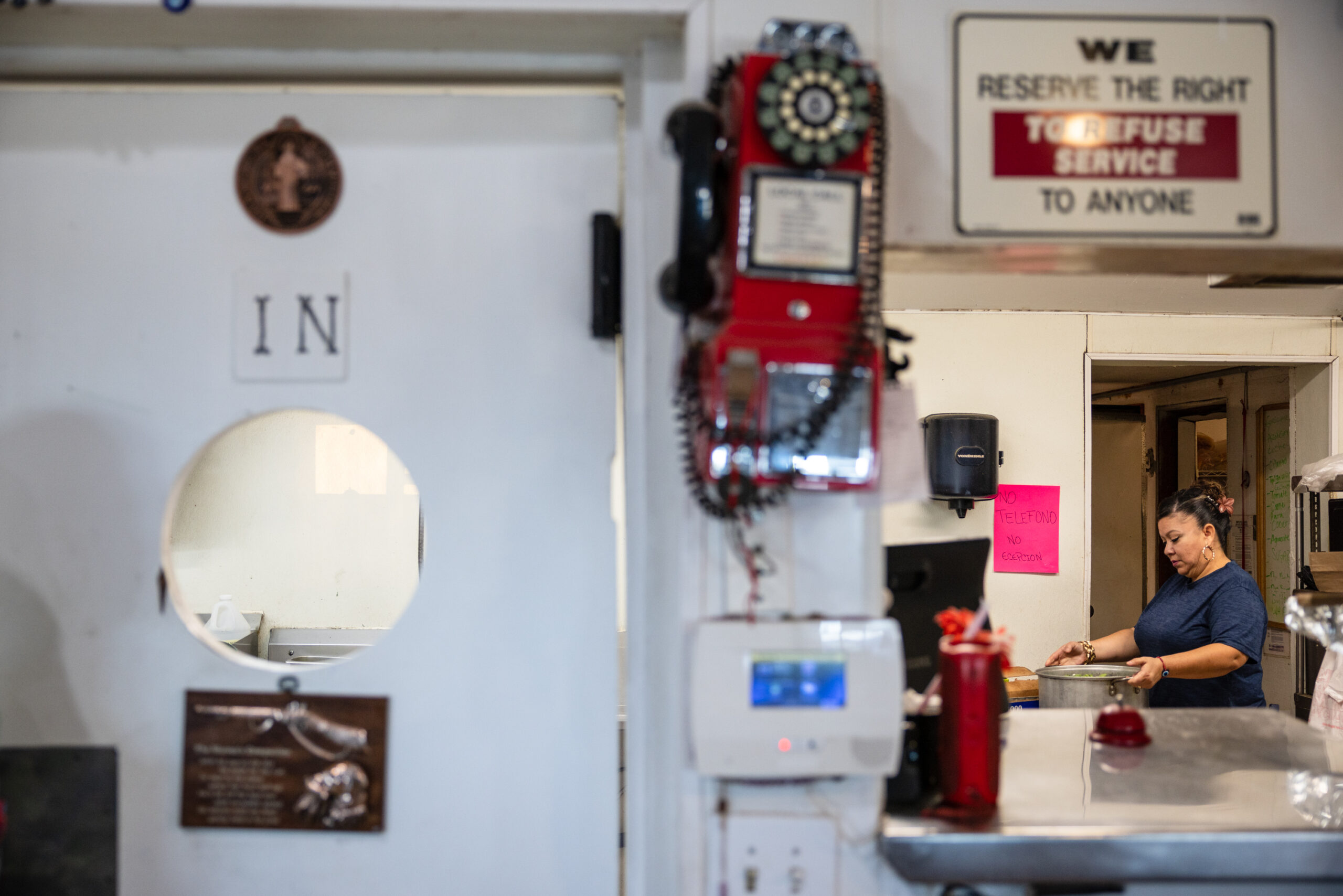
Vicky Hernandez works in the diner’s kitchen.
Owning a restaurant was Hernandez’s dream, and she still enjoys her work. Her cell phone rings with the sound of a quacking duck — guerrilla marketing when she’s outside of the diner. The Buckshot is open seven days a week, and Hernandez and her husband are there every day. She has five employees, she said, and pitches in wherever she’s needed, cooking, serving food and washing dishes.
Her most visible role, though, may be as hostess. Hernandez treats the Buckshot as if it were her living room. She greets people by name and and mugs of coffee appear before regulars sit down. She jokes with locals and squeezes into an upholstered booth decorated with curlicues to admire an 87-year-old’s manicure.
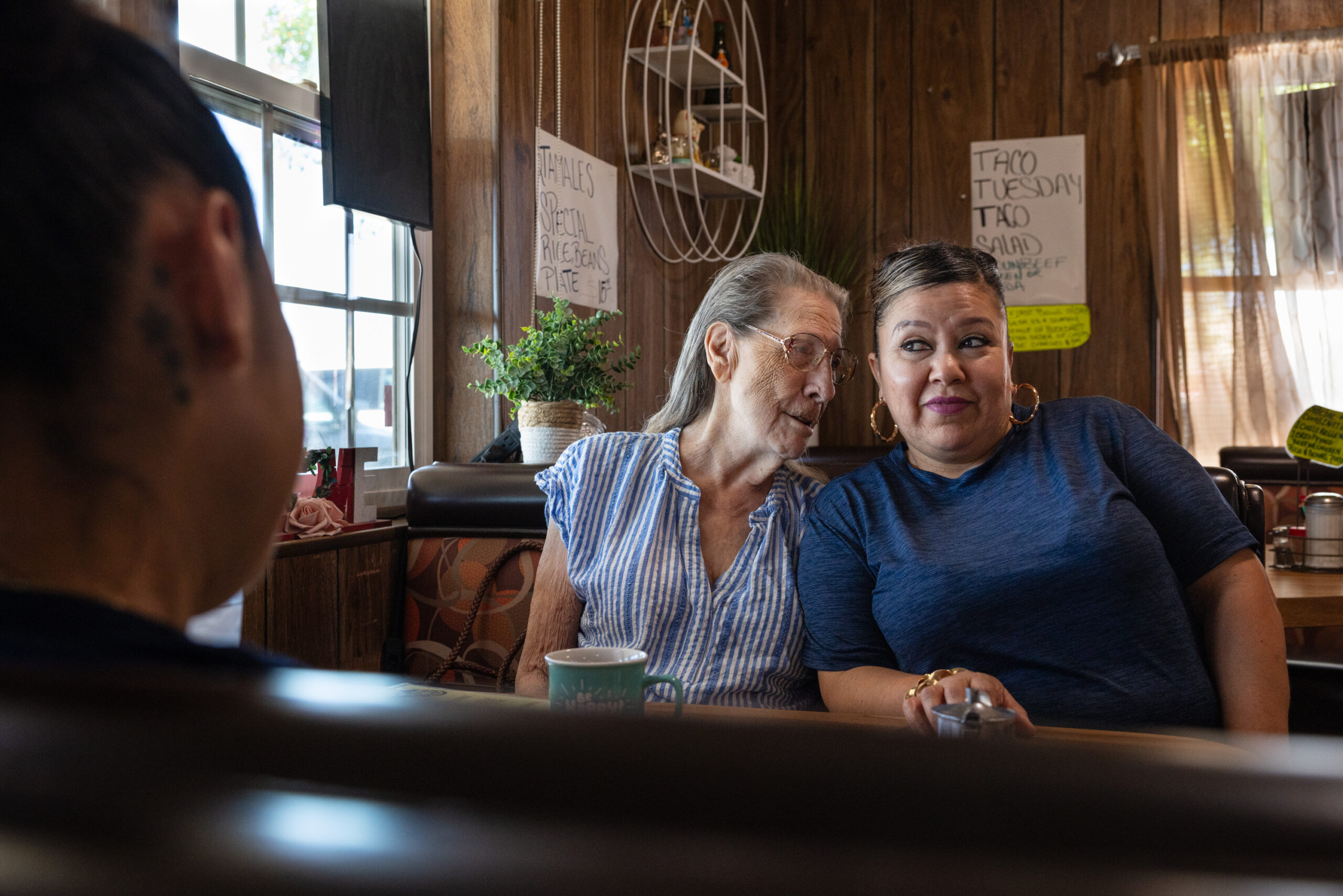
Vicky Hernandez sits with customer and friend Jeanette Roach.
The restaurant is a labor of love, but Hernandez said she’s found other ways to pay the bills. She works as a caregiver for a local woman, bringing her meals and ferrying her to doctor’s appointments. Her husband still works at the ranch, she said. They have renovated and now rent several homes.
The diner couldn’t survive without that additional income, she said. “Forget it — we wouldn’t be on the map.”
She acknowledges that Niland has seen better days. Today, the town’s business corridor along State Route 111 is bleak. Long-shuttered restaurants still advertise slow-cooked brisket and fresh sandwiches. Just 67 kids attend the local elementary school.
“There’s nothing here, except for a store and my restaurant,” she said. “We don’t even have a post office.”
Asked what the community needs, customers are quick to respond: more sidewalks and activities for children and families. More businesses and fast food restaurants. A social services office and a waterpark.
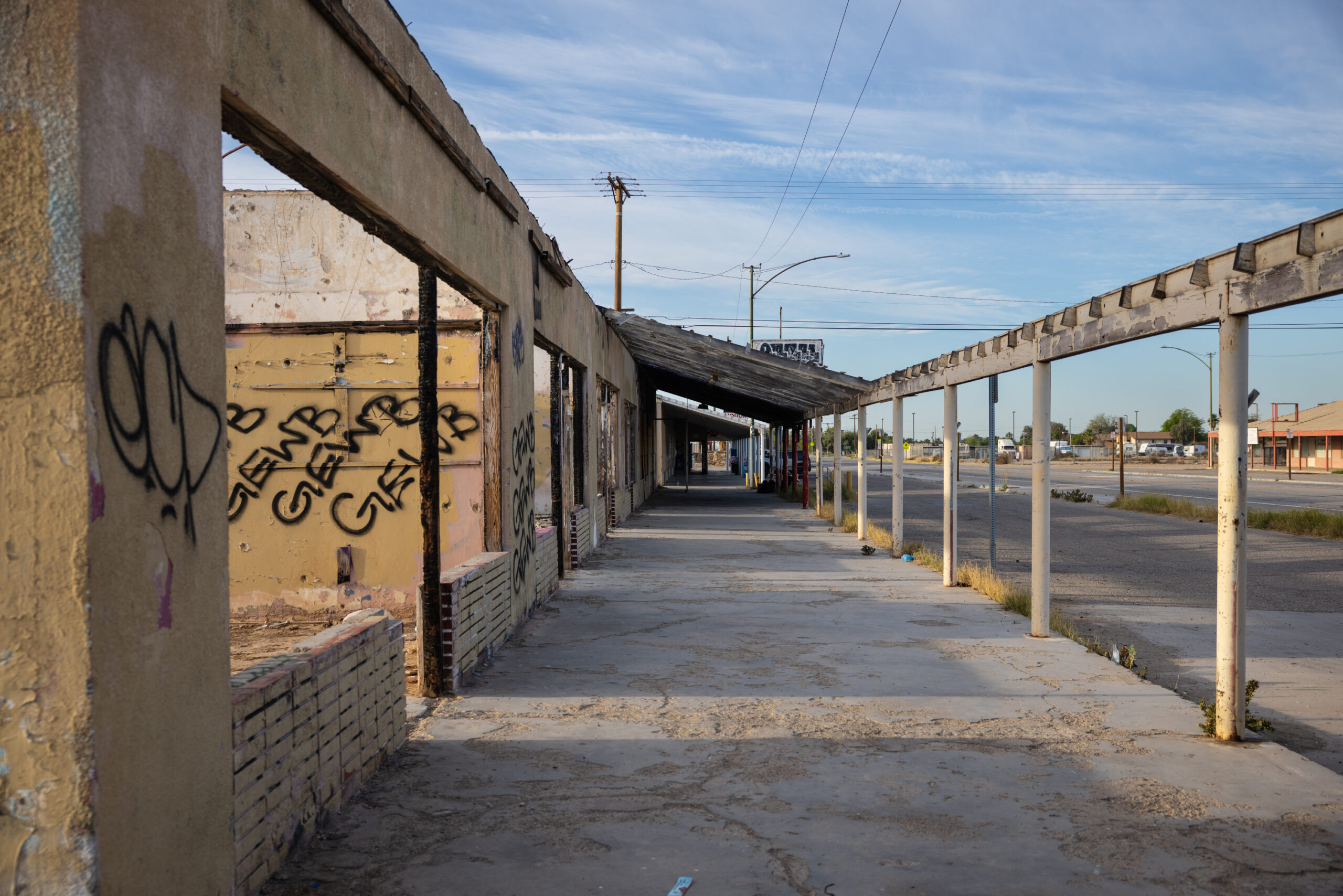
A building that burned in a fire in 2022 in Niland remains destroyed in April 2026. The building was home to the town’s post office, which has not reopened.
The county, in its draft environmental report, estimates the development will deliver 40,000 much-needed jobs, including 10,000 temporary construction jobs, to Imperial County, where the unemployment rate reported in April — 16.5% — was among the highest in California.
Advocates question the county’s job-creation estimate, pointing out in public comments that some industries greenlit for Lithium Valley — including data centers, anaerobic digesters and green hydrogen facilities — require few full-time employees. In a county where the median household income is less than $61,000, others are skeptical that the development will provide high-quality jobs with competitive wages, benefits and opportunities for advancement that would meaningfully improve residents’ lives.
While the county’s plan for Lithium Valley doesn’t address development in Niland, the unincorporated community could see an infusion of funds from a lithium extraction excise tax, created through a 2022 law signed by Newsom. The law requires 80% of the lithium tax to go to Imperial County, reserving at least 30% of that for the communities most directly and indirectly affected by lithium extraction.
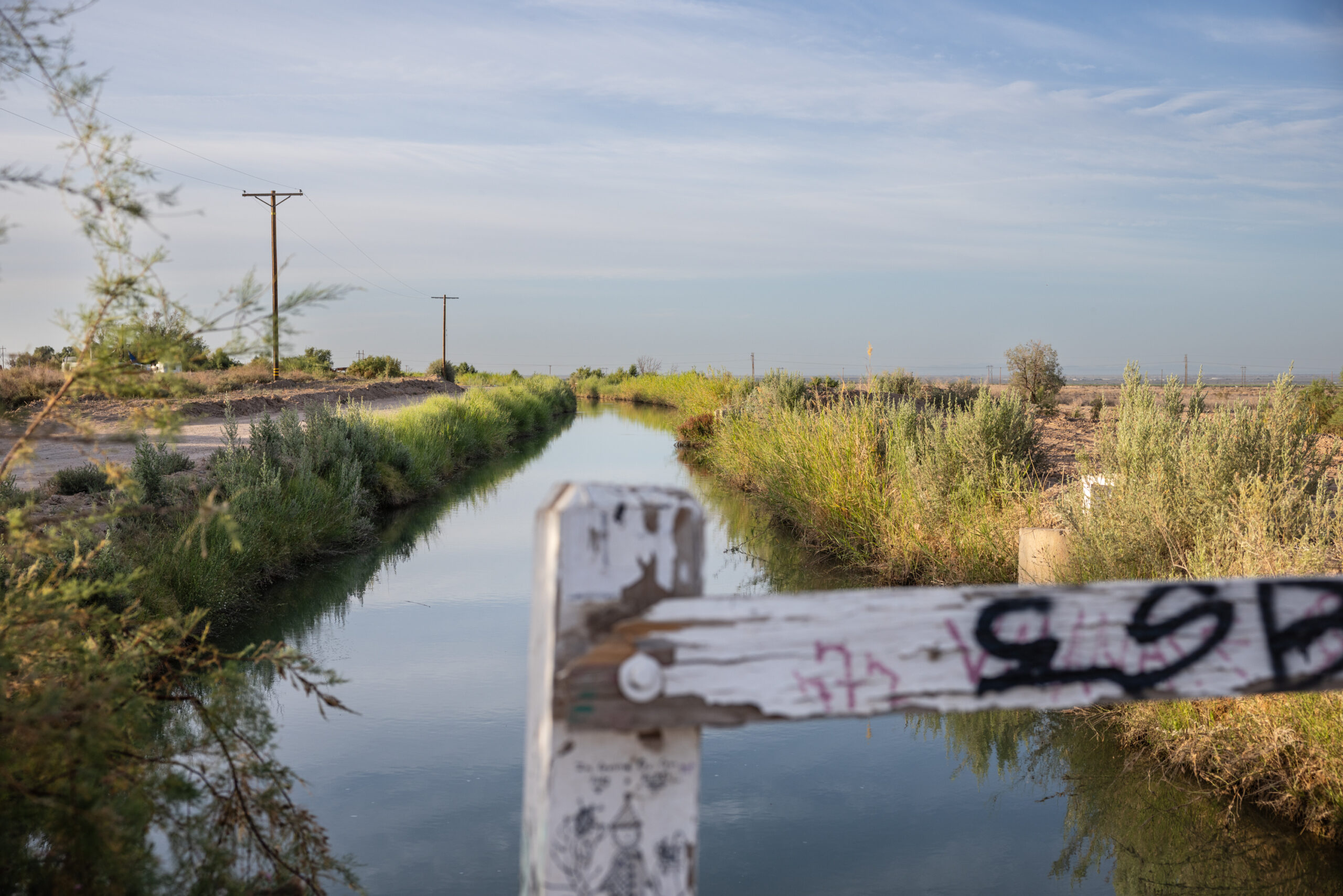
The Highline Canal brings water to agricultural fields surrounding Niland. A breach of the canal in 2023 caused major flooding and damage to homes and businesses in the town.
Newsom, at the 2023 press conference, referred to the excise tax benefiting local communities as he said equity “is literally written into the rules and the governing framework” for the development. But as KPBS reported, advocates, elected officials and even the assemblymember who co-authored the bill that created the tax have pushed back against the county’s disbursement structure, arguing that a larger share of the money should go to underinvested frontline communities like Niland.
Hernandez understands why many people remain skeptical.
Too often, she said, people attend public meetings — to oppose increasing utility costs, for example — only to see their bills go up anyway. When they attend meetings about Lithium Valley, she said, they are bombarded with numbers, but little information about how the projects would actually work.
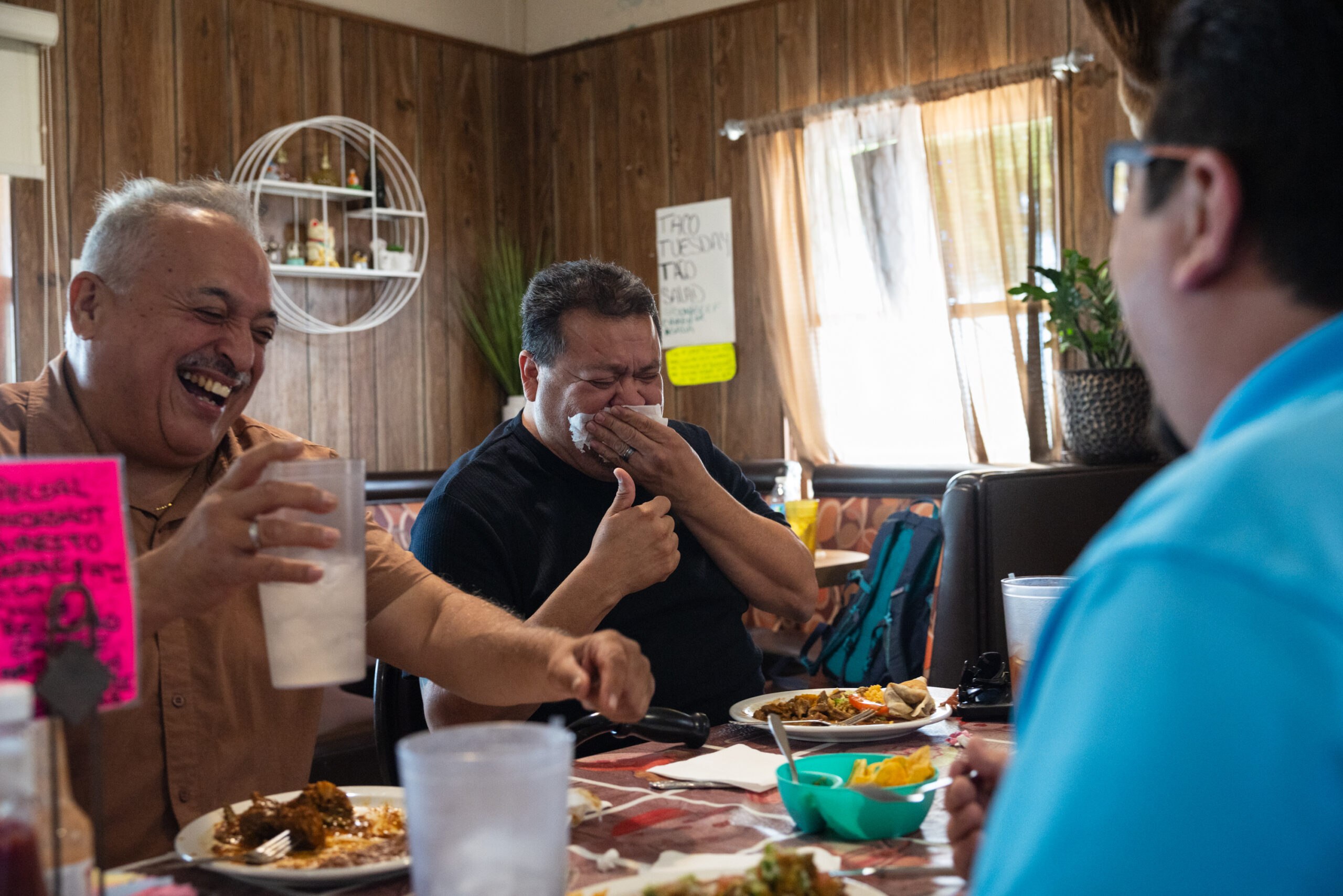
From left, Eric Montoya Reyes, Hector Cervantes and Hector Meza eat lunch at the Buckshot Diner.
* * *
Like Hernandez, supporters of Lithium Valley understand its potential to bring jobs and development to the region.
Eric Montoya Reyes stopped by the Buckshot for a plate of chile verde and beans — hold the rice — on a recent afternoon.
He’s the executive director of Los Amigos de la Comunidad, a Brawley-based nonprofit organization that received more than $78,000 from the county to conduct community engagement around Imperial County’s plans to fast-track projects in the area. Joining him were two others working to ensure Lithium Valley brings opportunities and good wages for local workers: an organizer with the International Brotherhood of Electrical Workers and the project manager of a local trucking company.
During public meetings Montoya Reyes facilitated in recent months, he said, he heard some contend that by streamlining permitting for future projects in the area, the county would be forgoing its ability to regulate industrial development in the plan area, and weakening public health safeguards.
Montoya Reyes dismissed those concerns, but said he understood where they were coming from.
“People here are afraid of unknowns,” he said. “This is a community that’s suspicious, hasn’t prospered. A lot of promises broken.”
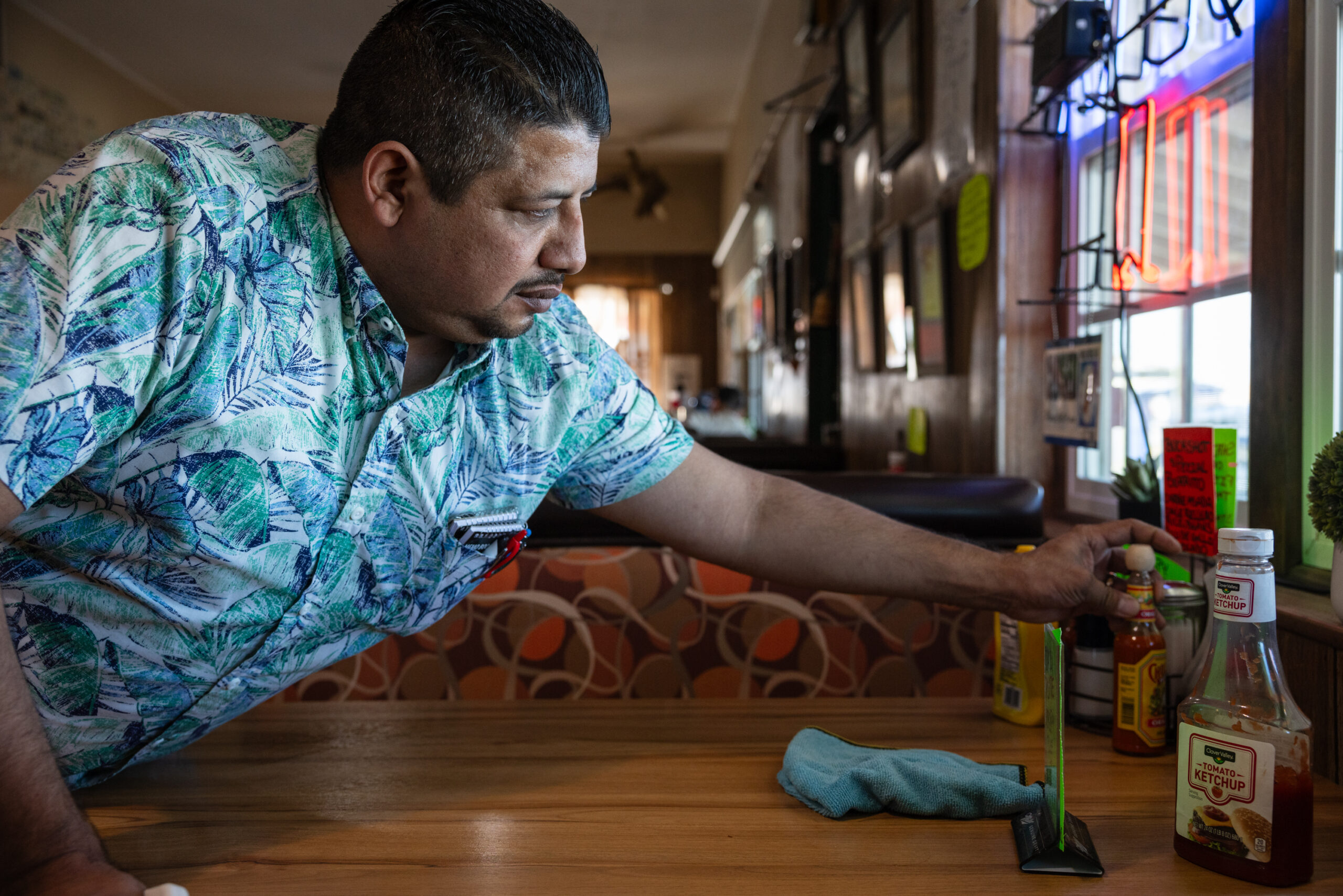
Benito Padilla cleans off a table at the Buckshot Diner.
Jimmy Zavala is bullish on Lithium Valley’s ability to deliver critical amenities to the community. He sat in a corner booth at the Buckshot below the mounted deer head, wearing a wide-brimmed hat.
He pointed to the Imperial Valley’s geothermal power plants, where he worked for three decades. The Imperial Valley has become the top region in North American for geothermal energy production, according to the Imperial Valley Economic Development Corporation, and the industry is one of the area’s largest employers.
The industry brought jobs for truck drivers, heavy equipment operators, welders and electricians, he said, as well as taxpayers who injected money into local schools and government coffers.
“Bring in the industry,” he said. “We need that shot in the arm.”
Jose Perez is a regular breakfast customer at the diner. His 25-year-old son worked at an experimental plant for two years, he said, earning $40 an hour plus benefits. But the experiment ended and so did his job. He, too, is confident that Lithium Valley will bring jobs to the community.
“One of the beneficiaries will be my son,” Perez said, “who is for sure going to be asked to come back.”
Then Hernandez handed him a glass of fresh vegetable juice, part of his effort to lose weight and control his diabetes.
* * *
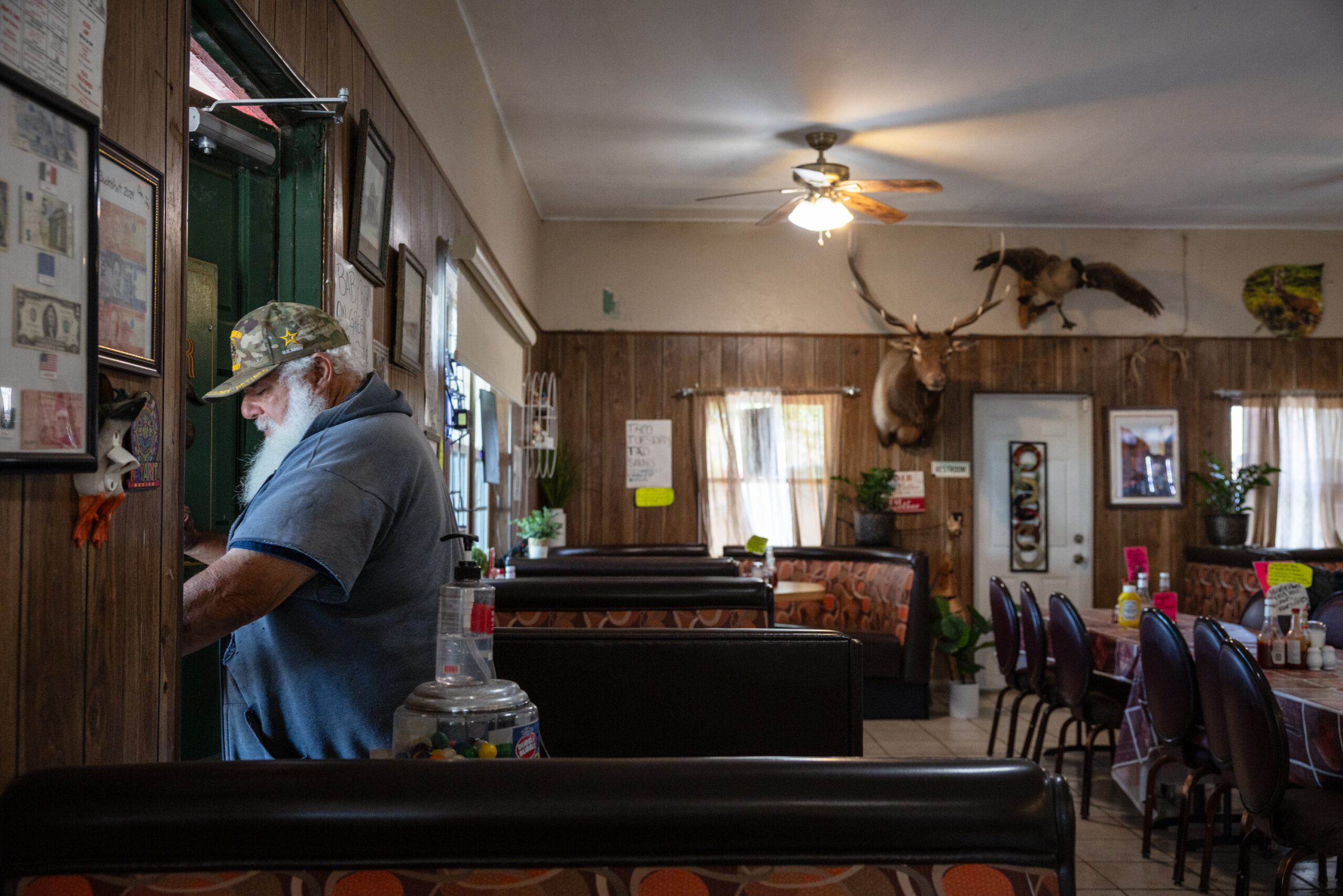
Ray Hernandez leaves the diner after meeting a friend for coffee.
Ray Hernandez, 75, who visits the Buckshot most mornings for a quiet cup of coffee, was among several Buckshot customers who expressed concerns about Lithium Valley.
He said he’s heard “just a little here and there” about Lithium Valley. When a reporter shared a few details about the plan, he replied, “Hopefully it don’t disturb the San Andreas Fault.”
Jesus Lopez works for a local trash collection company, and grabs breakfast at the Buckshot after completing his route in Niland.
He lives some 40 minutes away in El Centro, but is worried that contamination from the development could sicken people living nearby.
A few hours later, four maintenance workers from a nearby geothermal plant stopped by the diner for lunch. One said he had heard rumors that the projects could cause noise pollution and light pollution.
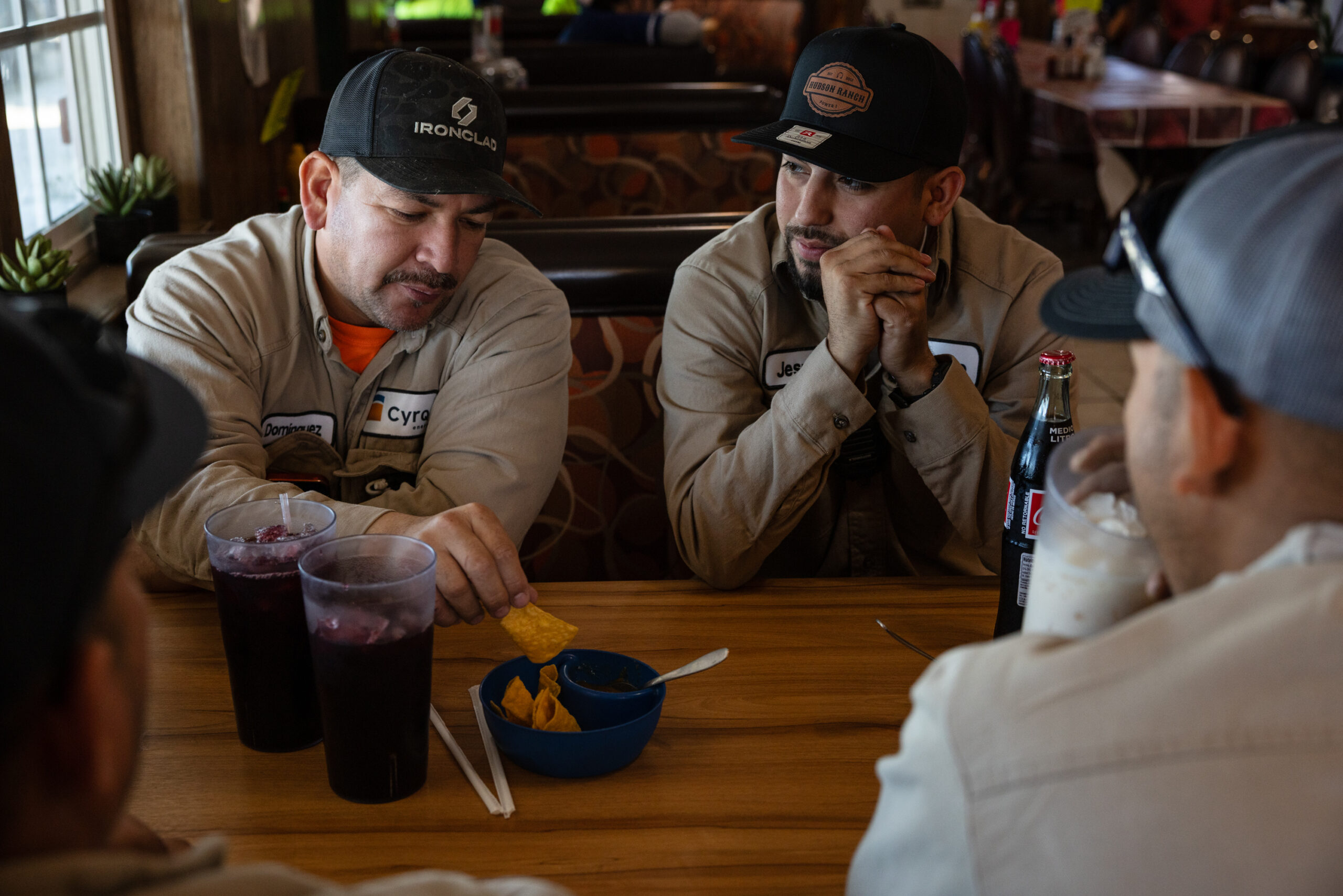
From left, Jose Dominguez and Jesse Garcia eat lunch at the diner with co-workers. They work together at a nearby geothermal plant.
A county report found that increased geothermal operations could result in increased seismic activity in the area, and that the Lithium Valley development plans would likely require the use, transportation and disposal of hazardous materials during construction and operation.
Angela Limon is more concerned about a controversial data center that’s proposed outside of Lithium Valley, in the city of Imperial. The developer, Imperial Valley Computer Manufacturing, could require around 750,000 gallons of water per day, and its water usage has become a flashpoint in the fight over the proposal.
Limon works as a caregiver for an elderly Niland resident who eats at the restaurant daily. Just recently, she said, her water bill nearly quadrupled to $198.
“With that data center, I don’t know if it’s going to get even higher,” she said. “I can’t afford that.”
* * *
In her dozen years as owner of the Buckshot, Hernandez has left her mark on the restaurant.
Lucky trinkets — gifts from customers — sit on a ledge above the swinging doors to the kitchen. Dollar bills are tacked on the wall above the register, a “piggy bank for retirement,” she quipped.
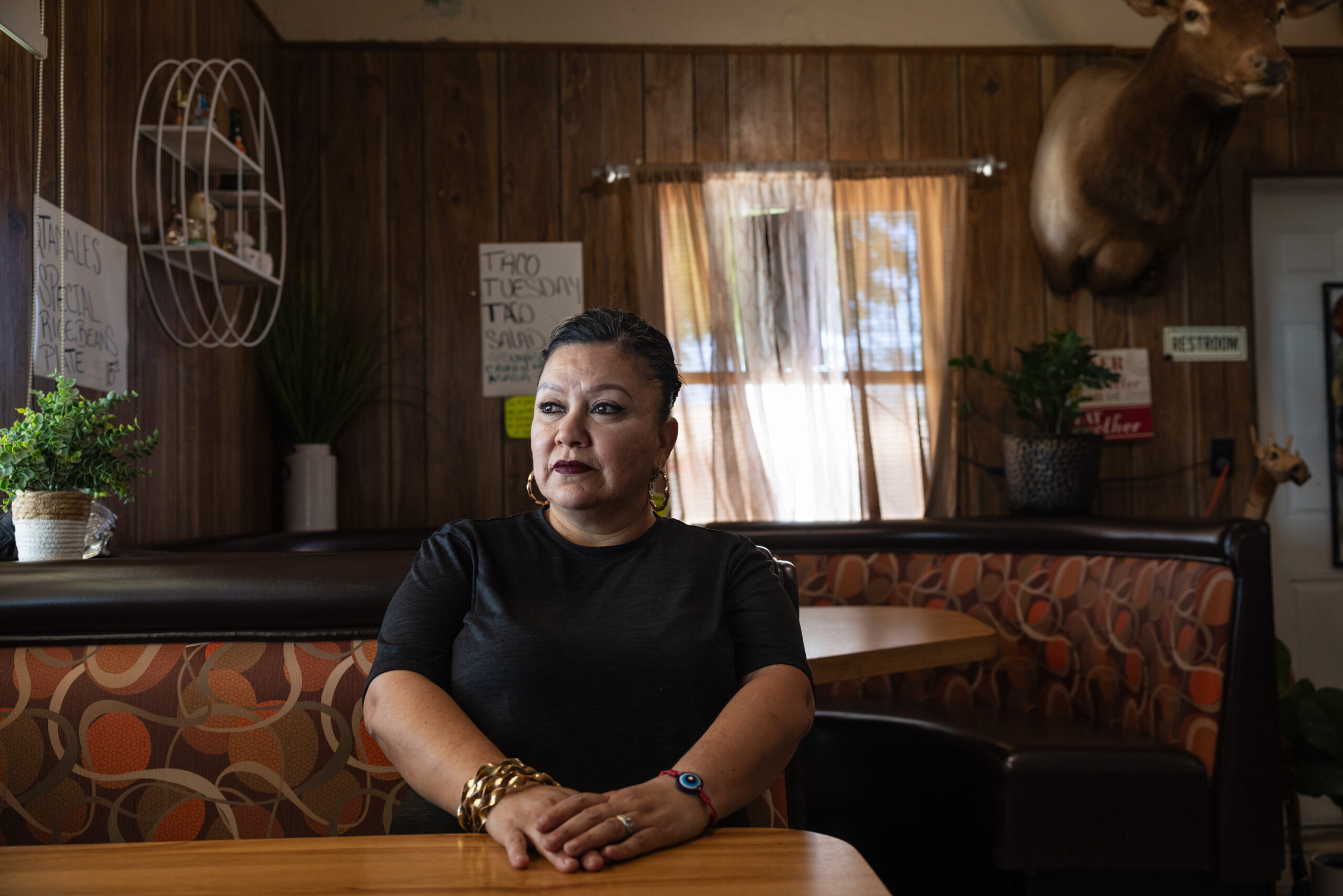
Diner owner Vicky Hernandez.
Along with the hunting paraphernalia, the walls now feature framed proclamations, including one from the California State Assembly naming her a mujer resiliente del año, or a resilient woman of the year.
Hernandez may not get to find out if Lithium Valley provides a long-term boost to her restaurant. Two of the companies developing lithium have not yet lined up financing for their projects. None has begun commercially extracting lithium, though the county contends they could have started work last year.
Hernandez has other plans. A few years ago she put the Buckshot on the market. Uncertainty about Lithium Valley wasn’t the motivation — she’s selling it to free herself up to take care of her parents — and the property listing boasted that “the Lithium boom will only add value to this opportunity.” But it pained her nonetheless.
The Buckshot had become her oasis, too. Outside the restaurant, departing customers squint as their eyes adjust to the unrelenting sun. Lithium Valley might transform this region one day, but for now, across the highway from the diner there’s nothing but a field.
Copyright Capital & Main 2026


-
 The SlickMay 29, 2026
Feds to Open Tens of Thousands of Acres of Colorado Wilderness to Oil Drilling
-
 Deadly Dust: The Silicosis EpidemicMay 27, 2026
California Moves to Ban Quartz Countertop Fabrication to Combat Silicosis Epidemic
-

 Column - State of InequalityMay 28, 2026
Top Democratic Candidates Agree on Housing Urgency, Not the Fix
-

 Latest NewsJune 1, 2026
Deep Cuts to Civilian Support Staff for Families of Deployed Marines Raise Concerns
-

 Column - State of InequalityJune 4, 2026
California’s Economy Runs on Labor Trump Wants to Deport
-
 The SlickJune 5, 2026
At This New Mexico Park, Mountain Bikers Pedal Amid Hundreds of Oil Wells
-

 Latest NewsJune 9, 2026
Ousted by the Trump Administration, U.S. Immigrants Remain Locked up in African Kingdom
-
 The SlickJune 10, 2026
Data Centers Are on the Ballot — This Pennsylvania Candidate Won Her Primary Keeping Them Top of Mind