
Latest News
Ousted by the Trump Administration, U.S. Immigrants Remain Locked up in African Kingdom
Held indefinitely, immigrants imprisoned in Eswatini lack medical attention, food and clothing, according to complaint.
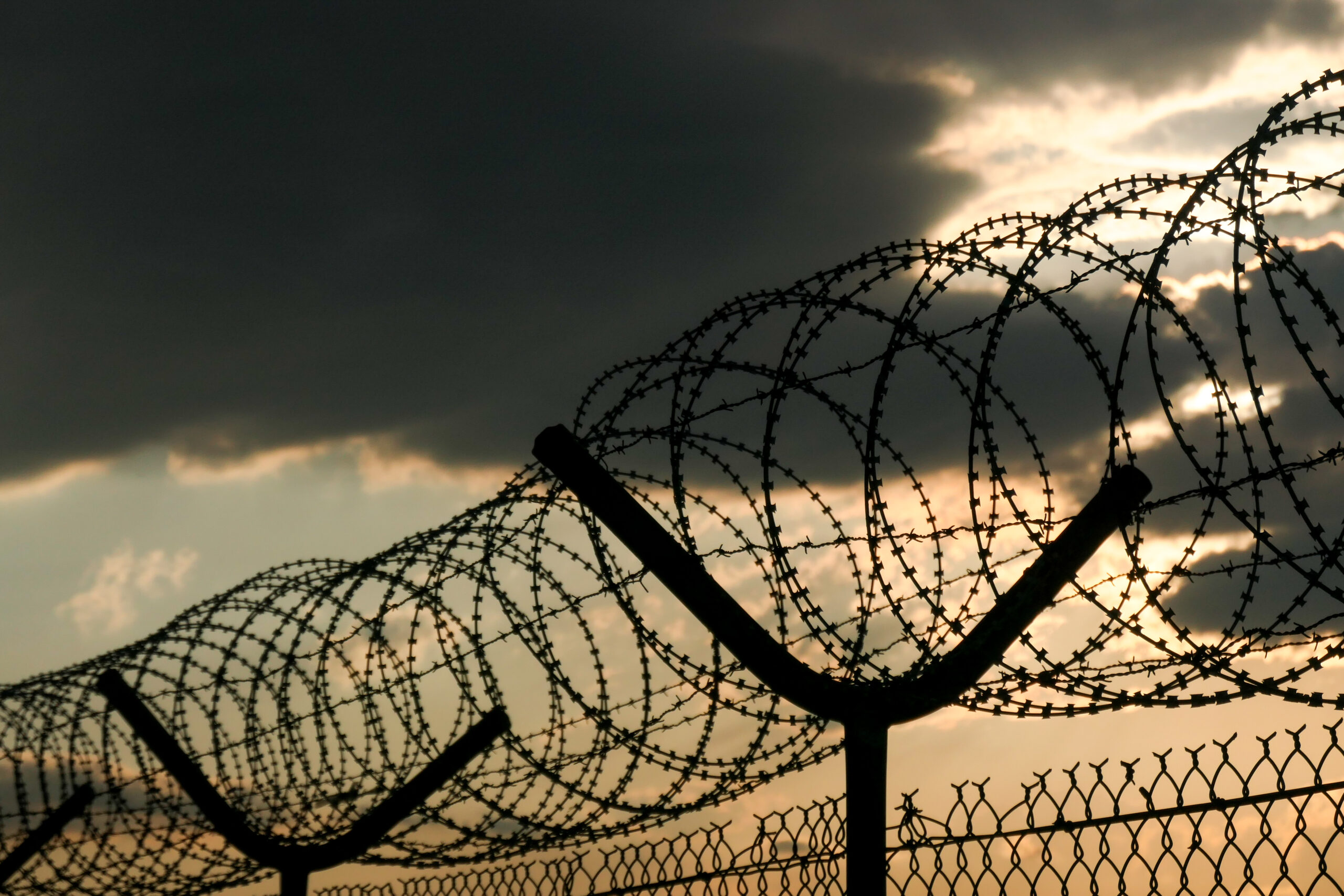

A military plane carrying five U.S. immigrants took off from Djibouti in July 2025.
Its destination was Eswatini, a small country nestled on the border between South Africa and Mozambique. Ruled by a king, Eswatini had made a deal with the Trump administration to receive up to 160 people removed from the United States in exchange for $5.1 million.
According to a complaint filed with the African Commission on Human and People’s Rights, the men didn’t know where they were going until the plane had almost landed.
As with the Venezuelan men sent to El Salvador last year by the Trump administration, when the Eswatini-bound flight arrived, the government there placed the new arrivals in a maximum security prison, where most remain today with no way to challenge their detention. Unlike the case for the Venezuelan men in El Salvador, Congress and the media have spent little time looking into the ongoing imprisonment of the men in Eswatini.
But for the family members of the people sent there, the separation has been devastating.
“He’s suffering some major depression there as I suffer silently here,” said the life partner of a Cuban man sent to Eswatini who asked not to be fully identified for fear of retaliation.
She said she’s working two jobs to take care of their family now that he’s gone.
When asked about the situation, the Department of Homeland Security, through an unnamed spokesperson, deferred to the State Department regarding the agreement with Eswatini.
“The Trump Administration is utilizing all lawful options to carry out the largest deportation operation in history, just as President Trump promised,” the spokesperson said. “Anyone who has been deported received full due process.”
The Eswatini government and the U.S. State Department did not respond to requests for comment. When the first flight landed in Eswatini, the Trump administration disparaged the men because of their criminal records.
Since July, two more flights have landed in Eswatini, most recently in March, bringing the total number of immigrants removed from the United States and then imprisoned there to 19 people. A couple of them have since been deported to their home countries.
Beatrice Njeri, regional litigator for Africa at Global Strategic Litigation Council and a lawyer representing several of the men in the complaint with the commission, called the conditions the men have been living in inhumane.
“We are seeing African states being complicit to human rights violations committed by the U.S.,” Njeri said.
Eswatini is among at least eight African countries that have received people removed from the U.S. who do not have any ties to the receiving country under agreements with the Trump administration, according to reporting from journalist Gillian Brockell, who tracks Immigration and Customs Enforcement flights. The U.S. government has also made agreements with countries in Asia, Europe and the Western Hemisphere.
A team of lawyers including Njeri is working to combat those removals by filing complaints with regional human rights commissions.
In March, the African Commission told the lawyers that it was moving forward with their case, though it’s not clear how quickly it will proceed. That case will seek accountability against the government of Eswatini. It will not have a direct effect on the U.S. Njeri said she hopes that the team of attorneys can find other means to hold the U.S. accountable.
The Inter-American Commission on Human Rights, part of the Organization of American States, held a hearing about third-country removals from the U.S. in March.
After the first five men arrived in July, they weren’t allowed to communicate with anyone for two weeks, according to the complaint filed with the African Commission. They weren’t able to leave their cells except to get food, which consisted of a bland porridge.
“The isolation made every day feel heavier than the last,” said Orville Isaac Etoria, a 63-year-old Jamaican man who was among the first sent to Eswatini, in a written statement for the legal complaint.
Like many of the others sent to Eswatini, he was convicted of a crime years ago, served his time and then released to restart his life. Etoria said ICE had allowed him to check in on an order of supervision since 2021 instead of being deported.
Then, after President Donald Trump came back into office, ICE detained him and sent him to Eswatini after about a month in custody.
Initially, at the Eswatini prison, the men had no recreational time and only children’s books for entertainment, Etoria said. Eventually, they gained access to a television and some outside time. He said he was never allowed to speak with a lawyer, though, according to the complaint, one tried to visit the men and was told they’d refused to see him.
In the third week, Etoria said, he was finally able to speak with his family. He was allowed a call a week after that, he said.
“This feeling of distance from my loved ones, halfway across the world, is one I will never forget,” he said. “I felt lonely and utterly lost.”
Eventually, in September, Etoria was deported to Jamaica and is living with his family.
“The experience has changed me in ways I am still trying to understand,” Etoria said. “I do not feel like myself yet, and I do not expect this feeling to go away anytime soon. What was done to me was pure evil. What I have lost, I still have not got it back.”
Njeri said the men have told attorneys that they’re not receiving adequate food and that they’re losing weight. Now it’s usually rice and a variation of a soup, sometimes with a vegetable, she said.
One of the men, Roberto Mosquera de Peral, went on a hunger strike for 30 days. He stopped only because he was showing signs of organ failure.
Njeri said the prison is full of mosquitos, and the men have no nets to protect them while they sleep. She said that when it’s cold, they don’t have enough clothing to keep warm.
She said the lack of proper medical care is also causing concern. That includes one man who hasn’t received treatment for skin lesions or glaucoma, she said. Another had an infected tooth, and the dentist initially pulled the wrong one, she added. Neither detainee was given access to medical records about what happened.
“For me the most important thing for people to know is the flagrant human rights violations that the state is complicit of and is not willing to address,” Njeri said. “They are aware that there are human rights violations. The state of Eswatini will not address it, and no one else is intervening in that situation so the human rights violations are continuing unabated.”
Njeri said she thinks that either the stigma about conditions in African countries or the smaller number of people sent to Eswatini has kept the story from getting more public attention.
Meanwhile, the attorneys are trying to get in touch with the more recent arrivals at Matsapha Correctional Centre, the Eswatini prison. Njeri said several people from the second flight to Eswatini are also wanting to join the human rights case.
Even if the African Commission rules against Eswatini and finds that the country has committed human rights abuses, the commission does not have a legal way to force it to make changes.
Just as the Trump administration has ignored findings from the Inter-American Commission on Human Rights that border officials tortured and killed a Mexican immigrant in San Diego in 2010, Eswatini could ignore the commission’s findings as well.
But, Njeri said, the documentation is still important.
She said some countries are concerned about their image when it comes to human rights, and a ruling from the commission that these agreements with the U.S. violate human rights could stop more countries on the continent from joining them.
“We cannot sit on our hands and watch states violate human rights without questioning and without consequences or repercussions, however that may look like,” Njeri said.
Copyright 2026 Capital & Main



-
 Imperial DivideJune 3, 2026
California’s Lithium Valley Dreams Meet Reality at the Only Restaurant in Town
-

 Latest NewsJune 1, 2026
Deep Cuts to Civilian Support Staff for Families of Deployed Marines Raise Concerns
-

 Column - State of InequalityJune 4, 2026
California’s Economy Runs on Labor Trump Wants to Deport
-

 Featured VideoJune 5, 2026
At This New Mexico Park, Mountain Bikers Pedal Amid Hundreds of Oil Wells
-

 The SlickJune 10, 2026
Data Centers Are on the Ballot — This Pennsylvania Candidate Won Her Primary Keeping Them Top of Mind
-

 Latest NewsJune 8, 2026
The Glacier May Be Gone, but the Love Isn’t
-

 Latest NewsJune 12, 2026
California Town Lets Private ICE Detention Centers Police Themselves
-
 Column - State of InequalityJune 11, 2026
County Tax Measures Show Limits of Local Responses to Medicaid Cuts