
Latest News
The Glacier May Be Gone, but the Love Isn’t
An interview with Time and Water director Sara Dosa on climate grief, memory and the films that actually move people.
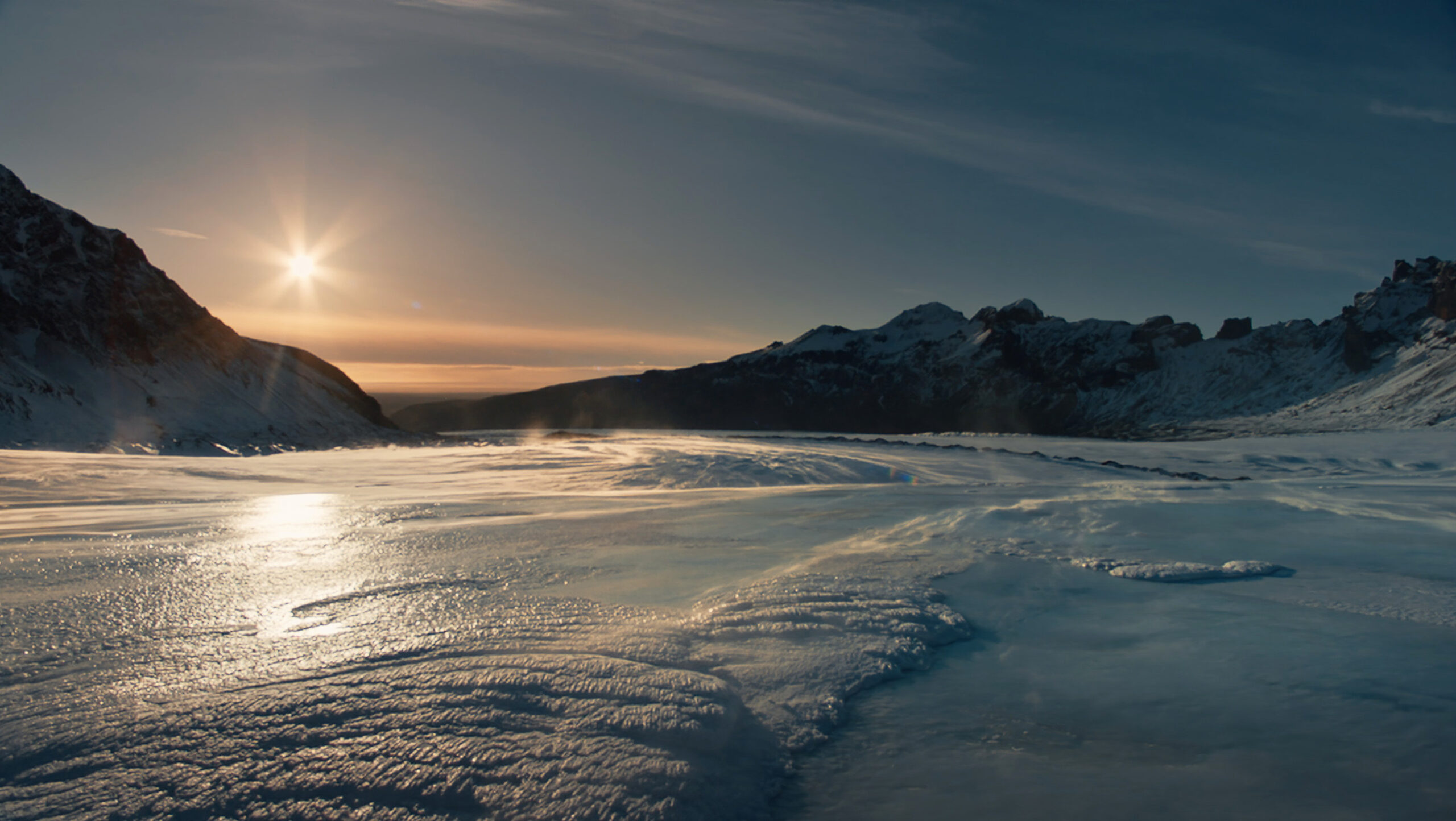

When Sara Dosa was 6 years old, she had her heart broken. That’s when, in first-grade class in Berkeley, California, she learned the rainforest was being cut down.
That painful realization was part of what inspired Dosa to become a documentarian who has turned her sights on the climate crisis. She co-produced An Inconvenient Sequel: Truth to Power, Al Gore’s 2017 follow-up to the film that launched the modern climate conversation. She went on to direct Fire of Love, an Academy Award-nominated 2022 documentary about French volcanologists Katia and Maurice Krafft, two scientists so consumed by their love for each other and for volcanoes that they died, together, inside one.
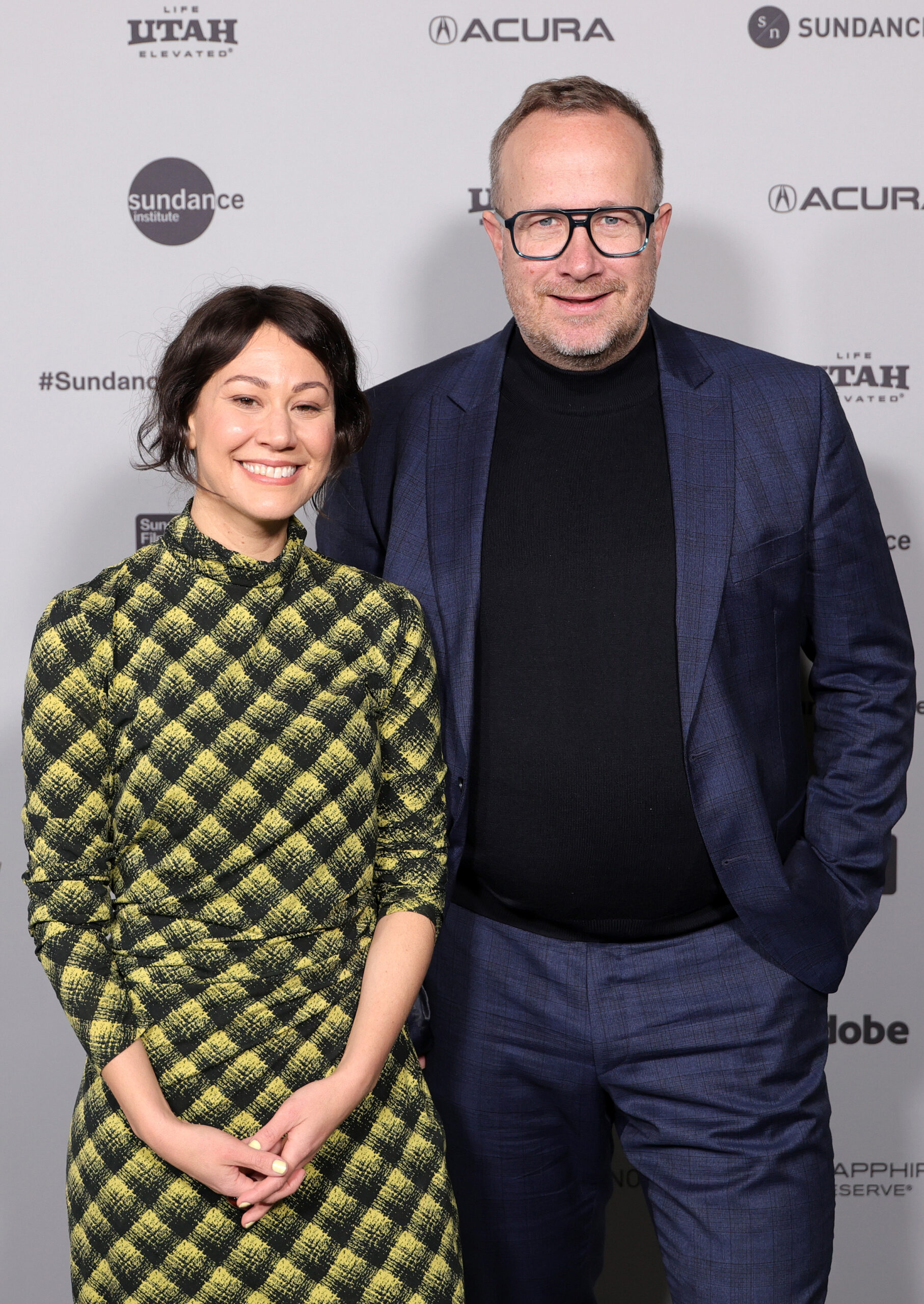
Sara Dosa and Andri Snær Magnason attend the Time And Water premiere at the 2026 Sundance Film Festival in Park City, Utah. Photo: Neilson Barnard/Getty Images.
Her latest film, Time and Water, now in theaters, is that work’s spiritual companion. It has the same archival intimacy and the same sense of awe in the face of forces larger than any human life. Only this time the disaster is not sudden and volcanic. It’s slow. It’s planetary. And we caused it.
Time and Water is a melancholy cinematic elegy, powerful, quiet and devastating, that laments the loss of glaciers, grandparents, memories and, perhaps, the future itself. Its subject is Icelandic writer and eco-activist Andri Snær Magnason, whose grandparents fell in love on the ice of Iceland’s largest glacier and honeymooned there on a three-week expedition.
When Magnason was later asked to write the eulogy for Okjökull — the first Icelandic glacier declared dead from climate change — the words he put on a copper plaque read in part “This monument is to acknowledge that we know what is happening and what needs to be done. Only you know if we did it.”
Only rock remains. What’s gone is the ice, seen now only in grainy footage and distant memories.
Dosa sat down with Capital & Main to discuss her new film, the power of grief as a call to action and what it means to make art that whispers instead of shouts.
This interview has been edited for length and clarity.
Capital & Main: One of the challenges of dealing with the climate crisis is that it’s such an abstract thing to most people, while others are starting to feel its effects firsthand. Most people have never seen a glacier, but how were you able to put a human face on it, make it tangible and show how it affects one family?
Sara Dosa: I think that the climate crisis is so painfully real for so many people and still so abstract and overwhelming for so many as well. How do we enter into communicating around something so vast and so massive and so daunting like the climate crisis?
With Andri’s personal family story, as well as that of Iceland, it felt like there was a conduit into human emotions that felt accessible, where we’re not met necessarily with the enormity of it right off the bat, but we can understand what home means to Andri, to his family, what glaciers mean to his grandparents and thus to him.
With the storytelling of the film we thought we could invite people to contemplate the climate crisis, but through a very personal lens, hopefully not in a way that depoliticizes it all, but rather creates an avenue to enter into something that feels human rather than conceptual or just so painful that it’s hard to grapple with.
The film is a bit bittersweet. There’s a lot of loss in the film and you really feel that. Is this film about what we’ve lost or about also what we still have?
For me, it’s about both what we’ve lost and also what we still have. I think the concept of grief ties that together for me. There’s this expression I heard a while ago that “grief is love that goes unexpressed.” And that really struck me because grief can be such an ineffable feeling. It’s so nonlinear, so baffling. It can pop up out of nowhere, even if we think we’ve mourned the person or the thing that we’ve lost.
But when you realize that behind grief is love, whether it’s for the grandparents that you lost or a glacier that you’ve lost also, in the case of this film, it can connect you with a feeling of love that I think can really transcend times. Unpacking the idea of grief through the mourning process can invite a connection with love. That really matters to me deeply and is something we really tried to put into the film itself.
Do you want viewers of the film to leave the theater and take some sort of action — motivated to do something — or to simply watch the film and decide for themselves?
It’s absolutely my hope that people will be motivated to take action. I don’t want to tell them what that is because that’s something that I think we have to decide for ourselves. However, it’s extremely important to me that people feel a sense of care for glaciers, a sense of connectivity to fellow humanity and a view of the future that is not already foreclosed.
We really thought of the film as having what we called a feeling of agentive uncertainty and creating this space where it’s not doom and dread. It’s not total hope, but the future is uncertain. I hope people will feel that sense of uneasy uncertainty and feel like, “OK, we have to do something now.” As Andri wrote on the plaque, we know what is happening and what needs to be done.
Some films focus on facts and figures and science. But others, like your film and The Territory, revolve around human stories. Which do you think is the most effective way to effect change?
For me personally, I find it quite effective when I can feel the sentience of nature itself. When I feel, say, the forest in a film about the redwood forest, when I understand its ecology, that it possesses this incredibly strong and yet delicate ecosystem that, when disturbed, can collapse, and how humans are entangled within that collapse.
Films where a human is trying to save nature — a hero’s journey approach — for me it’s not as effective because I really think of ourselves as entangled in the collectivity of life, and that view of the world itself is part of the healing process of the climate crisis. So that’s where I like to situate my own storytelling perspective. And those are the kinds of films that move me most.
But I think we also need films that are very explicitly saying, “Here’s what oil companies are doing. Here are the actors.” So I feel like we’re all in dialogue. And I’m just one kind of voice in this choir of people trying to sing.
Like Time and Water, your last film Fire of Love dealt with the interconnectedness between people and nature. And they are both love stories in their own way. What are the similarities and differences between these two films?
They’re both films that are dealing with the enormity of geologic time and both the precarity and the power of humans within geologic time, or rather nature’s rhythms and arrhythmia and how fragile and small humans are, but also the tremendous impact humans still can have despite that difference in scale. They’re both using archival imagery to tell a story of time and memory. I’m really just so fascinated by how archives can be used to tease out the complexity of memory and the experience of time.
Both of the films deal with life and death and have their own internal clocks. In the case of the Kraffts and Fire of Love, it was like a fated, doomed love story. They knew if they did their job right that they would die in a volcano. In Time and Water, I really hope that fatedness is not actually felt. We all know that our grandparents will die, but a glacier should not die. And for the climate crisis, glaciers possess their own life cycle, of course, but it should stay on geologic time, not be killed due to our exploitation and overuse of petrochemicals.
What are your plans on expanding on the issues brought up in the film?
It’s the hope of my team and I that we can have some sort of impact campaign that comes out along with the film. We hope it can be embraced by organizations, community groups, schools, universities around the world who can work with it in a way that extends its reach.
There are so many people who are doing powerful work, not just around glaciers and glaciated landscapes, but bringing ancestral memory into the focus of the climate crisis. So it’s really my hope that the film can be used as a story that in a way prefigures the future that we hope to have, that shows glaciers are still alive.
At the end of the film, Andri says, “I cannot send you a glacier, but at least I can send you this, a portal to a time when glaciers are still alive, held open so they can continue to be.” I feel like that is what would guide our impact campaign. Like, look at what is here. Let’s fight for what still remains.
Copyright 2026 Capital & Main


-
 Imperial DivideJune 3, 2026
California’s Lithium Valley Dreams Meet Reality at the Only Restaurant in Town
-

 Latest NewsJune 1, 2026
Deep Cuts to Civilian Support Staff for Families of Deployed Marines Raise Concerns
-

 Column - State of InequalityJune 4, 2026
California’s Economy Runs on Labor Trump Wants to Deport
-
 The SlickJune 5, 2026
At This New Mexico Park, Mountain Bikers Pedal Amid Hundreds of Oil Wells
-
 The SlickJune 10, 2026
Data Centers Are on the Ballot — This Pennsylvania Candidate Won Her Primary Keeping Them Top of Mind
-
 Latest NewsJune 9, 2026
Ousted by the Trump Administration, U.S. Immigrants Remain Locked up in African Kingdom
-
 Latest NewsJune 12, 2026
California Town Lets Private ICE Detention Centers Police Themselves
-
 Column - State of InequalityJune 11, 2026
County Tax Measures Show Limits of Local Responses to Medicaid Cuts