Column - State of Inequality
County Tax Measures Show Limits of Local Responses to Medicaid Cuts
Election results in Los Angeles and Contra Costa counties suggest voters are wary of sales tax hikes, adding pressure for statewide solution.
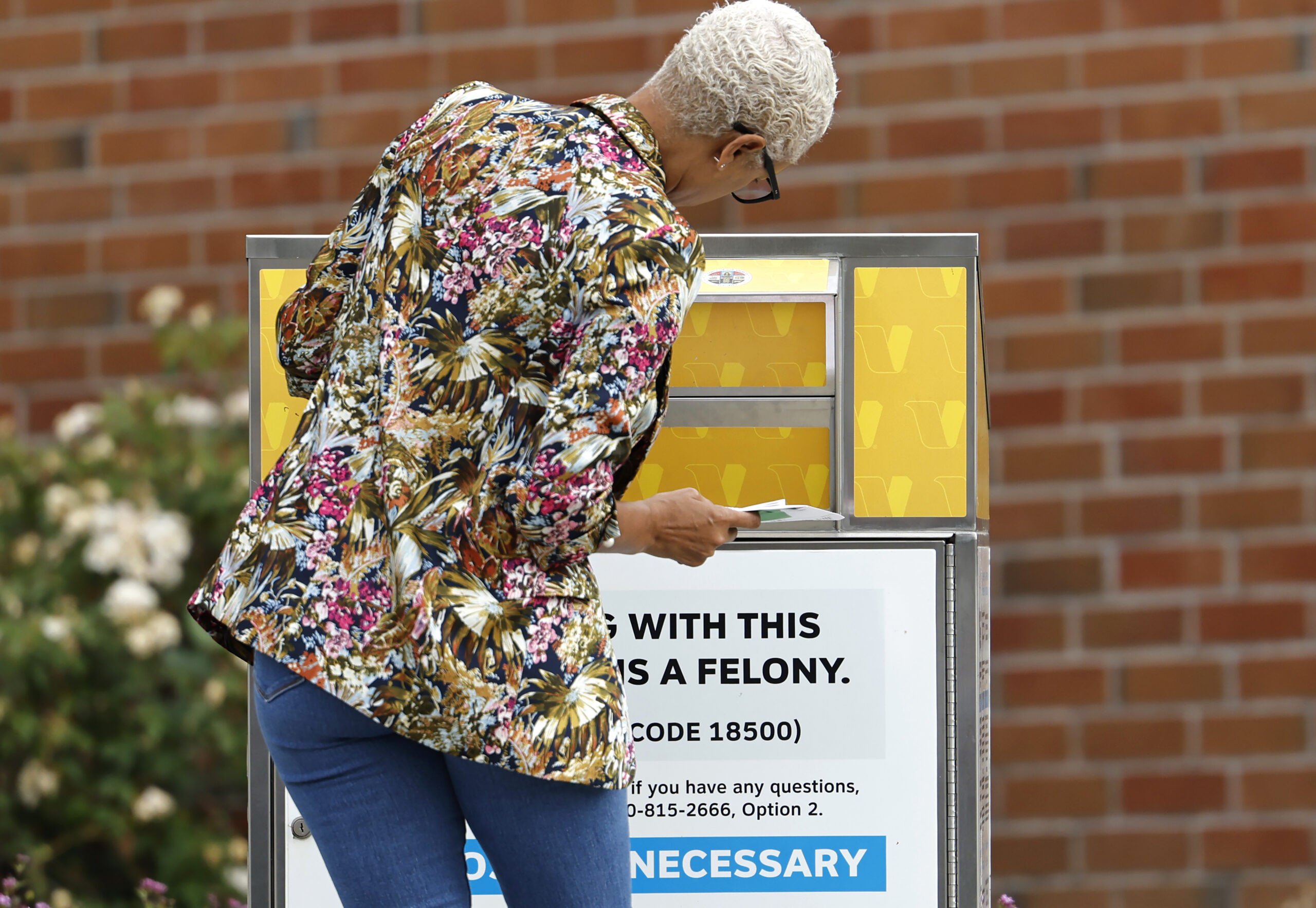

The Republican-led assault on federal Medicaid funding was always going to be a nightmare for the states. Even in California, one of the nation’s wealthiest states by most definitions, experts are broadly predicting a health care crisis for millions due to the federal cuts.
But there’s another kind of chaos afoot in California: the scrambling attempts by individual counties to do what the state says it can’t and backfill some of those funding losses.
And as the results of votes on two similar county-level proposals in last week’s primary election make clear, no easy answers are forthcoming.
Join our email list to get the stories that mainstream news is overlooking.
Sign up for Capital & Main’s newsletter.
In Los Angeles County, a measure to add a half-cent to the existing sales tax to primarily fund health care services holds a razor-thin lead, with votes still being counted. The proposal, Measure ER, could generate as much as $1 billion a year in revenue for the county if passed.
Voters in the Bay Area’s Contra Costa County, meanwhile, have crushingly defeated a similar idea. That proposal, Measure B, would have added a little more than six-tenths of a cent per dollar to the tax paid on certain purchases, and could have raised about $150 million a year. At last tally, it was failing by 57% to 43%.
Both counties lean heavily Democratic. In fact, their party voter registration breakdowns are nearly identical, with L.A. County and Contra Costa County both roughly 52% Democrat and 19% Republican. Both also already have high sales taxes; the new measures would push the sales tax in most cities in both counties above 10%.
Yet one proposal is competitive among voters, the other not remotely so. That points to the inherent risk in asking California’s counties to try to attack these funding gaps on their own.
And it raises the question of whether voters in November might instead turn to the only statewide health care relief proposal currently in play — and one that won’t come directly from them: a one-time tax on the state’s billionaires that could raise $100 billion over five years.
* * *
Los Angeles County’s Measure ER trailed in early returns before surging into the lead as more mail-in ballots were counted, but it was always predicted to be a close vote. These aren’t easy times in which to ask consumers to pay more.
“There really are no other viable and timely options,” Los Angeles County Supervisor Holly Mitchell said earlier this year, after the supervisors approved putting the measure on the June ballot by a 4-1 vote. “Trust me, I looked high and low.”
The stakes are incredibly high. The UC Berkeley Labor Center has estimated that as many as 3 million Californians are at risk of losing Medi-Cal coverage by 2028 as a result of policy changes and funding cuts to the program under the so-called One Big Beautiful Bill Act. (Medi-Cal is the state’s version of Medicaid.) The potential annual hit to California’s Medi-Cal funding has been put at $30 billion.
Still, a sales tax increase is a difficult proposition, even if some residents will benefit from keeping county health and safety net services afloat. Such taxes are regressive, meaning they hurt poor people more than they do those who are better off.
Lower-income families spend most of what they make on the basics, and most of those items, like food and transportation, become more expensive when local sales taxes rise. In L.A. County’s case, the sales tax would increase to a minimum of 10.25% if ER passes. (Some cities within the county tack on additional local sales taxes.)
“I continue to believe that [solutions] should be led by state policymakers and funded through responsible statewide action, not through a regressive tax that puts more strain on working people,” Kathryn Barger, the only Republican on the board and only supervisor to vote against placing Measure ER on the ballot, told Capital & Main by email.
In Contra Costa County, opponents of that sales tax measure reminded voters that they’d already passed a similar, ongoing tax in 2020, and questioned how transparent officials would be with revenues from a tax that technically goes into the county’s general fund.
“They could spend Measure B’s millions on whatever they consider ‘governmental,’ as they’ve already been doing” with the previous tax increase, the opponents wrote.
* * *
The rejection in Contra Costa County was firm, while the fate of Measure ER in Los Angeles County remains uncertain. What isn’t changing in either place, or anywhere else in California, is the coming storm of federal health care funding reductions.
That brings the conversation back to the proposed 2026 Billionaire Tax Act, a one-time, 5% levy on the accumulated wealth of California’s estimated 200 richest people. The resulting infusion of cash, roughly $20 billion per year for the next five years, would help the state’s besieged health care systems and hospitals weather the storm of the GOP’s attack on Medicaid funding — until, at least in theory, a friendlier administration takes over in Washington, D.C., years hence.
The proposal’s chances for passage in November aren’t really known yet. Recent polling shows the billionaire tax with 54% support, with Democrats mostly approving and Republicans opposed. But the heaviest spending on the campaign is yet to come.
What’s clear is that without some funding, health services will continue to deteriorate. Los Angeles County has already closed seven clinics, while Planned Parenthood shuttered at least five clinics in the state. A recent report by the consumer rights group Public Citizen concluded that federal cuts put 83 California hospitals at risk of closing, reducing services or laying off staff.
Mitash Popat, CEO of the Venice Family Clinic in L.A. County, called Measure ER an imperfect but necessary solution in a time of crisis. Popat described the county tax as “a kind of Band-Aid or a transition” to other funding — but such funding won’t be coming from the state any time soon.
On the contrary, Gov. Gavin Newsom has been walking back previous expansions of Medi-Cal. Sacramento lawmakers, meanwhile, have repeatedly said the state budget cannot make up for federal health care funding cuts.
The recent vote results in two different parts of the state strongly suggest that county tax solutions are uncertain and, even if passed, likely fleeting. If a billionaire tax sounds like a big swing, that’s because it is — but it might also buy the state enough time to find longer-term solutions to the basic question of how to keep its people well.
Copyright 2026 Capital & Main



-
 Imperial DivideJune 3, 2026
California’s Lithium Valley Dreams Meet Reality at the Only Restaurant in Town
-

 Column - State of InequalityJune 4, 2026
California’s Economy Runs on Labor Trump Wants to Deport
-

 Featured VideoJune 5, 2026
At This New Mexico Park, Mountain Bikers Pedal Amid Hundreds of Oil Wells
-
 The SlickJune 10, 2026
Data Centers Are on the Ballot — This Pennsylvania Candidate Won Her Primary Keeping Them Top of Mind
-

 Latest NewsJune 9, 2026
Ousted by the Trump Administration, U.S. Immigrants Remain Locked up in African Kingdom
-

 Latest NewsJune 8, 2026
The Glacier May Be Gone, but the Love Isn’t
-
 Latest NewsJune 12, 2026
California Town Lets Private ICE Detention Centers Police Themselves
-

 The SlickJune 16, 2026
Why Coal Will Lead to More Deaths in Colorado