

 It must have seemed like a good idea at the time, when Senators Chris Dodd and Barney Frank drew up the landmark regulatory bill that bears their names. One of its lesser-known provisions required U.S. companies to list the inclusion of any “conflict minerals,” mined in or near the violence-plagued Democratic Republic of the Congo, that comprise their brand-name products. The thinking was that this would help cut off funding for the armed groups ravaging that unfortunate country.
But that was way back in 2010, when the Dodd–Frank Wall Street Reform and Consumer Protection Act was signed into law. With touching innocence, the act entrusted the Securities Exchange Commission to establish the enforcement mechanism for this part of the legislation. This week, retail giant Walmart, along with arch-competitor Target and some other companies, got a free pass from Section 1502 of the law. The news, carried by the Wall Street Journal,
» Read more about: Walmart Dodges African “Blood Minerals” Rule »


Whether it was a newscaster scratching his head over yet another alleged Marilyn Monroe porn film or a conservative pundit worried about Congressman Todd Akin’s hurt feelings, people had silly things to say this past week. Here is a modest sampling.


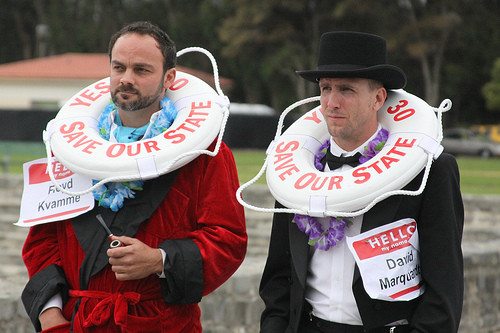
A few weeks ago an agonized fundraising appeal went out from three right-wing millionaires on behalf of the so-called “Californians for Reforms and Jobs, Not Taxes” campaign against Proposition 30.
Apparently business executives Floyd Kvamme, David Marquardt and Mark Stevens had learned that Prop 30, also known as the “Protect Schools and Local Public Safety Act,” would cause the wealthiest Californians to have to part with one to three percent more of their enormous incomes to support public education and public safety programs. Faced with the unnerving prospect that millions of school children might have smaller class sizes, and neighborhoods across the state might become safer places to live and work, they sprang into action.
Their letter to their friends in the one percent did not beat around the bush. Aimed unerringly at the naked desire of some capitalists to become ever richer at the expense of everyone else,
» Read more about: Teachers, Nurses: Save Our State from Bungling Billionaires »
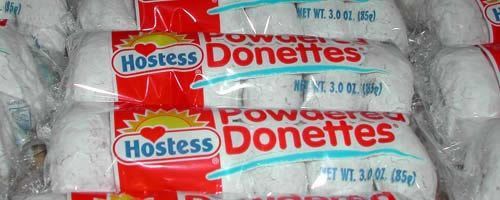

The seven-month standoff between the bankrupt Hostess Brands, Inc. and the union workers that drive their trucks and bake their Twinkies is about to come to an end, and it isn’t looking good for workers. Hostess, who filed for Chapter 11 Bankruptcy in January, sent a letter out to workers Monday putting forth a final offer to the Teamsters, the largest union at Hostess. The offer releases Hostess from millions of dollars in pension obligations, and if approved, will result in eight percent wage cuts within one year.
Frank Hurt, president of the Bakery, Confectionery, Tobacco Workers and Grain Millers union (BCTGM), the second-largest labor organization at Hostess after the Teamsters, expresses justified anger at the offer. He tells In These Times: “I would never sign this piece of crap. They keep giving us new proposals and each one is even worse than the last.”
Hurt’s union has a particularly weak hand in negotiations.
» Read more about: Hostess Brands' Contract Offer: Let Them Eat Twinkies »


Seven workers at the Embassy Suites hotel in Irvine have filed a complaint with Cal/OSHA against the parent company, HEI Hotels and Resorts, about the hotel’s so-called safety program. These workers, who are currently in an organizing campaign with UNITE HERE Local 11, say that this program discourages workers from reporting injuries on the job to reach the goal of an “accident-free workplace.”
Now Cal/OSHA is investigating HEI’s “Safety Bingo” program, which offers up to $25,000 or a new car as the grand prize. “Safety Bingo” promotes a blame-the-worker mentality instead of addressing the real hazards that exist.
“They could be using that prize money instead to fix the hazards and protect workers from getting injured in the first place,” says Andrea Nicholls, Health and Safety Coordinator at the L.A. County Federation of Labor, who is assisting the workers throughout the investigation.
This case, if successful, will set a new precedent in California in combatting employer programs that appear to prevent accidents,
» Read more about: Is "Safety Bingo" More Like Safety Russian Roulette? »
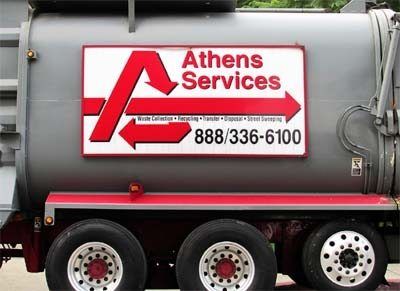
In recent years, we have seen companies from across the spectrum make green claims. Sometimes they are selling the truth, but often they are simply selling snake oil – like the presentation I heard recently by Athens Services pitching a 30-year rolling contract extension to the West Hollywood City Council.
Athens is one of the region’s largest trash and recycling haulers, but it is hardly an environmental leader. The company’s proposal to West Hollywood for what’s known as a single stream method of waste disposal could produce unacceptably high levels of wet and hazardous wastes that contaminate recyclables. The proposal also lacks accountability measures to track where recyclables are actually going. By contrast, San Francisco, with the highest diversion rates in the country at 77 percent, relies on a source-separated exclusive franchise system with high standards to meet its goals.
Not only is Athens proposing an environmentally dubious solution, it is asking the City of West Hollywood for something it’s fighting tooth and nail against in Los Angeles – a long-term exclusive contract.
» Read more about: Athens’ Laughable Double Standard for Waste Disposal »
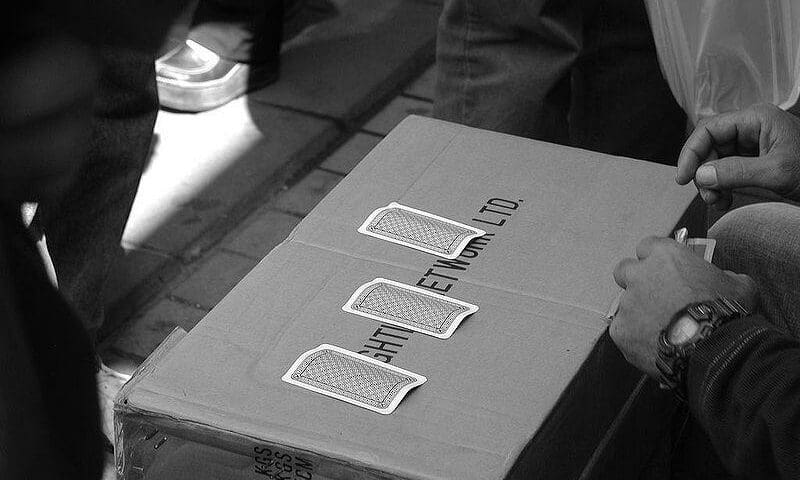
On Saturday, July 28th, over 800 Teamsters gathered at the Pleasanton Fairgrounds to kick off a massive member mobilization against Proposition 32, the “Special Exemptions Act.” Teamsters came from as far away as Redding to Bakersfield, Salinas to Visalia – an area roughly larger than 41 states. View photos of the event here.
This followed a similar kickoff in El Monte in April which was attended by over 1,400 Southern California Teamsters.
Attendees learned how Prop. 32, an initiative on this November’s ballot, is very misleading. The initiative says it will remove “special interest money” from politics, when actually it is riddled with exemptions for corporations and Super PACs. Prop. 32 doesn’t reform the broken system, it actually makes it worse by allowing unlimited corporate spending. Furthermore, Prop. 32 will eliminate the voices of working families and unions in the political process.
Joint Council 7 President Rome Aloise:
Prop.
» Read more about: Teamsters: Proposition 32 Is Dangerously Deceptive »


Ohio banjo god Rick Good has been getting some YouTube mileage out of “This House Is Not for Sale,” a protest folk song in the tradition of “I Don’t Want Your Millions Mister.” Its roots may also include Woody Guthrie’s “Do-Re-Mi” and the hobo anthem “Big Rock Candy Mountain.”
The biggest inspiration behind Good’s populist lyrics, though, are plainly an election year in which America’s One Percent have been spending money like drunken sailors — make that drunken admirals — with the White House heading their shopping list. Sample lyrics:
You can buy a congressman. You can buy a judge.
You can back a super-pac and give your lies a nudge.
But we the people know the truth and we still have the right
To take a stand and build a land where money is not might.


(Note: On August 21 domestic workers rallied in Sacramento for AB 889, a bill that would afford them many of the same rights enjoyed by other California workers. This post by Alex Pearlman first appeared on GlobalPost and is republished with permission.)
They feed the kids and clean the floors, but domestic workers and caregivers are often maligned by a system that allows their abusive employers to fly under the radar.
Working outside of the public eye, domestic workers — whether documented or undocumented — consistently report unsuitable working conditions, unstable pay and unfair labor practices.
But no more, they say, in California.
Domestic workers there are demanding a Bill of Rights that would ensure fair working conditions statewide and mandate minimum wage pay and eight hours of sleep per night. The California Domestic Workers Bill of Rights (CDWBR) would also allow domestic workers to cook their own food in the kitchen they work in,
» Read more about: Domestic Workers Rally for AB 889 and Dignity »
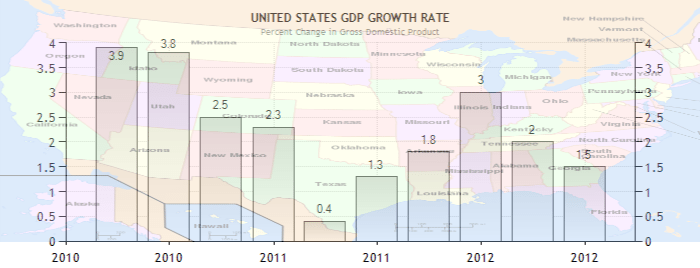
Earlier this summer some friends invited me to a small dinner party where I met a man who manages money for people who have some. He decides where to invest their portfolios in order to get a steady return that they can live on without working. Since we had not met before, I did not want to cloud the new relationship with my attitudes, but I wanted to know what he thought about the state of the economy without prying into his expertise at stock picking.
“So where are we in this economy these days?” I asked.
“We’re nowhere,” he responded, “until we get it growing again.”
“Oh,” I said. “Growing like consumer spending or capital investment or jobs or…?”
“Growth in every way,” he said. “We need to buy more, invest more, yes, but we need more people too.”
I was shocked,
» Read more about: Questioning Economic Growth: How Big Is Big? »