


After more than a month of unsuccessful attempts to reach Lionsgate Entertainment CEO Jon Feltheimer through letters and phone calls, it was time to pay him a visit. Rank-and-file musicians wanted to discuss Lionsgate’s practice of offshoring its musical scoring to distant countries – something that limits local musicians’ ability to earn a living and deprives our communities of tax revenue.
On Tuesday union members and supporters of the American Federation of Musicians’ Listen Up! campaign — including professional musicians, labor allies, faith and community leaders — gathered in Santa Monica’s Stewart Street Park for a rally. The spirited event included AFM Local 47’s executive board and a supportive crowd of musicians representing members from across our union. We were joined in song by our fellow AFM members and Grammy nominees Lisa Haley and the Zydakats. We heard moving speeches from Santa Monica City Councilmember Kevin McKeown and other friends,
» Read more about: Musicians Bring Campaign to Stop Offshore Scoring to Lionsgate »


With the absolute, final-final deadline for 2014 sign-ups now completely passed, and despite numerous speed bumps, implementation of the Affordable Care Act is well under way. From my view as a bedside nurse and advocate for patients and health care workers for more than 30 years, I see a chance to close some dangerous gaps in our country’s health care systems.
In the U.S. we like to think of ourselves as the best at everything. And it’s true that we have the finest health care—for those who can afford it. Unfortunately, for the average American our care is also the most expensive, with some of the poorest outcomes, in the industrialized world. Many Americans, pre-ACA, had no access to anything but emergency care, due to cost and/or pre-existing conditions. These are the biggest gaps ACA seeks to close.
My mother had her hip replaced in 2009. I’m thankful I was there,
» Read more about: An Opportunity to Close Health Care Gaps »


Twice a year Sacramento goes into a frenzy analyzing the state budget. First, in January, the Governor releases his proposed budget, then the “May Revise” appears as the Governor adjusts projections and heeds advice from Senators and Assembly members. The budget, however, is more than a long economic document. It becomes part of the Governor’s legacy, it’s a statement of his priorities, how he will want to be remembered and what he believes will be best for Californians.
Governor Jerry Brown is shaping a legacy based on fiscal responsibility. He wants to be remembered as the Governor who solved the debt crisis and bequeathed fiscal stability to California. Unlike his predecessor, Governor Brown has invested in education, by creating a solvent K-12 system and reinvesting, albeit modestly, in public higher education. However, he is missing some crucial elements that will undermine this success: namely, an investment in low-income families. The Governor forgot that it is working families who most need fiscal solvency.
» Read more about: Working Families Need a Better May Revise »
Sweeping changes underway in the nation’s health care delivery system that expose hundreds of thousands of patients to severe risk of harm are the focus of a major new national campaign by the nation’s largest organization of nurses announced today.
An unchecked proliferation of unproven medical technology and sharp erosion of care standards are rapidly spreading through the health care system, far outside the media spotlight but frighteningly apparent to nurses and patients, says National Nurses United.
In response, NNU has launched a major campaign featuring radio ads from coast to coast, video, social media, legislation, rallies, and a call to the public to act, with a simple theme – “when it matters most, insist on a registered nurse.” The ads were created by North Woods Advertising and produced by Fortaleza Films/Los Angeles. View the new videos and hear the radio ads at www.insistonanRN.org.
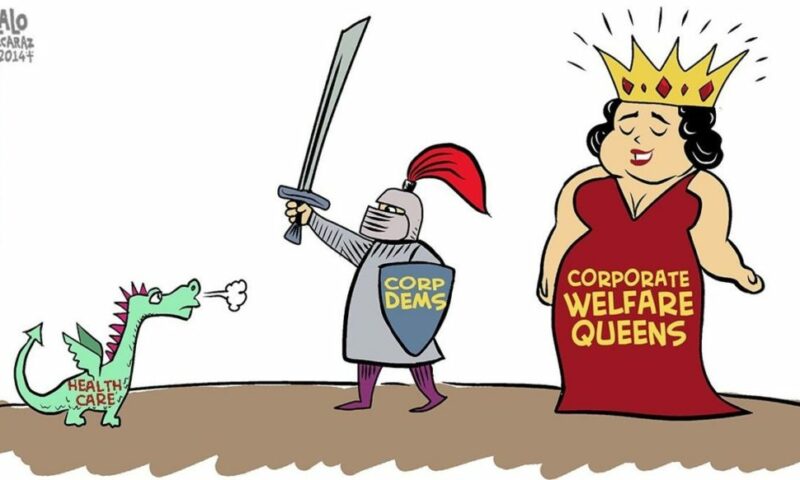
This week we continue our series about the shaping of California’s laws and policies by Corporate Democrats. In his second article, Pulitzer Prize-winning investigative reporter Gary Cohn examines how a bill does not become a law when powerful business interests lobby against it.
Jim Araby was dead asleep when his cell phone rang at 6 a.m. last June. Until then the labor activist had been enjoying an idyllic family vacation in Guerneville, on Sonoma County’s Russian River. But the number appearing on his phone told him the call was from Sacramento, suggesting bad news. The voice he now heard confirmed it.
“Can you get here?” a union colleague asked. “We need you.”
Araby, a regional director of the United Food and Commercial Workers, listened in dismay as he learned that Assembly Bill 880, which more than half a dozen community groups and unions had supported,


Samuel Quintero has a great responsibility. He is the sole source of income for his mother and younger brother, and has to take desperate measures just to provide what Quintero calls “the bare necessities.”
He adds: “I’ve actually had to rent out my bedroom and other rooms in my house just to get by, and I’m applying for food stamps.”
Quintero has been working at McDonald’s for one year and like many of the company’s employees, says his $8 hourly wage just isn’t enough.
“Sometimes I get the check and I literally don’t even see a dollar from it,” Quintero says. “It goes to the bills or the rent. I see everybody that’s working with me. They’re young and they’re like, ‘Well, we went out and did this or did that,’ and I’m like, ‘I have to support my mom and my little brother.’”
Quintero isn’t alone.
» Read more about: L.A. Fast Food Workers: Hold the Harassment, Supersize the Respect »
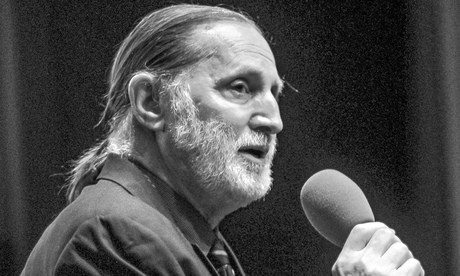

Filmmaker, union activist, provocateur – David Koff wore these and other appellations with pride and grace during his 74 years, and left behind many friends and colleagues when he died in March. The first three decades of his professional life were spent as a globe-trotting, Oscar-nominated documentarian who chronicled everything from the legacy of colonialism in Africa to Great Britain’s pervasive anti-black discrimination.
He began a second career as a researcher and filmmaker for UNITE HERE Local 11, and it was during that part of his life, following L.A.’s 1992 civil unrest, that Koff and a small band of activists conceived the idea for what became the Los Angeles Alliance for a New Economy (LAANE). A few years later, his obsessive yet meticulous research exposed the corrosive role of the Kajima Corporation in promoting its construction of the woefully mismanaged Belmont Learning Center near downtown L.A. Koff’s leading role in the take-down of Kajima and its white elephant high school-cum-shopping mall is the stuff of legend and set the platinum standard for the investigation of local corporate cronyism.
» Read more about: David Koff: Celebrating a Life Less Ordinary »
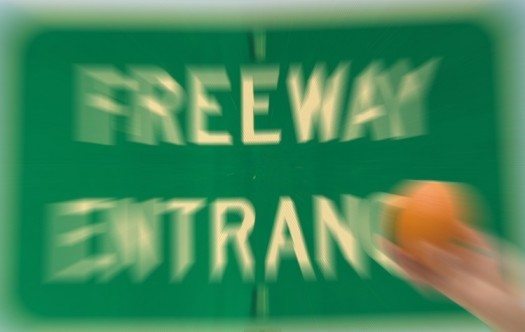
Complexities
A bag of oranges
doesn’t appear
to be heavy
but hold one
yourself and count
three hundred
cars driving by.
As she stands between
the stack of salty
peanuts and dusty
grapes, the bag
gets heavier and it
retains that heaviness
when it’s passed through
the window; and the driver,
hoisting it onto
the passenger’s seat,
thinks, this is a lot of
fruit for two dollars.
Source: “Complexities” first appeared in CQ: California State Poetry Quarterly, Winter 1986-1987; Volume 13, Number 4. It was subsequently selected as one of the poems for the 1988 SMARTS (Santa Monica Arts) Poetry on the Bus project. It also appeared as a spoken word track on Vehemence (New Alliance Records, 1993).
Bill Mohr is an associate professor in the Department of English at California State University,
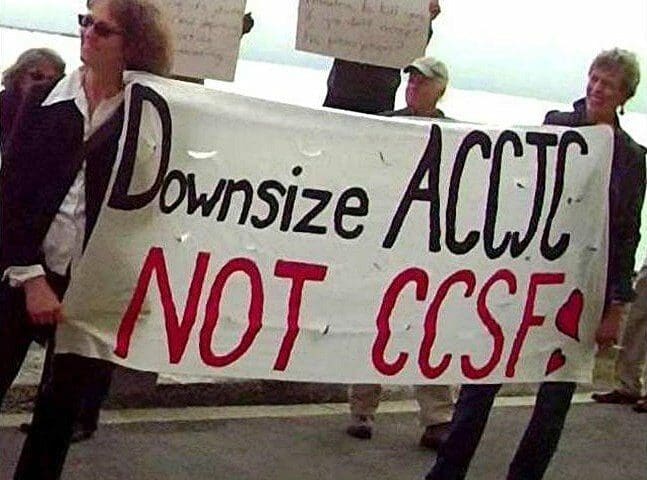
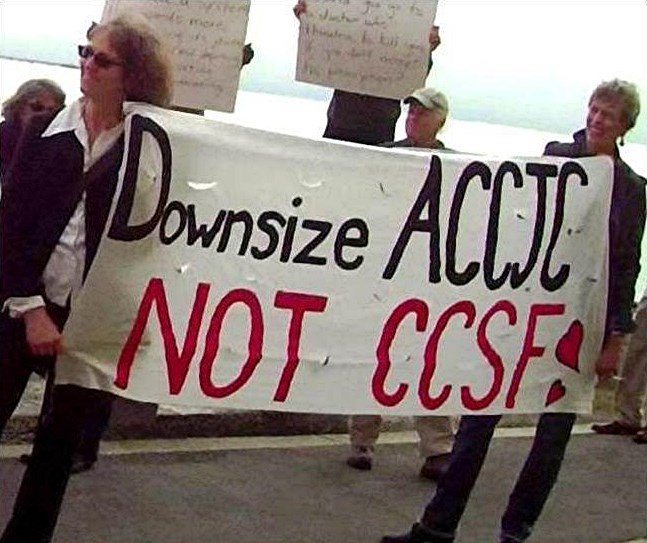
“Truthfully, I’m burned out,” Wendy Kaufmyn sighs over the phone. “And frankly we’re all just really tired. We’re having a meeting next week to try and revitalize ourselves.”
Kaufmyn, a tenured engineering instructor at the embattled City College of San Francisco (CCSF) and a cofounder of the Save CCSF Coalition, is speaking about the 21-month fight for survival of California’s largest community college. The strain and weariness are evident in her quivering voice.
“I’ve been here 31 years,” she tells Capital & Main. “I love City College and I’m just heartsick at what’s going on. I don’t know what’s going to happen.”
Kaufmyn is not alone. Since January, when San Francisco Superior Court Judge Curtis Karnow issued a preliminary injunction that temporarily barred the Accrediting Commission for Community and Junior Colleges (ACCJC) from pulling CCSF’s academic accreditation, a cloud of uncertainty has hung over the 79-year-old institution and the future of its 80,000 students.
» Read more about: No Break in Fight to Save S.F.’s City College »



Last week a Superior Court judge dismissed a final attempt by community groups to score a victory against the Walmart grocery market that opened in Chinatown last year. The groups’ complaint against Walmart brings up a number of factors that undermine the validity of the Chinatown store’s permits. These include zoning and redevelopment requirements that have not been met, poor record keeping by the City, the lack of current California Environmental Quality Act information about the neighborhood, and the fact that the permits were issued the day before a City Council hearing that could have halted the project.
Walmart has long occupied center stage in the national debate about income inequality because of its low wage jobs and ruthless ability to undercut small local businesses. How, then, did the retail giant plant a 33,000-square-foot flag in the middle of Los Angeles’ urban core, despite long-established safeguards designed to protect the unique neighborhood character of places like Chinatown?