Latest News
California Rideshare Drivers Join Massachusetts Counterparts in Unionizing
Uber and Lyft drivers in both states say low pay, rising gas prices and a lack of transparency in how they’re compensated have fueled organizing efforts.
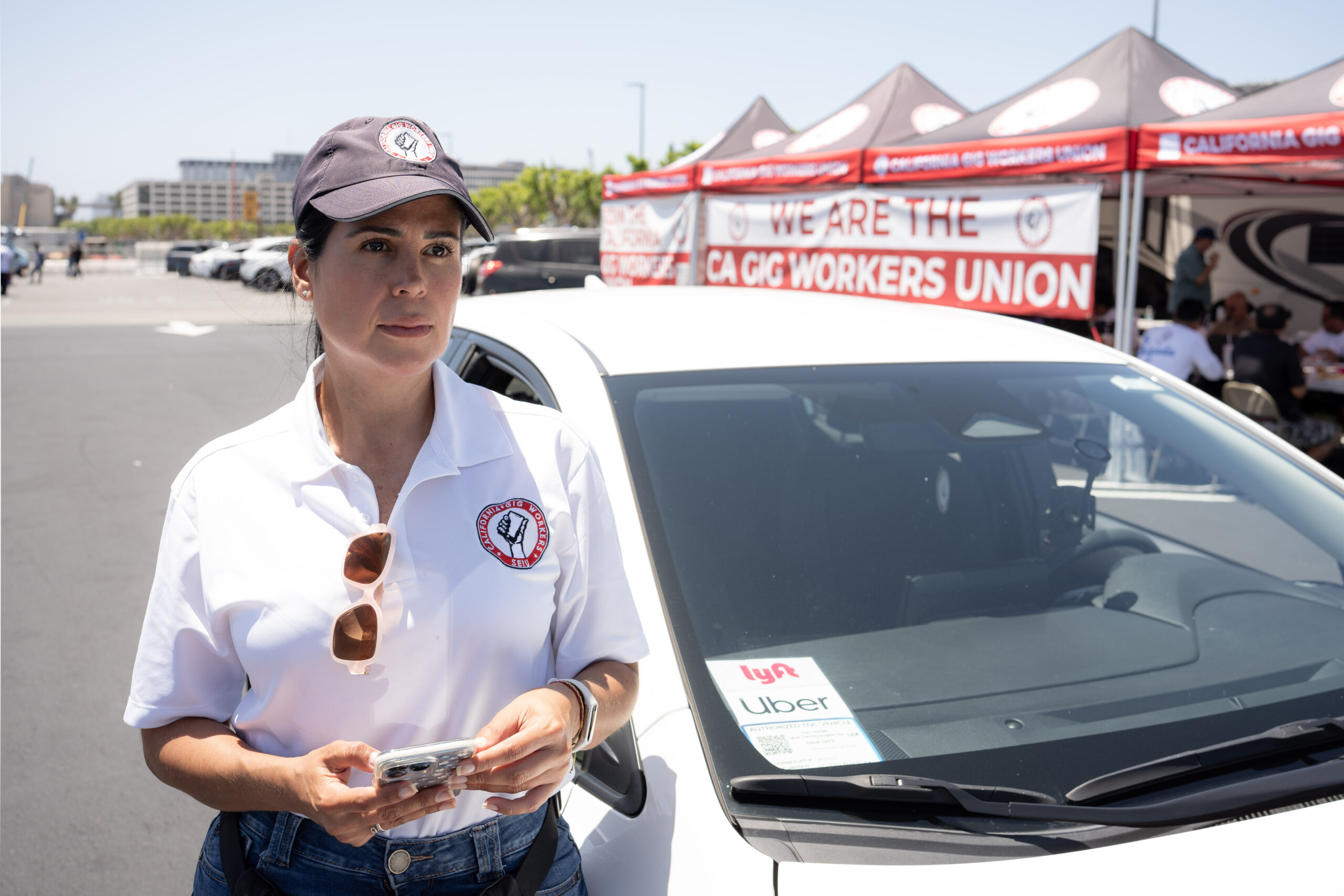

With gas prices rising and her earnings falling, driving for Uber and Lyft is more of a struggle than ever for Margarita Penalosa. Eight years ago, she said she was earning $30 per hour after expenses. Now she’s barely netting between $6 and $10 after expenses.
The hours are brutal. “I mostly drive every day, seven days a week,” she said. “It can be 14 hours a day, sometimes even more.” And she’s driving more, covering a region from Palm Springs to Santa Barbara, to make ends meet.
But Penalosa sees a possible path to improving those conditions. She is among an estimated 800,000 rideshare drivers in California who can now collectively bargain with app-based companies for higher wages, benefits and worker protections, marking an unprecedented shift for workers classified as independent contractors.
Join our email list to get the stories that mainstream news is overlooking.
Sign up for Capital & Main’s newsletter.
New laws in Massachusetts and California have kickstarted legal processes that could soon allow gig workers in those states to negotiate with rideshare companies for better working conditions even though they are not employees. Earlier this month, California drivers joined Massachusetts workers in reaching a key milestone made possible by the new laws: formal union recognition, paving the way for workers in both states to negotiate with rideshare companies for industry-wide standards on pay, benefits and working conditions.
Because rideshare drivers are classified as independent contractors, they fall outside the protections of the National Labor Relations Act (NLRA), which regulates most private sector unionization. That has left a loophole for state lawmakers to pass laws establishing a framework for unionizing drivers, according to David Madland, a senior fellow at the Center for American Progress.
“For years Uber and Lyft have prevented drivers from becoming employees. Now these state laws have put gig workers in the driver’s seat,” said Madland. In 2020 Uber and Lyft, along with DoorDash, Postmates and Instacart, spent more than $200 million to pass California’s Proposition 22, which allows rideshare companies to keep drivers classified as independent contractors.
The ability to collectively bargain could allow workers to address long-running concerns about low and unpredictable pay.
A 2024 UC Berkeley Labor Center study of drivers in five large U.S. metro areas found that after paying for gas, vehicle maintenance and all hours spent driving — including time driving without a passenger — rideshare drivers’ median take-home pay without tips was less than $6 per hour. An internal white paper puts the median net earnings of Lyft’s drivers nationwide higher, at more than $23 per hour (including tips and bonuses), but still well below the living wage in many major cities, according to various living wage calculators.
Lyft spokesperson CJ Macklin said in an email that the mostly part-time drivers on its platform appreciate being able to set their own schedules. “Most drivers aren’t using Lyft as a primary full-time income source, and the flexibility to set their own hours is something they consistently tell us they value,” Macklin wrote. Uber did not respond to requests for comment.
* * *
In October, Gov. Gavin Newsom signed Assembly Bill 1340, legislation sponsored by the Service Employees International Union (SEIU), which set in motion a process to allow rideshare drivers to gain union representation. (Disclosure: SEIU is a financial support of Capital & Main). Uber and Lyft dropped opposition to the bill after agreeing to a deal with Newsom and the SEIU that secured passage of SB 371, a bill that dramatically reduced the companies’ state-mandated insurance costs.
In Massachusetts, Uber and Lyft reached a legal settlement with the state attorney general in 2024 to guarantee drivers minimum hourly pay of $32.50 (now $34.48), and neither company campaigned against a 2024 ballot measure that allowed drivers to unionize while remaining independent contractors.
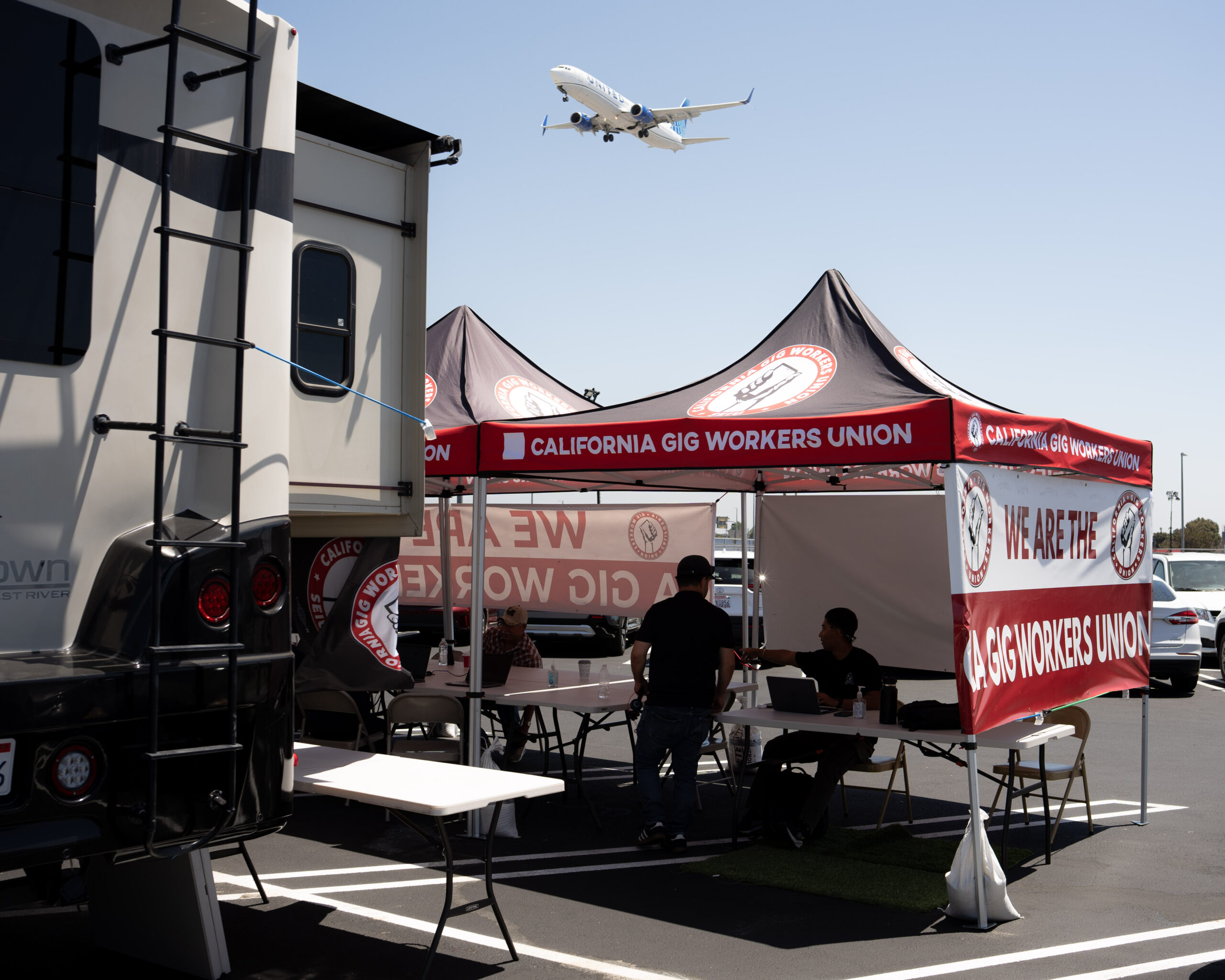
A California Gig Workers Union drive near Los Angeles International Airport in June. Photo: Jeremy Lindenfeld for Capital & Main.
Although many drivers have long sought employee classification, operating outside the National Labor Relations Board framework also offers certain advantages, Madland said. “The NLRA has allowed companies to endlessly delay. You have sort of a Starbucks situation where the workers formed a union a couple years ago and they still have no contract, whereas under these [state] laws the workers are actually pretty likely to get a contract,” he said.
The laws give rideshare drivers access to contact information for fellow drivers, making it easier to organize. In California, a union must show support from at least 10% of active drivers to qualify; with 30% it can petition the Public Employment Relations Board (PERB) for certification or the union must win an election. These thresholds are lower than those typically required under federal labor law. The laws also establish a form of sectoral bargaining, allowing standards to be negotiated across the rideshare industry rather than at individual workplaces.
Earlier this month, the California Gig Workers’ Union, which is affiliated with the SEIU, cleared a key legal hurdle by demonstrating that at least 10% of active rideshare drivers supported union representation. CGWU must then demonstrate that at least 30% of active drivers have chosen the union as their representative or CGWU must win an election (which PERB will oversee). Last month, the Massachusetts state government certified the App Drivers Union, with rideshare drivers in the state becoming the first in the country to unionize. Now drivers in both states can start collectively bargaining with rideshare companies.
* * *
From their inception, Uber and Lyft have touted the flexibility and freedom of being an independent contractor, liberated from the restraints of set schedules and pay. But some app-based drivers say the freedom of being your own boss increasingly comes at a cost.
Duane Mitchell, who has been driving for Uber in the Boston area for a decade, said he’s doing better than drivers in California, thanks to a law establishing a higher minimum earnings standard for Massachusetts rideshare drivers, as well as state-mandated sick pay. But, he said, the rideshare companies continue to offload the costs and risks of driving onto workers, and their pay calculations are complex, inconsistent and rarely in his favor. For example, he said the companies cut his estimated rate of pay when light traffic lets him complete a trip faster than projected.
“[The companies] know when you’re going to be able to put miles on faster and get to the destination quicker, so they’ll start reducing your rate for getting there faster than expected,” Mitchell said. “They say, ‘Well, this guy’s going to be there in 20 minutes. Let’s not pay him $20, let’s pay him $9. And if I fall below the guaranteed minimum, they’ll just add in $1 or two.”
Asked about Mitchell’s concern, Macklin said that in most markets, Lyft provides an upfront earnings quote before a driver accepts a ride, “based on the expected route, ride type, and market conditions.”
“We provide a full pay breakdown per trip in the app, and drivers can review or dispute any ride through our support channel,” Macklin said.
For Mitchell, the bottom line is that his pay is so low that he owes no state or federal taxes and the public has to make up the difference.
“Whose tax dollars are paying for snow removal and road repairs, or staffing of emergency services like police, fire and EMTs? Not me. I get $3,500 a year in food stamps, and I get another $1,000 a year in heating fuel assistance. In my opinion, every single citizen of Massachusetts should be in favor of what we’re doing,” he said.
Rideshare drivers in both states have inspired unionization efforts elsewhere in the U.S. A bill awaiting the signature of Illinois Gov. JB Pritzker would allow the state’s 100,000 rideshare drivers to unionize. Last year Minnesota lawmakers introduced a bill that would establish a similar legal framework, allowing app-based drivers to collectively bargain.
* * *
Drivers who spoke to Capital & Main say they don’t yet have a set of demands, but they consistently say they are squeezed by higher gas prices, vehicle maintenance costs and algorithmic management, which causes compensation rates to constantly change. Another complaint is over the practice of being unceremoniously removed from the app at a moment’s notice, without explanation.
In Los Angeles, Harvin Melendez said he was deactivated from the Lyft platform four years ago without explanation, and that he was offered no way to appeal the decision.
“When I got my deactivation with Lyft, they sent me a letter, and the letter says your outcome is permanent, because you [didn’t] follow the rule for something, but not explaining what exactly was the issue. I sent many emails to the platform, and they don’t respond,” Melendez said.
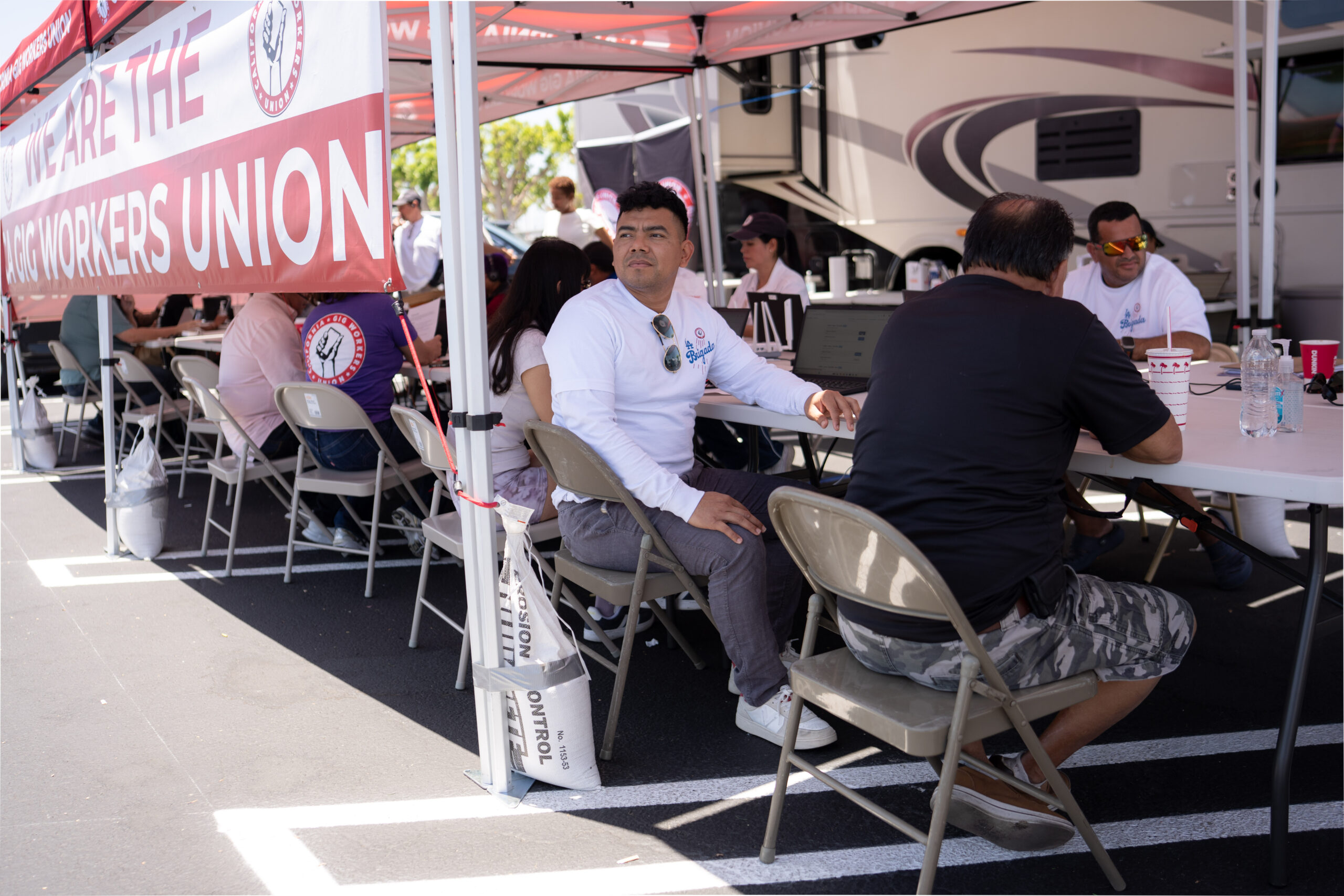
Uber driver Harvin Melendez sits at a table while organizing with the California Gig Workers Union. Photo: Jeremy Lindenfeld for Capital & Main.
Macklin said that the company’s appeals process for deactivation has “evolved significantly over the years” and that Lyft provides advance notice when a driver is at risk of deactivation. Permanent deactivations, such as the one experienced by Melendez, “include an opportunity for the driver to tell their side of the story,” Macklin wrote.
Now driving exclusively for Uber, Melendez said he likes that he can set his own hours. But he is troubled that he works more hours than he did four years ago for less pay. He said he takes home about $200 for 12 hours of work on a typical day. As an independent contractor, he has no paid vacation and no paid sick leave.
Melendez said one of his biggest frustrations is what he sees as the contradiction at the heart of gig work: Drivers are told they have the freedom to choose which rides to accept, but they are penalized when they exercise that discretion. “Drivers can set their own schedule, and they can decide to not take a rider if they want to, but then they penalize you for not doing that. If you don’t accept this ride … you lose the diamond status and then you’re paid less,” Melendez said. (Macklin said Lyft drivers are not penalized for declining to accept a rider.)
“I like to be my own boss, but we need more dignity,” Melendez said.
Madland, of the Center for American Progress, hopes other sectors adopt the model of unionizing workers under state laws. “In my ideal world, the federal government could adopt this for many more workers, because there are lots of workers who would like to form a union and have a very hard time under existing law, and the sort of nature of their work makes it additionally hard to form a union and bargain collectively,” he said.
Copyright 2026 Capital & Main


-
 Column - State of InequalityMay 21, 2026
In California Governor’s Race, Xavier Becerra Walks Away From Single-Payer
-
 Latest NewsMay 22, 2026
Where California’s Gubernatorial Candidates Stand on Climate and Taking Big Oil Money
-
 The SlickMay 20, 2026
70-Foot Wastewater Geyser Reflects New Mexico’s Latest Oilfield Challenge
-

 The SlickMay 29, 2026
Feds to Open Tens of Thousands of Acres of Colorado Wilderness to Oil Drilling
-
 Latest NewsMay 18, 2026
Budget Cuts Threaten Program That Doubles Food Dollars for Californians in Need
-
 Deadly Dust: The Silicosis EpidemicMay 27, 2026
California Moves to Ban Quartz Countertop Fabrication to Combat Silicosis Epidemic
-
 Latest NewsMay 26, 2026
Conditions at California ICE Detention Centers Are Getting Worse, Inspections Find
-
 Imperial DivideJune 3, 2026
California’s Lithium Valley Dreams Meet Reality at the Only Restaurant in Town