
Politics & Government
Scholar: Impeachment’s Twisted Takeaways for Trump
The Founding Fathers didn’t envision political parties as they exist today. But did they envision a Donald Trump?

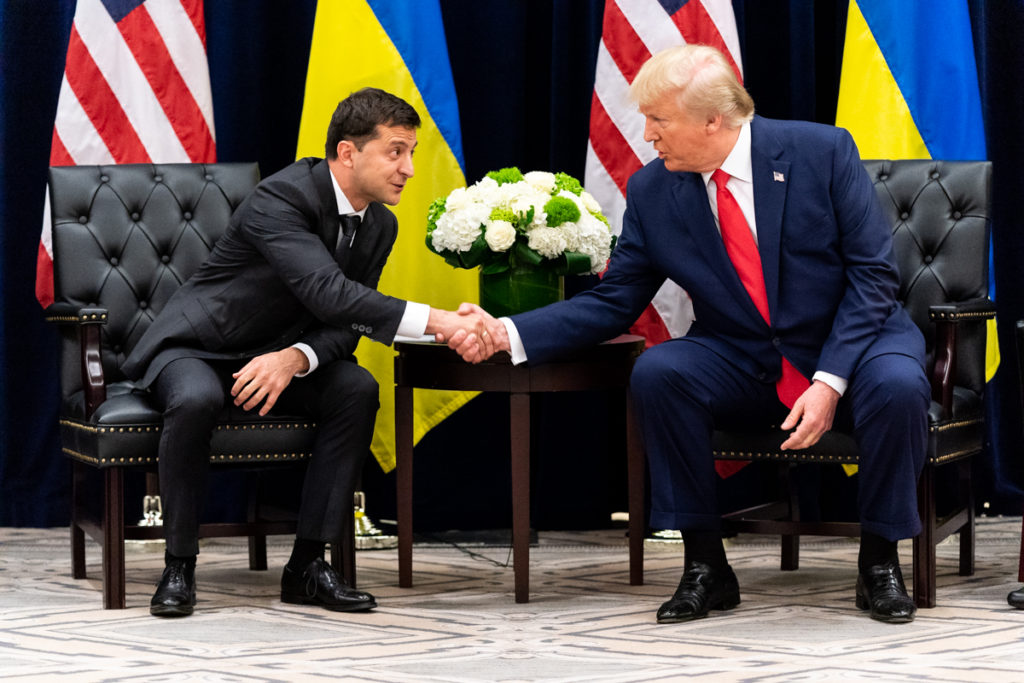
University of California, Berkeley, Law School Dean Erwin Chemerinsky spoke to Capital & Main during Tuesday’s opening session of President Trump’s impeachment trial. The following interview, which discusses the trial’s second day of oral arguments, has been edited for concision and clarity.
Capital & Main: Now that the trial is underway, how do you think the impeachment managers are doing in making their case?
Erwin Chemerinsky: The Democrats are making a very strong case to support impeachment. I think Adam Schiff has done a brilliant job of explaining why impeachment is appropriate and using Donald Trump’s own words to support this, and at the same time being understated, not using histrionics to support the position.
And at the same time we have the GOP caucus, some of them not even pretending to take these procedures seriously, some not even showing up. We also have Fox News, which is dismissing the whole thing and ridiculing Adam Schiff and not even taking on the merits of the case. Did the Founding Fathers anticipate the partisan polarization that we have now? Does impeachment still serve its original purpose?
The Founding Fathers didn’t envision political parties as they exist today. In fact, the framers of the Constitution didn’t like the idea of political parties. The reality is political parties, especially in a polarized time, determine the outcome of the votes. We all knew what the House was going to ultimately do, and we all know what the Senate is going to do. It’s very difficult to think of our current times from the perspective of the Framers so long ago.
Even in fairly recent times, we had the case of Richard Nixon, who had members of his own party, including some senators, tell him, “Look, we’re going to have to vote to remove you.” And that led to his resignation.
Through much of the investigation of Nixon and the impeachment proceedings in the House Judiciary Committee, it was still politically polarized. It was still split along party lines [until] the Supreme Court decision [about Nixon’s tapes, at which point] it was clear that Nixon obstructed justice. Then even the Republicans went in and said, “You have to resign.” But I wouldn’t want in hindsight to forget how split along party lines the investigation of Watergate was for so much of its course.
If and when President Trump is acquitted in this process, is there a danger that it shows that at least his party approves of his behavior? Certainly he’ll make that case.
I worry very much what lessons President Trump and others will draw when the Senate decides not to remove him from office. I worry that the message to President Trump, if there’s a second term as president, “So long as the party stays with you, the impeachment process is toothless, you’ll never be removed.” I worry what the message is to future presidents: “No need to comply with congressional subpoenas, no need for your aides to be brought congressional subpoenas — just refuse and nothing’s going to really happen.” I worry then that the lesson that will be drawn from the Senate refusing to remove Trump is tremendously undermining checks and balances.
Could these particular crimes be handled in the court system? And could a sitting president be indicted for any crimes?
There is no answer, yet, to the question of whether a sitting president can be indicted. The Constitution doesn’t say, there’s nothing in the Framers’ intent, no Supreme Court case or lower court cases addressed it. There’s a 1973 memo from the Justice Department that said the sitting president can’t be indicted. Robert Mueller, in his report, said that he felt bound by that because he was employed as part of the Justice Department. But this is a question that’s unresolved. Certainly, President Trump takes the position that a sitting president can’t be indicted, but we’ve got to remember that’s not something where there’s any law in point.
What are the commentators getting wrong or overlooking in this procedure?
I worry that at times the commentators are just as partisan as we’re hearing from the floor of the House or the floor of the Senate. I think that there are certain things that should be nonpartisan. “High crimes and misdemeanors” includes abuses of power — doesn’t require illegal activity. And I wish that constitutional law professors left and right would say, “Of course that’s true. It is so clear from the history of the United States.”
Copyright Capital & Main



-
 Column - State of InequalityJune 4, 2026
California’s Economy Runs on Labor Trump Wants to Deport
-

 Featured VideoJune 5, 2026
At This New Mexico Park, Mountain Bikers Pedal Amid Hundreds of Oil Wells
-
 The SlickJune 10, 2026
Data Centers Are on the Ballot — This Pennsylvania Candidate Won Her Primary Keeping Them Top of Mind
-
 Latest NewsJune 9, 2026
Ousted by the Trump Administration, U.S. Immigrants Remain Locked up in African Kingdom
-

 Latest NewsJune 8, 2026
The Glacier May Be Gone, but the Love Isn’t
-
 Latest NewsJune 12, 2026
California Town Lets Private ICE Detention Centers Police Themselves
-
 Column - State of InequalityJune 11, 2026
County Tax Measures Show Limits of Local Responses to Medicaid Cuts
-
 The SlickJune 16, 2026
Why Coal Will Lead to More Deaths in Colorado