
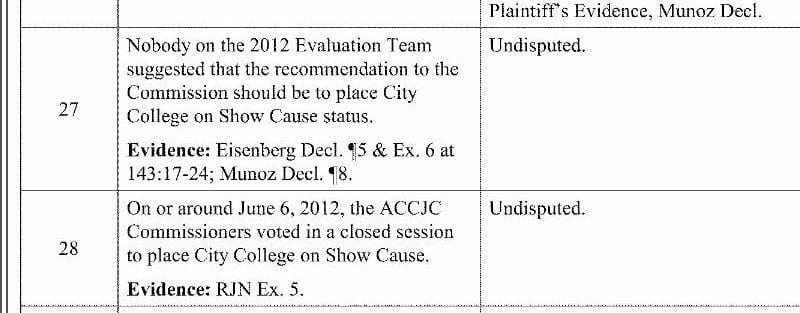
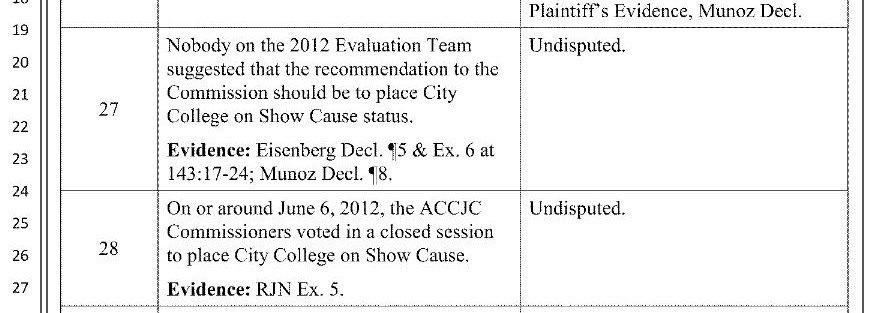
Throughout the two-year debate over a plan by the Accrediting Commission for Community and Junior Colleges (ACCJC) to shut down San Francisco’s nine-campus City College, the school’s supporters held their tongues on one key belief. Namely, that the commission had long ago made up its mind to shut down the college and no amount of restructuring could change the ACCJC’s mind. A recently filed court document, however, has confirmed this widespread suspicion.
The San Francisco Superior Court filing, first revealed in a Los Angeles Times story, disclosed that not one of the ACCJC’s own 15-member evaluation team ever suggested that CCSF’s accreditation be revoked; instead, the commission admitted, its panel merely recommended a form of academic probation that would allow the school to fix some administrative and accounting bugs in its system. Despite that, the ACCJC’s executive committee voted in 2012 to ignore the evaluators’ recommendations and threatened the school with the loss of its accreditation.
» Read more about: Fiasco: Attack on San Francisco City College Outrages CA Officials »
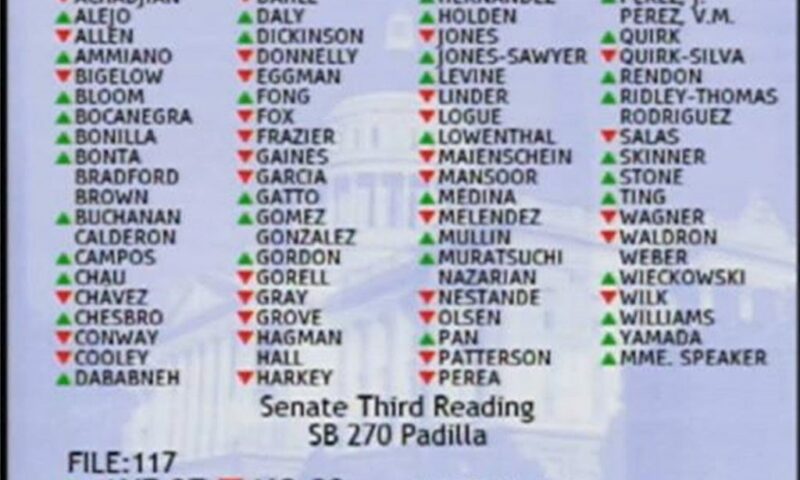
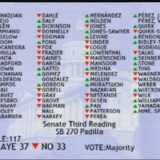
Last night the California plastic bag measure, state Senate Bill 270, fell four votes short of the required 41 to pass the Assembly. The bill’s support crossed partisan lines – however, several Democratic legislators from the Central Valley and Southern California voted no or did not vote at all. The San Jose Mercury News reported that out-of-state lobbyists representing Hilex Poly, an East Coast plastic bag company, spent nearly half a million dollars to sway legislators to oppose SB 270.
How did your state representative vote? See the voting screen, above.
SB 270, sponsored by senators Alex Padilla, Kevin De Leon and Ricardo Lara, would restrict single-use plastic bags in California, a proven policy measure to limit ocean litter. A similar ban has been implemented in more than 100 communities across California – and in such large cities as Los Angeles, San Francisco and San Jose. The effect has been reduced litter – with no jobs reported lost.
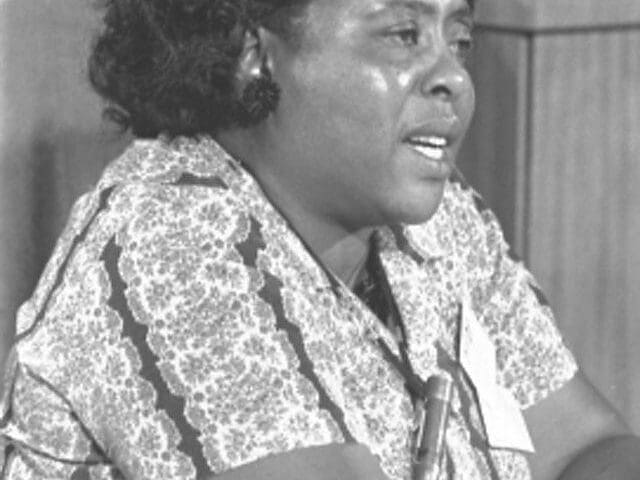
“I question America ” — the famous words spoken by civil rights activist Fannie Lou Hamer 50 years ago this week at the tumultuous Democratic Party convention in Atlantic City — is a fitting reflection of the soul-searching that the country is once again going through in the wake of the turmoil in Ferguson, Missouri.
To understand both the progress America has made, and the many challenges it now faces, in terms of racial justice, it is useful to remind ourselves of the battle that occurred a half century ago and the life of Ms. Hamer, a sharecropper and activist from the Mississippi Delta who galvanized the country with her stirring words and her remarkable courage.
In her testimony before the credentials committee at the Democratic Party’s convention in Atlantic City, New Jersey, Hamer explained why the committee should recognize the integrated Mississippi Freedom Democratic Party over the state’s segregated official party delegation.
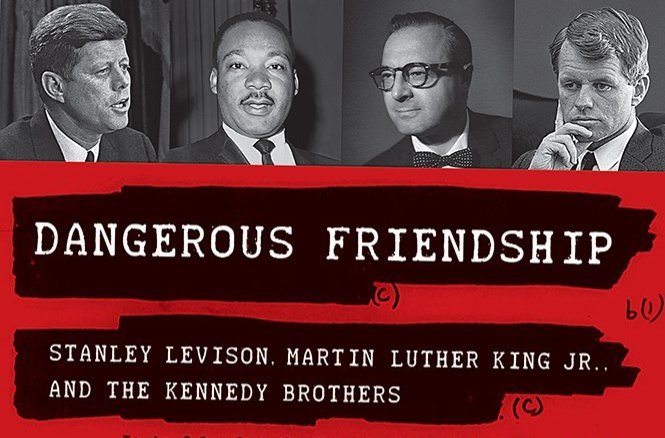
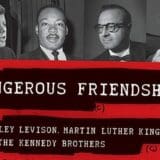
Most students of the 1960s may know about the FBI’s obsessive surveillance of Martin Luther King Jr. and how the bureau’s shadowing and bugging of the Southern Christian Leadership Conference’s president would lead federal agents to infiltrate the civil rights and peace movements. Now, a new book by Ben Kamin throws a spotlight on the man whose close friendship and collaboration with King provoked J. Edgar Hoover’s wrath and paranoia. Dangerous Friendship analyzes the relationship between King and Stanley Levison, a lawyer and wealthy businessman with a radical past. The book tells how Levison, known as King’s ghostwriter and closest white friend, advised King on strategy and raised righteous amounts of money for his cause; the story also shows how their friendship prompted the Kennedy White House to force King to shun Levison for more than a year.
Kamin, a nationally known rabbi, also explores how Levison’s personal solidarity with African American struggles reflected a traditional Jewish embrace of equality and social activism.
» Read more about: Tonight: Ben Kamin on MLK’s “Dangerous Friendship” »
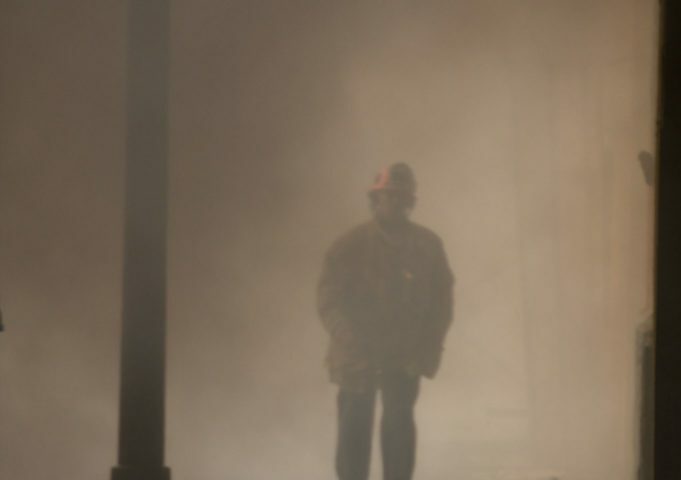

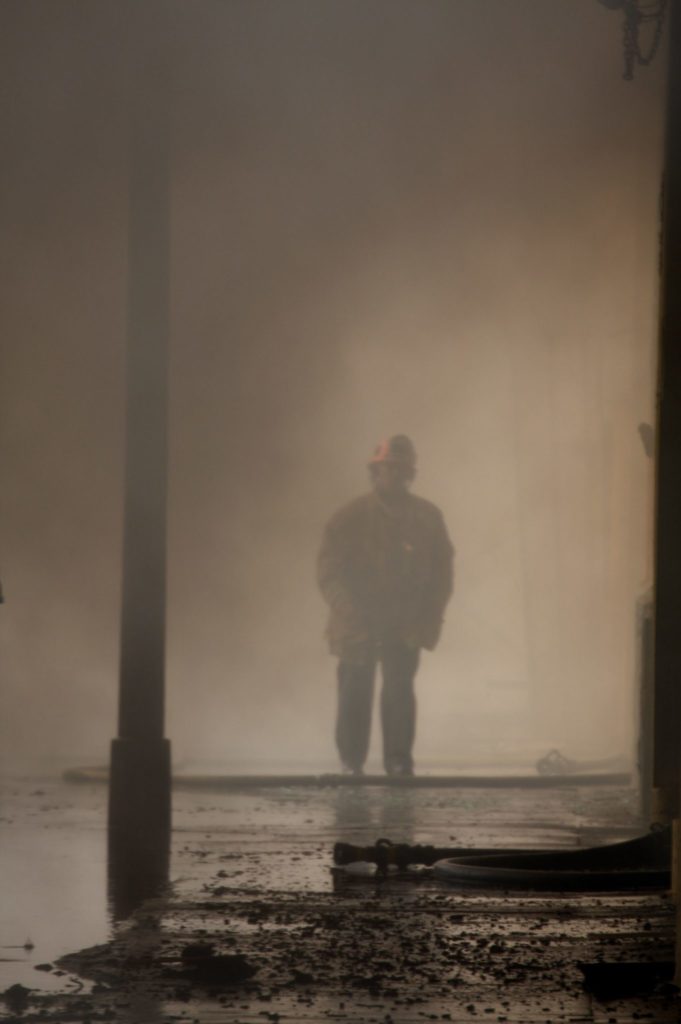
A consumer-rights bill that would require upholstered-furniture manufacturers to clearly disclose whether furniture sold in California contains flame-retardant chemicals recently received a huge boost when furniture manufacturers dropped their opposition to the measure and decided to support it. Senate Bill 1019, which is backed by firefighters, environmentalists and consumer protection advocates, is being bitterly fought by the chemical industry, whose campaign against regulation and clear public disclosure of flame-retardant chemicals is reminiscent of Big Tobacco’s fight against government controls.
The furniture makers, however, switched sides after state Senator Mark Leno (D-San Francisco) agreed to an amendment clarifying the definition of flame retardants.
“AHFA [the American Home Furnishings Alliance] and principal members of the furniture coalitions withdraw our opposition of the bill pursuant to the inclusion of the amendments agreed upon to define flame retardant chemicals and offer this letter of support for S1019,” Bill Perdue, AHFA’s vice president for regulatory affairs,
» Read more about: Flame Retardant Bill Wins Important Industry Support »
It was just another summer backyard barbeque. A few veggie patties followed by a few burgers on the grill. Some drinks. Some salads. Maybe a couple dozen people. There were neighbors, several community activist types, a couple of clergy and a handful of other religious folks, plus a few workers from a local hotel and some iron workers. Wait, who?
Yes, the gathering was called together by CLUE – Clergy and Laity United for Economic-Justice – in a supporter’s back yard. We met to share some summer food, deepen our friendships and to mark some victories that might otherwise go without notice – benchmarks that shouldn’t be forgotten so quickly.
One victory involved a Santa Monica hotel. Workers there secured a “labor peace agreement” with management that protects some basic worker rights. Employees can now post signs about the benefits of a union knowing they will not get torn down and destroyed.

Public-private partnerships (P3s) deserve scrutiny before contracts are signed, and that principle is made clear in a recent four–part series by Len Boselovic of the Pittsburgh-Post Gazette (full disclosure: I was interviewed for and am quoted in the series.)
It is not in dispute that America is in great need of updates to our crumbling infrastructure. In 2013, the American Society of Civil Engineers (ASCE) issued a report card that gave the nation’s infrastructure an embarrassing grade of “D+” based on unmet needs to repair and rebuild roads, bridges, drinking water and wastewater systems, schools, rail and transit systems, and public parks. ASCE also estimates that the US needs to spend $3.6 trillion in the next seven years to recover from decades of neglect and divestment.
Public-private partnerships use private capital from investors to finance public infrastructure projects.
» Read more about: Infrastructure: Public-Private Partnerships Must Be Two-Way Streets »
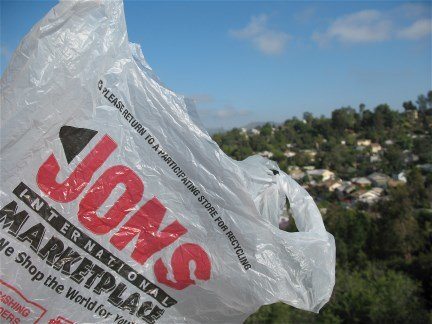

Whether California consumers will continue to enjoy the convenience — and suffer the environmental guilt — of toting their groceries in free, disposable plastic shopping bags may be decided on Thursday.
That’s when Senate Bill 270, the latest version of a statewide measure that would phase out single-use plastic bags in California’s grocery and convenience stores, pharmacies and liquor stores, comes up for a full floor vote in the state Assembly. The bill, which also mandates a 10-cent charge for paper bags, was introduced in February by state Senators Alex Padilla (D-Pacoima), Kevin de León (D-Los Angeles) and Ricardo Lara (D-Long Beach).
If it survives Thursday’s Assembly vote and is signed by the governor, it will make California the first state in the nation to adopt a ban even as it replaces 86 local bag ban ordinances covering more than 115 cities and counties — including San Francisco,
» Read more about: Plastic Bags: Blowing in the Wind No More? »
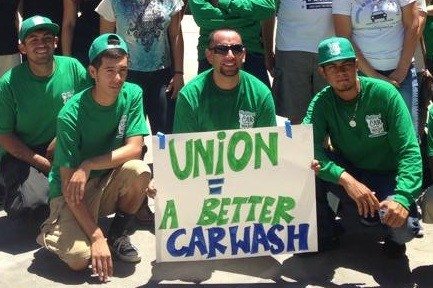
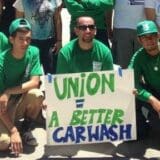
Los Angeles County’s car wash workers seemed to face overwhelming odds when they began to organize a few years back. Carwasheros considered themselves lucky if their bosses simply paid them for the correct number of hours they had worked, let alone if they received the legal minimum wage – some were expected to work for only tips. Many car wash employees were undocumented immigrants in an industry known for its high turnover and were counted as among society’s most vulnerable workers.
And yet, with the help of the United Steel Workers union’s CLEAN Car Wash Campaign, car washers began to prevail in a series of court battles that resulted in owners being ordered to improve working conditions and to conduct their accounting practices above-board. In 2012 the state’s Department of Industrial Relations assessed more than $4.8 million in wages and civil penalties against California car wash owners,
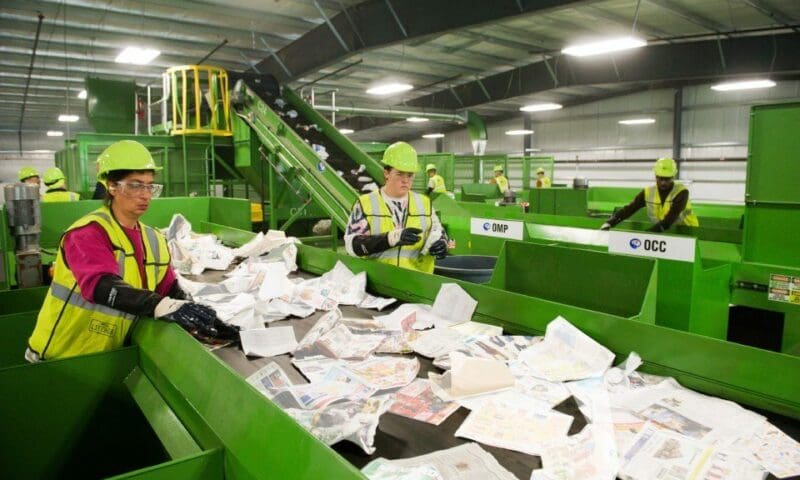

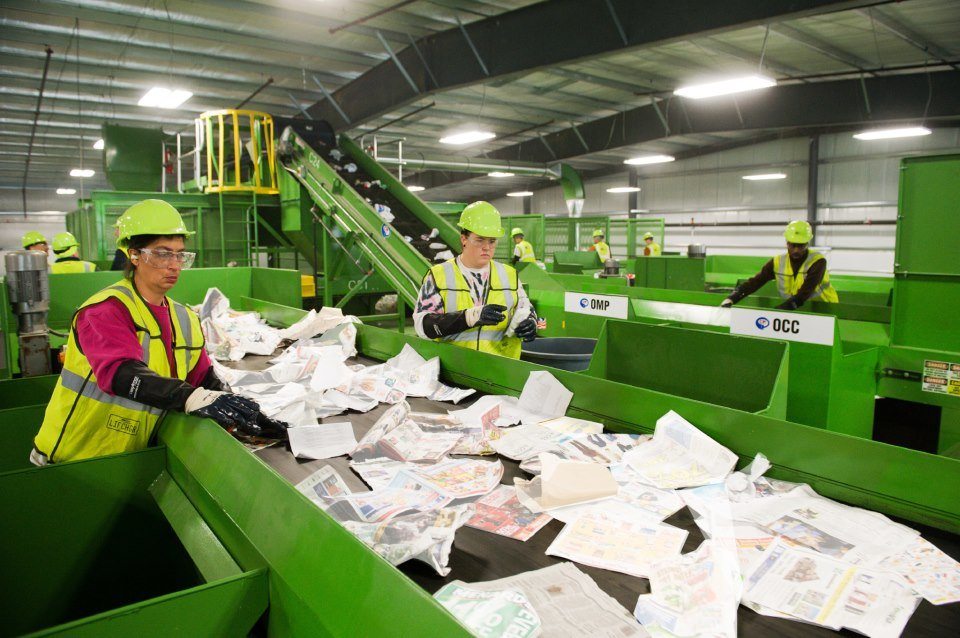
Imagine being a waste worker sorting through trash for recyclables with only tattered gardening gloves and being pricked by a used hypodermic needle. Under the current conditions of many recycling companies, you would be told, “Get back to work” and simply have to bandage your wound – sometimes with pieces of paper from a pile of trash. And if you tried to talk with your boss about your fear of spreading illness from the needle to your family or friends, you are immediately fired. This is a true story of a former trash sorter – who was also considered a temporary employee – at a trash sorting facility in Los Angeles.
This story – of gross negligence and denial of company responsibility for basic worker health and safety protections – is too common a reality in low-wage industries. Bill Raden and Gary Cohn covered the plight of temporary workers in the food processing industry in a Capital &
» Read more about: New California Bill Will Dispose of Abuse of Temp Sanitation Workers »