


A controversy surrounding the Los Angeles Unified School District’s (LAUSD) compliance with California’s contentious Parent Trigger law has apparently opened up a rift between key allies responsible for passing the state’s so-called Parent Empowerment Act.
LAUSD’s decision to grant itself a year’s recess from the 2010 trigger law’s provisions came to light only last week when its author, former state Senator Gloria Romero, leaked a letter from an LAUSD lawyer claiming that, as part of a two-year waiver it received in 2013 from the federal Department of Education, the district is not subject to the Parent Trigger law through the 2014-2015 school year. The law allows parents to take over low-performing public schools and replace faculty with non-unionized teachers under the management of private charters.
That waiver, which was granted last November but only announced August 5 by U.S. Secretary of Education Arne Duncan, frees LAUSD and seven other state school districts from penalties connected to not meeting a 2014 deadline for 100 percent math and reading proficiency mandated by the George W.


Four years ago I retired from active ministry in the United Methodist Church. My wife Susan and I now live a comfortable, middle-class life based upon the three pillars of retirement. We both receive Social Security. We get a monthly check from my pension plan. We hold some savings. But that’s not true for most Americans.
Yes, retiring workers can look forward to Social Security if they have paid into it. But that automatically excludes some. Government employees, for example, get pensions, but not Social Security. Undocumented workers may have the Social Security tax deducted from their paychecks, but the funds likely go to an account that does not bear their names – therefore, they will not get those payroll taxes returned to them when they age into eligibility.
Besides, Social Security was from the beginning expected to provide supplemental income only, not the sole basis for a livelihood.


(Note: The following opinion piece was written by a single mother of two children who fears losing her job. For this reason her name has been withheld.)
What does “Made in America” mean to you? For consumers, it means a quality product. For workers, it means a good paying job and an opportunity to achieve the American Dream. Yet “Made in America” can also stand for opportunity to exploit workers under harsh conditions and unfair wages. That’s what it means in the manufacturing plant where I work in Commerce.
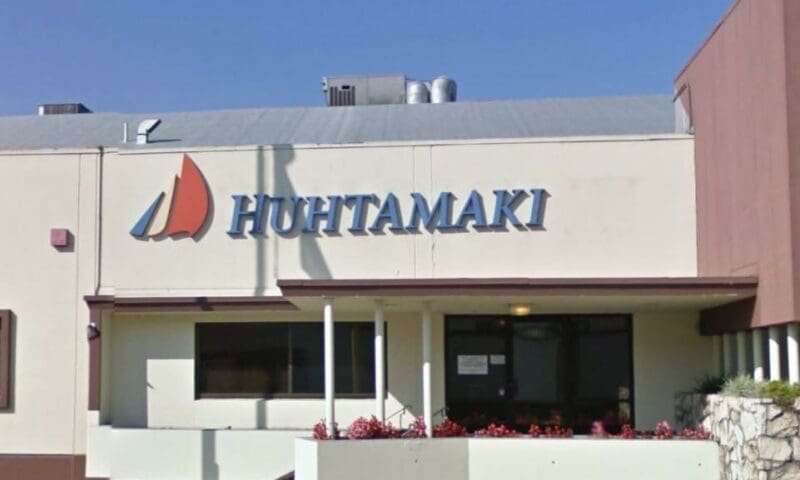
I’ve worked three years for Huhtamaki, a Finnish-owned packaging manufacturer located in the Los Angeles area. We make ice cream containers and other products for Walmart. And the job, it’s just not what people are talking about when they talk about investing in new manufacturing jobs in our country.
As a single mother of two,


In a scene right out of Orange Is the New Black, 1,000 inmates at the Ohio Reformatory for Women in Marysville, Ohio dumped their food in protest last week after maggots were found in the kitchen and dining areas. The prison’s food service program had been outsourced to the massive Aramark corporation.
Maggots have also been discovered in seven other prisons around the state – and Aramark runs the food service programs in all of them. Last month, maggots were discovered in two Michigan prisons where Aramark also runs the food service programs. The Philadelphia, PA-based corporation hasn’t taken responsibility, and officials in both states are sticking by the vendor, responding with small fines instead of canceling the contracts. Ohio fined Aramark $270,000 and Michigan Governor Rick Snyder fined the company a mere $200,000.
» Read more about: Outsourcing: Maggots on Aramark’s Prison Menu »
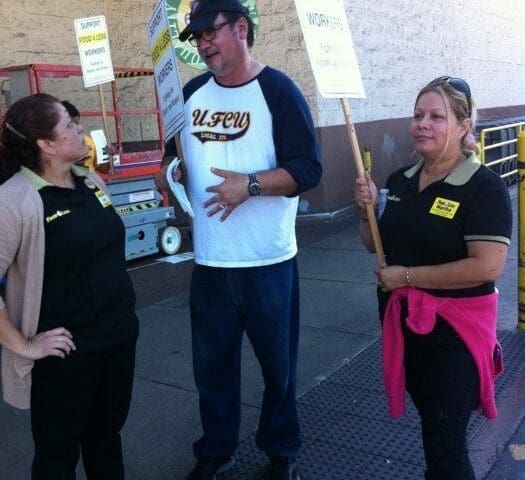

On Wednesday grocery shoppers at Food 4 Less stores throughout the Southland were met with smiles, picket signs and a message from the supermarket chain’s employees and supporters: Please don’t shop at Food 4 Less until its parent company, Kroger Company, signs a new union contract.
The most recent collective bargaining agreement between Food 4 Less and its workers expired June 8 and employees are concerned about work-standards reductions and a potential undercutting of medical benefits for 6,500 workers at 90 Southern California stores.
Kroger’s proposals include axing hours across the board and reducing company payments into employee health and welfare funds. The Cincinnati-based company recorded a half-billion-dollar profit for the first quarter of 2014.
At the Highland Park store on Figueroa near Avenue 52, Maribel Garcia, a United Food and Commercial Workers organizer, was unfazed by the August heat. She was still energetic after eight hours in the parking lot asking shoppers to support the boycott by seeking their groceries elsewhere.
» Read more about: Food 4 Less Workers Hang Tough With Boycott »
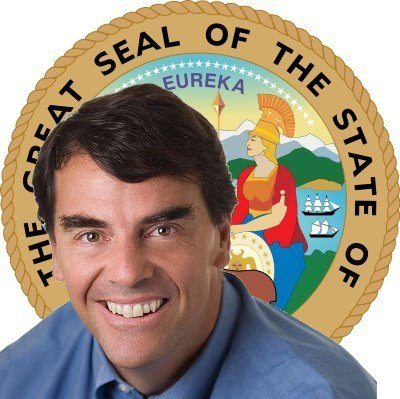
Thank god for wise, visionary billionaires! Until Tim Draper came along, Californians had no idea they were living in a failed state. Here we were, enjoying the illusory benefits of a budget surplus, a booming technology sector and robust political commitments to public education and public health.
But it took a Silicon Valley venture capitalist to remove our rose-tinted glasses. California is so big a hellhole, in fact, that Draper spent nearly $5 million to buy 1.3 million petition signatures – more than enough to place on the 2016 ballot a measure to break up our giant state into six teeny weeny ones. You see, California is such a dysfunctional mess that only dividing it in two will not fix it.
Cynics, of course, may see in this wealthy provocateur’s proposal to Balkanize California an ulterior political motive: to carve out of the new configuration four sparsely populated Republican-leaning states,


As Sacramento shifts into its August overdrive this week, three key health care reforms have been attracting fierce lobbying attacks by business interests and the hospital and health insurance industries, to keep them from advancing out of the Senate Appropriations Committee for floor votes. August 31 is the deadline for the full Assembly and state Senate to pass any bills destined for the governor’s desk.
AB 1522, known unofficially as the Healthy Workplaces, Healthy Families Act, was introduced by Assemblywoman Lorena Gonzalez (D-San Diego) with the support of the California Labor Federation. It would make California, after Connecticut, the second state to require employers to provide paid sick leave for all of its workers. (The California Labor Federation is a financial supporter of Capital & Main.)
AB 503, the proposed hospital charity care law, introduced by Assemblymen Bob Wieckowski (D-Fremont) and Rob Bonta (D-Oakland),
» Read more about: Three Bills Aim to Strengthen California’s Health Care System »
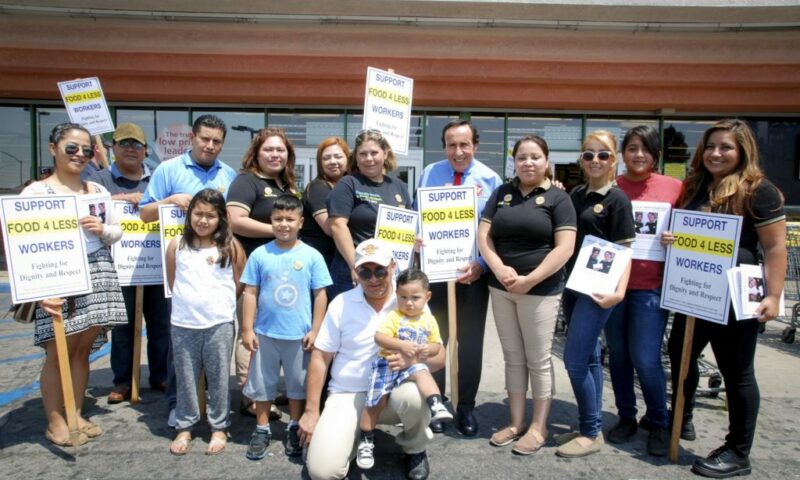

Union grocery workers at Food 4 Less don’t want to Work 4 Less. That’s the message they’ll be delivering today (August 13) at 14 Southern California stores as they press the chain for a new contract. Their most recent collective bargaining agreement expired June 8 and Food 4 Less, which is owned by Ralph’s parent company, Kroger, wants to cut health and welfare contributions, along with work hours — while dumping more work on lower-paid employees.
For that reason the 90 stores’ 6,500 workers, who belong to Local 770 of the United Food & Commercial Workers union, have called on shoppers to boycott the chain. They also invite the public to “adopt” a Food 4 Less store and join them on picket lines Wednesday from 8 a.m. to noon.
Locations:
» Read more about: Food 4 Less Workers Ramp Up Boycott Today »


On Monday, the Center for Constitutional Rights filed a request to the U.S. Supreme Court for judicial review of Blum v. Holder, a lawsuit challenging the constitutionality of the Animal Enterprise Terrorism Act. The request, and the history that led up to it, provides a glimpse into the ways in which the free speech rights of political activists continue to be eroded as a result of the defining legal and constitutional framework of our era, the “War on Terror.”
The brainchild of the American Legislative Exchange Council, the AETA was crafted as a direct response to the extraordinary success of an animal rights campaign called Stop Huntingdon Animal Cruelty (SHAC). SHAC had effectively employed what its members believed to be legal, constitutionally protected activity to disrupt the business practices of a notorious animal testing corporation accused of engaging routinely in horrific abuses of animals,
» Read more about: Fear for the First: Is Activist Speech Terrorism? »


One night last year, as the public debate about economic inequality began to sharpen, California State Senator Mark DeSaulnier (D-Concord) was walking to the Berkeley premiere of a documentary film focused on that very subject. Inequality for All, narrated by former U.S. Labor Secretary Robert Reich, had been executive-produced by the man DeSaulnier was walking with that evening, Stephen M. Silberstein. At the time, DeSaulnier was casting about for ways to attack economic inequality and during their walk Silberstein, a software entrepreneur and philanthropist, mentioned an idea he’d been working on to help tackle the problem.
Until the 1980s, corporate CEOs were paid 30 times the amount the average worker received, but today, according to some conservative estimates, they make about 330 times that. What if, Silberstein proposed, state corporate taxes were tied to a company’s annual CEO compensation relative to its employees’ wages? DeSaulnier liked what he heard and so,
» Read more about: Overcompensation: Tying Corporate Taxes to CEO Pay »