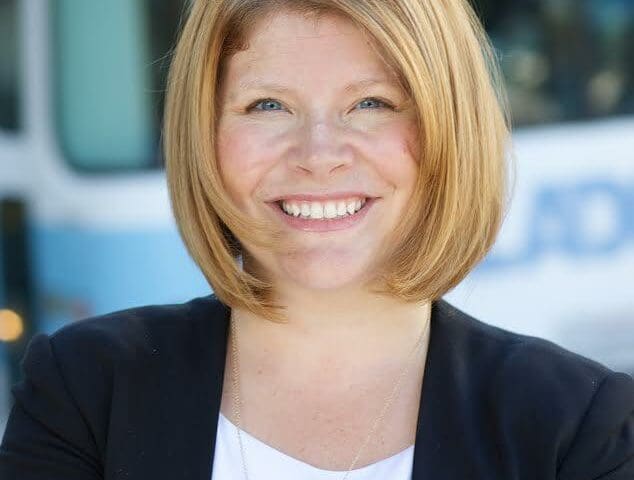

Seleta Reynolds, Los Angeles’ new chief of transportation, wants to help break L.A.’s dependence on cars. She believes that bikes are key to doing it. New York City, the Bay Area and other metropolises have already begun to show that a mixed transportation network with a central role for bicycles can be achieved in America. But can bikes prosper in the most infamous car town in the world?
Before being hired by Mayor Eric Garcetti this summer, Reynolds helped lead San Francisco’s Livable Streets office in that city’s transportation agency. She sees a bit of L.A.’s future in San Francisco’s present.
“In San Francisco, people are truly multimodal,” she told Capital & Main. “They take taxis, they take Uber and Lyft. They ride their bikes, they take a bike-share. They take the ferry, they ride the bus, they take the Muni Metro. Sometimes they drive, they take car-shares.
» Read more about: A Bike Lane Runs Through It: L.A. Rethinks Transportation »
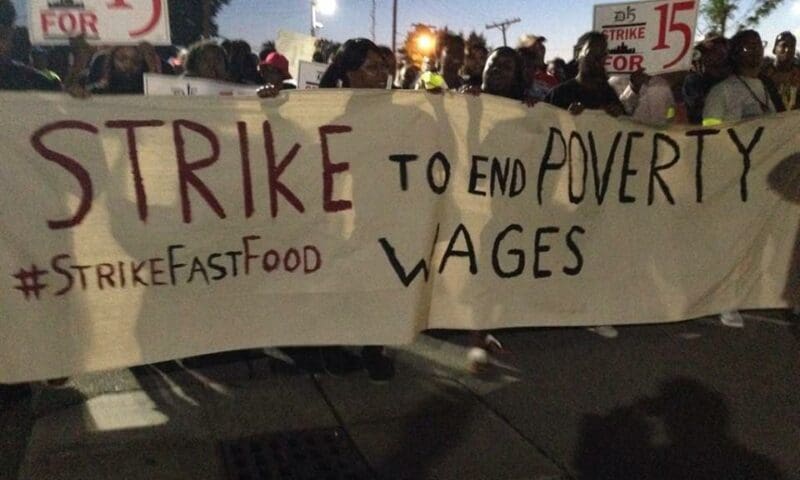
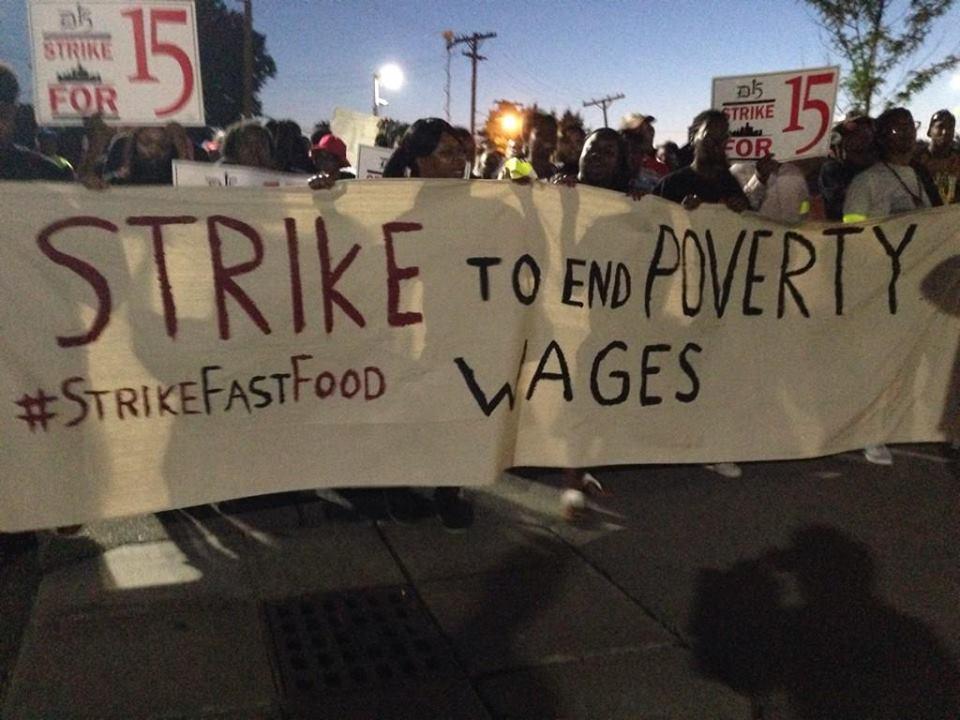
Seattle Mayor Ed Murray used last May Day to announce that business and labor had agreed to a historic plan to raise the minimum wage to $15 an hour. Seattle’s bold measure is part of a growing wave of activism and local legislation around the country to help lift the working poor out of poverty. The gridlock in Washington – where Congress hasn’t boosted the federal minimum wage, stuck at $7.25 an hour, since 2009 – has catalyzed a growing movement in cities and states.
The Seattle victory was a game-changer. Within months, politicians in other cities jumped on the bandwagon. San Diego city officials voted in August to adopt a $11.50 an hour by 2017. In San Francisco, which already has a citywide minimum wage, voters will decide in November whether to raise it to $15.
On September 24, the Los Angeles City Council voted by a 12 to 3 margin to require large hotels to pay at least $15.37 an hour to their workers.
» Read more about: A Movement Raises the Minimum Wage and Changes the Debate »

A $300,000 plane; $861,000 to pay off personal debts and keep open a struggling restaurant. A down payment on a house and an office flush with flat-screen televisions, executive bathrooms and granite counter tops. This isn’t a list of expenditures from Lifestyles of the Rich and Famous, this represents a small slice of the more than $30 million of taxpayer funds that have been wasted through fraud and abuse in Pennsylvania’s charter schools since they first opened in 1997.
A new report from the Center for Popular Democracy, Integrity in Education, and Action United is blowing the lid off the lack of public oversight at Pennsylvania’s 186 charter schools.
Inadequate audit techniques, insufficient oversight staff and a lack of basic transparency have created a charter system that is ripe for abuse in the Keystone State. But there is hope. The report provides a detailed roadmap for Pennsylvania to create an effective oversight structure and provide meaningful protections that can curtail endemic fraud and waste.
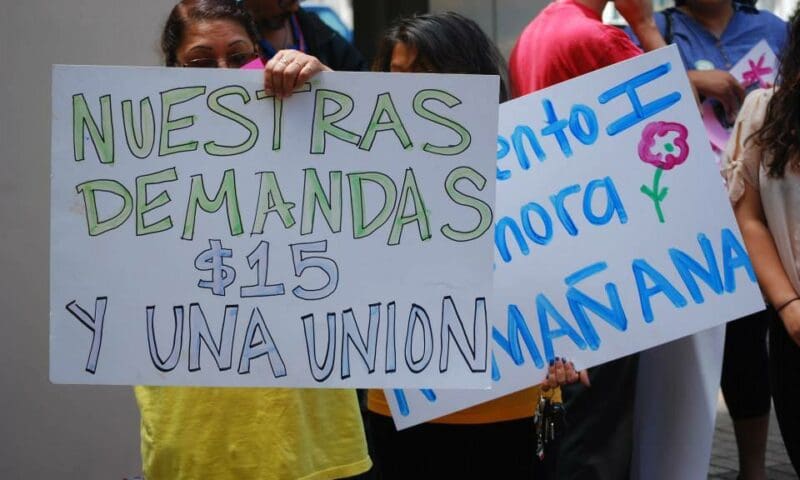
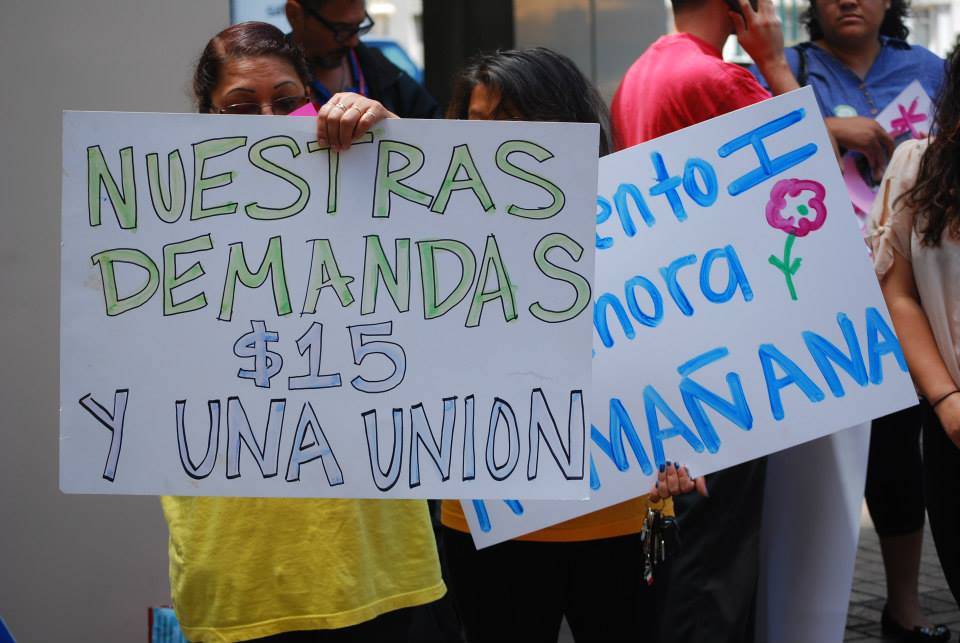
The recent Los Angeles City Council vote to raise hourly pay for 10,000 hotel workers to $15.37 could be part of an historic groundswell to create a new minimum wage across Los Angeles and beyond.
The Los Angeles City Council is expected to soon take up an introductory motion that would raise compensation for more than half a million employees throughout the city now laboring at California’s minimum $9 hourly standard.
Los Angeles Mayor Eric Garcetti, who rolled out the proposal on Labor Day with eight council members at his elbow, commissioned an impact study that calculates some 567,000 workers would benefit from the pay raise by 2017.
Garcetti has proposed a wage of $13.25 an hour, which would result in an annual wage boost of $3,200 per worker. Some advocates are pushing for a higher wage, as well as other provisions including paid sick days and strict enforcement to guard against wage theft.
Among the pile of bills that the legislature passed at the end of their session and delivered to Governor Jerry Brown’s desk were some significant ones for workers, health, education and the environment. The deadline for Brown to sign the bills was midnight Tuesday.
California became the first state to ban single use plastic bags, the formerly ubiquitous grocery bags that have a special talent for working themselves into waterways, beaches, and sensitive environmental areas.
The statewide ban follows – and replaces – dozens of local bans, including Los Angeles and San Francisco. Senate Bill 270, which the Sacramento Bee called “one of the most contentious bills of 2014,” was authored by state Senators Alex Padilla (D-Pacoima), Kevin de León (D-Los Angeles) and Ricardo Lara (D-Long Beach). The latter two joined as authors and helped solidify a majority in the legislature after ensuring that economic incentives would be available to help companies and workers impacted by the change.


The state took an important step for consumer rights and against corporate misinformation today. Governor Jerry Brown signed Senate Bill 1019, authored by Senator Mark Leno (D-San Francisco), which requires furniture labels to include information about flame retardant chemicals.
Experts found that the chemicals had serious health and environmental impacts, despite making no real difference in fire safety. Consumer rights, health, environmental, and labor groups all joined in support of the bill.
“For us, the evidence is increasingly clear that flame-retardant chemicals do little to inhibit catastrophic fires, but pose a real threat to the health and safety of firefighters and the people we serve,” said Lou Paulson, president of California Professional Firefighters, in applauding the Governor’s signing of SB 1019. (Disclosure: The union is a financial backer of Capital & Main.)
The chemical industry launched an intense fight against the bill,
» Read more about: New Law to Inform Californians of Dangerous Chemicals in Furniture »
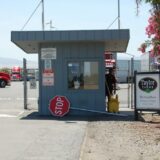
Governor Jerry Brown signed Assembly Bill 1897 into law Sunday, inaugurating what the bill’s author, Roger Hernandez (D-West Covina) described as “landmark legislation . . . to protect hard-working Californians who often times do not have a voice in the workplace.” The bill was drafted in response to the growing practice of corporations, particularly agriculture-based companies, to skirt state labor laws by relying on third-party contractors to hire employees and administer their wages.
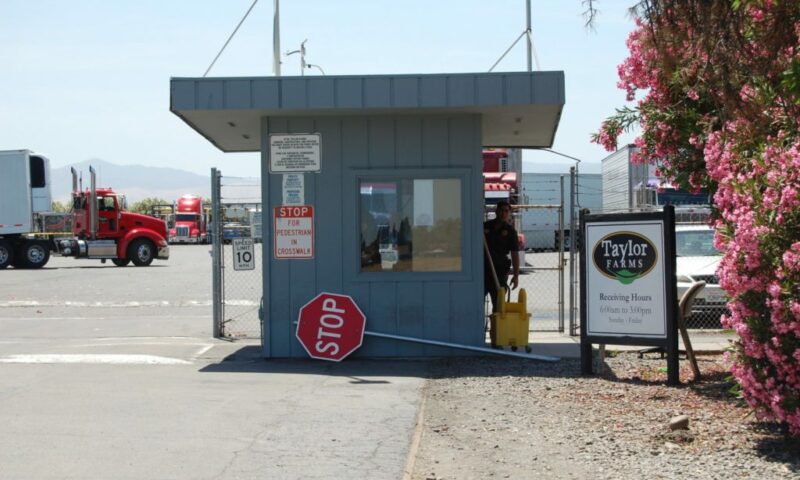
Last May a Capital & Main report by Bill Raden and Gary Cohn documented how workers at the sprawling Taylor Farms vegetable and salad processing plant in Tracy were denied due-process rights along with health care and other employee benefits. (See “Ten Years a Temp: California Food Giant Highlights National Rise in Exploited Labor.”) Taylor Farms has claimed that workers at its facilities are temporary employees who work for various contracting outfits. Many of these employees have worked years for Taylor Farms and yet have had little chance for advancement.
» Read more about: Governor Brown Signs Employer Accountability Law »
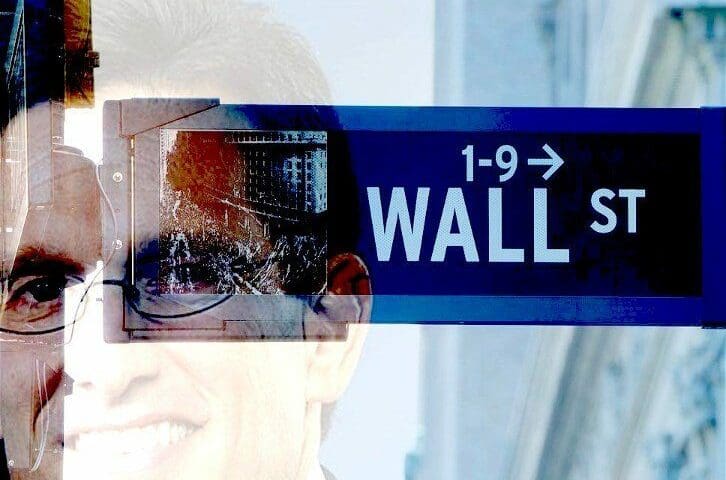
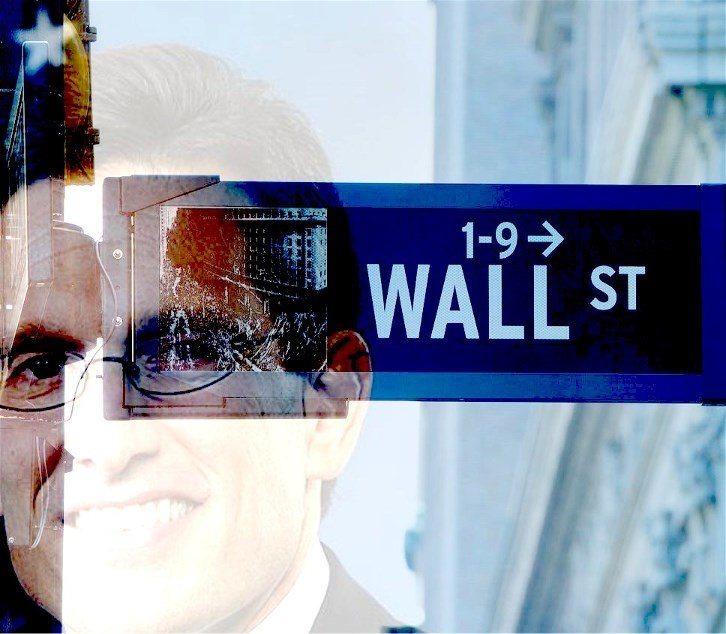
When House Majority Leader Eric Cantor lost his primary bid for re-election, he wasted no time cashing in on new opportunities. He didn’t even wait for his term to end before resigning his office August 18 – leaving his constituents unrepresented for three months, and making the leap to big bucks on Wall Street. His base pay in his new position with the investment firm Moelis & Co. is $400,000 for the remainder of the year, plus a $400,000 signing bonus. He also gets a million dollars-worth of restricted stock – altogether about 26 times the average income of Virginians in his old district.
What makes an ex-Congressman so valuable to an investment firm based in New York City? To be clear, he cannot return to the floor of the House to lobby his former colleagues on a bill. Congress ended that practice in the middle of the last decade.
» Read more about: The Big Money: Eric Cantor Goes to Wall Street »

I was inspired by the videos and photos of the more than 300,000 people at the People’s Climate March this past weekend in New York. The word is out, climate change is real, but what people might not know is the privatization of American infrastructure is contributing to the problem.
In a joint article with Professor Stephanie Farmer, I detail how poorly structured “public-private partnerships” (P3s) hinder efforts by cities and states to address climate change.
The city of Chicago is learning this the hard way. Not only has the decision to lease the city’s parking meters to a Morgan Stanley-led consortium been a costly mistake for taxpayers (the meters were sold $1 billion dollars under their value), Dr. Farmer’s research has also found that the deal is tying the hands of transportation planners in their efforts to construct environmentally sustainable transportation modes—such as bike lanes,
» Read more about: How Privatization Contributes to Climate Change »
It sounded like a moment from a Chris Rock comedy: A bewildered black motorist writhes on the ground in pain, asking, “What did I do, sir?” of the white police officer who has just shot him at a gas station in broad daylight.
“I just got my license – you said, ‘Get your license’!” exclaims the wounded Levar Jones, who only seconds before had his arms raised in the air. “Why did you shoot me?” The South Carolina Highway Patrol officer matter of factly replies, “For a seatbelt violation.”
The incident, of course, was no comedy or part of a Hollywood movie, but was recorded in the city of Columbia by the officer’s dashboard camera. It took place September 4, although the video only surfaced yesterday. It shows the officer firing four shots at the driver who had been standing beside his pickup truck, when he turned to his vehicle to retrieve his license.
» Read more about: Video Captures Another African American Shot By Police »