
The Slick
Why Coal Will Lead to More Deaths in Colorado
Across the nation, one of the dirtiest sources of power gets a lifeline from the Trump administration and state officials.
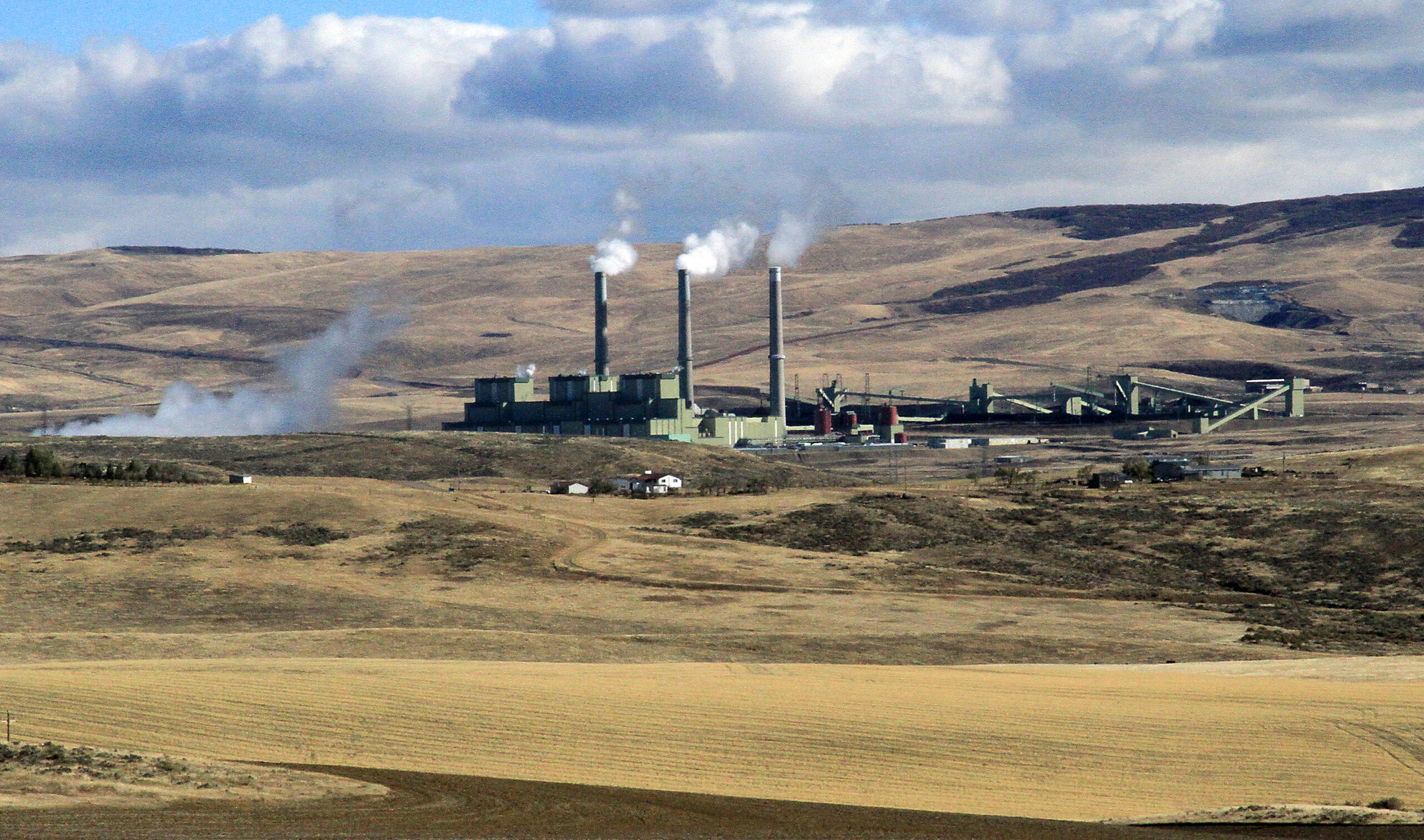

Colorado Springs resident Jane Ard-Smith told Colorado state lawmakers in April that granting a request by her municipal utility to keep its coal-fired power plant running three years past its planned 2029 retirement date would exacerbate her respiratory health.
“Folks with breathing-related ailments like me — we looked forward to breathing a little bit easier,” Ard-Smith testified before the Senate’s Transportation & Energy committee. “I’m concerned that the progress we’ve made as a state and as a city will be thwarted.”
Colorado Springs Utilities, which operates the Ray D. Nixon Power Plant in Fountain, about 85 miles south of Denver, isn’t alone in prolonging the life of its coal-fired plant. Providers that operate two other such plants — one on the western slope of the Rocky Mountains in Craig, and one on the eastern side in Pueblo — did not shut them down on Dec. 31, as planned. State law requires utilities to phase out coal and to replace it with cleaner-burning alternatives such as wind and solar.
Per unit of energy, coal-fired power plants belch more hazardous air pollutants than any other energy source.
Emergency orders from the Trump administration kept the Craig unit from retiring, while equipment malfunctions and transmission grid constraints contributed to the postponed shutdowns of coal-fired units in Pueblo and Colorado Springs, respectively. Xcel Energy Inc., the state’s largest utility, and Colorado Springs Utilities requested these delays and were supported by the state.
Residents like Ard-Smith, consumer advocates, and doctors statewide agreed that allowing these three coal-fired power plants to stay open beyond their scheduled closure dates will worsen public health, contribute to more deaths and increase costs for ratepayers. The tab is about $85 million a year alone to keep the Craig Generating Station online, according to one report.
Coal is more expensive and dirtier to combust for power generation than renewable energy. Colorado’s six coal-fired units are among the state’s worst polluters and major sources of toxic haze that obfuscates world famous views in Rocky Mountain National Park. These plants are also ringed by communities with lower median incomes and greater proportions of people of color who suffer higher rates of emergency room visits.
Per unit of energy, coal-fired power plants belch more fine particulate matter, mercury, sulfur dioxide, nitrogen oxides and hazardous air pollutants than any other energy source. These generators also release millions of pounds annually of greenhouse gases that warm the atmosphere, causing more intense and extreme weather events such as heat waves, floods and hail.
And that’s not all: Several of Colorado’s remaining coal-fired plants did not install modern pollution controls in anticipation of their replacement with cleaner energy sources. Their continued use led Democratic Gov. Jared Polis to admit in May that the state won’t reach his goal of 100% renewable-powered electricity by 2040, relative to 2005 emissions levels. Utilities will, however, hit an 80% target — required by law — in 2030, he added.
Keeping the three coal-fired plants open will also exacerbate the state’s air quality, which already fails to meet federal standards, as well as increase hospital visits, missed school time for children with asthma and pregnancy complications, physicians and public health researchers told Capital & Main.
“Ultimately, the longer these plants operate, people will get sick, and people will die.”
~ Sheryl Magzamen, epidemiologist
“If we think about our three core functions, we have lungs that keep us breathing, a heart that keeps our blood circulating, and a brain that is the circuit board that runs the body,” said Dr. Sara Carpenter, a pediatrician and executive director of Healthy Air and Water Colorado, a nonpartisan nonprofit comprised of health care providers.
“Air pollution, and coal in particular, are lethal to all three of those systems,” she added.
Discontinuing coal use leads to measurable health improvements. Scientists at Colorado State University found in a 2019 study published in GeoHealth that closing coal-fired power plants would reduce deaths in disproportionately impacted communities.
Conversely, keeping them open will increase mortality, said Sheryl Magzamen, a professor in the environmental and radiological health sciences department at Colorado State University and the study’s lead author.
“Ultimately, the longer these plants operate, people will get sick, and people will die,” the epidemiologist said.
The prolonged lifespan of three coal-fired units in Colorado were among at least 34 across the country left open in spite of planned retirements since the president took office for a second time in January 2025. He doubled down on his support of what he calls “clean, beautiful coal” this month when he announced $700 million in federal funding, in part to build the first new such plants in the U.S. in more than a decade in Alaska and West Virginia.
Tapping power from such generators is necessary to help meet escalating electricity demand stemming in large part from data centers that fuel artificial intelligence, his administration said.
A resurgence in coal use was partially to blame for a 2.4% increase in planet warming emissions in the U.S. last year.
Colorado’s attorney general and other state litigators filed suit against the federal government’s emergency energy orders, claiming that leaving such plants online threatens to unwind hard-fought progress toward a clean-energy economy. About one-third of the average global temperature increase since preindustrial times is attributable to coal combustion, according to the International Energy Agency.
The federal orders also prompted Polis to sign into law on June 4 a bill that institutes a cap on greenhouse gas emissions allowed from coal-fired power plants operating past their planned retirement dates.
Backsliding isn’t only happening in the United States, where the White House is actively discouraging investment in wind and solar energy. Worldwide, more than 70% of coal units slated for shutdown last year were kept online, according to a May report from Global Energy Monitor, a nonprofit that tracks global energy use. The U.S. Energy Information Administration projected that retirements scheduled for this year could be delayed as well.
A resurgence in coal use was partially to blame for a 2.4% increase in planet warming emissions in the U.S. last year, after two years of decline, researchers from the Rhodium Group, an independent data provider, revealed in a January report.
In Colorado, power plants continued to use coal as officials warned residents to prepare for the annual “ozone season” — the days between May 31 and Aug. 31 when the state’s unusual topography and unpredictable weather conspire to worsen ground-level pollution.
“Fossil fuel combustion generates a lot of precursors for ozone and they have a pretty substantial rate of spread,” said Jonathan Buonocore, an assistant professor of environmental health at Boston University.
“Air pollution from these things can be cross-continental,” added Buonocore, who worked with other researchers to build a dataset for a study published in November in Environmental Research Letters that found that Colorado’s population is among the nation’s most exposed to fossil fuel infrastructure.
“A study in Southern California found that between 1994 and 2011, as air pollution decreased, lung function development in adolescents increased.”
~ Dr. Sara Carpenter, pediatrician
Smog forms when heat and sunlight react with toxic gases released by vehicles, oil and gas rigs and fossil-fuel-fired power plants, among other sources. Ozone pollution in metropolitan Denver routinely exceeds federal standards throughout the summer, prompting public health officials to issue air quality alerts that direct older residents, children and those with respiratory and other ailments to stay inside.
Colorado’s ozone problems also contribute to failing grades from the American Lung Association for areas near, and within the same region, as coal-fired power units. Rio Blanco County, located south of the Craig Generating Station, received a “D” grade from the nonprofit for its air quality. Moffat County, where the power station is located, is without monitors that allow the organization to monitor its atmosphere for pollutants.
In December, and again in March, the U.S. Department of Energy issued a 90-day emergency order that required Unit 1 at the Craig Generating Station, slated to close Dec. 31, 2025, to remain operational. Since December, Unit 1 has been fired up for only 16 days to help the regional power authority cope with outages and grid uncertainty, said Mark Stutz, a spokesman for Tri-State Generation and Transmission Association Inc. The facility includes two other coal-fired units. Unit 2 is slated for closure Sept. 30, 2028, and Unit 3 on Jan. 1 of that year, he added.
Tri-State operates Units 1 and 2 with several other providers as part of a co-op that must pass along to ratepayers repair expenses for Unit 1, which needed repairs when the federal government ordered it to remain operational, Tri-State CEO Duane Highley said in a Jan. 29 request for a rehearing on the order.
About 300 miles southeast in Pueblo, a coal-fired unit at Xcel Energy’s Comanche Generating Station continues to operate until the end of 2026. The state’s Public Utility Commission approved a request from the utility and state officials to postpone the closure of Unit 2 to allow for the repair of Unit 3, which was “extensively damaged” and out of service. Postponing closures, even for a year, matters for children’s health because their developing lungs are sensitive to air pollution from coal-fired power plants, said Carpenter, the pediatrician.
“Puberty has such big growth spurts and the lungs really increase in size,” she said. “A study in Southern California found that between 1994 and 2011, as air pollution decreased, lung function development in adolescents increased — it was a statistically significant change.”
Thirty miles north in Fountain, Colorado Springs Utilities will be allowed to keep the Ray D. Nixon coal plant open until 2032 after Polis signed a bill in May. The three-year extension of the unit’s life was necessary to allow the utility to meet its clean energy goals as required by state law, Travas Deal, the utility’s chief executive, testified in April at the state Senate’s Transportation & Energy Committee.
The utility needs greater transmission capacity to add renewables like wind and solar, he added, and its customers cannot afford another rate increase beyond the 6.5% a year jump that’s already in place. The region’s service area led the state in the number of low-income energy assistance program applications in 2025.
“Over the past several years, energy bills have risen faster than wages,” Nicole Means, the utility’s energy assistance program director, told lawmakers. “When energy costs rise, they don’t just strain household budgets, they ripple outward — higher utility bills mean less money for groceries, child care and health care.”
Copyright 2026 Capital & Main


-

 Column - State of InequalityMay 21, 2026
In California Governor’s Race, Xavier Becerra Walks Away From Single-Payer
-

 Latest NewsMay 22, 2026
Where California’s Gubernatorial Candidates Stand on Climate and Taking Big Oil Money
-
 The SlickMay 20, 2026
70-Foot Wastewater Geyser Reflects New Mexico’s Latest Oilfield Challenge
-
 The SlickMay 29, 2026
Feds to Open Tens of Thousands of Acres of Colorado Wilderness to Oil Drilling
-

 Latest NewsMay 18, 2026
Budget Cuts Threaten Program That Doubles Food Dollars for Californians in Need
-

 Deadly Dust: The Silicosis EpidemicMay 27, 2026
California Moves to Ban Quartz Countertop Fabrication to Combat Silicosis Epidemic
-

 Latest NewsMay 26, 2026
Conditions at California ICE Detention Centers Are Getting Worse, Inspections Find
-

 Imperial DivideJune 3, 2026
California’s Lithium Valley Dreams Meet Reality at the Only Restaurant in Town