
L.A. Teachers Strike
L.A. Teachers’ Potential ‘Meta-Strike’ Reveals Battle Lines in U.S. Public Education War
Co-published by the American Prospect
Superintendent Austin Beutner and his allies have made it clear they do not believe that the L.A. Unified School District in its current incarnation is worth investing in – or even preserving.


Co-published by the American Prospect
Sometimes strikes are exactly what they seem to be – battles over wages and working conditions, with relatively few implications for anything or anyone else. But sometimes a strike is about something much bigger: a fundamental clash over vision and values, with repercussions that extend far beyond the warring parties. Call it a meta-strike.
See More Strike Coverage
If Los Angeles teachers walk off the job January 14, as widely expected, it will be a meta-strike with extremely high stakes not only for teachers, students and parents in L.A., but for public education across the U.S. The stalemated negotiations over wages, class size, staffing and other issues matter – but they are proxies for an epic fight that has been playing out in American school districts for more than a decade.
The head of the country’s second-largest school district is aggressively advancing a controversial blueprint that could make LAUSD almost unrecognizable.
On one side of this divide are those who believe that public education as an institution should be preserved more or less in its current form, with a greater infusion of money to address chronic underfunding and understaffing. On the other side is an array of forces that want to radically restructure public schools, and who have made it clear they do not believe that the L.A. Unified School District in its current incarnation is worth investing in – or even preserving.
Austin Beutner, LAUSD’s superintendent, is nothing if not a proponent of radical restructuring. He was appointed to his post not because of his experience in education – he has never held a position in that field – but because he is a fervent advocate of an approach that has its roots in the private sector, where he spent the bulk of his career. Beutner made his considerable fortune in business, starting at the powerhouse private equity firm Blackstone and then co-founding the investment banking company Evercore Partners.
Selected by a divided school board in May, Beutner is now arguably the most powerful figure in the national movement to upend traditional public education. As head of the country’s second-largest school district, he is aggressively advancing a controversial blueprint that could make LAUSD almost unrecognizable.
Though Beutner has yet to unveil his proposal, he has tipped his hand in a big way with the hiring of consultant Cami Anderson, the former superintendent of Newark, New Jersey public schools. In Newark, Anderson pushed through a disruptive plan called the “portfolio model.” As the L.A. Times reported in November, under the portfolio model the district would be divided into 32 networks. These networks, observed reporter Bill Raden on this site, “would be overseen like a stock portfolio. A portfolio manager would keep the ‘good’ schools and dump the ‘bad’ by turning them over to a charter or shutting them down much like a bum stock. The changes in Newark included neighborhood school closures, mass firings of teachers and principals, a spike in new charters and a revolt by parents that drove out . . . Anderson.”
Why Beutner and the board majority that hired him think that the portfolio model will be more successful in L.A. than it was in Newark is uncertain. They don’t see the unchecked growth of largely unregulated charter schools as a problem, despite more and more evidence that charters discriminate against disabled students, increase racial stratification and on the whole do not perform better than traditional schools. On the contrary, they view charter expansion as elemental to the future of the district.
This is in stark contrast to United Teachers Los Angeles, the teachers union, which sees investment — in the form of higher salaries, reduced class sizes, more support staff including psychologists and nurses – and the regulation of charters and community schools as the linchpin of progress. They do not see the public school as a failed institution, but as an egregiously underfunded one whose challenges have been made significantly worse by the rise of charter schools that drain resources from traditional schools. While some influential philanthropic and community organizations have embraced Beutner’s restructuring plan, the teachers union has been somewhat successful in building community support for its vision of reinvestment, particularly for the idea of public oversight and for schools that address all the complex needs of an overwhelmingly poor student population.
While the two sides continue to negotiate, they could hardly be farther apart in how they view the future of public education. Which is why a teachers strike is almost certain.
Copyright Capital & Main



-

 Column - State of InequalityJune 4, 2026
California’s Economy Runs on Labor Trump Wants to Deport
-

 Featured VideoJune 5, 2026
At This New Mexico Park, Mountain Bikers Pedal Amid Hundreds of Oil Wells
-

 Latest NewsJune 9, 2026
Ousted by the Trump Administration, U.S. Immigrants Remain Locked up in African Kingdom
-
 The SlickJune 10, 2026
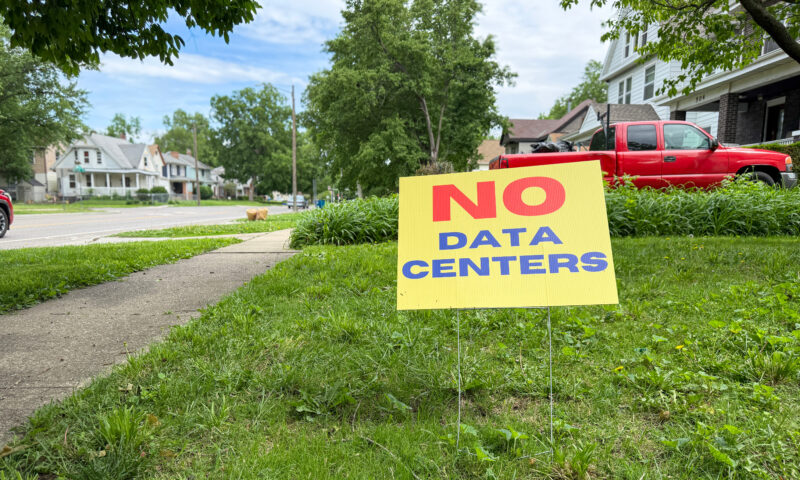
Data Centers Are on the Ballot — This Pennsylvania Candidate Won Her Primary Keeping Them Top of Mind
-
 Latest NewsJune 12, 2026
California Town Lets Private ICE Detention Centers Police Themselves
-

 Latest NewsJune 8, 2026
The Glacier May Be Gone, but the Love Isn’t
-

 Column - State of InequalityJune 11, 2026
County Tax Measures Show Limits of Local Responses to Medicaid Cuts
-

 The SlickJune 16, 2026
Why Coal Will Lead to More Deaths in Colorado