
Column - State of Inequality
How Many Californians Face Eviction Each Year? The State Can’t Say For Sure.
A bill moving through the Legislature would improve eviction tracking and could help California better target homelessness prevention funding.

A little more than two years ago, a state audit found that despite spending $24 billion over the previous five years to combat homelessness, the state of California couldn’t be sure how effective some of its programs were because of insufficient data.
The problem of poor data tracking and reporting on homelessness issues, though, is hardly confined to sweeping programs like Project Homekey. And when it comes to one of the primary reasons people wind up on the street — being evicted from their homes — that information gap is glaring.
Despite expert estimates that hundreds of thousands of California residents face eviction each year, the data reporting on the issue is so fragmented — and in some cases, missing altogether — that more precise numbers are virtually impossible to find, let alone what those numbers indicate.
That all stems from the purely patchwork nature of the state’s counties reporting out their own data on eviction filings and results. And it leaves state lawmakers and analysts essentially guessing where to focus energy and resources to prevent more evictions from happening.
“We don’t have the data to do data-driven policy,” said Kyle Nelson, director of policy and advocacy for the economic justice nonprofit Strategic Actions for a Just Economy. “And as the state is investing unprecedented amounts of money in homelessness prevention, we have no idea whether or not we’re actually addressing the root cause.”
* * *
The number of California residents who face eviction every year isn’t clearly known. By actual eviction filings by landlords, the count has hovered between 130,000 and 135,000 a year since 2019, with a significant dip during the COVID-19 pandemic years as tenant protections and assistance were increased.
Those numbers, though, represent only the cases brought through the court system. The outcomes of those cases aren’t specified, only the fact that they were filed.
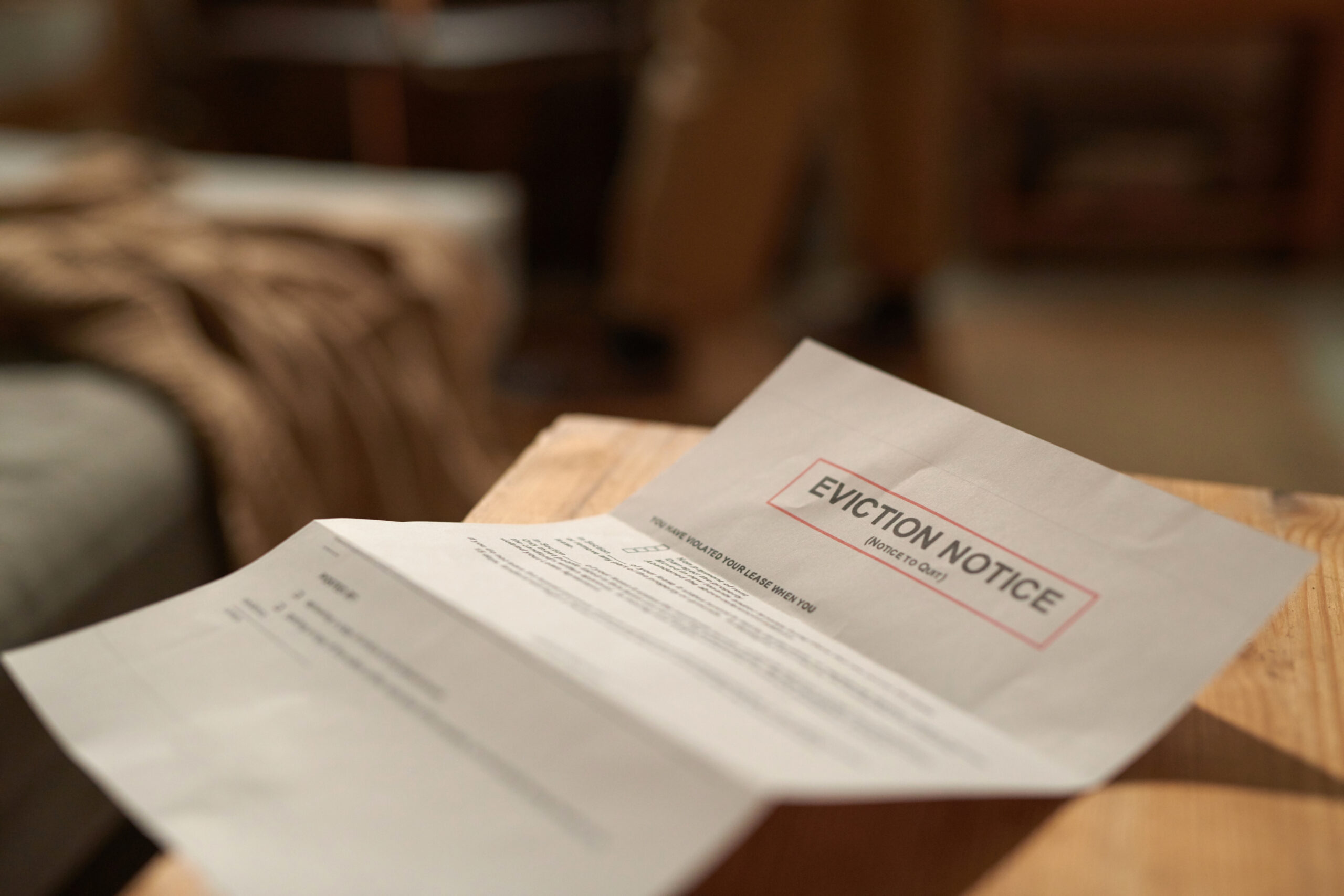
Beyond that, housing experts say the total does not include vast numbers of renters who, once they’ve received a preliminary eviction notice from their landlord giving them a certain amount of time to pay their rent, move out of their homes because they fear a court filing is on its way and don’t want the proceeding to show up on their rental history.
Nelson, who has used public records requests to study evictions in the state for a decade, puts the likely total of people facing such displacement at several hundred thousand annually. The downstream effect of those kinds of numbers on homelessness is grim; according to recent research by UC San Francisco, roughly one-third of California’s unhoused adults had their name on a lease or mortgage just prior to becoming homeless.
Overall, California’s system for tracking eviction filings — and then following those cases out to their conclusions — is remarkably lacking. As Nelson notes in his organization’s recent report, each of the state’s 58 counties has its own approach to documenting outcomes in eviction cases and in deciding how much of that information (if any) to make available to the public or the state’s Judicial Council.
Further, California doesn’t mandate what eviction data should be tracked. In fiscal year 2023-2024, the latest year included in the nonprofit’s study that covers 15 years, eight counties didn’t report their eviction outcomes at all to the Judicial Council, which oversees the superior court system that processes eviction filings.
That group — including Los Angeles, San Francisco, San Diego, Sacramento and Riverside counties — comprised 57% of the state’s eviction filings that year. While the counties themselves presumably know the outcomes of those cases, the state doesn’t.
For many counties, the reporting process is complicated by a very straightforward problem: outdated programs or methods. “For a long time, Los Angeles, which is the largest trial court in the state, was keeping paper records,” Nelson said. “They had very, very basic electronic data architecture. And I think that’s the story for a lot of these counties. They don’t have a way of easily incorporating their local data into [a state system].”
* * *
A bill working its way through the state Legislature would force some transparency on this process. Carried by State Sen. Maria Elena Durazo (D-Los Angeles), the measure would require superior courts in each county to report eviction case outcomes to the Judicial Council every three months, and also publish the results online.
Some provisions of the bill would begin in 2027, including an assessment by the council of how soon each of the counties could begin reporting the data. In several counties, Nelson said, that’s going to require upgrades to the various county courts’ technology systems.
“It costs money, and it takes time,” Nelson said. In the past, that’s been enough to defeat other versions of this legislation, including a veto by Gov. Gavin Newsom in 2023 and another try by Durazo that died in committee last year.
Nelson testified in support of the most recent effort before the Assembly Judiciary Committee earlier this week, which subsequently passed the bill, SB 1160. It now goes to the Assembly Appropriations Committee, where the cost of implementing the plan will be scrutinized.
Cost and court staffing issues form the basis of much of the opposition to the measure, which has had bipartisan support from legislators themselves in all of its versions. The Judicial Council has estimated a one-time cost of $6.1 million to set up the system and $5.4 million annually to run it. The state Legislative Analyst’s Office, meanwhile, put the cost of implementing and running the program at only about $1.8 million per year in a letter to Sen. Durazo’s office.
Either way, it’s not free. At some point, though, the state is going to have to reckon with the larger cost of not knowing what’s happening with its eviction cases, which supporters say is consistently hamstringing lawmakers’ ability to understand whether they’re committing resources in the right places.
“Having the data would give us a sense of where we can make interventions to maximize the investments we’ve already made,” Nelson said. Without that basic information, the state is grasping in the dark when it comes to understanding whether its spending is having any impact on the eviction aspect of its homelessness crisis.
Copyright 2026 Capital & Main



-

 The SlickMay 29, 2026
Feds to Open Tens of Thousands of Acres of Colorado Wilderness to Oil Drilling
-
 Deadly Dust: The Silicosis EpidemicMay 27, 2026
California Moves to Ban Quartz Countertop Fabrication to Combat Silicosis Epidemic
-

 Imperial DivideJune 3, 2026
California’s Lithium Valley Dreams Meet Reality at the Only Restaurant in Town
-

 Column - State of InequalityMay 28, 2026
Top Democratic Candidates Agree on Housing Urgency, Not the Fix
-

 Latest NewsJune 1, 2026
Deep Cuts to Civilian Support Staff for Families of Deployed Marines Raise Concerns
-

 The SlickJune 5, 2026
At This New Mexico Park, Mountain Bikers Pedal Amid Hundreds of Oil Wells
-

 Column - State of InequalityJune 4, 2026
California’s Economy Runs on Labor Trump Wants to Deport
-

 Latest NewsJune 9, 2026
Ousted by the Trump Administration, U.S. Immigrants Remain Locked up in African Kingdom