
Environment
New California Bill Will Dispose of Abuse of Temp Sanitation Workers

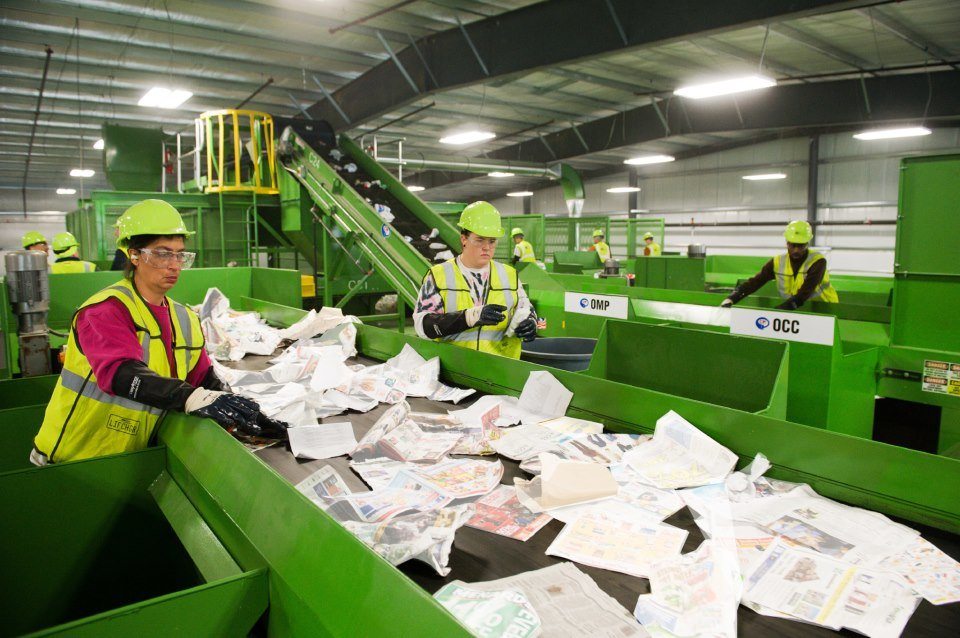
Imagine being a waste worker sorting through trash for recyclables with only tattered gardening gloves and being pricked by a used hypodermic needle. Under the current conditions of many recycling companies, you would be told, “Get back to work” and simply have to bandage your wound – sometimes with pieces of paper from a pile of trash. And if you tried to talk with your boss about your fear of spreading illness from the needle to your family or friends, you are immediately fired. This is a true story of a former trash sorter – who was also considered a temporary employee – at a trash sorting facility in Los Angeles.
This story – of gross negligence and denial of company responsibility for basic worker health and safety protections – is too common a reality in low-wage industries. Bill Raden and Gary Cohn covered the plight of temporary workers in the food processing industry in a Capital & Main article. Sorting through our trash is cited as one of the most dangerous jobs, according to the U.S. Bureau of Labor Statistics. To pile on to that, temporary work places the responsibility for health and safety protection – such as basic gloves, respiratory masks and reflector vests – on the worker, rather than on the company.
The work of a trash sorter is physically stressful – but essential. In these demanding jobs, women and men are often hunched over a conveyer belt of trash for eight or more hours a day, sorting through refuse and carefully dodging such hazards as syringes, dirty diapers, moldy paper and toxic chemicals. They often breathe in a steady exposure of dust and fungi. Many sorters are low-income and recent immigrants.
However, not all trash companies treat their workers unfairly. One Los Angeles recycling facility takes a human-based approach. The company provides family-sustaining wages, health and safety training and gear, paid sick and vacation days, and a retirement plan to all employees.
Many of the workers whom I spoke with at this company have committed decades to the facility and see their work as a service that protects public health. One employee is referred to as Abuelita – “Grandma” in Spanish – by her coworkers and even the company’s management. At the age of 72, Abuelita loves her job and continues to stay on past the average retirement age because she sees herself as a coach for new employees and her co-workers as a family. When trash companies see themselves as responsible for the entire well-being of their employees, then the benefits, greater cohesion and productivity– to the worker, to the company and to society – become clear.
In California, we finally have an important opportunity to curb the abuse of temporary workers in the sanitation industry. Assemblymember Roger Hernandez of West Covina wrote Assembly Bill 1897, a law that would require a company and its staffing agencies to be responsible for paying workers’ wages, providing workers’ compensation, and paying all required employer and worker contributions as required by California’s Labor Code. This bill would essentially help temporary workers receive at least the minimum wage, compensation for injuries and a path towards retirement.
Soon, the California Assembly, led by Assembly Speaker Toni Atkins, will consider passing the law after a vote of approval by the Senate Appropriations Committee. Please show your support for ending temporary worker abuse in the sanitation industry by contacting your state Assemblymember and telling them you support AB 1897.



-

 Column - State of InequalityJune 4, 2026
California’s Economy Runs on Labor Trump Wants to Deport
-

 Featured VideoJune 5, 2026
At This New Mexico Park, Mountain Bikers Pedal Amid Hundreds of Oil Wells
-

 Latest NewsJune 9, 2026
Ousted by the Trump Administration, U.S. Immigrants Remain Locked up in African Kingdom
-

 The SlickJune 10, 2026
Data Centers Are on the Ballot — This Pennsylvania Candidate Won Her Primary Keeping Them Top of Mind
-
 Latest NewsJune 12, 2026
California Town Lets Private ICE Detention Centers Police Themselves
-

 Latest NewsJune 8, 2026
The Glacier May Be Gone, but the Love Isn’t
-

 Column - State of InequalityJune 11, 2026
County Tax Measures Show Limits of Local Responses to Medicaid Cuts
-
 The SlickJune 16, 2026
Why Coal Will Lead to More Deaths in Colorado