Latest News
As Cold Storage Company Became Global Titan, Fire Risks Piled Up
Lineage transformed food supply chains and made its owners rich. Now it’s hired a crisis team in the wake of East L.A. warehouse fire.
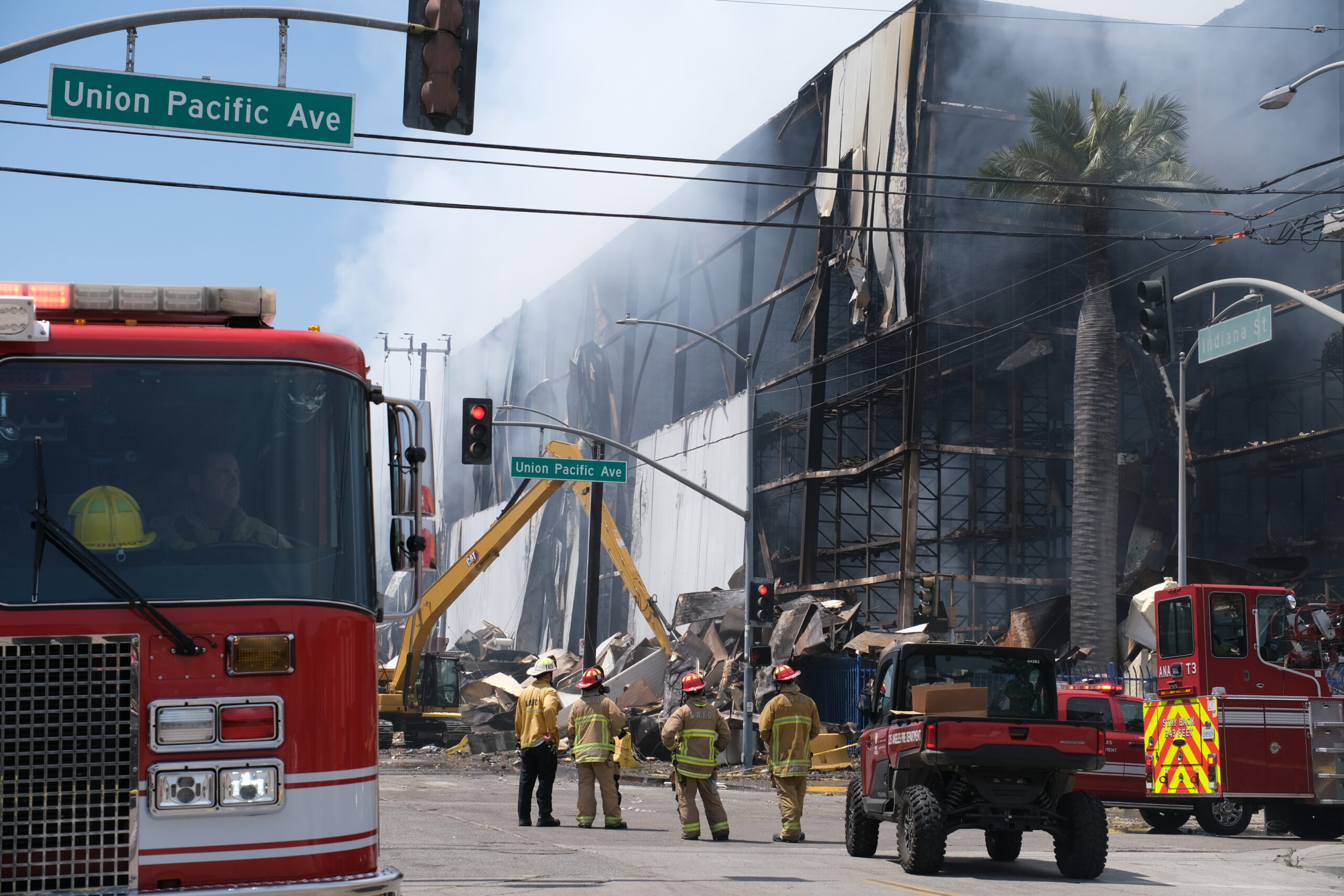

More than a week after fire broke out in a cold storage warehouse in Boyle Heights, the Los Angeles Fire Department announced it had finally stopped burning. But neighborhood residents whose homes were enveloped in smoke for days may feel the health and environmental effects of the blaze for weeks or even months.
The fire sent thick plumes of black smoke into the air from Downtown Los Angeles to the San Gabriel Valley. In Boyle Heights, residents — some who live just across the street from the block-long warehouse — told Capital & Main that they were struggling to breathe and access basic assistance such as home air purifiers.
The Boyle Heights warehouse was built less than a decade ago, but residents had little understanding of what was behind its walls or what risks it could pose. That’s not unusual in this dominantly Latino community and many others like it in Southern California where working-class residents live in close proximity to rail lines, factories, auto shops, rendering plants and many other pollution hazards.
The nearly 500,000-square-foot warehouse is operated by Michigan-based Lineage Inc., the largest cold storage firm in the world and a company with a record of dozens of health and safety and environmental violations. The cause of the fire is still unknown, said LAFD spokesperson Jamie Stewart, but the company believes it started on the warehouse roof as workers from another company serviced rooftop solar panels. That company, Pearce Services, confirmed that four of its workers were on site the day the fire started.
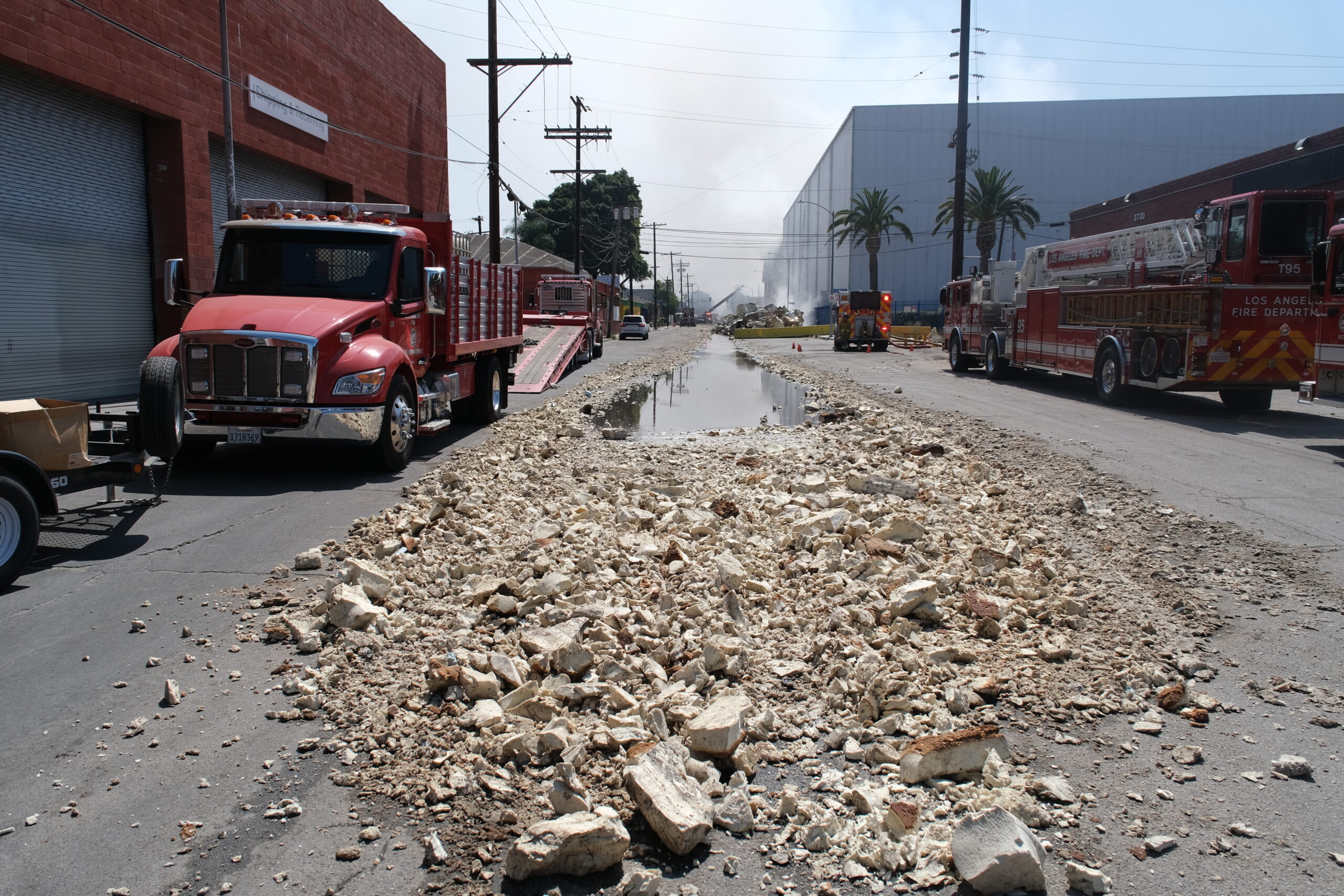
A runoff stream from firefighting efforts flows along Union Pacific Avenue on June 22.
Five days after the fire erupted, Juan Juarez and neighbor Francisco Carriel stood in their yards speaking over a cinderblock and iron fence. Their homes on La Puerta Street, with cement stucco walls painted white, were awash in relentless waves of toxic haze. Less than a block away, a brown stream of runoff and a row of twisted metal panels and charred foam piled up as firefighters used excavators to pull apart the warehouse and spray water into it.
“Está de la chingada” — Spanish for “it’s fucked up” — they both said nearly in unison as a reporter approached. Pulling his cartoon character mask under his chin, Juarez explained that several of his children and nephews were in his house, sweltering and without access to air conditioning.
A few houses down the street, resident Wendy Ramirez said she sent her two children, who both have asthma, to stay elsewhere. Since the fire began, she had experienced stomach pains and diarrhea, which she said her doctor blamed on the smoke.
“For them to say it’s not toxic, it’s such a lie, it’s such a lie,” Ramirez said, referring to a widely reported statement from the South Coast Air Quality Management District that particulate matter readings in the smoke were “generally near” normal levels.
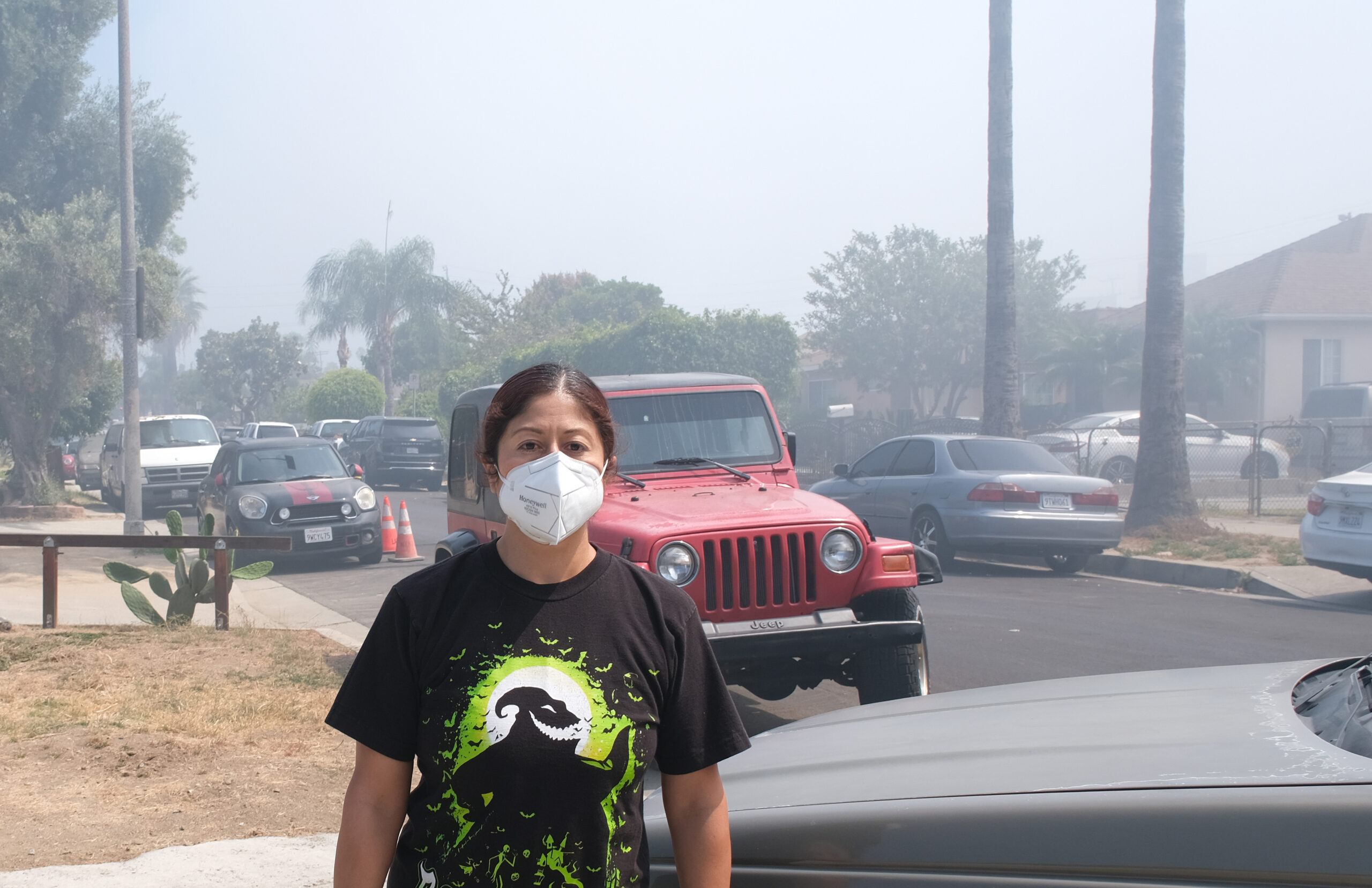
Wendy Ramirez, a resident of the Boyle Heights neighborhood in Los Angeles.
The fire has highlighted the environmental and health hazards of the rapidly expanding cold storage industry, which have largely flown under the public radar. Most cold storage warehouses use anhydrous ammonia for refrigeration, which can be fatal if inhaled. The warehouses are insulated with thick layers of combustible foam that contain the potentially carcinogenic material polyisocyanurate. They also store huge quantities of highly flammable plastic-wrapped food products.
The blaze also brought immediate attention to Lineage, the world’s dominant cold storage company, with more than 500 warehouses in 18 countries in North America, Europe, Asia and Oceania. California — with 42 Lineage warehouses — is home to more of the company’s warehouse space than any other state or foreign country except New Zealand. In its statement on the fire, Lineage highlighted the strategic importance of its Boyle Heights facility because of its proximity to the Port of Long Beach and its access to millions of people in Southern California.
According to company documents, lawsuits and other records, Lineage — which operates as a real estate investment trust — has expanded rapidly over the last decade as demand for cold storage has increased. The company has a history of environmental and health violations. Lineage did not immediately respond to Capital & Main’s emails inquiring about its record of citations issued by the Environmental Protection Agency and the Department of Labor’s Occupational Safety and Health Administration.
In Boyle Heights, determining what burned, and what kinds of particle pollution fouled the air for days, will take weeks as the fire department and city and county agencies investigate, officials said.
The harm for residents could be severe, said Rima Habre, an epidemiologist at the University of Southern California. Short-term consequences for those nearest to the warehouse could be asthma and even heart attacks, but other effects will take time to surface. Much of it has to do with what’s in the smoke, which is hard to trace retroactively.
“The larger problem is when these things happen, they’re so dependent on exactly where the smoke is going,” Habre said, adding that heavy metals and industrial chemicals are likely part of the atmospheric mix.
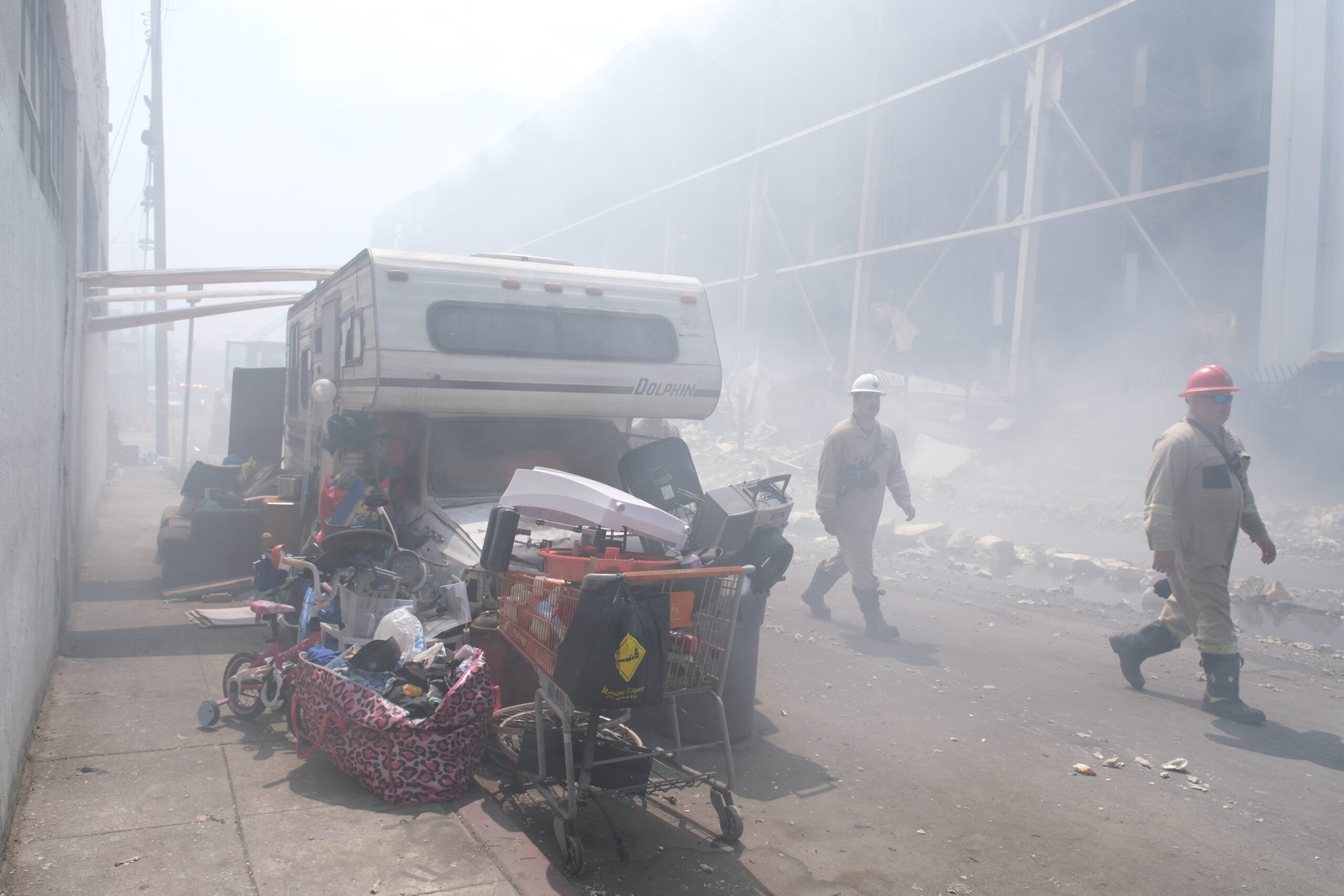
Firefighters walk through smoke alongside the burning Lineage cold storage warehouse.
Lineage said it’s assisting with firefighting efforts and has contributed $2 million to the California Community Foundation to assist affected communities. It has also launched a damage control effort with the help of a prominent L.A.-based lobbying firm.
Lineage was founded in 2008 by former investment bankers Adam Forste and Kevin Marchetti, who began their careers at Morgan Stanley, where Forste specialized in mergers and acquisitions.
Lineage, then known as Lineage Logistics, began with the purchase of a single Seattle warehouse in 2008. Since then, Lineage has acquired dozens of regional cold storage companies and added hundreds of warehouses that now store and distribute 400 billion pounds of food a year.
Forste and Marchetti took the company public in 2024 with the largest initial public offering that year, raising more than $4 billion. Currently the partners appear on the Forbes billionaires’ list, each with an estimated net worth of $2.1 billion. The company also established a nonprofit, Lineage Foundation for Good, which distributed $8 million in charitable grants in 2024, the last year for which online IRS records are available.
Los Angeles Fire Department spokesperson Mario Guillen told Capital & Main that both Lineage, which runs the cold storage warehouse, and the warehouse property owner collaborated to remove potentially hazardous ammonia from the building and obtain water cannons and water dropping helicopters. Chill Build LLC is listed as the owner of the warehouse property, according to public records. Lineage didn’t answer Capital & Main’s emailed questions about the amount of money it spent on the firefighting effort.
Lineage has also invested in damage control.
Two days after the fire erupted, Lineage hired a lobbying firm with deep ties to Los Angeles City Hall for “crisis communications and work related to the impact of facility fire.” M Strategic Communications was engaged to lobby various city officials including the mayor, as well as the Department of Building and Safety and the Los Angeles Fire Department, on behalf of Lineage through the rest of the year.
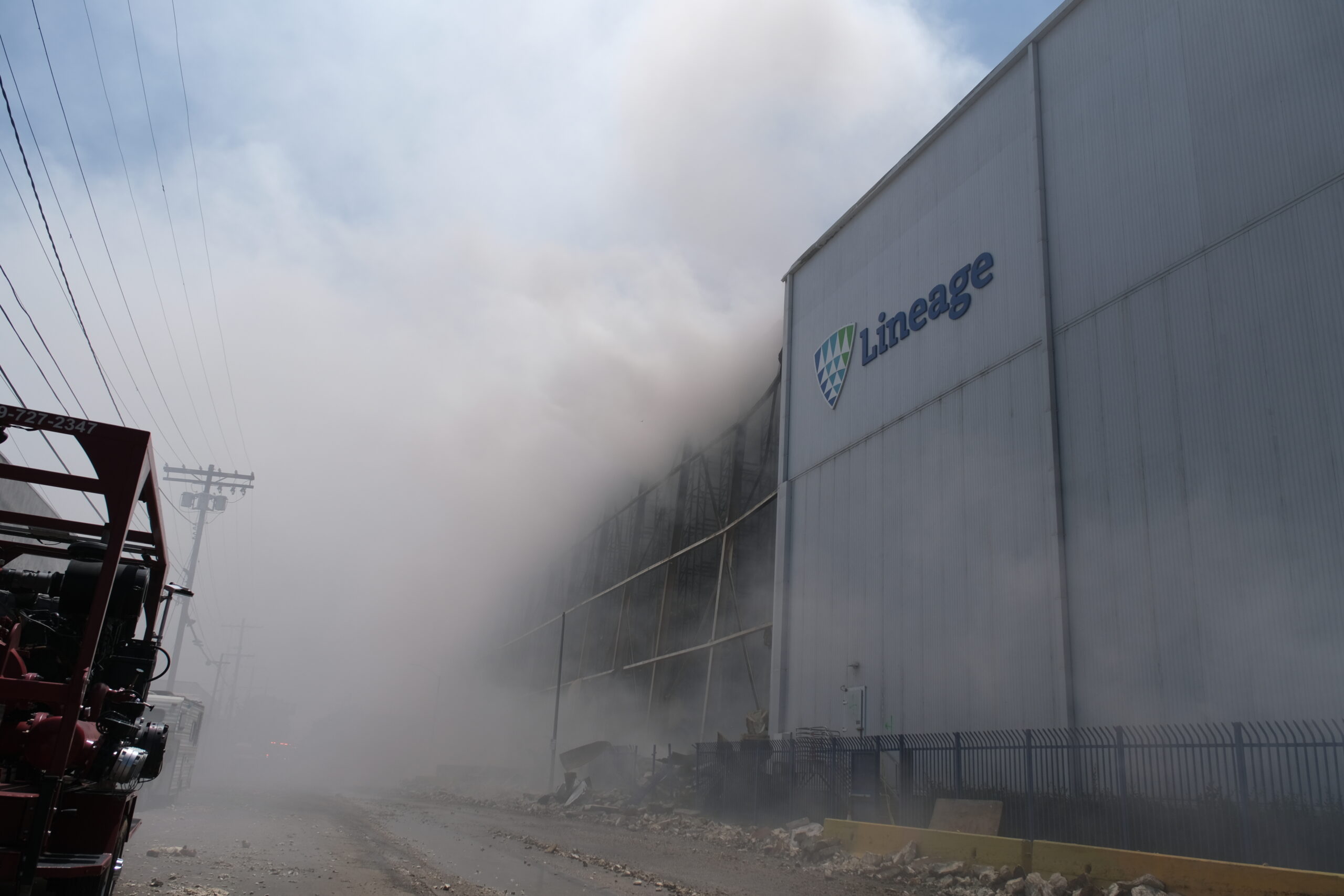
Smoke billows from the Lineage cold storage warehouse.
Last year Lineage also hired Veritas Public Affairs to lobby city officials for a “remedy related to a rapid shutoff device alternative.” Rapid shutdown devices are safety mechanisms designed to protect firefighters from high-voltage electricity when they access roofs with solar panels during fires or other emergencies. Veritas didn’t specify which city agency it was hired to lobby. Reached by phone, Lineage’s Chris Thurston, who is listed on the lobbying disclosure form, said, “I can’t comment on that.”
The company has also maintained an active lobbying presence on the federal level. Lineage spent $60,000 in 2025 to lobby Congress on proposed tax increases for U.S. companies that would be levied by other countries’ governments.
The fire could damage the company’s reputation, but it’s unclear whether it will affect its bottom line.
In 2024, a Lineage cold storage warehouse in Benton County, Washington, burned for 60 days before it was demolished. The following year, the company reported in its annual report to the U.S. Securities and Exchange Commission that the fire produced a net gain of $107 million in 2024 and 2025 from insurance reimbursements, even after accounting for costs, including $29 million in clean-up costs.
However, earlier this year in the rural communities surrounding the Benton County warehouse, more than 100 people filed lawsuits alleging their health and the environment was damaged as result of negligent actions by Lineage and others in responding to the fire. In one of the lawsuits, residents said runoff from the firefighting effort contained contaminants that seeped into the water supply and the soil. Residents also alleged that they suffered “acute physical symptoms” including “burning eyes, throat irritation, coughing, difficulty breathing, headaches, nausea, dizziness and cognitive defects.”
Federal regulators have found Lineage in violation of dozens of health and safety and environmental regulations in recent years. For example, the company agreed to pay $172,000 to settle with the EPA over Clean Air Act violations at an Altoona, Iowa, facility where it allegedly failed to comply with requirements designed to prevent accidental releases of hazardous substances. In 2020, a contractor at a Statesville, North Carolina, facility was killed and others were injured during an ammonia release.
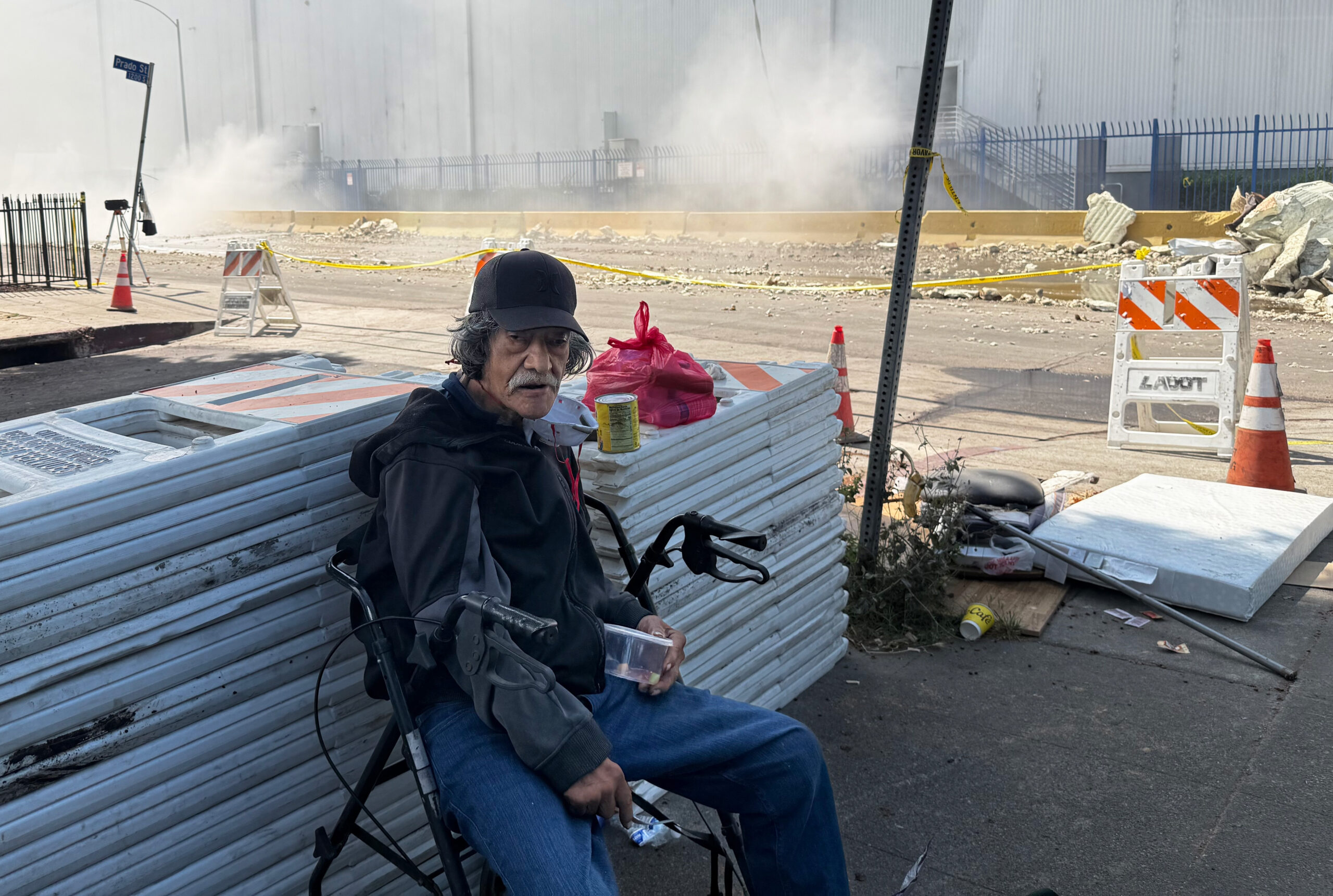
Armando Millan, a disabled and unhoused resident of Boyle Heights, sits across the street from the Lineage warehouse. A representative for Councilmember Ysabel Jurado reached out to Millan about assistance with evacuation, but he was reluctant to leave his belongings behind.
In response to the Boyle Heights fire, both Los Angeles Mayor Karen Bass and Gov. Gavin Newsom issued emergency declarations to facilitate aid to affected Angelenos and aid in firefighting efforts. A Federal Emergency Management Administration spokesperson wrote in an email that the agency is “monitoring” the situation in Boyle Heights, adding that response to the fire “is being led by local and state authorities.” EPA spokesperson Julia Giarmoleo said the agency is “performing ongoing air monitoring and sampling.”
Councilmember Ysabel Jurado, who represents Boyle Heights, said in a statement that she plans to introduce city council motions calling for the public release of air quality and environmental testing results in English and Spanish, and a report on materials that were present at the facility, including what burned. Noting that Boyle Heights “carries significant environmental burdens,” Jurado said the neighborhood “deserves the same urgency, transparency and protection as any other community in Los Angeles.”
Supervisor Hilda Solis said in an emailed statement that Lineage “must take responsibility for the impacts on affected communities,” including “providing immediate support such as air purifiers, masks, and other essential assistance for residents.” On June 23, the Los Angeles County Board of Supervisors approved her motion to investigate the company’s role in the fire.
But so far, little help — from the company or government agencies — has reached Boyle Heights residents.
As smoke inundated his house, Juarez explained that he hasn’t even been able to obtain an air purifier from city officials. He said he tried calling the city, but has been unable to reach anyone. Leaving his home isn’t an option because he fears the house will be burglarized.
“This part of the city is very neglected,” Juarez said. “Like they think, ‘Oh, it’s Boyle Heights. It’s fine. Let them be.’”
Research assistance provided by Kani’ya Davis.
All photos by Aaron Cantú.
Copyright 2026 Capital & Main.


-
 The SlickMay 29, 2026
Feds to Open Tens of Thousands of Acres of Colorado Wilderness to Oil Drilling
-
 Imperial DivideJune 3, 2026
California’s Lithium Valley Dreams Meet Reality at the Only Restaurant in Town
-

 Column - State of InequalityMay 28, 2026
Top Democratic Candidates Agree on Housing Urgency, Not the Fix
-

 Latest NewsJune 1, 2026
Deep Cuts to Civilian Support Staff for Families of Deployed Marines Raise Concerns
-

 Column - State of InequalityJune 4, 2026
California’s Economy Runs on Labor Trump Wants to Deport
-
 The SlickJune 5, 2026
At This New Mexico Park, Mountain Bikers Pedal Amid Hundreds of Oil Wells
-
 The SlickJune 10, 2026
Data Centers Are on the Ballot — This Pennsylvania Candidate Won Her Primary Keeping Them Top of Mind
-
 Latest NewsJune 9, 2026
Ousted by the Trump Administration, U.S. Immigrants Remain Locked up in African Kingdom