
Latest News
A Voice for Change: How Woody Guthrie Keeps Resonating With New Generations
A new documentary connects the life and music of the Depression-era singer-songwriter to today’s struggles for social justice, equality and immigrant rights.
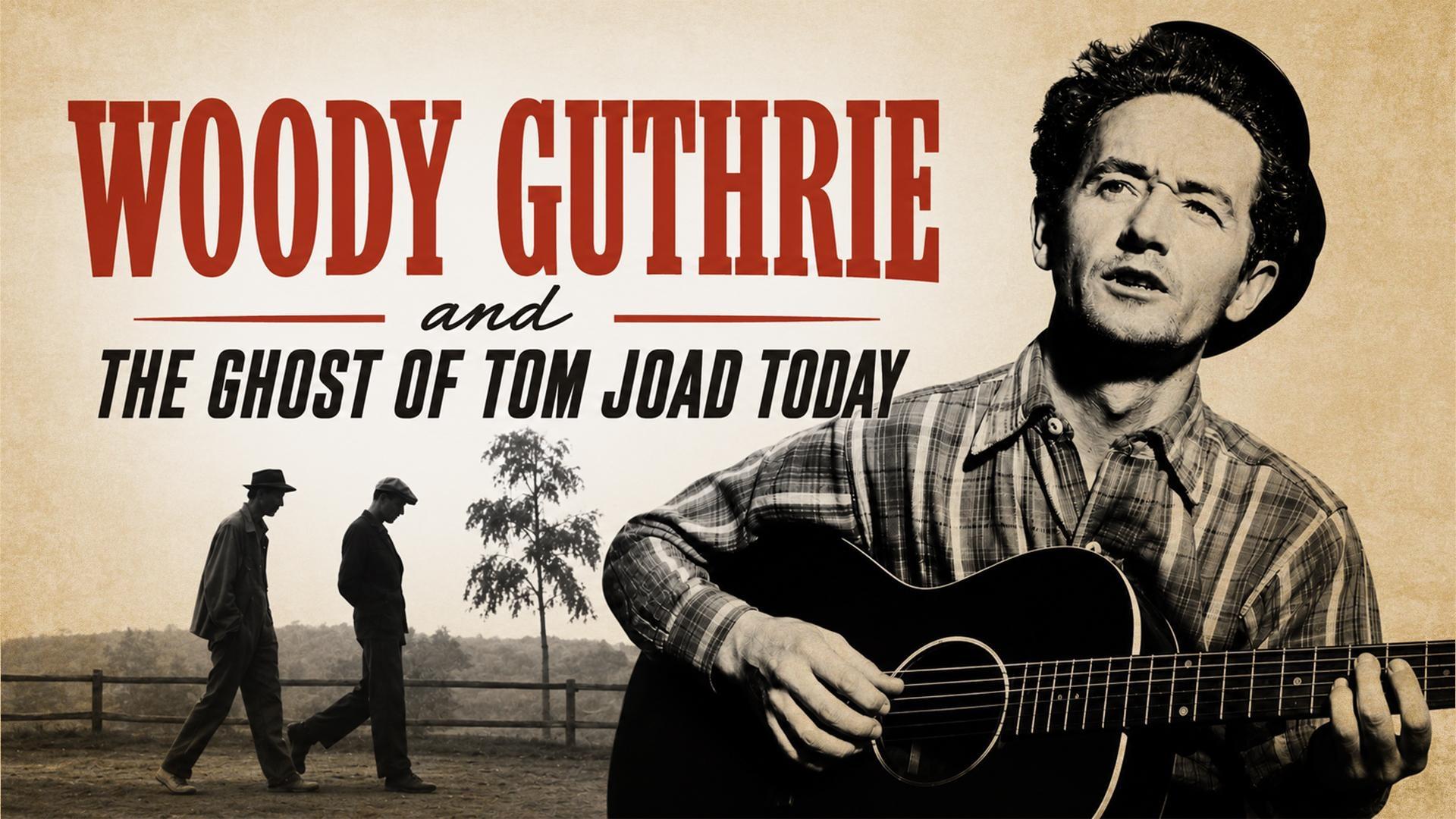

During his lifetime, Woody Guthrie saw America at ground level, riding boxcars, singing in taverns and on street corners, and even living for a time in a California migrant camp.
These experiences shaped the songs he wrote, giving voice to migrant workers, laborers, and other marginalized Americans. Through his music, Guthrie protested inequality and championed social justice, helping define the role of folk music as a vehicle for change.
Guthrie died in 1967 at age 55, but his music has never faded from the American consciousness. Nowhere is that legacy more evident than in “This Land Is Your Land,” his alternative national anthem. His gift for lyrics that were both deeply humane and sharply critical has endured for generations, inspiring followers such as Bob Dylan and Bruce Springsteen.
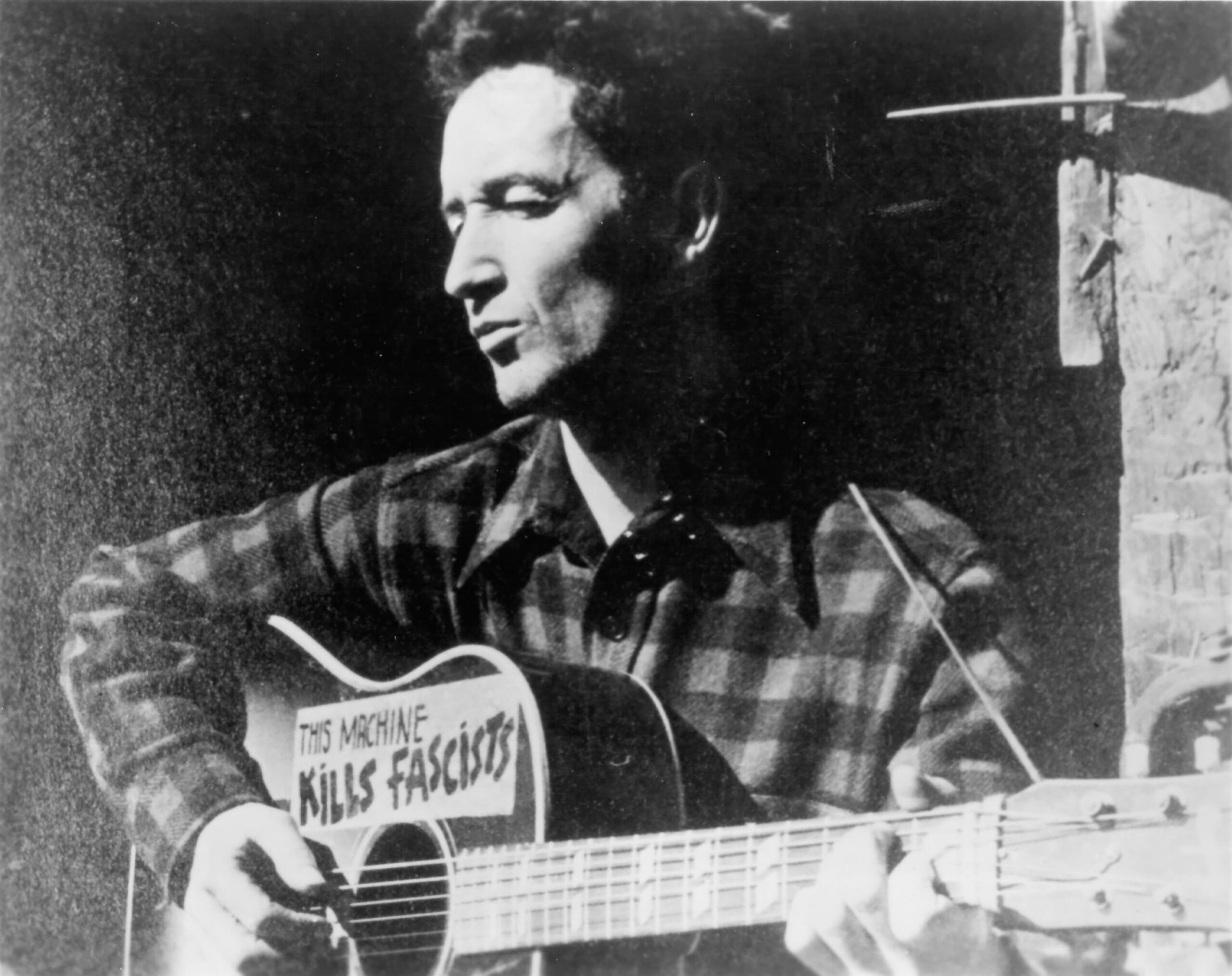
Woody Guthrie in 1942. Photo: Michael Ochs Archives/Getty Images.
A new PBS documentary, Woody Guthrie and the Ghost of Tom Joad Today, revisits his work in the 1930s and 1940s and shows how it remains connected to this modern era of immigration and aggressive ICE enforcement under President Donald Trump.
Greg Mitchell, writer and director of the documentary, said Woody Guthrie has had a moment of increased relevance over the last year as his music attracts a new generation of listeners.
“Not that he’s ever disappeared,” said Mitchell, the author of several books about American politics and history since the Great Depression, including on Socialist Upton Sinclair’s 1934 race for California governor. “Woody has been embraced by new generations, certainly at the No Kings protests and anti-ICE protests. He’s sort of everywhere.”
Guthrie resonates, Mitchell said, because “he seems authentic. Most of the country is not left wing, but he had an incredible life, and he wrote all these great songs and lived it.”
In the documentary’s vintage footage, scenes of Depression-era migrant camps don’t look very different from recent news coverage of how farmworkers live. After years of drought at home, Dust Bowl refugees from Oklahoma and Texas came to California looking for work, but were often greeted by angry locals. Attempts to organize farmworkers were often crushed violently.
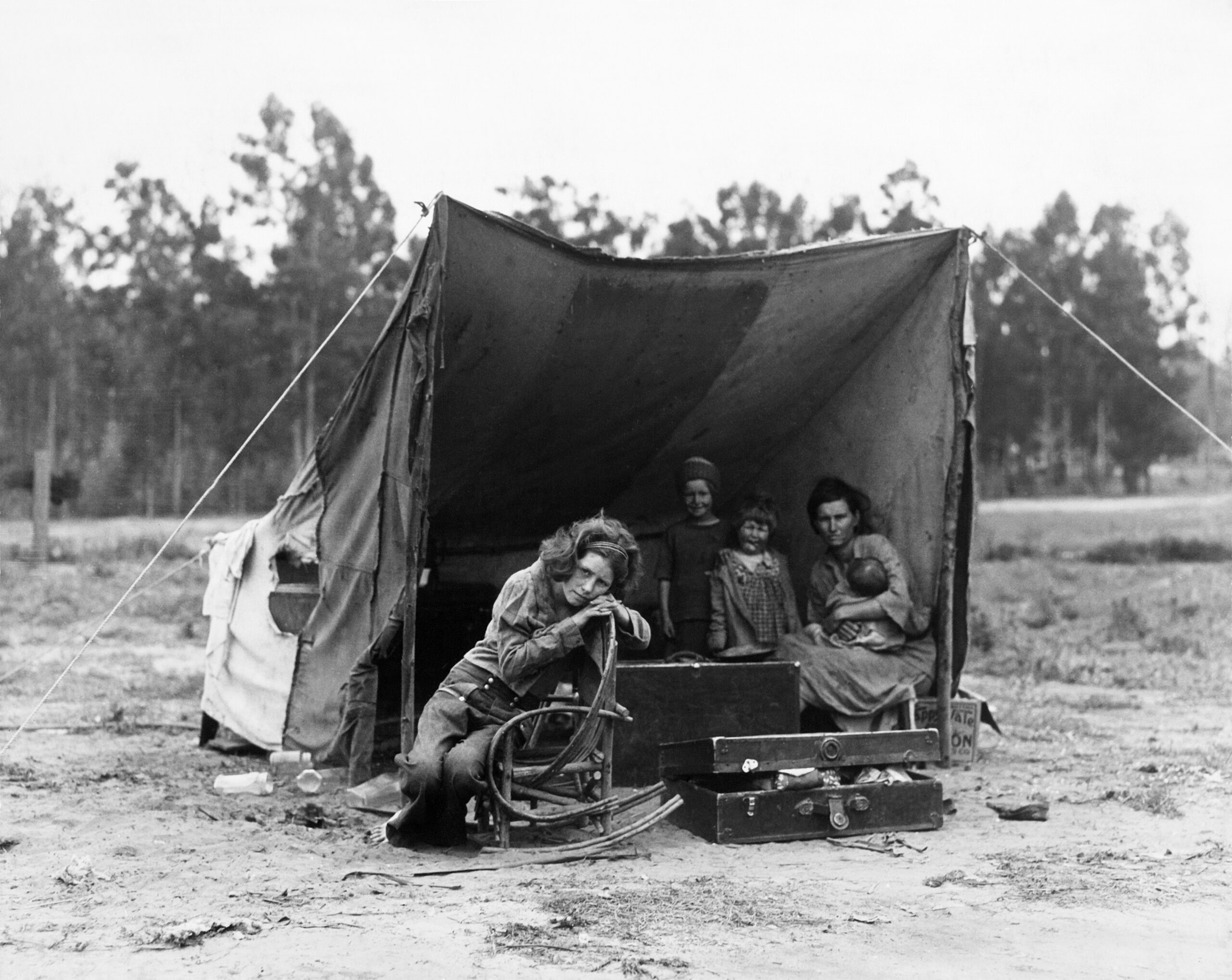
Migrant farmworker Florence Thompson with four of her children in 1936. Photo: Dorothea Lange.
“When we think about how much California has changed, we see in that the possibility of change,” said Lyn Goldfarb, who produced the documentary with Mitchell.
The film also looks at the parallel career of author John Steinbeck, who wrote often of migrant workers in California, culminating in his novel The Grapes of Wrath. The book was then made into a classic film by director John Ford, with Henry Fonda as the iconic central character Tom Joad.
“He was about as radical as you could get, at least on the subject of migrants and farmworkers and poor people,” Mitchell said of Steinbeck. “He actually became a conservative as years went on, and left that behind. But he deserves credit for 10 years in the trenches on this issue before he left it. Woody kept on with very political writing and being an activist. Woody was more radical as his life went on.”
The one-hour documentary, narrated by Rosanne Cash, begins airing on PBS SoCal on June 25, then rolls out through the summer on PBS stations across the country. It will also stream via PBS.org. The film premiered on the big screen Sunday at the Autry Museum of the American West in Los Angeles.
At the screening, singer-songwriter Carla Olson performed “Deportee (Plane Wreck at Los Gatos),” Guthrie’s lament on the 1948 deaths of 28 men and women who were being deported on a chartered plane. It crashed near Coalinga, California, also killing three crew members and one federal deportation officer. When Guthrie saw that the names of the deportees were left out of the Associated Press news story, he was moved to write the song.
Olson said she first heard the song as a teenager as a cover version on the Byrds’ 1969 album Ballad of Easy Rider, and was especially moved by its closing verse: “Who are all these friends / Who are scattered like dried leaves / The radio said / They were just ‘deportees.’”
“These things stay with you all through your life,” said Olson, who eventually recorded the song as a duet with former Byrds singer Gene Clark in 1987. “Obviously, Woody wrote it with the intention that it slap people in the face. We’ve been through this before. I’m afraid it won’t be the last time we go through this.”

Singer-songwriter Carla Olson and director Greg Mitchell at the premiere of Woody Guthrie and The Ghost of Tom Joad Today at the Autry Museum of the American West in Los Angeles. Photo: Steve Appleford.
To underline Guthrie’s connection to the present moment, Woody Guthrie and the Ghost of Tom Joad Today closes with Springsteen’s “The Ghost of Tom Joad,” accompanied by bleak images of immigrants surrounded by federal agents, and protesters holding signs quoting Guthrie.
Mitchell said he wanted to make a Guthrie documentary that “had current ramifications. Otherwise it’s just a biopic.”
Early in his career, Mitchell was a cultural journalist and editor, and he was partially responsible for the first national magazine feature on Springsteen, in 1973, for Crawdaddy — years before the singer famously appeared on the covers of both Time and Newsweek the same week. Mitchell has watched Springsteen’s career ever since.
“He became more active starting in the 1980s and then slowly more and more, and then it exploded with the Minneapolis anti-ICE situation,” Mitchell said.
In response to the death of two protesters shot by federal agents, Springsteen released an anti-ICE song, “Streets of Minneapolis,” in January. Also this year, he led the Land of Hope and Dreams Tour, designed to deliver a night of topical and politically outspoken music “in celebration and in defense of America.” This October in Columbia, Maryland, Springsteen will be joining Rage Against the Machine’s Tom Morello at a one-day protest concert called the Power to the People Festival, with a lineup that includes Foo Fighters and Joan Baez.
The Guthrie tradition of musical protest seems as active as ever.
In the audience for the documentary premiere was Van Dyke Parks, the acclaimed songwriter and arranger who produced an early album by Arlo Guthrie, Woody’s son.
“What interests me about Guthrie is the immediacy in his work,” Parks said. “He was pissed, and he was effective in his approach to social unrest and justice. When younger musicians sing it, we start keeping those connections.”
Copyright 2026 Capital & Main



-
 The SlickMay 29, 2026
Feds to Open Tens of Thousands of Acres of Colorado Wilderness to Oil Drilling
-
 Deadly Dust: The Silicosis EpidemicMay 27, 2026
California Moves to Ban Quartz Countertop Fabrication to Combat Silicosis Epidemic
-
 Imperial DivideJune 3, 2026
California’s Lithium Valley Dreams Meet Reality at the Only Restaurant in Town
-

 Column - State of InequalityMay 28, 2026
Top Democratic Candidates Agree on Housing Urgency, Not the Fix
-

 Latest NewsJune 1, 2026
Deep Cuts to Civilian Support Staff for Families of Deployed Marines Raise Concerns
-

 Column - State of InequalityJune 4, 2026
California’s Economy Runs on Labor Trump Wants to Deport
-

 The SlickJune 5, 2026
At This New Mexico Park, Mountain Bikers Pedal Amid Hundreds of Oil Wells
-

 Latest NewsJune 9, 2026
Ousted by the Trump Administration, U.S. Immigrants Remain Locked up in African Kingdom