
Pain & Profit
Trump’s Biggest Inaugural Donor Benefits from Policy Changes That Raise Worker Safety Concerns
Meatpacking giant JBS gave $5 million; industry soon celebrated a decision to make those on the assembly line work faster.
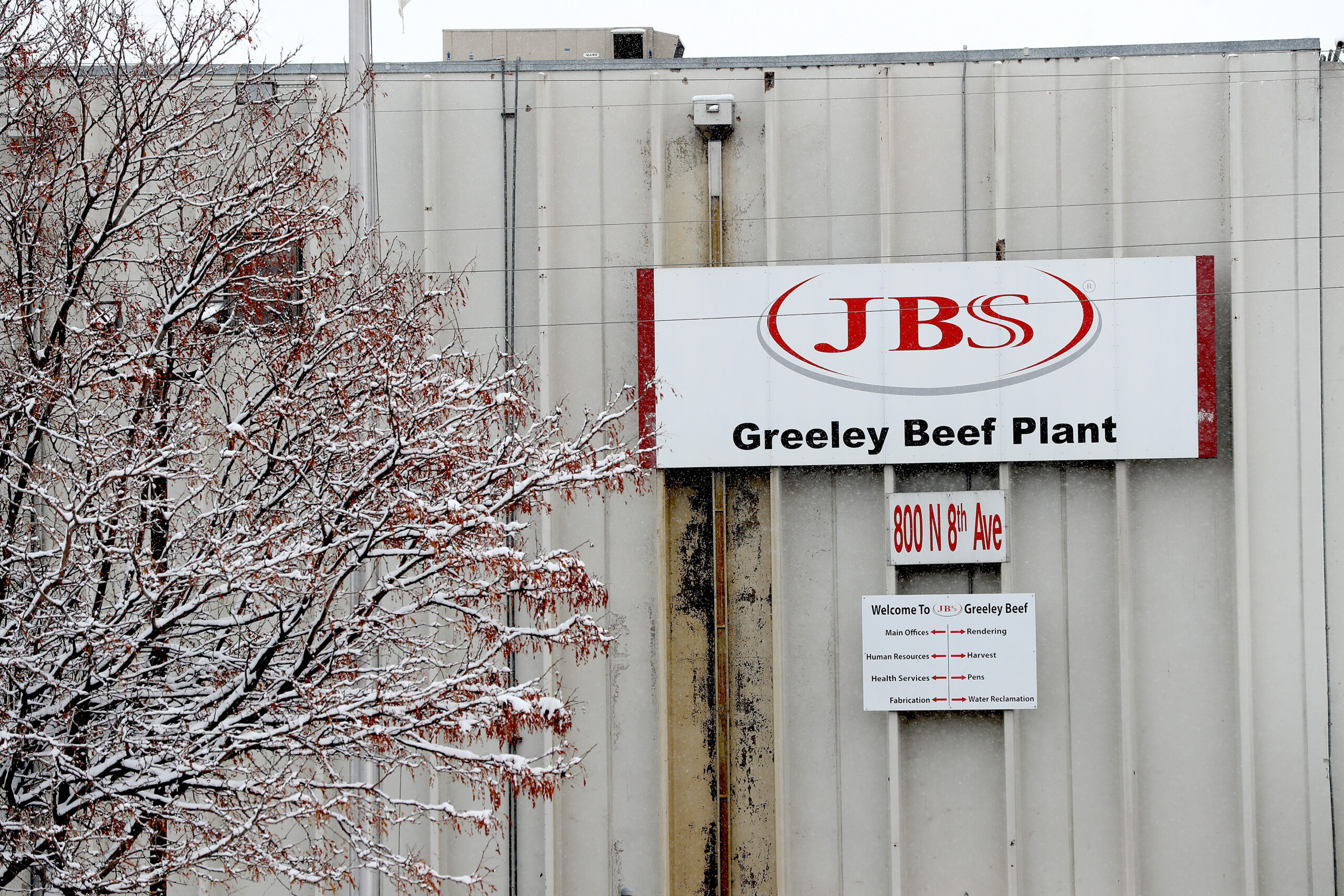

The largest single donor to Donald Trump’s inauguration was Pilgrim’s Pride, a poultry processor that contributed $5 million to the Jan. 20 festivities, more than the combined donations of Meta, Amazon and Apple. And in the first quarter of 2025, its parent company spent more than $500,000 lobbying the administration, doubling its expenditures compared to the same period last year.
Since then, the processor and its parent company, Brazilian meatpacking giant JBS, have benefited from several major policy decisions by the Trump administration. In March, the Securities and Exchange Commission granted its approval for JBS to be listed on the New York Stock Exchange, which was celebrated by the company’s global chief executive officer, Gilberto Tomazoni, as a moment that would start a “new chapter in our trajectory” by improving capital access and its long-term growth prospects.
A month later, the Department of Agriculture announced that it would allow meat processing facilities like those of Pilgrim’s Pride to accelerate their line speeds — the rate at which workers process meat and poultry — a long-sought goal of the industry. The agency said research has found no direct link between processing speeds and workplace injuries, even though some studies have indeed shown that faster line speeds would increase health risks. In addition, the agency said it would no longer require plants to submit worker safety data it considered “redundant.”
Since Trump took office again, the Food Safety and Inspection Service — which inspects meatpacking facilities and enforces food safety regulations has — experienced significant staffing reductions due to voluntary buyouts and a hiring freeze. The administration also took steps to cancel union contracts for many inspectors. The changes were applauded by industry groups such as the Meat Institute (formerly the North American Meat Institute) for helping it stay competitive globally while increasing efficiency.
Consultants for the meat industry have also been given roles in the administration. Mindy Brashears, who has consulted for Cargill, Perdue and other industry giants, was recently confirmed as the under secretary for food safety at the Department of Agriculture, a role she also held during the first Trump administration. In a 2022 congressional report, she was dubbed the “meat industry’s go-to fixer” for her success at “blocking attempts by other regulators to improve health and safety conditions in meatpacking plants.”
The developments have alarmed some lawmakers, including U.S. Sen. Elizabeth Warren (D-Mass.), who wrote a letter to JBS USA CEO Wesley Batista Filho last spring, asking him to explain the company’s inaugural donation.
“Your large donations and direct stake in federal policies and enforcement actions, and the Trump Administration’s series of actions that benefit your companies, raise serious concerns about a potential quid-pro-quo arrangement,” Warren wrote.
JBS did not respond to Capital & Main’s requests for a comment but, in a statement to the New York Times in June, said that “Pilgrim’s contribution to the inauguration was entirely unrelated to the multiyear process of listing JBS on the New York Stock Exchange — a process that required full compliance with all SEC regulations.”
Changes Have Been ‘Dire’ for Workers
For the workers in the meatpacking industry — considered one of the most hazardous occupations in the country — the faster line speeds and other changes have been “dire,” said Jose Oliva, strategic campaigns director at the HEAL Food Alliance, a coalition of organizations that works on farmworker rights and food justice issues. He said he hears from workers that the job has become “more precarious” and “more dangerous.”
The work is physically exhausting and involves using knives and machines to cut, trim and debone large portions of meat as they move along a conveyor belt. The industry has sought for years to increase the speed at which animal carcasses move down the line while workers have pushed back for safety reasons.
Starting in 1997, the Food Safety and Inspection Service permitted faster line speeds at a handful of swine and poultry slaughterhouses in Illinois, Michigan, Minnesota, Nebraska and Pennsylvania.
Studies released by the USDA in January 2025 found that 81% of poultry processing workers and 46% of pork processing workers were at high risk for musculoskeletal disorders but they did not conclude that their risk for injury increased significantly with the speed of the evisceration line.
But studies reviewed by the John Hopkins Center for a Livable Future have shown that increasing the line speed at those facilities was associated with a lower overall wellbeing among workers, a greater risk of injury from repetitive movements and a higher perception of injury risk.
“Our review of the literature contributes to the evidence that working at faster speeds poses risks to workers,” wrote Patti Truant Anderson, a faculty associate at John Hopkins.
The decision in March to extend the line speed waivers was condemned by United Food and Commercial Workers Union then-President Marc Perrone in a statement. The union represents 1.2 million workers in meatpacking, food processing, grocery and retail. (Disclosure: The UFCW is a financial supporter of Capital & Main.)
“Our members work tirelessly every day in America’s pork and poultry plants, helping families put food on the table. They know firsthand that these jobs are already physically demanding and high-risk. Extending these waivers without additional safety measures will only lead to more injuries, more workplace accidents, and a greater risk of food contamination.”
Workers said that the job has grown more dangerous over time.
“It’s Upton Sinclair all over again,” said Axel Fuentes, the executive director of the Rural Community Workers Alliance, referring to the widely read novel The Jungle, whose depiction of horrific conditions in meatpacking plants led to a public outcry and the passage of landmark food safety legislation in 1906.
Fuentes, who works with poultry processing workers at Smithfield plants in northern Missouri, said that the job has always been dangerous but has become more so this year for a number of reasons.
Beyond the line speed increases, he pointed to the increasing loads handled by workers. “One of the most pressing issues for workers, which causes more accidents, is the excessive number of pieces of meat that the workers have to handle per minute. That’s a big, big problem, which has been increasing over the years because there’s not a regulation for that.”
Fuentes said that in poultry plants, the load has increased in recent years from 145 a minute to 170 a minute and that in pork processing facilities “they used to kill 8,500 pigs in 8 hours and now it’s up to 10,500 pigs … so there’s an increasing risk of accidents.”
More than 1,000 Haitian workers alleged in a class-action lawsuit filed in December 2025 that JBS subjected them to discriminatory and unsafe working and living conditions — including dangerous line speeds — after recruiting them to its Greeley, Colorado, meatpacking plant.
In the complaint, the workers claimed they were segregated onto the “B shift,” where they stripped meat to the bone at an accelerated pace, which led to repetitive stress injuries. In the complaint they claimed they were pushed to line speeds as high as 440 head of cattle per hour, above the industry standard maximum safe speed of 390 head per hour. One of the plaintiffs, a worker named Nesly Pierre, claims that the line moved so quickly that he could not unclench his fist from the meat hook, leaving his fingers stuck in a “clawing position.”
JBS did not return a request for response from Capital & Main, but told Meatingplace that it “strongly disagrees” with the claims made in the lawsuit.
“At JBS, treating our employees with dignity and respect is a core value of our company, regardless of nationality or background. We follow all employment and labor laws and take our responsibilities to our workforce seriously. Our employees choose to work with us, understand the terms of their employment, and are free to leave at any time.”
In a March statement, U.S. Secretary of Agriculture Brooke Rollins said the higher line speeds and other changes would allow for greater efficiency while maintaining food safety standards.
“America leads the world in pork and poultry production, and we are committed to ensuring our producers remain competitive on a global scale without being held back by unnecessary bureaucracy,” Rollins said. “Under President Trump’s leadership, we are cutting unnecessary red tape, empowering businesses to operate more efficiently, and strengthening American agriculture — all while upholding the highest food safety standards.”
Bailey McWilliams, a communications chief at the U.S. Department of Agriculture, said the John Hopkins review was “incomplete and misleading” because it did not include a USDA study from January 2025.
According to that study, 46% of evaluated workers across all establishments were at high risk … for musculoskeletal disorders, or MSD,” and “the effect of evisceration line speed increase on MSD risk varied between establishments.” At one establishment, the study said, “Evisceration line speed was associated with a statistically significant increase in MSD risk, and for another establishment evisceration line speed was associated with a statistically significant decrease in MSD risk.”
In addition, McWilliams wrote:
“Claims that oversight has diminished or food safety has been compromised are inaccurate. These claims not only reflect a stark misunderstanding of how food safety is achieved today but also seek to undermine public confidence in the nation’s food supply.”
She also said that the Food Safety and Inspection Service is continuously hiring to fill vacancies and coverage needs.
Cuts, Contamination, Caution
Accidents in the meatpacking industry can be gruesome and threaten food safety as well as harming workers.
“You don’t have enough time to follow safety rules, so workers using knives or saws often cut their fingers or hands or end up striking someone nearby,” said Fuentes. Due to time pressure, injured workers may not have time to get bandaged up. Other times, he said, workers have to cut out an abscess in pigs but they don’t have enough time to clean up the mess that ends up on the conveyor belt. “And that contaminates the rest of the meat on the line.”
The situation is complicated by the cutbacks in inspectors and Trump’s immigration enforcement regimen, which has left some immigrant workers reluctant to complain about conditions in plants, Oliva and Fuentes said. The remaining inspectors, many of whom saw their union’s contracts terminated, are sometimes reluctant to cite unsafe conditions. Fuentes said that an inspector who observed discarded pork parts contaminating a conveyor belt “was afraid of stopping the line because he thought he could get fired even if he doesn’t work for the company,” Fuentes said.
Paula Soldner, the chairwoman of the National Joint Council of Food Inspection Locals who resigned in September, said that she’s had inspectors call her in recent months and tell her about safety issues that would have potentially generated a food recall but were reluctant to raise the issue with a supervisor. “They fear that the supervisor will ignore it or punish them for raising concerns.”
Soldner, who worked as an inspector for 38 years, said she is alarmed at what she sees as the decline in oversight of meatpacking plants and what it means for food safety in America. She claims that the industry’s lobbying clout has allowed it to pressure the government to increase line speeds and reduce the ranks of inspectors.
“When I came in as an inspector in 1987, we regulated what the industry does. In 2025, the industry regulates what the inspectors do.”
A recent series of Immigration and Customs Enforcement (ICE) raids of meatpacking plants across the country have caused panic in immigrant communities, making workers afraid to raise their voices about conditions, Oliva said.
“There’s a lingering threat that there’s gonna be an ICE raid in your plant, and so you keep your head low, right? Don’t start any trouble.”
Fidelina Torres, who has worked at poultry processing plants in Arkansas for more than three decades, said she and her co-workers are worried that the line-speed increase could lead to more injuries.
“We recently had a meeting at work to discuss the plan to increase the line speed,” she said. “How is that possible? We’re already working really fast — 35 to 46 chickens per minute. How is it going to be possible for folks to keep up with the higher speed?”
Copyright 2026 Capital & Main



-
 The SlickMay 29, 2026
Feds to Open Tens of Thousands of Acres of Colorado Wilderness to Oil Drilling
-
 Deadly Dust: The Silicosis EpidemicMay 27, 2026
California Moves to Ban Quartz Countertop Fabrication to Combat Silicosis Epidemic
-
 Latest NewsMay 26, 2026
Conditions at California ICE Detention Centers Are Getting Worse, Inspections Find
-
 Imperial DivideJune 3, 2026
California’s Lithium Valley Dreams Meet Reality at the Only Restaurant in Town
-

 Column - State of InequalityMay 28, 2026
Top Democratic Candidates Agree on Housing Urgency, Not the Fix
-

 Latest NewsJune 1, 2026
Deep Cuts to Civilian Support Staff for Families of Deployed Marines Raise Concerns
-
 Column - State of InequalityJune 4, 2026
California’s Economy Runs on Labor Trump Wants to Deport
-
 The SlickJune 5, 2026
At This New Mexico Park, Mountain Bikers Pedal Amid Hundreds of Oil Wells