

Like most political junkies, I have been so focused on the recent election – national, statewide and local – that I have not been thinking much further. But the vicissitudes of politics always bring me back to the core issues. Once the up and down results are in, I remember again that the electoral process amounts to only a part of what makes a democracy work.
Yes, we must have listening and sympathetic ears among those elected to office. Yes, it helps to have people from the margins brought into the arenas of decision making and sitting in the rooms where deals get made. But without advocates for the issues that matter, however much money gets spent and whoever is elected remains irrelevant.
My loneliest moment as an elected official came about three months into my first term as a member of the Santa Monica City Council. We were deciding on development projects one at a time because we had scrapped the laissez faire rules,
» Read more about: The Heart of the Matter: What Counts After Election Day »
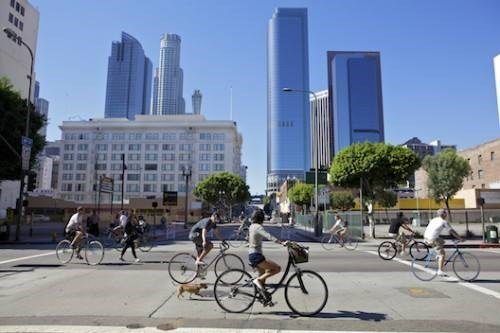
Have you ever felt paralyzed by the apocalyptic projections of global warming? Have you walked away from a presentation, article or news report feeling despair about the heating of our planet? You’re not alone. Amongst young Americans polled, global warming is a major worry.
The fear is good and warranted; the despair and paralysis are not. According to Jonathan Parfrey of the L.A.-based nonprofit, Climate Resolve, climate change needs to be seen as a local issue that people can address and do something about. And he has many ideas about how that can be done.
“L.A. has a spectacular climate,” says Parfrey, “we all love it. That’s why we’re here.” But global warming can hurt our city by impacting the things we care most about — including our health, food and water supply, property values, air quality and fire safety.
What’s called the “urban heat island effect” —
At some point during the last decade, as various plans have been floated to avert climate change, it struck me that we’re focusing on the wrong problem. Global warming caused by a buildup of greenhouse gases in the atmosphere (carbon dioxide chief among them), has indeed sped us in the direction of rendering the planet uninhabitable for life, human and otherwise. But climate change is not a disease in itself. Instead, it’s a symptom of a disease, systemic and pernicious, brought on by squandering the parts of nature we call “resources” at a breathtaking clip and without restraint. All of the solutions on offer, from displacing coal with natural gas in the West to constructing more nuclear reactors in the South, are supposed to allow us to go living exactly as we do, without the consequences.
Except we can’t. As Naomi Klein, author of No Logo and the blockbuster bestseller, The Shock Doctrine,
» Read more about: Reviewed: Naomi Klein’s “This Changes Everything” »
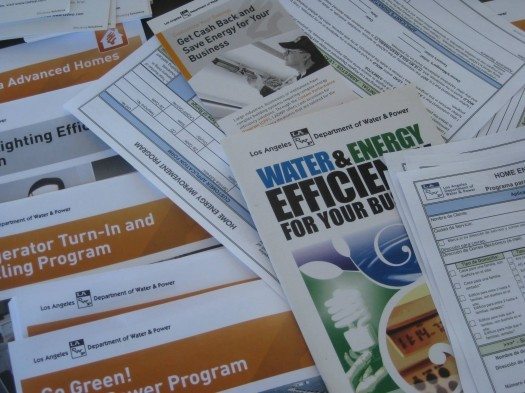

Energy efficiency is the Swiss Army Knife of public policy. It’s Veg-o-matic. It slices and dices. No matter the question, energy efficiency just might be the answer.
What technology saves you money on your utility bill? How can businesses become more competitive? What reduces greenhouse gas emissions at the lowest cost? Energy efficiency is the correct answer to all-of-the-above.
Now add another benefit: energy efficiency can help prepare us for climate change.
Think about the hot summer days when electricity use skyrockets. On L.A.’s hottest day on record – 113° Fahrenheit on September 27, 2010 – LADWP delivered a whopping 6,177 megawatts. It was the all-time high in power demand, mainly to power air-conditioners and refrigerators.
But, when the grid is overtaxed, there’s also a high likelihood of power outages. More than an inconvenience, blackouts are a public health problem. During the Chicago heat wave of 1995,
» Read more about: It Slices, It Dices – the Magic of Energy Efficiency »
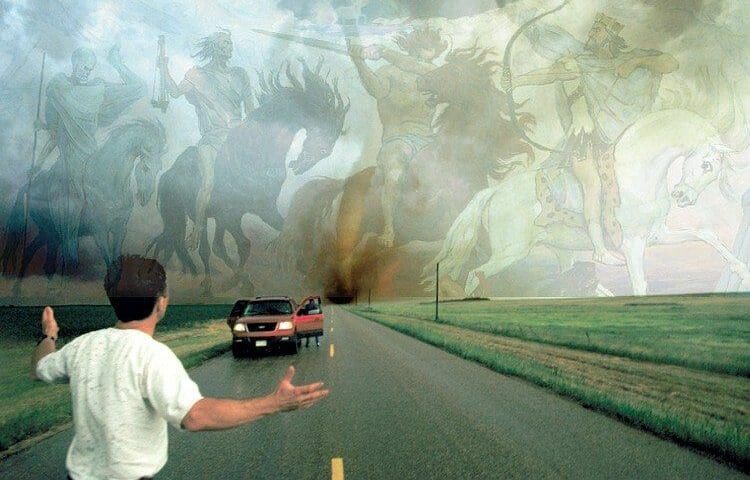

Despite the conventional wisdom that Southern California only has one season, some wag suggested it does indeed have four: Fires, floods, earthquakes and riots. So far this year we’ve had none of those, for which I am grateful, and I hope our luck holds.
I say luck because Los Angeles County leads the state in fire risk. Of the million homes in California in high-risk fire areas, half are in our county. Seven of the 10 most expensive fires in the U.S. since 1990 have been in California, and insurers paid some $5 billion in wildfire claims in 2003, 2007 and 2008.
Meanwhile, wildfires across the country have set new records. Nine million acres of forest were destroyed this year in 45,000 wildfires. An area larger than Massachusetts was burned over in five western states, including ours. That’s 13,000 square miles blackened, wild life killed, trees and brush scorched and burned.
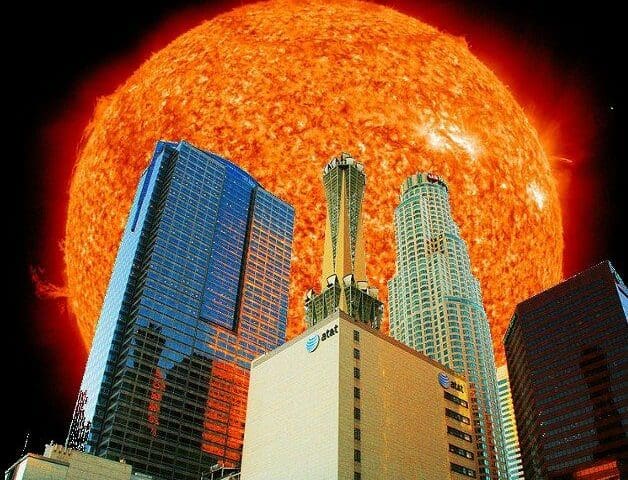

After a presentation by Climate Resolve on the local impacts of climate change last month, our host, Jonathan Parfrey, jokingly told us that anti-depressants would be passed out at the door. Gallows humor is understandable and – for me – always necessary when faced with hard truths. But dare I say that I also felt slightly more hopeful armed with information that would help us plan for the future?
This briefing, held at the Municipal Water Department, presented the first in a series of studies, sponsored by the City of L.A. and the U.S. Department of Energy, that focused on how climate change will impact L.A. County by mid-century. A lot of complex modeling went into the study, and – in this era of climate science denial – our presenter, Dr. Alex Hall, the study’s lead author, was at pains to explain it to us.


[caption id="attachment_11199" align="aligncenter" width="432" caption="Mark A. Wilson/Wikimedia"] [/caption]