
Column - State of Inequality
Despite Apocalyptic Warnings, California Fast Food Wage Hike Didn’t Kill Jobs
UC Berkeley study finds employment held steady — and only pennies were added to menu prices.
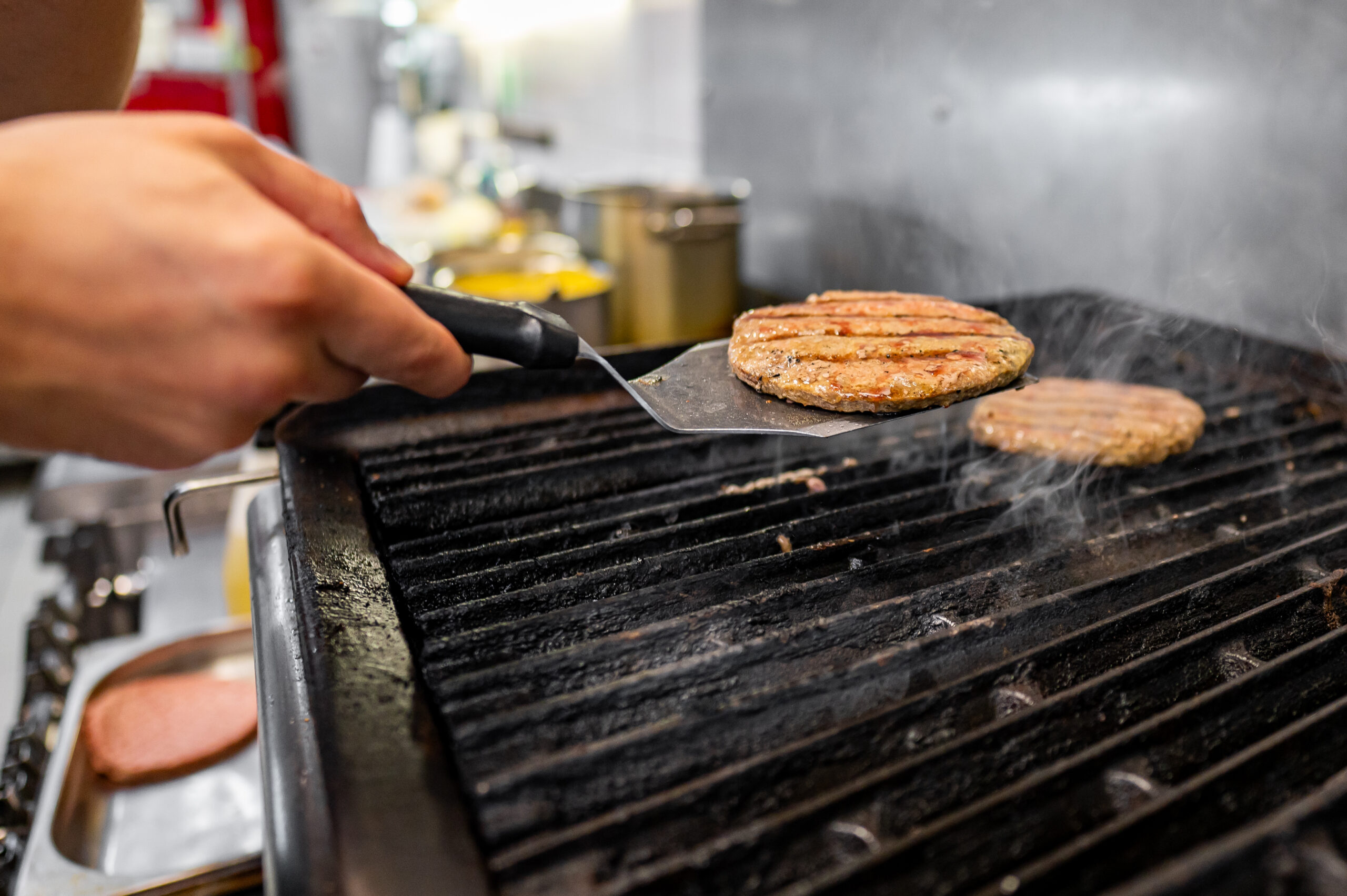

In their third report on the subject and second update of data, University of California researchers reach the same conclusions that have twice bedeviled the anti-wage hike sector of the restaurant industry:
California’s $20 an hour fast food minimum wage, instituted in 2024, did not reduce employment.
It led to only the most modest of price increases — barely noticeable to a consumer.
It significantly improved the lives of hundreds of thousands of California workers in many of the industry’s largest fast-food chains, with an average wage increase of more than 10%.
Those results have held steady across three years of work by UC Berkeley’s Institute for Research on Labor and Employment. They also align with a previous study on the California law conducted jointly by Harvard University’s Kennedy Center and UC San Francisco, as well as with long-established research showing that minimum wage increases generally don’t affect employment numbers or prices much.
That won’t end the debate over the wage law, which was established in 2023 and took effect two years ago this month. But the growing body of research suggests a much milder reality than the apocalyptic visions that some in the fast-food industry projected when the $20 figure — from a previous $16 an hour minimum — was initially approved.
“We have some entirely new data” in the report issued April 1, said Michael Reich, chair of the Center on Wage and Employment Dynamics at the Berkeley institute. “The results, though, are pretty much the same as before.”
* * *
The wage law has been the subject of overheated rhetoric since it was first discussed, when opponents suggested that raising the floor for fast-food workers from $16 to $20 an hour would prompt employers to shed jobs, dramatically raise prices or both.
The Berkeley studies, beginning in 2024, have consistently found no such thing. In the most recent research, Reich and co-author Denis Sosinskiy concluded that the higher minimum has increased the average weekly wage for covered fast food workers by about 11%, but did not reduce employment. In terms of what we pay at the cash register, the report found that restaurant owners had increased their prices by only about 1.5% — or six cents on a $4 item.
Those relatively benign findings suggest there was some initial confusion about what the wage law would actually do and whom it would affect. First, it’s applied only to the largest fast-food chains, those with more than 60 locations nationally. In California, that means that about 525,000 employees are potentially affected by the $20 minimum out of the roughly 750,000 who work at fast-food locations in the state.
Second, the effect of the wage was never going to be as severe as threatened, because a significant number of workers were already making well more than $16 an hour — and some chains, including In-N-Out Burger, routinely paid far more than that in order to attract talent and prevent turnover. Moreover, major population centers like Los Angeles and the Bay Area already have local minimum wages set well above $16. (San Francisco’s is $19.18 per hour, with the city of Los Angeles moving to $18.42 on July 1.)
In other words, actual wages didn’t go up 25% just because the minimum went from $16 to $20. The Berkeley study found that average wages in the state went up by less than half that.
The latest report compiles pay data from Glassdoor job postings and Square payroll data, while using a new data set from Advan Research, a company that aggregates cell phone locations — in this case, to determine the precise number of workers who enter a fast-food establishment each day. (Reich said only those who stayed at the store for more than four hours were presumed to be workers.) The Berkeley studies have consistently used Door Dash for price comparisons, since all significant fast-food companies participate.
So why did prices go up only 1.5%? Reich says it’s because labor costs account for only about 30% of most fast food businesses’ overall costs. Thus, an 11% average raise meant their overall costs went up only about 3%, half of which they passed on to the customer.
* * *
Industry-funded research has attempted to paint a grimmer picture of the wage law. A report by one group last year blamed 10,700 fast food job losses in California on the $20 figure, though it began counting those losses almost 10 months before the new law took effect. The conservative Hoover Institution, meanwhile, had to retract a similar report after concluding that its author included data points that proved to be misinterpreted.
Asked for comment on the new UC Berkeley findings, the advocacy group Save Local Restaurants CA pointed to a UC Santa Cruz study that found higher menu prices, fewer hours and benefits for workers and an accelerated move toward automation by fast-food store owners — the result, it said, of the higher minimum wage.
The report was based primarily on interviews with local Santa Cruz restaurants. Reich said the authors made “no attempt to validate their motivated responses with interviews with workers, a control group or objective government data. In other words, not at all informative, and not cited as such by any economists as far as I know.”
That won’t stop the rhetoric — and undoubtedly, some fast-food businesses or franchisees have struggled to compete under the new wage structure. The flip side, of course, is that hundreds of thousands of California workers have been able to move closer to an actual living wage thanks to the change.
In most of the state, $20 an hour still isn’t near enough, and the state government-appointed Fast Food Council has not approved a cost-of-living increase since the law’s inception.The MIT Living Wage Calculator estimates that a single adult with no dependents needs to earn $30.48 an hour to afford basic living costs in the state, and worker groups in Oakland and Alameda County are both engaged in battles to reach $30 an hour over the next few years, with Los Angeles involved in a more targeted push directed at tourism industry workers.
Still, the fast-food wage remains a significant achievement, one that, according to the Berkeley research, was pulled off without the serious side effects that its detractors foretold. That body of evidence continues to grow, while the wage’s beneficiaries continue to scrap for a decent living in the Golden State.
Copyright 2026 Capital & Main



-

 Column - State of InequalityMay 21, 2026
In California Governor’s Race, Xavier Becerra Walks Away From Single-Payer
-

 Latest NewsMay 22, 2026
Where California’s Gubernatorial Candidates Stand on Climate and Taking Big Oil Money
-

 The SlickMay 20, 2026
70-Foot Wastewater Geyser Reflects New Mexico’s Latest Oilfield Challenge
-

 The SlickMay 29, 2026
Feds to Open Tens of Thousands of Acres of Colorado Wilderness to Oil Drilling
-
 Deadly Dust: The Silicosis EpidemicMay 27, 2026
California Moves to Ban Quartz Countertop Fabrication to Combat Silicosis Epidemic
-
 Latest NewsMay 26, 2026
Conditions at California ICE Detention Centers Are Getting Worse, Inspections Find
-
 Imperial DivideJune 3, 2026
California’s Lithium Valley Dreams Meet Reality at the Only Restaurant in Town
-

 Column - State of InequalityMay 28, 2026
Top Democratic Candidates Agree on Housing Urgency, Not the Fix