
Labor & Economy
Speedups 2.0: Tailor-made for Taylorism
I recently spoke to the leader of the Service Employees International Union-United Service Workers West, which represents Los Angeles janitors, about some startling information I had heard earlier from a friend at SEIU-USWW.

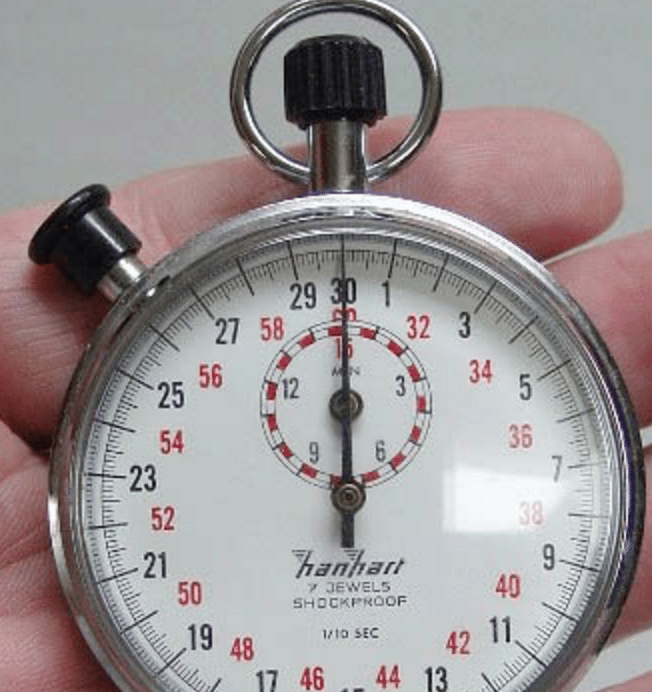

I recently spoke to the leader of the Service Employees International Union-United Service Workers West, which represents Los Angeles janitors, about some startling information I had heard earlier from a friend at SEIU-USWW. The union president, David Huerta, claimed that many owners of high-rise buildings in Los Angeles have been redesigning office floor plans and cubicles to speed up the work of janitors – starting by putting most surfaces at eye level.
According to Huerta, the owners have also replaced plush carpeting with industrial grade and use patterned fabrics to hide dirt. Now workers only vacuum rugs three times a week instead of five. Work on the other two days is limited to dusting and other fast–cleaning functions. Every janitor has a 16-point “performance based cleaning” schedule that includes trash collection and the cleaning of carpets, window sills, “high boards” and “low boards” – surfaces that the worker either needs to reach or bend to clean.
As the tasks have gone faster, the janitors’ work load has grown heavier. Instead of cleaning 3,800 square feet an hour, now with the streamlined offices, janitors can clean as many as 5,700 square feet – about the size of two-and-one-half single-family homes. The speed-up, says the union, has resulted in dirtier offices – which, added to the stress of always pushing to move faster, has resulted in injuries, chronic allergies, asthma and other health problems.
Sadly, that’s not a new phenomenon in the workplace. The first “scientific management” efforts go back to the late 1800s, when an engineer named Frederick Winslow Taylor began studying work flows, breaking down tasks to their most efficient physical motions, dividing work assignments and applying “science” to make the assembly line move faster. Fundamentally, Taylorism – as “scientific management” is known – reduces humans to machines.
But well before Taylorism, reducing humans to machines was a common practice – especially among slaveholders in the Deep South. In earlier times and other places – like America’s Eastern Piedmont – slaves worked in a “task system.” A slave did a specific job that had limits, such as cultivating one acre of rice. But as cotton became king, the growers needed more productivity and therefore more efficiency, and so they created a “pushing system.”
The push was the whip. Slaves were whipped for not meeting a quota. When they did meet it, the quota was increased and, if they did not meet the new threshold, they were whipped again. Paradoxically, the fastest picker was whipped most often, as an example to the other slaves. The systematic violence increased productivity: During the half century before the Civil War cotton production increased 361 per cent. Slaves learned to pick with both hands simultaneously, like machines moving down the row, the speed of the workers guided by the overseer’s whip.
That was crude. Today’s Taylorism uses computer chips to measure efficiency. At Amazon – among the top five corporations where Americans say they would prefer to work – warehouse employees carry minicomputers that measure their speed and efficiency. About 60 per cent of people who work in Southern California warehouses do so through contractors, so they earn low wages, seldom receive health benefits and don’t work steady hours. (Last year a report in the Los Angeles Times revealed safety violations, insufficient lighting and excessive heat at the kind of Inland Empire mega-warehouses that Amazon and other retailers lease.)
Even at the top of the pile, Amazon workers suffer. According to a New York Times piece published last summer, even the workplace ethos at Amazon’s Seattle headquarters could be characterized as “punishing.”
Amazon is not alone: 66 percent of companies monitor their employees’ Internet use; 45 percent log keystrokes; 43 percent track employee emails. And at least 20 companies have put microphones in employee badges, to listen in on water-cooler conversations. McDonald’s uses a point-of-sale computer system to monitor counter clerks and supermarkets measure how quickly clerks scan groceries.
Even UPS – a unionized company – surrounds drivers with devices that not only determine how many packages they deliver and how quickly, but measure every use of the brake pedal and how fast delivery workers drive from stop to stop. One driver said the constant surveillance was like “a mental whip.” He said, “People get intimidated and they work faster.”
Even if you are not a delivery driver or a warehouse worker or a janitor – maybe just an ordinary consumer – you may not be immune to this constant monitoring. Today there are billboards that track mobile phones – so companies know if, after passing one of their advertisements, you stopped at a store and just happened to buy their product. The practice may not be coercive, but it is intrusive. And it’s another sign that we are all being turned into slaves to a high-intensity market economy. It’s more efficient that way.
(Photo: Hydrargyrum/Wikimedia)


-

 Latest NewsApril 28, 2026
A May Day Push to ‘Shut It Down’ Takes Shape Across the Country
-
 The SlickApril 29, 2026
With Promises of Money, Controversial Gas Pipeline on Navajo Nation Passes First Hurdle
-
 Deadly Dust: The Silicosis EpidemicMay 6, 2026
California Could Be the First State to Ban Quartz Countertops
-

 Latest NewsApril 27, 2026
As the U.S. Spends Billions Fighting Iran, War-Driven Inflation Hits Working Families Hard
-

 Column - State of InequalityMay 21, 2026
In California Governor’s Race, Xavier Becerra Walks Away From Single-Payer
-

 Latest NewsMay 1, 2026
In One of L.A.’s Food Deserts, ‘Hands That Harmed Are Now Hands That Heal’
-

 Column - State of InequalityApril 30, 2026
Don’t Call It Upward Mobility If People Still Can’t Afford to Live
-

 Latest NewsMay 5, 2026
Fire Recovery Could Wipe Out Altadena’s Affordable Rentals