Pain & Profit
A Year After USAID’s Termination: The Impact Has Been ‘Devastating’
In the face of death and disease, global health workers struggle to keep hope alive.

“Heartbreaking.” “Devastating.” “Difficult and challenging.”
Such are the words used by health care workers, government officials and former U.S. Agency for International Development employees to describe the impact of the agency’s dissolution last year.
Since the Trump administration shut down USAID, which had delivered humanitarian aid and medical supplies to countries around the world since the Kennedy administration, the repercussions have been hard to fathom for many in the global health community. But they certainly include avoidable deaths and an increase in suffering for some of the world’s poorest and most vulnerable populations, say health experts and researchers.
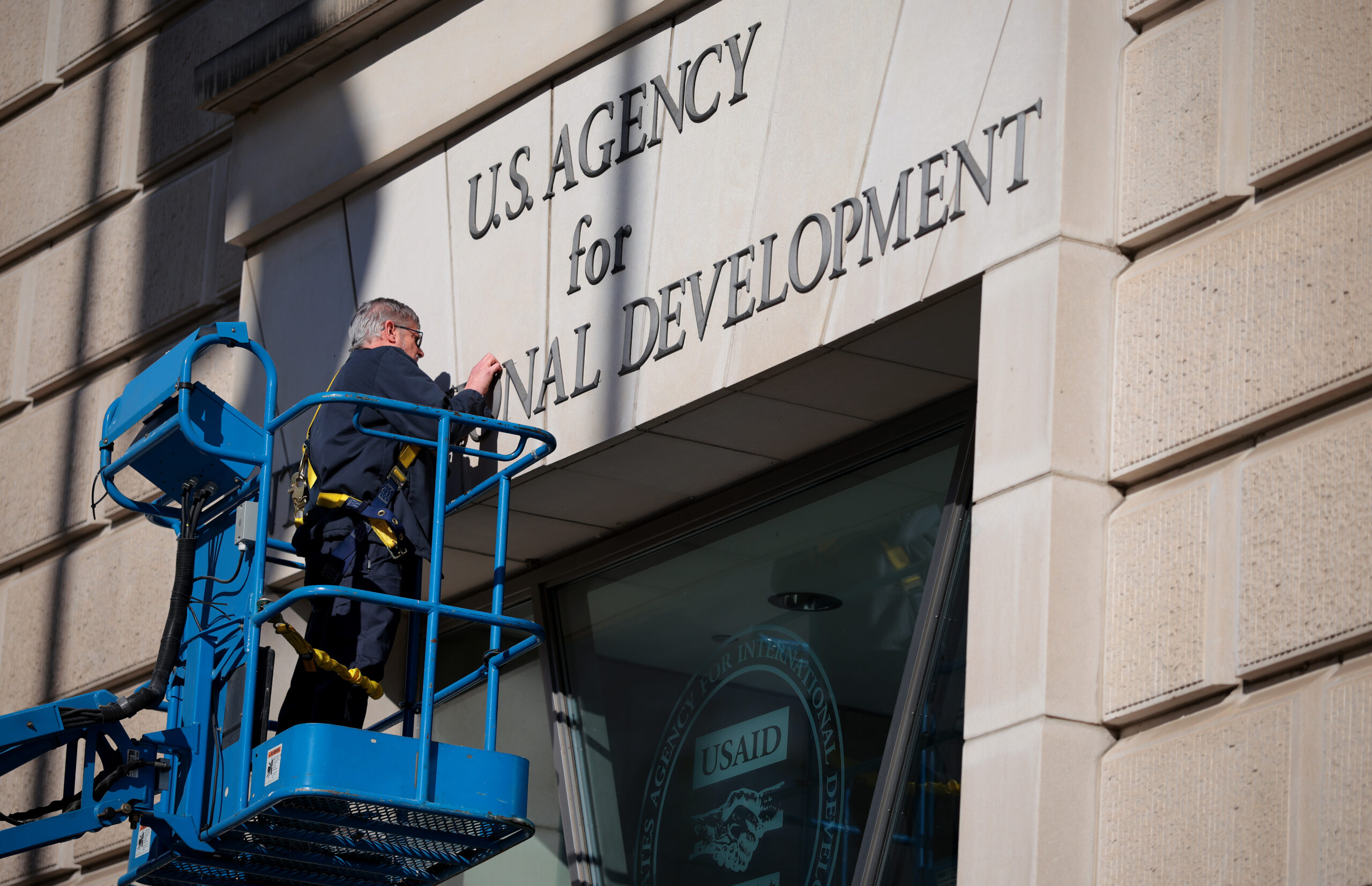
A year after the agency’s sign was removed from its building in Washington, D.C., the authors of a study published in the medical journal The Lancet summarized the agency’s importance and the impact of its closure in blunt terms:
“USAID funding has significantly contributed to the reduction in adult and child mortality across low-income and middle-income countries over the past two decades,” the researchers said. “Our estimates show that, unless the abrupt funding cuts announced and implemented in the first half of 2025 are reversed, a staggering number of avoidable deaths could occur by 2030.”
Already, the effects have spanned the globe:
- Malaria deaths spiked in northern Cameroon after supply chains for antimalarials fractured.
- In Yemen, U.S. cuts to the United Nation’s World Food Programme ended food assistance to 2.4 million people and halted nutritional care for 100,000 children.
- In Darfur, Catholic Relief Services struggled to maintain 11 health and nutrition facilities.
- In Myanmar, the International Rescue Committee saw learning centers for children in the world’s largest refugee camp abruptly close, and UNICEF reported a 27% increase in the number of children admitted for severe acute malnutrition treatment.
- And in the Democratic Republic of the Congo, the sudden halt of USAID-funded water and sanitation programs in Goma drove families back to Lake Kivu for drinking water. Cholera surged. By December, deaths had increased 361% — from 409 the previous year to 1,888. In January alone, 16,900 new cholera or acute watery diarrhea cases were reported across 19 countries.
“Suddenly everything collapsed; neither the hospital nor the communities were prepared for this sudden stop,” Camara Wabomundo, a health worker in eastern Congo, told Oxfam, a confederation of organizations that fight famine and inequities. “I fear that cholera will exterminate this population; they have survived the bombardments, but cutting off assistance could lead to more deaths than the war.”
Meanwhile, neglected tropical disease programs once lauded for cost-effectiveness — leveraging $26 in donated drugs for every dollar spent — face uncertain futures. Fourteen countries have eliminated at least one tropical disease program once supported by USAID. Gains achieved over decades risk erosion if mass drug administration campaigns lapse.
Maternal and child health programs also suffered deep cuts, with 86% of the projects terminated. Since 1990, under-5 mortality had been halved worldwide; between 2020 and 2023, maternal deaths fell 40%.
“The numbers are devastating,” Andrew Natsios, a former USAID administrator under President George W. Bush, told Capital & Main. “And it will come back to hurt America,” he noted, citing the loss of the agency’s health statistics reporting system, which was a global source of data on health conditions, fertility rates, morbidity rates, child survival rates and the outbreak of diseases.
“That’s how we know whether a new disease is threatening a particular country or the whole world, so we can be prepared. There’s gonna be another pandemic, and I think it’s gonna be much worse than COVID. And we’re not gonna know about it until it gets out of control, in which case we can’t stop it.”
A Lack of Data and Slashed Programs
Some hope was restored in July when the State Department took over certain programs previously run by USAID — including PEPFAR, an acronym for the United States President’s Emergency Plan For AIDS Relief that is credited with helping save 26 million lives. The program has enjoyed bipartisan support for decades.
Its disruption in the first half of 2025 was keenly felt by countries that had previously received PEPFAR funding. A survey of clinics in 32 countries by the City University of New York’s Dr. Ellen Brazier found that nearly half reported disruption in services, with 28% reporting challenges with medication availability.
In the July announcement, Secretary of State Marco Rubio declared that foreign assistance programs will be run by the State Department “where they will be delivered with more accountability, strategy, and efficiency.”
In November, the agency announced that it was providing at least 2 million doses of Lenacapavir, an innovative drug produced by Gilead Sciences to help prevent the spread of HIV, to targeted populations in high-burden HIV countries.
But key elements of PEPFAR have not been restored. Prevention programs — community health workers, outreach to vulnerable children, gender-based violence support — were slashed. “They have been hit harder than others,” said Ramona Godbole, USAID’s former deputy director of Policy Planning and Programs for Global Health. “The work we did with orphans and vulnerable communities. I’ve heard that much of that is gone now.”
Those types of cuts will only exacerbate the crisis, warns Leah Petit, a former USAID official. Without prevention, infections will rise, requiring more treatment in the long run, Petit warned.
Spokespersons for the State Department did not respond to several requests for comment, including whether Rubio stood by his assertion at a congressional hearing in May 2025 that “no one has died because of USAID [cuts].”
Reached for comment, White House spokesperson Ann Kelly said: “America remains the most generous country in the world because President Trump has a humanitarian heart, and partner countries want to be self-reliant in addressing the needs of their people. The Trump administration is ensuring all programs funded by American taxpayers align with American interests, just as this President was elected to do.”
On the ground, the impact has been staggering.
In Zambia, a former USAID employee — who requested anonymity out of fear of retribution — said she still lives with the shock of how quickly it all unraveled.
“It was a pretty traumatic ending,” she said, emphasizing the abruptness of the shutdown. The country was well on its way to epidemic control, with millions receiving treatment. She said the strategy in late 2024 had been to chart a careful transition: gradually shifting more responsibility to local governments without “shutting off the tap and hurting so many people.”
Instead, in January 2025, a stop-work order froze programs worldwide. Contracts were terminated. Staffers were dismissed. By July, 90% of USAID contracts were canceled as the newly formed Department of Government Efficiency, also known as DOGE, dismantled the agency under the watch of Elon Musk and shifted fragments of its portfolio to the State Department.
“We were on the cusp of achieving epidemic control,” she said. “And essentially … there’s no way to sustain it if we’re essentially gutting our prevention program.”
Under a narrow “lifesaving” waiver, HIV treatment could technically continue. But the reality was far messier.
People inside USAID’s Office of HIV/AIDS drafted a waiver to ensure antiretroviral therapy would not be interrupted. Yet, according to multiple former officials, implementation stalled. “Even though there was life-saving care, … it was being blocked,” said Petit. “So even though they’re saying no one’s going to die, they were stalling it out.”
The consequences rippled outward. Rumors spread that clinics had closed or drugs were unavailable. “There’s a lot of people that were lost to follow up,” Petit explained. Even if medication remained in stock, patients who believed treatment had stopped often did not return.
At a teaching hospital in Zambia, the former USAID employee said she was told about “a huge increase in the number of people living with HIV presenting … with opportunistic infections.” Conditions that had become rare, such as advanced tuberculosis and cryptococcal meningitis, were returning.
“Opportunistic infections are easy to treat, easy to prevent,” the former USAID official said. “And to see so many … it’s heartbreaking.”
Currently, Zambian health officials are in the midst of negotiating a new aid package with the U.S., and they are diplomatic in their description of the impact. “It has been difficult and challenging,” said Professor Roma Chilengi, the director general of the Zambia National Public Health Institute. He said that he didn’t want to speculate about the number of deaths and HIV-related infections over the last year.
Data that might confirm the trend has largely vanished from public view. The once-robust PEPFAR dashboards that have long published data on testing and counseling — once cited as models of transparency — have gone dark. The webpage, which currently shows data from 2024, has a message that informs visitors that it is “currently undergoing updates and will return soon with refreshed data and interactive dashboards.”
“The data’s gone dark,” Petit said. She believes either the agency lacks the staff to publish it — or has declined to publish the data because “it would show great loss of life.”
In February the State Department was served with a Freedom of Information Act suit by the Center for Global Development, among other health groups. The health policy nonprofit has been able to obtain PEPFAR’s 2025 numbers, which show declines in testing and counseling compared to previous years.
Overall, PEPFAR provided testing and counseling to 67 million people in 2025, down from 84 million people in 2024.
At the same time, the number of pregnant women who knew their status was stable over the year as a whole, and there was a reported 110,000 increase in the number of pregnant women newly enrolled in prophylactic treatment with PEPFAR support, according to the Center for Global Development.
The Clinton Health Access Initiative projected 30,000 additional HIV-related deaths over five years — far below early worst-case estimates, but still devastating.
Keeping Hope Alive
The Center for Global Development has been one of many global health groups that have been focused on detailing the impact of USAID’s dissolution — as well as highlighting those initiatives that were the most effective.
“Humans are really good at dealing with an individual anecdote and terrible at conceptualizing large numbers,” said Robert Rosenbaum, a nonresident fellow at the Center for Global Development who co-founded Project Resource Optimization, an initiative established to channel philanthropic funding toward the most urgent, life-saving programs that were terminated during the dismantling of USAID.
“What we’ve been doing in our work has been not so much an effort of documentation but really an effort of preservation — to try to find the projects that were terminated that were delivering the most life-saving care and saving the most lives per dollar spent.”
He points to USAID’s funding in Sudan of health clinics targeting maternal mortality and food programs that dealt with malnutrition in children. “Of all of the things that we can do in global development, that probably is one of the most cost-effective ways to save a life. Children at that stage, if they’re not treated, face a 20% to 25% mortality rate, which is unthinkable,” Rosenbaum said.
USAID cuts in funding in Sudan led to closure of over 70% of community-run Emergency Response Rooms , cutting off food for 2.8 million people and exacerbating a severe, ongoing famine and health system collapse.
And then there are threats that ignore borders. Petit points to global health security work once coordinated with the World Health Organization and U.S. agencies. Research on pathogens such as Nipah virus — a potentially fatal viral disease — was abruptly defunded. Agricultural surveillance that once prevented African swine fever from entering the United States was also scaled back.
“It’s all integrated,” she said. “And it will impact the United States in some form.”
Copyright 2026 Capital & Main


-
 Imperial DivideJune 3, 2026
California’s Lithium Valley Dreams Meet Reality at the Only Restaurant in Town
-

 Latest NewsJune 1, 2026
Deep Cuts to Civilian Support Staff for Families of Deployed Marines Raise Concerns
-

 Column - State of InequalityJune 4, 2026
California’s Economy Runs on Labor Trump Wants to Deport
-

 Featured VideoJune 5, 2026
At This New Mexico Park, Mountain Bikers Pedal Amid Hundreds of Oil Wells
-
 Latest NewsJune 9, 2026
Ousted by the Trump Administration, U.S. Immigrants Remain Locked up in African Kingdom
-

 The SlickJune 10, 2026
Data Centers Are on the Ballot — This Pennsylvania Candidate Won Her Primary Keeping Them Top of Mind
-

 Latest NewsJune 8, 2026
The Glacier May Be Gone, but the Love Isn’t
-

 Latest NewsJune 12, 2026
California Town Lets Private ICE Detention Centers Police Themselves