The Slick
Climate Chilled at New Mexico Legislature — Again
Thanks to bills that did pass, state will divert money to pay for industry problems: abandoned wells and induced earthquakes.

It was bitingly cold as legislators, staff, lobbyists and others rolled into New Mexico’s capitol building, the Roundhouse, in Santa Fe on Jan. 26. The annual session had begun six days earlier — a short, one-month session dedicated almost exclusively to the state budget.
A cold front had blown off the North Pole and swooped down through Canada and the central U.S., dragging record cold temperatures behind it. In Santa Fe, which sits at 7,000 feet, temperatures dipped to the single digits overnight that Sunday and Monday — pretty cold, but not unusual for the capital in January. However around Carlsbad, New Mexico, 250 miles farther south and nearly 4,000 feet lower, it was even colder, with three nights dropping below zero. Sitting in the middle of the broad, flat Permian Basin that stretches across southeast New Mexico and into Texas, the city can normally count on much warmer temperatures than most other corners of the state. But not this last week of January.
The basin is the most productive oilfield in the nation, with tens of thousands of oil and gas wells and related infrastructure just in New Mexico’s section of the Permian. And when the temperatures there plunged, oil and gas infrastructure began flaring and venting unusually large amounts of natural gas.
According to records kept by the New Mexico Oil Conservation Division, the January spike was the largest amount of gas burned or lost to the atmosphere in at least two years — maybe longer.
“Initial indications show it as potentially one of the highest January totals since 2023,” said Sidney Hill, public information officer for the Energy, Minerals and Natural Resources Department. Oil and gas producers have until March 15 to file venting and flaring reports from January, so “final totals cannot yet be validated,” he said.
“Cold weather can lead to frozen lines, instrumentation malfunctions, pressure imbalances and other equipment failures,” Hill continued, and that can lead to venting, flaring or shutdowns.
The lost gas and frigid temperatures are connected in another way as well. Climate scientists pointed to a warming Arctic and very warm water temperatures in the Gulf of Mexico as major contributing factors to the storm — both the result of global warming, which is caused in large part by burning and venting fossil fuels.
That same cold Monday, Major General Miguel Aguilar, interim cabinet secretary of the state’s Homeland Security and Emergency Management Department, outlined the growing array of threats the state faces during his department’s budget hearing in the Roundhouse before the Senate Finance Committee.
“Disasters are hitting New Mexico in really record amounts,” he said. The state “is no longer dealing with episodic disasters. We are operating in an environment of persistent disasters: wildfires, post-wildfire flooding, extreme heat, droughts, winter storms.” He continued, “The events we see now become multiyear state-recovery commitments rather than short-term response missions.”
Ali Rye, deputy cabinet secretary at the department, contrasted other states’ disasters, such as a hurricane or tornado event, to what New Mexico faces: a fire season that lasts for months. “And they happen every single year,” she said.
The department, she said, was asking to shift 21 contract jobs to permanent positions. Even with that, she said, New Mexico would be behind the national average for state staffing. “At some point in time, the plate is gonna break and unfortunately I think we’re getting pretty darn close to that,” Rye said.
A bill designed to further reduce New Mexico’s contributions to climate change, the Clear Horizons and Emissions Codification Act, returned to the Roundhouse after a pair of Democrats joined with Republicans to defeat it in a committee hearing in last year’s session. Its goal: to reduce the state’s greenhouse gas emission totals to 2005 levels by 2050.
As before, it was sponsored by Sen. Mimi Stewart (D-Bernalillo), and again, it was her fellow Democrats who shaped the outcome, as seven of them voted with the minority Republicans to kill it in the full Senate. If three of the Democrats had gone the other way, it would have passed.
“It’s very hard to balance it, and it really kind of makes my heart sick,” Stewart said.
And, again, the oil and gas industry came out swinging against the bill, which would have required it to further reduce greenhouse gas emissions. “I was pilloried every night on TV. Apparently, I’m just the worst thing for kids,” Stewart said of the television advertisements and the social media posts that threatened huge cuts in tax revenues for the state’s schools if the bill passed. Direct and indirect oil and gas taxes make up more than a third of New Mexico’s state revenue.
“The head of [the New Mexico Oil and Gas Association] has been in the paper multiple times saying how great the methane reduction was. [But] we had to drag them kicking and screaming to those methane reduction rules,” she said. “In fact, oil and gas production has doubled under the methane rules.” Those rules require oil and gas producers to capture 98% of the natural gas that they bring out of the ground by the end of this year, essentially banning nearly all venting and flaring.
Sen. George Muñoz (D-Gallup), who chairs the Senate Finance Committee, has voted against every iteration of the bill over the years, including this one, citing the potential costs to the oil refinery, coal mine, power plant and oil and gas companies in his district. “A lot of us assumed when it got to the [Senate] floor it was going to pass,” he said. “I think everybody was kind of surprised.”
The bill was the final attempt to codify Gov. Michele Lujan Grisham’s third executive order, issued at the start of her term in 2019, before she is term-limited out of office at the end of this year. She didn’t acknowledge the loss — or the climate — in her written remarks at the end of the session and mentioned it only in passing in her end-of-session press conference, though she had implored the Legislature to pass the bill in her State of the State address at the start of the session. Her office didn’t respond to requests for comment.
Two bills that the oil and gas industry heartily supported did pass. One rejiggers the state Conservation Fund Tax to raise the amount it distributes to the state Reclamation Fund from about 20% to 100% over the next three years, then drops to 50% in 2037. Currently, some of the revenues — which come from a tax levied on every barrel of oil and every cubic foot of natural gas brought out of the ground — go to the state’s general fund. The Reclamation Fund pays to clean up abandoned oil and natural gas wells, a growing problem in New Mexico and other oil and gas producing states.
In the second bill, the state will give $1 million to the New Mexico Institute of Mining and Technology to expand the state’s seismological monitoring network. The Permian Basin is regularly shaken by tremors tied to companies that reinject wastewater produced in oil and gas extraction. Four or more barrels of the waste are generally produced for every barrel of oil in New Mexico. Companies usually dispose of the water by reinjecting it deep underground. But there’s so much injected that the resulting underground pressure leads to earthquakes.
Missi Currier, president and CEO of the New Mexico Oil and Gas Association, said, “The Reclamation Fund bill passed with unanimous, bipartisan support reinforcing the industry’s commitment to responsible development and reclamation. We also appreciate the increased funding for seismicity monitoring through New Mexico Tech.”
On the wastewater front, a bill was introduced to force the state’s Water Quality Control Commission to once again take up the debate over using that water outside the oilfield; oilfield use is the only kind currently permitted. Also known as “produced water,” the highly saline waste can contain radioactive elements, toxic organic compounds and other contaminants from the well drilling process.
The bill would have allowed the use of treated wastewater in industrial, commercial, energy and manufacturing arenas, but it failed after strong pushback from environmental groups who worried that the treated wastewater wouldn’t be clean enough. In a ruling last year, the Water Quality Control Commission, which monitors and regulates water use across the state, thought so too, and nixed its broader use. A few months later, an industry push to reopen that debate fell apart after reporting showed Lujan Grisham had her finger in the Water Quality Control Commission process.
Speaking broadly, Currier said, “We encourage the Legislature to seek a balance between environmental stewardship and economic progress and focus on science over politics.”
Outside the Roundhouse, science continued to trump politics. The winter of 2024-2025 was the warmest in recorded state history — until this winter. On Monday, the National Oceanic and Atmospheric Administration reported that this winter was more than 2 degrees warmer than last. Joe Galewsky, professor and chair of the Department of Earth and Planetary Sciences at the University of New Mexico, said, “We are in historically unprecedented territory for consecutive years.”
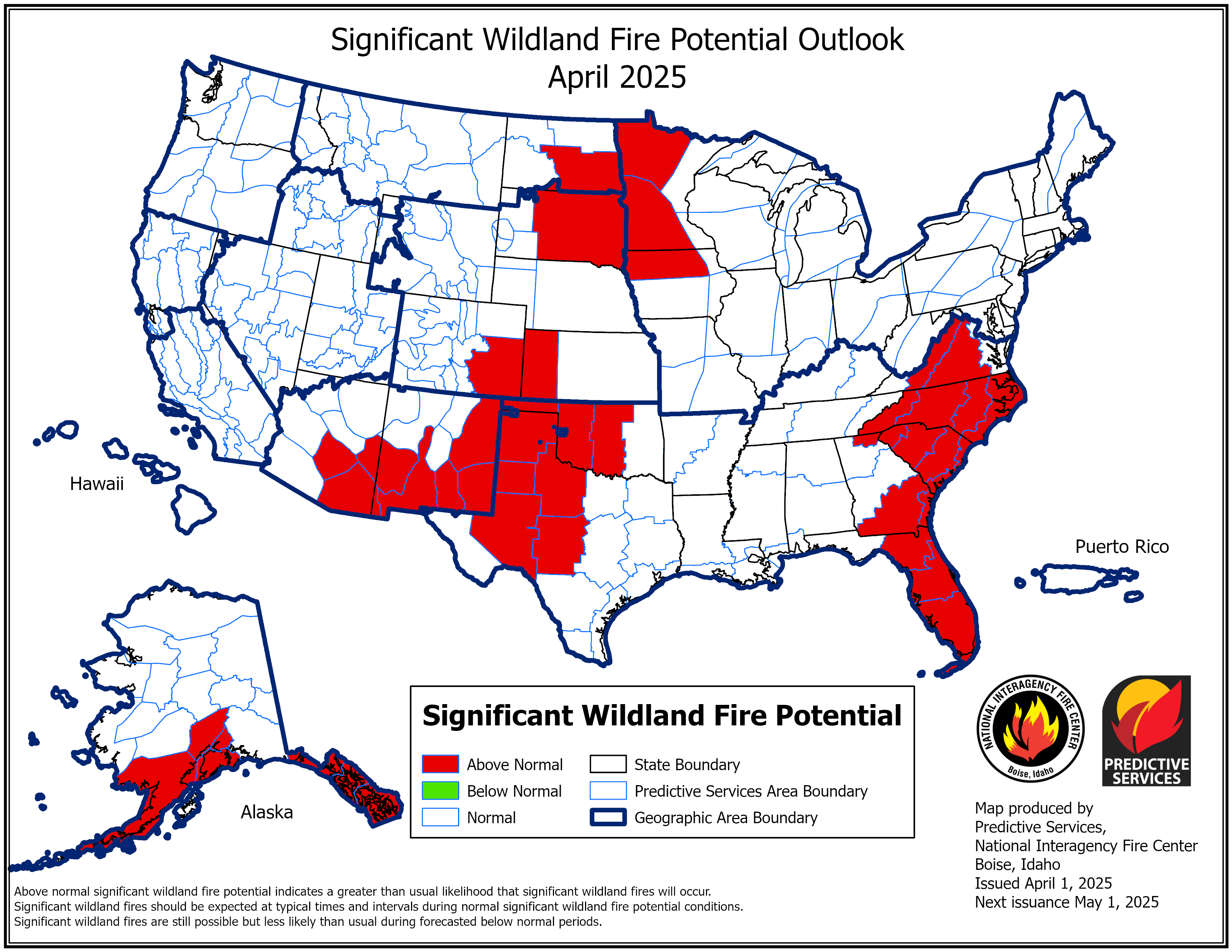
Of 60 snow measuring stations across New Mexico, none is at or above median snowpack for this time of year. Twenty-six have no snow, or an average percentage measuring in the single digits. The National Interagency Fire Center outlook shows the eastern third of New Mexico — including the Permian Basin — with above average potential for significant wildfires for March. By June, that rises to about half the state.
Stewart is particularly serious about climate change and greenhouse gas reductions because, she said, “We’re just looking at more fire, more floods, more devastation.” She plans to resurrect the Clear Horizons Act again in next year’s legislature.
“Other areas of the world are doing it. It can be done,” she said.
In an interview before the session began,Stewart, who has been a state legislator since 1995, said sustained focus was a recurring issue, especially in short, one-month legislative sessions like this year’s.
“The way we work with four or five hours of sleep a night [in] the last two weeks, it’s not good,” she said at the time. “We’re totally exhausted and we’re making the most important decisions of the session.” And unlike every other legislature in the country, New Mexico’s legislators are unpaid.
Resolutions to ask New Mexico voters to make all sessions 45 days and open all sessions to all bill types didn’t pass out of committee hearings, though a resolution to ask voters to pay legislators did.
“It might be time to modernize the Legislature,” Stewart said after the session wrapped up. “We’ll lose some of the fun, but we probably need to have a longer period of time and pay people so that people will take it more seriously.”
Copyright 2026 Capital & Main



-
 Imperial DivideJune 3, 2026
California’s Lithium Valley Dreams Meet Reality at the Only Restaurant in Town
-
 Column - State of InequalityJune 4, 2026
California’s Economy Runs on Labor Trump Wants to Deport
-
 Featured VideoJune 5, 2026
At This New Mexico Park, Mountain Bikers Pedal Amid Hundreds of Oil Wells
-
 Latest NewsJune 9, 2026
Ousted by the Trump Administration, U.S. Immigrants Remain Locked up in African Kingdom
-
 The SlickJune 10, 2026
Data Centers Are on the Ballot — This Pennsylvania Candidate Won Her Primary Keeping Them Top of Mind
-
 Latest NewsJune 8, 2026
The Glacier May Be Gone, but the Love Isn’t
-
 Latest NewsJune 12, 2026
California Town Lets Private ICE Detention Centers Police Themselves
-

 Column - State of InequalityJune 11, 2026
County Tax Measures Show Limits of Local Responses to Medicaid Cuts