
Column - State of Inequality
More States Are Taxing the Ultra-Rich — Washington Is the Latest
As inequality grows, states are stepping up where the federal government hasn’t. “It’s a movement,” says Patriotic Millionaire’s Chuck Collins.
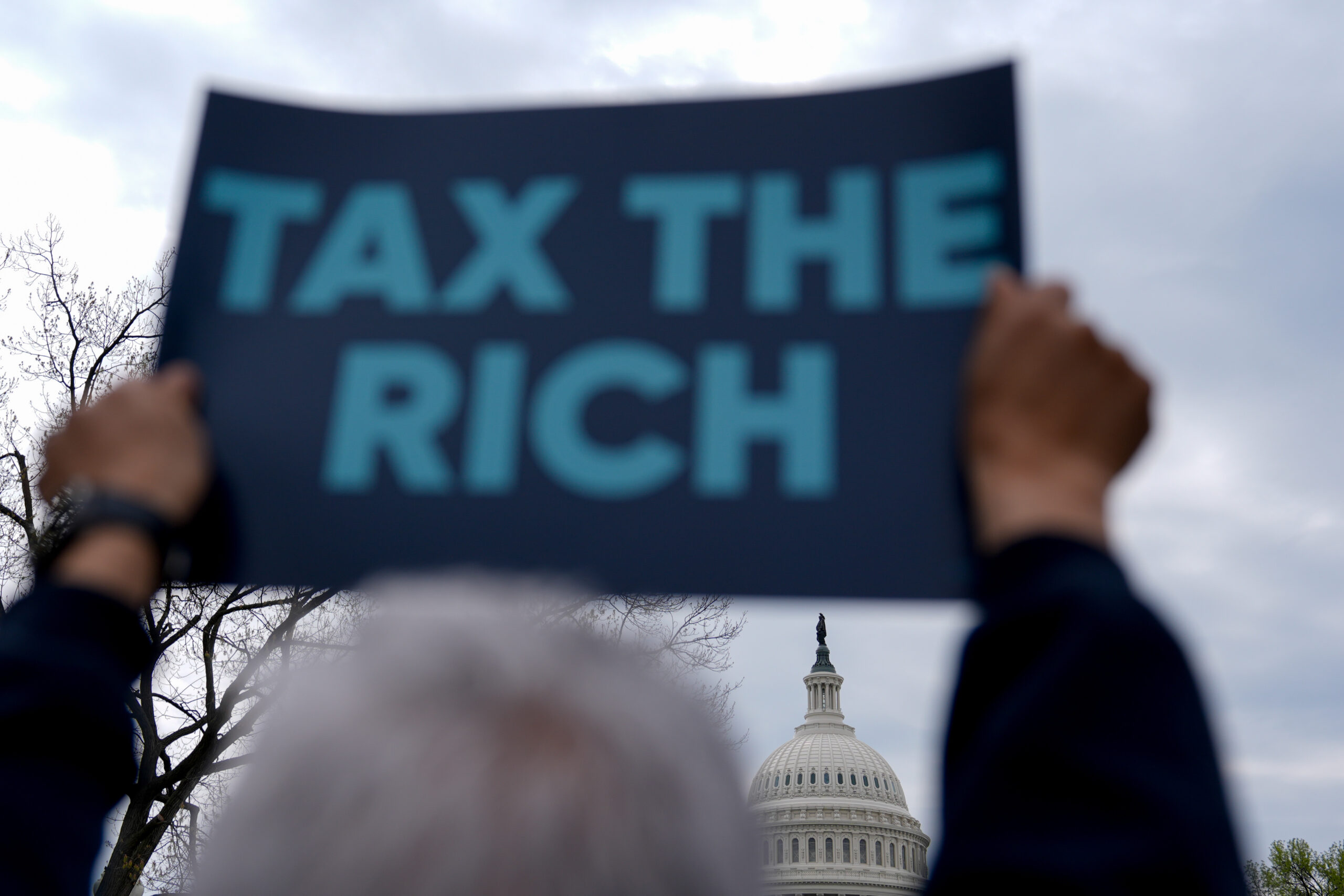

Washington isn’t the first state to pass a so-called millionaire tax, and it won’t be the last. Massachusetts’ millionaire surcharge has been in place since 2023, California may be voting to tax billionaires this fall, and at least a half-dozen other states are actively considering ways to balance budgets or help their working classes via taxes on the ultra-wealthy.
So no, the Evergreen State’s action is not unique. But that’s not the same as saying it doesn’t matter.
Instead, the measure, approved a week ago by Washington legislators after a grueling session that included a 24-hour filibuster by opposing Republicans, ought to be seen for what it is: the latest in a series of attempts by states to tax the growing uber-rich class in ways the Trump administration won’t.
“Absolutely, it’s a movement,” said Chuck Collins, one of the founders of Patriotic Millionaires, a Washington, D.C.-based organization that advocates for tax reform in the United States, especially when it comes to how much — or how little — the wealthy pay.
“Part of it stems from the failure to address this situation at the federal level,” Collins said. “You know, we just gave the top 1% in all the states a massive tax reduction [via the so-called Big Beautiful Bill]. It’s a good time to make the case that wealthy, higher-income households should pay a bit more.”
That includes Collins and the other members of his group, who describe themselves as high-net-worth individuals who believe that they and those like them should be paying more in taxes. As the Patriotic Millionaires website puts it, “Wealthy Americans like us have rigged the tax codes to give ourselves countless handouts, leaving working people paying higher rates than billionaires.”
So long as the Donald Trump-led Republican Party remains in charge at the federal level, that isn’t likely to change. Between tax cuts for the rich and massive reductions in federal funding for such critical programs as Medicaid, states have been left to figure out for themselves how to keep lights on, doors open and emergencies managed.
* * *
Washington just took a first step, and in so doing it made history. It’s one of only nine states that until now didn’t tax personal income — and even after passing this measure, it mostly won’t.
The new tax, which Washington Gov. Bob Ferguson has announced his intention to sign, is scheduled to go into effect in 2028. It applies a 9.9% rate only to personal income above $1 million. The state estimates it will affect about 20,000 households, or less than one-half of one percent of the Washington population.
Washington’s state system has long relied on sales and business taxes instead of personal income, marking it as one of the most regressive approaches in the country — meaning the tax burden falls heaviest on those least able to shoulder it. The left-leaning Institution on Taxation and Economic Policy found in a recent analysis that the poorest 20% of Washington families pay 13.8% of their income to taxes, while the one-percenters — the wealthy elite — pay just 4.1%.
That’s a broken system, established when Washington’s economy was driven by timber and food producers, not the tech leaders — Microsoft, Amazon, etc. — and massive defense contractors like Boeing that dominate the state’s financial landscape now. “We still have a tax code based on apples and cherries, while building some global-leading technology every which way you throw a rock,” Democratic Washington state Rep. Brianna Thomas told Fortune.
The state plans to use the tax revenue, an estimated $3 billion to $4 billion per year, to pay for school lunches for kids, expand a family tax credit to include another 460,000 low-income households, and fund other critical services the state budget can’t otherwise afford.
In that respect, the legislation echoes some of the themes of California’s potential billionaire tax. That proposal, which still has to qualify for the November ballot, would levy a one-time, 5% tax on the total wealth of the state’s roughly 200 billionaires, with the money being used mostly to restore health care services that otherwise would wither under the Trump-led federal budget cuts.
And both of those efforts have followed in the wake of Massachusetts, whose voters in 2022 passed a 4% surcharge on annual taxable income that exceeds $1 million. Since the tax took effect in 2023, the state has collected nearly $6 billion in additional tax revenue — and the number of millionaires in the state has grown, not shrunk.
* * *
That last point bears note, if only because the opposition playbook to a wealth tax is so dependable. In both California and Washington, critics immediately began suggesting that rich people will flee those states, and that the resulting overall reduction in tax payments will defeat any short-term revenue gains. But tax flight among the ultra-wealthy is largely a myth.
“It’s a stickiness issue,” said Patriotic Millionaires’ Collins, who inherited his own fortune through his great-grandfather Oscar Mayer’s processed meat company. “People like to stay and live in their communities, and they know that they get what they pay for — that a state with adequate tax money is a good place to live.”
Washington’s new tax will almost certainly face a court challenge, just as California’s would if it passes. The mere specter of legal hurdles, though, doesn’t seem to be preventing states from considering similar acts. Colorado, Connecticut, Hawaii, Michigan, New York and Rhode Island are all debating using wealth taxes to close holes in their budgets and keep critical state services flowing to residents who need them, with New York City Mayor Zohran Mamdani publicly pushing his state’s Legislature to act.
Collins, who worked for nearly 30 years on the idea of a wealth tax in Massachusetts before succeeding, said his organization has been advocating for a Vermont measure as well. New Jersey has had a wealth tax in place since 2020. Minnesota, meanwhile, implemented a tax on investment income over $1 million in 2024.
Clearly, despite the recent noise, a wealth tax is not a new concept. The Washington state Legislature’s act, though, underscores a growing urgency — even among careful, job-insecure lawmakers — to correct tax imbalances that in some cases have been generations in the making, and to address real needs.
“You can have a theoretical debate about taxation, but when you put an actual proposal on the table, it focuses attention and engagement,” Collins said. In the absence of such focus in Washington, D.C., states are increasingly taking matters into their own hands.
Copyright Capital & Main 2026



-

 Imperial DivideJune 3, 2026
California’s Lithium Valley Dreams Meet Reality at the Only Restaurant in Town
-

 Latest NewsJune 1, 2026
Deep Cuts to Civilian Support Staff for Families of Deployed Marines Raise Concerns
-

 Column - State of InequalityJune 4, 2026
California’s Economy Runs on Labor Trump Wants to Deport
-

 Featured VideoJune 5, 2026
At This New Mexico Park, Mountain Bikers Pedal Amid Hundreds of Oil Wells
-

 The SlickJune 10, 2026
Data Centers Are on the Ballot — This Pennsylvania Candidate Won Her Primary Keeping Them Top of Mind
-

 Latest NewsJune 9, 2026
Ousted by the Trump Administration, U.S. Immigrants Remain Locked up in African Kingdom
-

 Latest NewsJune 8, 2026
The Glacier May Be Gone, but the Love Isn’t
-
 Latest NewsJune 12, 2026
California Town Lets Private ICE Detention Centers Police Themselves