
Labor & Economy
The Branding of Democracy

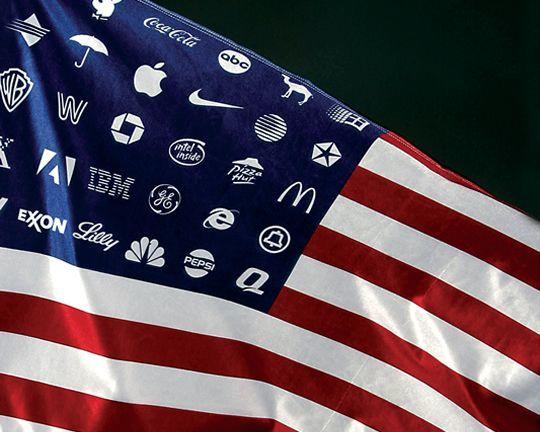
For a long time now, we’ve been a nation of brands. We have our favorite candy bars, sodas, toothpastes and even TV channels. We watch, use and eat “our” brands and leave the others on the shelf. But few of us realize how many of those items we love are actually owned by the same conglomerate – huge financial institutions that consolidate into their systems one product after another.
And often, what we don’t know can hurt our communities. When a handful of companies own all of the most popular brands that Americans use every day, they hold a privileged monopoly on our lives. Capitalism is supposed to offer choice, but more and more the decision is between one huge marketing scheme and another. Capitalism is supposed to foster consumer democracy, but instead it channels our choices into a few mega-corporations that are enriched by our loyalties.
Take media. Five giant pyramids dominate everything we watch and read. Viacom, News Corp, TimeWarner, Clear Channel and Disney dominate radio and TV station ownership, as well as TV networks, cable TV and “content production” — a phrase that includes books, magazines, screenplays, movies, videos and sports. Clear Channel, for example, owns 1,200 radio stations in all 50 states plus Washington, D.C., with more than 110 million listeners. That’s big. And whatever station you prefer to get your news from, you probably don’t know who actually owns it – and profits from it.
Or consider the products that we need to get through the day – everything from breakfast cereal to bottled drinking water to afternoon snacks. Ten conglomerates make and sell almost all those things. You know Pepsi, but did you know they owned Quaker Oats too? And KFC, Pizza Hut and Taco Bell? Plus all the chips you can imagine. If you need soap, detergent, baby diapers or deodorant, you can count on Proctor & Gamble, but for baby food or pet supplies, you need to go to Nestle, the candy people. For your next party, Kraft has all the crackers (Nabisco) and dips you need.
Likewise, Burger King was owned by an international liquor conglomerate before it was sold in 2002 to a consortium that included Goldman Sachs and Bain Capital (remember that Romney guy?). They took it public, but it was purchased by a Brazilian-backed investment company, that merged it with another multi-brand firm that later took it public again. Along the way BK lost its position as the number two burger chain – but no wonder. Nobody was minding the store while the big guys scraped off the profits.
Most recently Carl’s Jr.’s owners – CKE – sold the company to Roark Capital Group, an Atlanta-based trading company named after the Ayn Rand character. The company also owns Arby’s, Seattle’s Best Coffee, and Cinnabon, among other brands.
These ownership transfers depend on deep profits that increasingly require employees to work for low wages, which hurts families and neighborhoods. A brand can disguise a pattern of buying and selling that has nothing to do with the product, making us think we are purchasing from local franchisees who offer us choices for our spending dollar. Instead, we are feeding the big equity companies and shipping our money to investment houses.
More and more the money we spend on the products we watch, use and eat have little to do with the financial health of our communities or our families. In the face of giant corporations, the power of individuals shrinks, whether we are workers who want a fair wage or consumers who still think we have some control over our lives. In the big picture, the consolidation of money trumps us all. And that’s not the way it’s supposed to be.

-
 Column - State of InequalityApril 9, 2026
Despite Apocalyptic Warnings, California Fast Food Wage Hike Didn’t Kill Jobs
-
 Latest NewsApril 14, 2026
ICE Has Arrested Dozens of Delivery Drivers at the Gates of a San Diego Military Base
-
 Deadly Dust: The Silicosis EpidemicApril 13, 2026
As Worker Silicosis Deaths Mount, GOP Moves to Shield Companies From Liability
-
 The SlickApril 20, 2026
As Prices Climb, California Imports More Gasoline Made From Russian Oil
-
 Pain & ProfitApril 10, 2026
U.S. Demand for Mining Concessions in Return for Health Funding Prompts Backlash
-
 Latest NewsApril 21, 2026
Federal Job Cuts Hit Black Women Hard — A Year Later, Unemployment Is Up
-
 Latest NewsApril 17, 2026
What Could a Republican Governor Get Done in Deep-Blue California?
-
 Featured VideoApril 15, 2026
Teaching LGBTQ+ History in Trump’s America