Pain & Profit
U.S. Demand for Mining Concessions in Return for Health Funding Prompts Backlash
African countries beef up lobbying to influence Trump’s transactional approach. Some see U.S. tactics as “colonialist.”

Owen Mulenga is worried.
The 42-year-old campaigner for literacy and data protection in Zambia has been warily observing the negotiations between his country and the U.S. State Department over a health funding package that includes mining concessions and data-sharing agreements.
He’s worried that his impoverished country will be pressured to give up its resources — valuable minerals such as copper and cobalt — plus the health data of its citizens — to the U.S. government and American companies in return for critical health aid.
“America is demanding mining concessions — and they have said categorically that if we don’t agree on mines, they will stop HIV funding. That’s colonialism.”
Mulenga was referring to a draft of a memo prepared for Secretary of State Marco Rubio by the department’s Africa Bureau staff that strongly suggested withholding lifesaving assistance to people with HIV in Zambia as a negotiating tactic to pressure the southern African country to sign a deal giving the U.S. more access to its critical minerals.
“We will only secure our priorities by demonstrating willingness to publicly take support away from Zambia on a massive scale,” according to the memo, which was obtained by the New York Times.
The clock is ticking, since funding for the decades-old President’s Emergency Plan for AIDS Relief — which provides daily HIV treatment to about 1.3 million people in Zambia — is only set to run through April. If an agreement is not reached soon, the Trump administration is considering whether to “significantly cut assistance” as soon as May, the memo states.
Within Zambia, many people were impacted by the cutbacks in AIDS relief funding in the first half of 2025, though much of that was restored during the second half of the year, Mulenga said. He said he knows people who have been infected with HIV in recent months, and he’s concerned about cutbacks in primary health care funding and how that could put his elderly grandmother at risk.
Due to the power imbalance between the countries, Zambia is treading carefully. It rejected the latest draft of a $1 billion-plus U.S. health funding memorandum of understanding for HIV, malaria and maternal care, citing concerns over sovereignty and attempts to link aid to mining deals.
But the Zambian government also pressured some activists to refrain from criticizing the mining aspect of the negotiations and focus on health care funding. “They called us one time and said, ‘Don’t talk about the mines. Talk about the health,’” Mulenga said.
Reached for comment about the draft of the memo, a State Department spokesperson told Capital & Main: “We do not comment on purportedly leaked documents, deliberative diplomatic discussions, or negotiated bilateral documents.” The spokesperson declined to be identified.
The White House did not return a request for comment.
Power Imbalance, a Surge in Lobbying
The Zambian negotiations are just one of the Trump administration’s initiatives. In the last several months, the U.S. signed agreements with 20 or so African countries to provide $11 billion in health aid over the next five years, and it is in the process of negotiating additional deals with countries around the world. The health funding in the agreements are a steep drop from previous years. According to an analysis by nonprofit Partners in Health, funding would drop by 69% to Rwanda, 61% to Madagascar, 42% to Liberia and 34% to Eswatini, where a quarter of the population live with HIV.
The transactional focus could be effective, say some African leaders and aid experts, by making governments less dependent on American assistance and stimulating investment in developing countries.
Josiah Kalala, director of the Chapter One Foundation, a human rights organization in the Zambian capital of Lusaka, said that after the U.S. Agency for International Development (USAID) funding was disrupted last year, “There was a general acknowledgement that the Zambian government has to do more.” The country’s president thanked President Donald Trump at the time, saying “he’s slapped us not on one cheek but on both cheeks, we should have been hammered a long time ago.”
But the Trump administration’s approach risks undermining those goals with unrealistic expectations. For example, the draft memorandum of understanding requires Zambia to hire by 2030 an additional 40,000 health workers, a 50% increase over current levels. If the country does not attain this goal, it could face funding cuts.
“I’m a person living with HIV,” Julius Kachidza, chair of Zambia’s Civil Society Self-Coordinating Mechanism, told the Guardian. “If the HIV program in Zambia is distorted or it’s disrupted or it’s derailed, I’ll be the first casualty, as well as hundreds of thousands of other people.”
A spokesperson for the Zambian government declined to comment to Capital & Main on the status of the current negotiations.
The State Department spokesperson said that “President Trump’s National Security Strategy states the United States should look to partner with select countries to ameliorate conflict, foster mutually beneficial trade relationships, and transition from a foreign assistance paradigm to an investment and growth paradigm capable of harnessing Africa’s abundant natural resources and latent economic potential.”
The spokesperson noted that the America First Global Health agreements that have been signed represent more than $20.6 billion in new health funding. “In return, we expect governments to increase their own spending on health so programs are sustainable and under genuine national ownership, not permanently financed by U.S. taxpayers. Both sides are putting skin in the game to ensure lasting impact.”
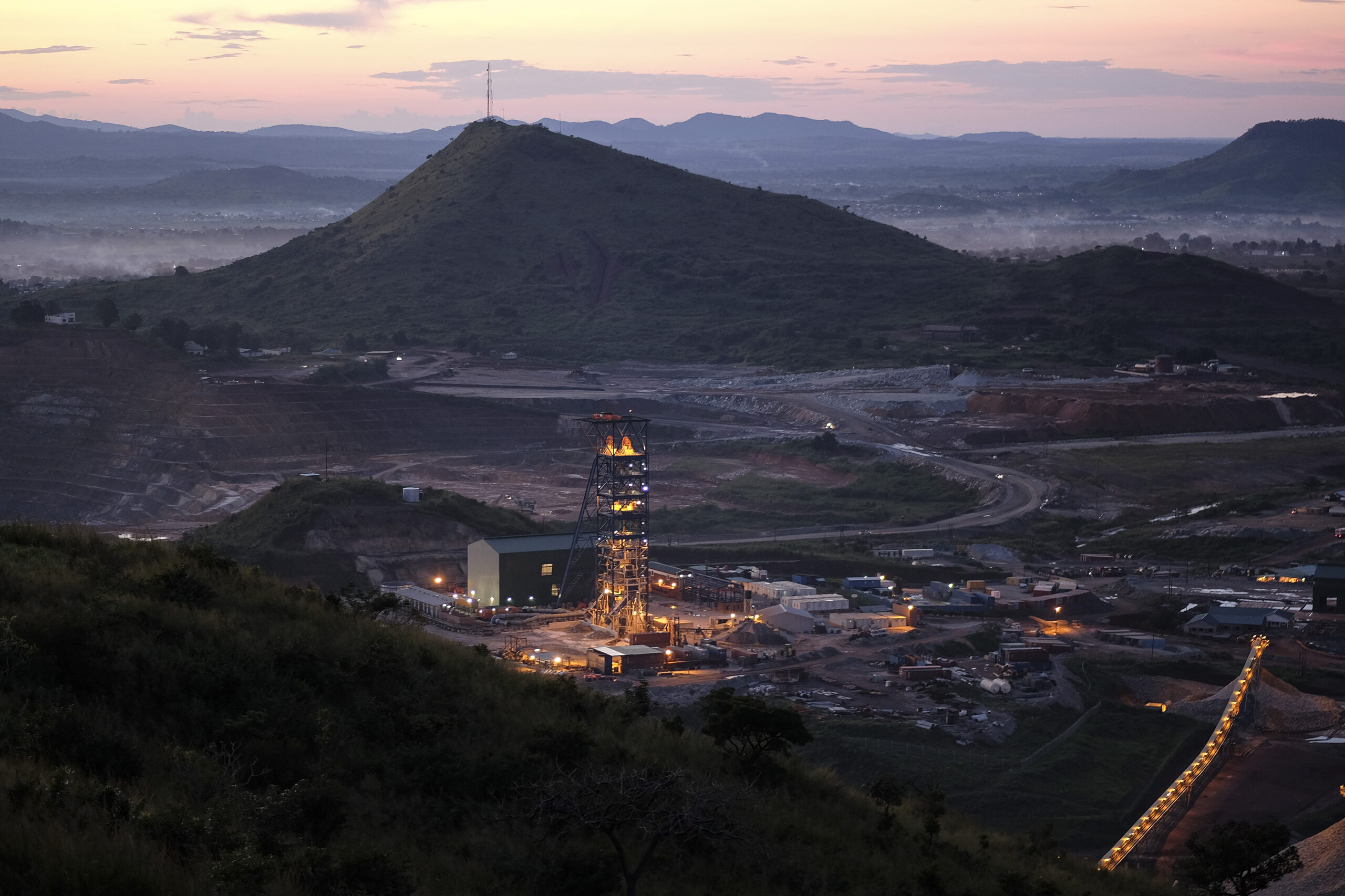
The Trump administration’s bilateral negotiations appear to be guided by a focus on tying health grants to mining concessions and other resource extraction agreements. Several major U.S. mining companies have benefited. In September 2025, Texas-based Metalex Commodities was awarded a $1.4 million grant by the U.S. Trade and Development Agency to fund a feasibility study for expanding the Kazozu copper-cobalt mine in Zambia. Other major players in the country include KoBold Metals, which is developing the Mingomba copper-cobalt project, and Barrick Mining Corporation, which runs the Lumwana copper mine. Both are in Zambia.
Some of the firms’ investors have ties to the Trump administration, wield enormous clout and influence and have contributed to the president’s political efforts. Marc Andreessen, whose firm holds the largest stake in KoBold Metals and who has worked with Trump’s Department of Government Efficiency (DOGE), as well as another KoBold investor, Ben Horowitz, each donated $2.5 million to a Trump-supporting super PAC during the 2024 presidential election. Other wealthy and influential backers of KoBold include Meta’s Mark Zuckerberg, Amazon’s Jeff Bezos and OpenAI’s Sam Altman. Each contributed $1 million to Trump’s inauguration.
Another aspect of the Trump administration’s approach to Africa that has raised eyebrows is that negotiations are being led by Massad Boulos, the father-in-law of Trump’s daughter, Tiffany. Boulos, a native of Lebanon, is Trump’s senior adviser for Africa at the State Department and former chief executive of SCOA Nigeria PLC, a heavy truck assembly and machinery dealership. One of its subsidiaries, SCOA Equipment Limited, supplies heavy equipment for mining and road construction in the region.
The bilateral agreements with the State Department have heightened concerns in many countries, with opposition parties in Zambia, for example, accusing the U.S. of taking advantage of the country. In a recent interview, Green Party leader Peter Sinkamba questioned the secrecy of the health funding memorandum of understanding and demanded that it be made public since it could enable the exploitation of the country’s natural resources.
“Having a secret deal tied to public service delivery is highly suspicious and suggests that the contents of the agreement may not be in the best interests of Zambians,” he told RCV News.
Edward Simukonda, the operations director of a Zambian mining company, went further, saying that “the United States is trying to hold us to ransom, and this should not be the case.”
Other countries are grappling with the transactional approach of the Trump administration.
The Democratic Republic of the Congo, for instance, has been devastated by the closure of USAID. In 2024 it was the largest recipient of U.S. humanitarian aid in the world, mostly for food, water, sanitation and shelter for more than 7 million people displaced by an armed rebel group that has captured the country’s eastern provinces. With so many people fleeing the conflict, the withdrawal of aid pushed “an already dire humanitarian situation closer to catastrophe,” the United Nations Refugee Agency warned.
In the wake of USAID’s demise, aid organizations funded by the agency had to immediately stop essential work — such as providing clean water in the city of Goma in Congo. Since then, cholera cases have dramatically increased in the country, with the U.N. characterizing the outbreak as the worst in 25 years. By December, there had been a 361% increase in cholera deaths, up from 409 cases in 2024 to 1,888 in 2025.
The country’s president, Félix Tshisekedi, moved quickly. Appearing to understand the Trump administration’s transactional approach to foreign aid, he touted the country’s wealth in natural resources, including minerals like cobalt, of which it produces 74% of the world’s supply. Tshisekedi sent a letter to Trump in February 2025, in which he proposed a potential “$3 trillion partnership” that included security assistance to help the country deal with rebel armies, as well as mining concessions.
On the same day that the Trump administration issued a memo freezing aid, Congo signed a contract for $1.2 million with Ballard Partners, which has become one of the most powerful and highest-paid lobbying firms in Washington, D.C., in part due to its ties to Trump. Its owner, Brian Ballard has known Trump for 30 years and lobbied for the Trump Organization prior to the 2016 election. Among his former employees — Trump Chief of Staff Susie Wiles and now-former Attorney General Pam Bondi.
The country had hired Ballard Partners to lobby for its interests in previous years, but at much lower levels ($450,000 in 2024 and $553,000 in 2023).
A few months later, Congo signed three more lobbying contracts with Trump-linked firms, including a $5 million deal with Earhart Turner, which is owned by Karen Giorno, a senior adviser on Trump’s 2016 presidential campaign who pledged to bring “Trump-style tenacity” to the lobbying scene in Washington. Among the lobbyists at the firm assigned to contact members of the Trump administration to seek “a stronger economic partnership and security assistance” was right-wing provocateur Milo Yannapopoulos. The contract was later suspended, reports Global Witness.
Later in 2025, the U.S. responded with a proposal that included “major tax benefits for American mining companies, including corporate tax relief for 20 years, an exemption from windfall taxes and duty-free treatment for imports,” reports Africa Intelligence. Congo pushed back and, after several rounds of negotiations, agreed to a memorandum of understanding that gives U.S. companies the right of first offer on certain mining sites in the country.
Asked for comment on the report, the State Department spokesperson said in an email, “The United States and the Democratic Republic of the Congo continue to advance the U.S.-DRC Strategic Partnership Agreement and create conditions for consistent, responsible U.S. investment in the DRC’s critical minerals sector. We remain committed to fully implementing the agreement to unlock the DRC’s investment potential and deliver tangible benefits for both nations.”
Other countries such as Rwanda, Somalia and Guyana that relied on humanitarian aid from the U.S., which plunged under the Trump administration, have hired lobbyists and touted their openness to investment in their natural resources. Among the lobbyists for Guyana is Carlos Trujillo, who served as an ambassador during Trump’s first term and worked as a senior adviser to the president’s 2024 presidential campaign. Congo recently signed a five-year agreement with U.S. investment firm Atlas Park to map its mineral resources.
Health Data Is ‘Gold’
The deals are also contingent on the countries providing access to their citizens’ medical data to the American government and some pharmaceutical firms, a provision that worries health experts and USAID veterans. Such provisions are “unprecedented” and “outrageous,” former USAID administrator Andrew Natsios told Capital & Main.
“If they’re doing it just to give to a pharmaceutical company, that’s self-defeating. It’s not gonna serve the purpose of an early warning system for new novel diseases.”
Edward DeMarco, a former USAID official who now works as an international development strategist, said that African countries “have concerns that some of this data will be shared with pharmaceutical companies who then have access to this personal health data on millions of people.” He added: “They’re mining for minerals, but this is also gold, this data” in terms of its value to biotech companies and medical researchers.
When such a provision was included in a health agreement signed by Washington and Nairobi in December, it was immediately opposed by prominent Kenyan lawmakers and lawyers because of the lack of public consultation. After a consumer advocacy group filed a case against its implementation l, the agreement was suspended by a Kenyan court later that month.
Health activists in Zambia were particularly concerned about the data-sharing agreement when they read draft copies of the memorandum of understanding.
“There was a lack of clarity about the nature of the data to be shared and what protections Zambian citizens will be guaranteed once the data is in the U.S.,” said Kalala, the Chapter One Foundation director. “It’s not data sharing, if it’s only going one way. We have generally weak protections in this country. So for a lot of the people whose data might come into the wrong hands or whose privacy might be infringed, what mechanisms for accountability would be built into this agreement?”
Among those companies that could benefit from the agreement are Gingko Bioworks, which is already on the ground in Congo and Rwanda collecting medical data, as well as Gilead Sciences, the pharmaceutical firm that recently developed lenacapavir, an HIV treatment that is being used in several African countries.
The focus on data sharing is a key part of the Trump administration’s effort, under its America First Global Health Strategy, to develop a global private biosecurity system parallel to the World Health Organization, which the U.S. departed on Trump’s first day in office.
The demand for long-term data sharing — such agreements usually only five years at most, Natsios said — is “particularly troubling,” noted The Namibian, the largest daily newspaper in Namibia, which called it a potential “Faustian bargain.”
Boulos, the former Trump adviser who has said Africa “doesn’t need charity,” has denied that the administration’s approach is transactional and claimed that any partnerships would be “win-win in nature… nobody is taking advantage of anybody else.”
On the front lines of the HIV crisis in Zambia, activists worry that their government is vulnerable and will find it difficult to reject American demands.
“Saying no is simple,” said Mulenga. “But what comes next? How will we fund these programs? When you say no, you’re an enemy. You have disobeyed. And when you have disobeyed, you have to be punished. That’s the problem.”
Copyright 2026 Capital & Main

-
 Imperial DivideJune 3, 2026
California’s Lithium Valley Dreams Meet Reality at the Only Restaurant in Town
-

 Latest NewsJune 1, 2026
Deep Cuts to Civilian Support Staff for Families of Deployed Marines Raise Concerns
-

 Column - State of InequalityJune 4, 2026
California’s Economy Runs on Labor Trump Wants to Deport
-
 Featured VideoJune 5, 2026
At This New Mexico Park, Mountain Bikers Pedal Amid Hundreds of Oil Wells
-
 The SlickJune 10, 2026
Data Centers Are on the Ballot — This Pennsylvania Candidate Won Her Primary Keeping Them Top of Mind
-
 Latest NewsJune 9, 2026
Ousted by the Trump Administration, U.S. Immigrants Remain Locked up in African Kingdom
-

 Latest NewsJune 8, 2026
The Glacier May Be Gone, but the Love Isn’t
-
 Latest NewsJune 12, 2026
California Town Lets Private ICE Detention Centers Police Themselves