
The Slick
As Prices Climb, California Imports More Gasoline Made From Russian Oil
The state’s failure to reduce driving and to stockpile fuel led to dependence on sanctioned oil refined elsewhere.
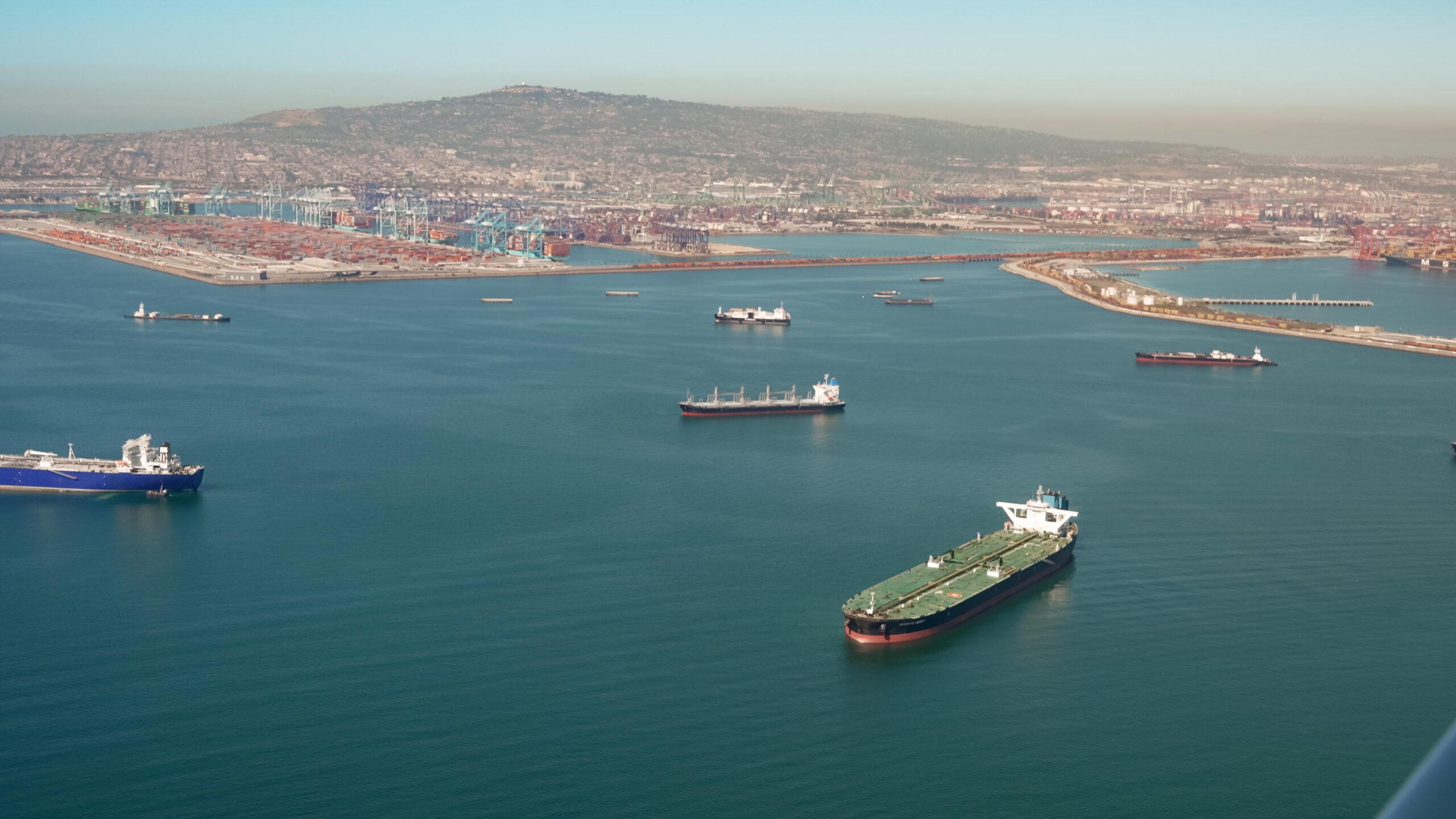

In mid-March — as a freakish early heat wave hit the West and the price of a gallon of regular gasoline climbed toward nearly $6 — Californians endured the consequences of a problem that has long dogged the state: dependence on climate-warming oil priced by the global market.
A record amount of imported gasoline arrived by the end of the month, cooling prices a bit. Much of it had shipped before the Iran War disrupted global supplies. But prices will likely stay high simply because the supply is so low; the average price on April 15 was 30 cents higher than a month earlier, according to the American Automobile Association.
California is in a challenging midtransition to an economy based on clean energy, the California Energy Commission has said. Rising electric vehicle use and more efficient gasoline-powered cars led to a drop in demand for refined fuel, with last year seeing the least amount of gasoline pumped in more than 20 years except when the pandemic reduced driving in 2020.
Some oil refiners in California said they can’t make sufficient profits as demand for their products falls, so they’re closing. The century-old Phillips 66 Co. refinery in Los Angeles shuttered last year, and a Valero Energy Corp. refinery in the Bay Area city of Benicia expects to idle this month. Both refineries account for nearly a fifth of California’s capacity to refine crude oil.
To ensure it has enough fuel, the state is importing refined products from abroad just as the Iran war tightens global crude oil supplies. But California has been able to get a lifeline from a surprising source: Fuel made from Russian oil is surging into the state, even though such sales are used to finance that nation’s ongoing war with Ukraine.
Although the U.S., the United Kingdom and the European Union imposed sanctions on Russian-sourced oil — punishing institutions that interact with blacklisted tankers and companies or that purchase the oil at prices above a cap — other nations such as India, Turkey and China have increased purchases since 2022.
Through a so-called “refining loophole,” the U.S. has imported fuel made from Russian crude oil that was refined in a third nation. California’s top foreign refinery supplier of gasoline and blendstocks this decade is Reliance Industries Ltd.’s Jamnagar refinery complex in western India.
Companies in California have taken advantage of the loophole since the start of the war in Ukraine. Swiss-based commodity trading company Glencore PLC, which owned a terminal in Long Beach until 2023, was the biggest buyer, followed by Phillips 66, Swiss energy trading company Gunvor Group, Chevron Corp. and Plains All American Pipeline, according to shipping data analyzed by the firm Data Desk.
More than 9 million barrels arrived via this loophole in 2025; six shipments carrying 149,916 barrels arrived through March. The imports coincided with increased gasoline prices in the state.
In comments to Capital & Main, a California Energy Commission spokesperson said it does not have legal authority to restrict imported fuels by source of origin, nor does it track crude oil origins. The U.S. Treasury Department, which levies the sanctions, did not respond to questions.
Imports of refined products measured in total barrels from South Korea and the Bahamas — the latter rerouting refined products from U.S. Gulf Coast refineries — have exceeded those from India since 2025. But South Korea, which received most of its oil through the embattled Strait of Hormuz, recently banned exports to conserve fuel for domestic use.
India processed near-record volumes of Russian crude after the U.S. Treasury waived sanctions in March for oil already at sea, an effort to lower global oil prices. In comments to Capital & Main, Chris Wright, secretary of the U.S. Department of Energy, called the move “pragmatic.” On April 17, the Treasury extended the sanctions waiver for another month.
But refined fuels made from Russian oil could continue flowing to California “as long as the Strait of Hormuz remains closed,” said Isaac Levi, Europe-Russia Policy & Energy Analysis Team Lead at the Centre for Research on Energy and Clean Air. California’s imports have already “sent hundreds of millions of dollars to the Kremlin war chest,” Levi added.
California depends on gasoline from abroad because there are no U.S. pipelines to bring domestic fuel to the state (though two are proposed). The law requires gasoline in the state to meet strict antipollution requirements, the so-called California Reformulated Gasoline Blendstocks for Oxygenate Blending. Few refineries worldwide make CARBOB because it is costly to produce; a proposed bill would let refineries pay a fee to sell non-CARBOB gasoline to prevent price spikes.
In a Feb. 18 hearing, Siva Gunda, vice chair of the California Energy Commission, said if demand for gasoline continues to go down, “it’s not about if [more refineries] are going to close, it’s about when.” But the state would be fine as long as “the market can safely rely on global refining capacity,” he added. It would, however, be less resilient.
Last year, global sources of refined fuel helped California avoid a severe price spike. When PBF Energy Inc.’s Martinez refinery in the Bay Area caught fire in February 2025 and shut down for a month, gasoline supplies constricted, and the price of a gallon rose. But it stabilized after imports arrived at ports in Long Beach and the Bay Area, according to the state Division of Petroleum Market Oversight.
“The increased prices signaled scarcity in the market, which attracted additional imported gasoline,” said Gigi Moreno, chief economist at the oversight division, in a presentation in December.
Data from analytics platform Kpler showed that in the two weeks after the Martinez refinery shut down, two tankers laden with gasoline set sail from the Jamnagar refinery complex and reached the Olympus Terminal in the Port of Long Beach in March 2025. Another shipment arrived at a terminal in Martinez around the same time.
Shipments of Russian oil arrived at Jamnagar on 11 sanctioned tankers in the weeks before refined products were exported to California. Russian companies were the top suppliers to Jamnagar that year.
Two Decades of Missed Opportunities
In 2000, a year after gasoline prices in California peaked at a then-record $1.62 per gallon, a task force recommended that oil refineries stockpile fuel to prevent price spikes. It also said the state should encourage people to drive less. Despite attempts to do so, neither happened.
The first failure was in limiting driving. The report noted that “modifications in residential development, to emphasize and facilitate pedestrian or mass transit” could result in less gasoline usage. Yet by 2020, motorists had put more miles on their vehicles due to the continued “pave-the-earth” expansion of highways.
California’s plan to cut greenhouse gas emissions by 2030 assumes a steep drop in driving. The state, however, is nowhere near meeting that goal. The California State Transportation Agency said its planned investments in features such as crosswalks and bike paths will result in lower emissions by getting people out of their cars, but many projects aren’t completed.
More than $5 billion in revenues from the state’s cap-and-trade emissions program have gone toward public transit and denser housing, but “it actually takes a really long time” to make a difference, said Jeanie Ward-Waller, director of transportation advocacy at Fearless Advocacy and a former employee at the California Department of Transportation.
The 2000 report’s other critical recommendation, that refineries keep a month’s worth of gasoline on hand for “combatting a price spike,” was not acted on for more than two decades. Those efforts started in 2022 and have now stalled.
Two laws passed under Gov. Gavin Newsom’s direction authorized the California Energy Commission to enforce a cap on refiners’ profit margins and make refineries maintain minimum inventories of fuel to prevent price spikes.
But last year the commission said it was “deprioritizing” the cap law for five years and has yet to promulgate a rule for refineries to stockpile fuel. The Western States Petroleum Association, the powerful industry lobbying group, claimed there is not enough capacity to both store fuel and supply the state.
“If we had minimum inventory rules,” said Jamie Court, president of the advocacy group Consumer Watchdog, “we would not have this problem.” Without such rules, the state is also failing to address the refineries’ profit margins, which he estimated is over $1.50 per gallon—more than that of any other state.
In an email to Capital & Main, the California Energy Commission said it de-prioritized capping refineries’ profits to focus on other things, including potential rules for refineries to keep enough fuel on hand when they can’t make enough. A spokesperson said it is gathering data “to determine if there are clear consumer benefits” for these rules.
The one bright spot since 2000 has been electric vehicle sales. High gas prices could further speed up their purchase, said Philip Verleger Jr., a longtime oil industry analyst who wrote that expensive fossil fuels are a key driver of the switch to electric vehicles.
Yet while California tries to maneuver around President Donald Trump’s legal efforts to undermine the financial appeal of clean cars, it is also proposing to leave programs for low-income buyers underfunded.
The California Air Resources Board has estimated that the state needs $550 million for equity incentives each year through 2030. Newsom’s 2026-27 budget proposes $200 million in rebates for electric vehicles purchased.
That amount “is certainly welcome,” said Michael Berube, the CEO of clean car advocate Calstart, “but there needs to be more than that overall.”
Copyright 2026 Capital & Main.
Correction: An earlier version of this story misstated the year that California gas prices peaked at a then-record of $1.62 per gallon. This occurred in 1999.



-

 The SlickMay 29, 2026
Feds to Open Tens of Thousands of Acres of Colorado Wilderness to Oil Drilling
-

 Deadly Dust: The Silicosis EpidemicMay 27, 2026
California Moves to Ban Quartz Countertop Fabrication to Combat Silicosis Epidemic
-
 Latest NewsMay 26, 2026
Conditions at California ICE Detention Centers Are Getting Worse, Inspections Find
-

 Imperial DivideJune 3, 2026
California’s Lithium Valley Dreams Meet Reality at the Only Restaurant in Town
-

 Column - State of InequalityMay 28, 2026
Top Democratic Candidates Agree on Housing Urgency, Not the Fix
-

 Latest NewsJune 1, 2026
Deep Cuts to Civilian Support Staff for Families of Deployed Marines Raise Concerns
-

 Column - State of InequalityJune 4, 2026
California’s Economy Runs on Labor Trump Wants to Deport
-

 The SlickJune 5, 2026
At This New Mexico Park, Mountain Bikers Pedal Amid Hundreds of Oil Wells