
Latest News
A Grieving Afghan Man Says He Tried to Get Medical Care for His Brother Who Died in ICE Custody
Naseer Paktiawal just returned from burying his brother in Afghanistan. “I didn’t want to bury him here.”
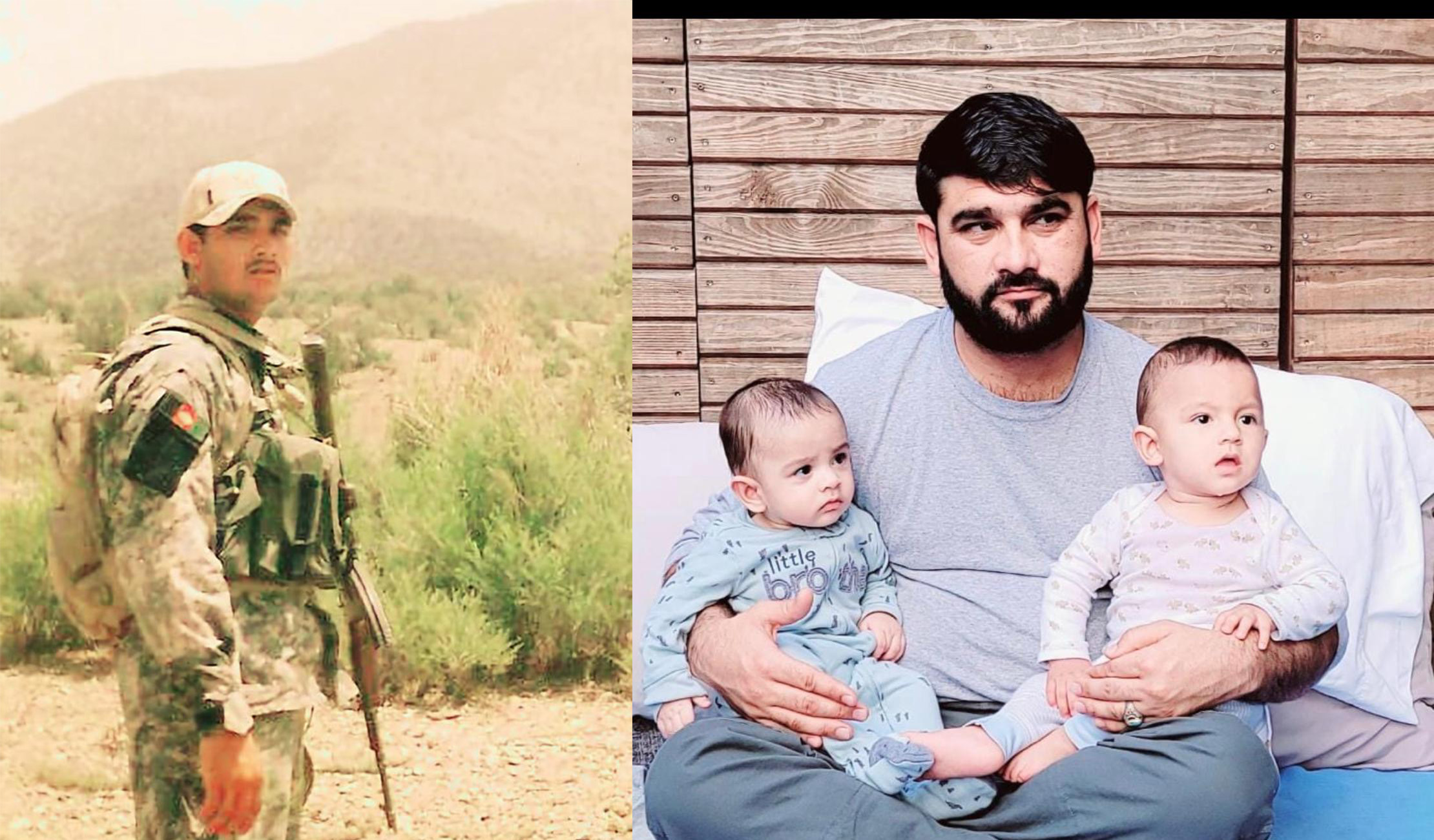

When Naseer Paktiawal found out that his older brother was not feeling well after being taken into Immigration and Customs Enforcement custody in mid-March, he called an ambulance.
Paktiawal said he watched the ambulance drive up to the Dallas facility where ICE processes people its officers have arrested. Later, he said he received another call from his brother, who told him that his condition was worsening and that the medics never checked on him.
The next morning, his brother, Nazeer Paktyawal, was dead — roughly 24 hours after being taken in by ICE. At the time, he was the 12th person known to have died in ICE custody this year. Since then, at least five more have died, bringing the total to 17.
“If they had let those guys check up on him, he would still be alive,” Paktiawal said. “He would still be here with his family and with me.”
Paktiawal, who served as a translator for U.S. forces in Afghanistan, wants answers about what happened to his 41-year-old brother, whom he looked up to like a father.
“In what kind of a country do we live? If he’s not safe, I’m not safe,” Paktiawal said. “He thought that this country is the safest country in the world, but it’s not. I don’t know what they did to my brother. He was healthy. He was working.”
ICE did not respond to questions from Capital & Main beyond sending a link to its press release about Paktyawal’s death, which says that he was declared deceased at Parkland Hospital a little after 9 a.m. on March 14. The statement says that the agency does not deny emergency care to people in its custody.
The city of Dallas did not respond to a request for comment about the ambulance.
Paktyawal fought alongside U.S. Special Forces, including the 3rd Battalion, 3rd Special Forces Group, as a member of Afghanistan’s special forces and was evacuated with his family when U.S. troops withdrew from the country and the Taliban took over in 2021.
Paktiawal said his brother inspired his own decision to work as a translator for U.S. troops. After their father died, Paktyawal joined the special forces to support their family in 2005, and Paktiawal took the translator job in 2010 once he finished high school to help the family as well.
He said beyond supporting their family, both brothers believed in the U.S. mission to bring peace and stability to their country and were willing to sacrifice their lives for it.
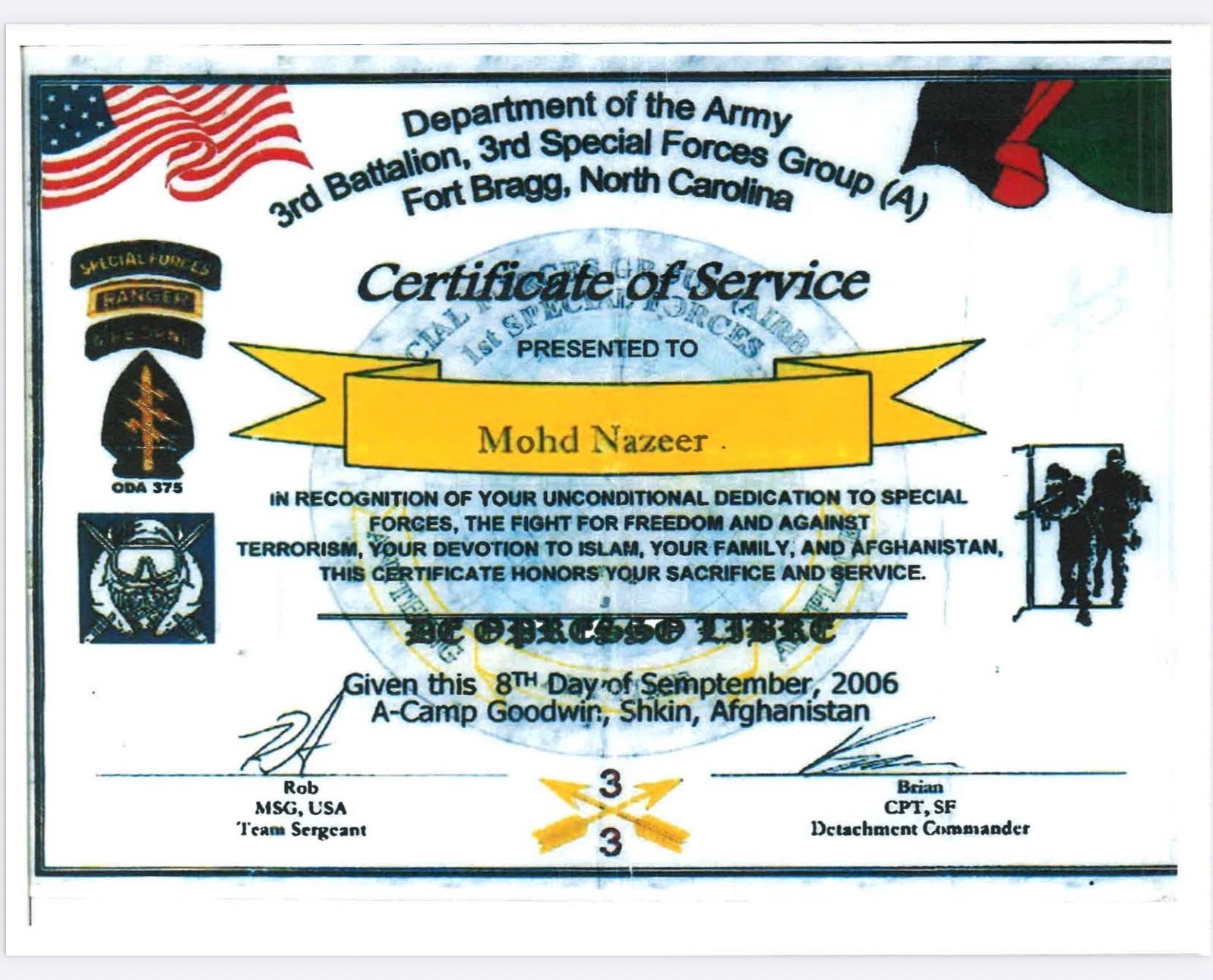
A certificate recognizing Paktyawal’s service alongside the U.S. Army’s 3rd Battalion, 3rd Special Forces Group in Afghanistan. Courtesy the Paktyawal family.
Paktiawal received a special immigrant visa to move with his wife and children to the U.S., where he is now a citizen. The rest of his family stayed behind. He said being the only part of the family here was lonely.
He remembered how excited he felt when his brother joined him in Texas in 2021.
“When he got here from Afghanistan, I felt like I had my whole family with me,” Paktiawal said. “Now I’m here alone again.”
The brothers rented apartments in the same complex, and their families saw each other almost every day, Paktiawal said. They often took their children together to a local park. On weekends, the brothers would join a group of Afghan men to play volleyball.
One of those men, Rahmanullah Zazy, recalled Paktyawal as a hard-working and humble man.
“He loved this country,” Zazy said. “He was always saying, ‘I’m so grateful I’m here with my kids, and they will have a good future.’”
Paktiawal worked driving a semi truck, and Paktyawal joined his brother in that work until a rule announced by the Trump administration last year took away Paktyawal’s Class A license because he didn’t yet have his green card. Paktiawal said his brother had completed an interview with U.S. Citizenship and Immigration Services and was waiting on the decision in his case.
Once Paktyawal could no longer work in commercial trucking, he got a job as a baker at a grocery store that catered to the Afghan community in the Dallas suburbs where they lived, Paktiawal said. He said he saw his brother at the grocery store, healthy and working, the night before his arrest.
The next morning, when Paktyawal was getting ready to take his children to school, ICE officers detained him in front of them.
“That moment will stay with them forever,” the family said in a statement.
In its statement, ICE said that Paktyawal had been arrested twice in 2025, once on charges of food benefits fraud and a second time on charges of theft. The Dallas County District Attorney’s office confirmed that Paktyawal had an active court case relating to a felony charge of fraudulent use of food benefits of $200 or more. Garland police confirmed that officers had arrested Paktyawal on suspicion of a misdemeanor theft, but there was no court case for that charge.
Paktiawal said that his brother was innocent.
“Whatever they say about my brother, they’re just making excuses, and they’re just trying to tell the people that he was a criminal,” Paktiawal said. “He was not a criminal. He was a hero. He served this country on behalf of the U.S. government.”
ICE said that Paktyawal’s parole, or temporary permission to be in the U.S., expired in August 2025, but his brother maintains that Paktyawal still had permission to be in the U.S. for several more years.
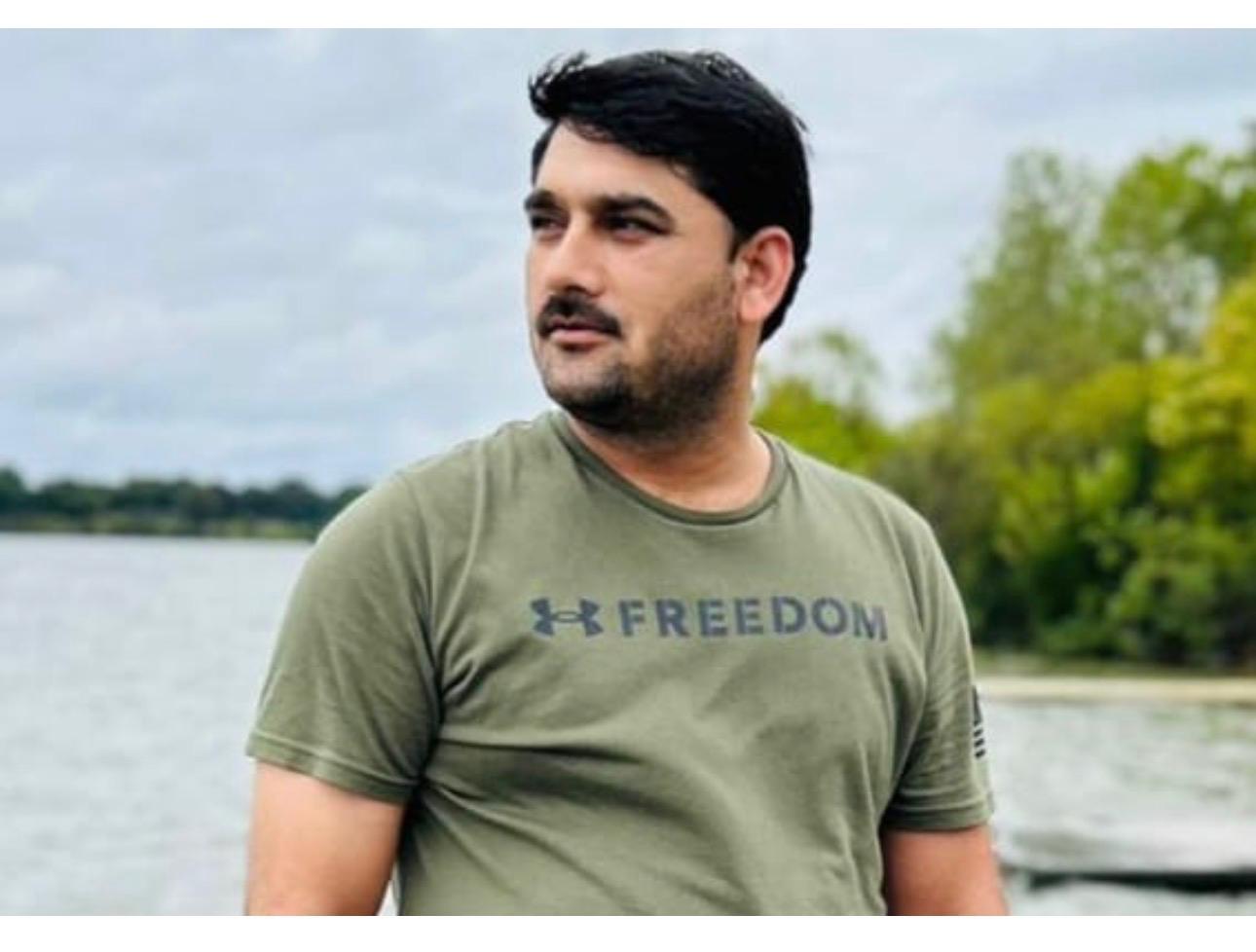
Nazeer Paktyawal. Courtesy the Paktyawal family.
Paktiawal said that he received a call from his brother a few hours after ICE arrested him, and Paktyawal said he was not feeling well, complaining of fever, body pain and difficulty breathing.
Paktiawal said he went to the holding facility in Dallas to try to see his brother and to ask about his medical care.
“They said, ‘Don’t worry about it,’” Paktiawal said.
That’s when he went outside the building and called an ambulance. After watching it pull up to the building and waiting about 45 minutes, he looked around and couldn’t see the ambulance anywhere, he said. He believes it left through a back entrance.
He said he called again and was told that medics had checked on his brother.
But, later that night, Paktyawal called his younger brother and said no one had been to check on him, Paktiawal said.
Paktiawal still remembers the last words his brother said to him over the phone: “Naseer, I need your attention.”
“I don’t know what attention he wanted from me,” Paktiawal said. “Maybe that was the time he knew that he’s not going to make it.”
Paktiawal insisted over the phone to an ICE officer that his brother needed medical attention.
Close to midnight, Parkland Hospital admitted Paktyawal. Early on March 14, according to ICE, hospital staff noticed that Paktyawal’s tongue was swollen. He was pronounced dead at 9:10 a.m.
Paktiawal was taking his children to a playground when he learned of his brother’s death. At first, he said, he thought the officer had made some sort of mistake.
He called Zazy and other friends, and the group went to the hospital. The group waited five or six hours before anyone would meet with them to tell them what happened. They said they weren’t allowed to see Paktyawal’s body.
“I don’t know why his tongue was swelling — a healthy man, a man who works seven days a week, a man who’s got six children, driving the car every day to school and to work, and they told me that we tried everything, but we couldn’t save him,” Paktiawal said.
Several days later, the family received Paktyawal’s body and held a funeral in the Dallas suburbs. Then, Paktiawal made arrangements to send his brother’s body to Afghanistan and flew there to receive him and tell their mother what happened. He asked his other relatives not to say anything to her until he could be with her in person.
Paktiawal buried his brother in the family cemetery alongside their father.
“I didn’t want to bury him here,” Paktiawal said. “Because of what they did to my brother, I don’t trust them what they would do to my brother’s grave here. That’s why I took his body all the way to Afghanistan.”
Paktiawal feels an extra layer of grief because the most recent presidential election was his first time voting since becoming a citizen, and he voted for Donald Trump, he said. He thought Trump would take care of immigrants like him and his brother who had worked with the U.S. military.
He feels betrayed.
Paktyawal’s wife told #AfghanEvac that she alerted the officers who arrested her husband that he needed an inhaler and tried to send it with him but that the ICE officers didn’t take it. Paktiawal said he remembered his brother sometimes using an inhaler, but he’s convinced that there is more to the story of what happened to his brother. He is waiting for results from the autopsy, he said.
“I want justice,” Paktiawal said. “I want answers for my family, for my mother, my brother and my sisters and especially for his kids.”
Paktiawal is now taking care of his brother’s wife and children in addition to his own. He is looking for a bigger home where the families can live together. Community members launched a GoFundMe to help support the family.
Paktiawal said his littlest nephew still asks him when “Baba” is coming home.
“Ten years later, he is going to ask the same question, ‘What happened to my dad?’” Paktiawal said. “All I’m going to tell him is, ‘Your dad was a hero, and he was arrested falsely and he was killed.’ He didn’t die. My brother didn’t die — he was killed.”
Copyright 2026 Capital & Main


-
 The SlickMay 29, 2026
Feds to Open Tens of Thousands of Acres of Colorado Wilderness to Oil Drilling
-
 Deadly Dust: The Silicosis EpidemicMay 27, 2026
California Moves to Ban Quartz Countertop Fabrication to Combat Silicosis Epidemic
-
 Imperial DivideJune 3, 2026
California’s Lithium Valley Dreams Meet Reality at the Only Restaurant in Town
-
 Column - State of InequalityMay 28, 2026
Top Democratic Candidates Agree on Housing Urgency, Not the Fix
-
 Latest NewsJune 1, 2026
Deep Cuts to Civilian Support Staff for Families of Deployed Marines Raise Concerns
-

 Column - State of InequalityJune 4, 2026
California’s Economy Runs on Labor Trump Wants to Deport
-
 The SlickJune 5, 2026
At This New Mexico Park, Mountain Bikers Pedal Amid Hundreds of Oil Wells
-
 Latest NewsJune 9, 2026
Ousted by the Trump Administration, U.S. Immigrants Remain Locked up in African Kingdom