The Slick
Oil Companies Accused of Massive Accounting Fraud in New Mexico
Suit claims ExxonMobil and others underreported debts by $194 million, calling it “a playbook” for how companies dump old wells and expenses on states.
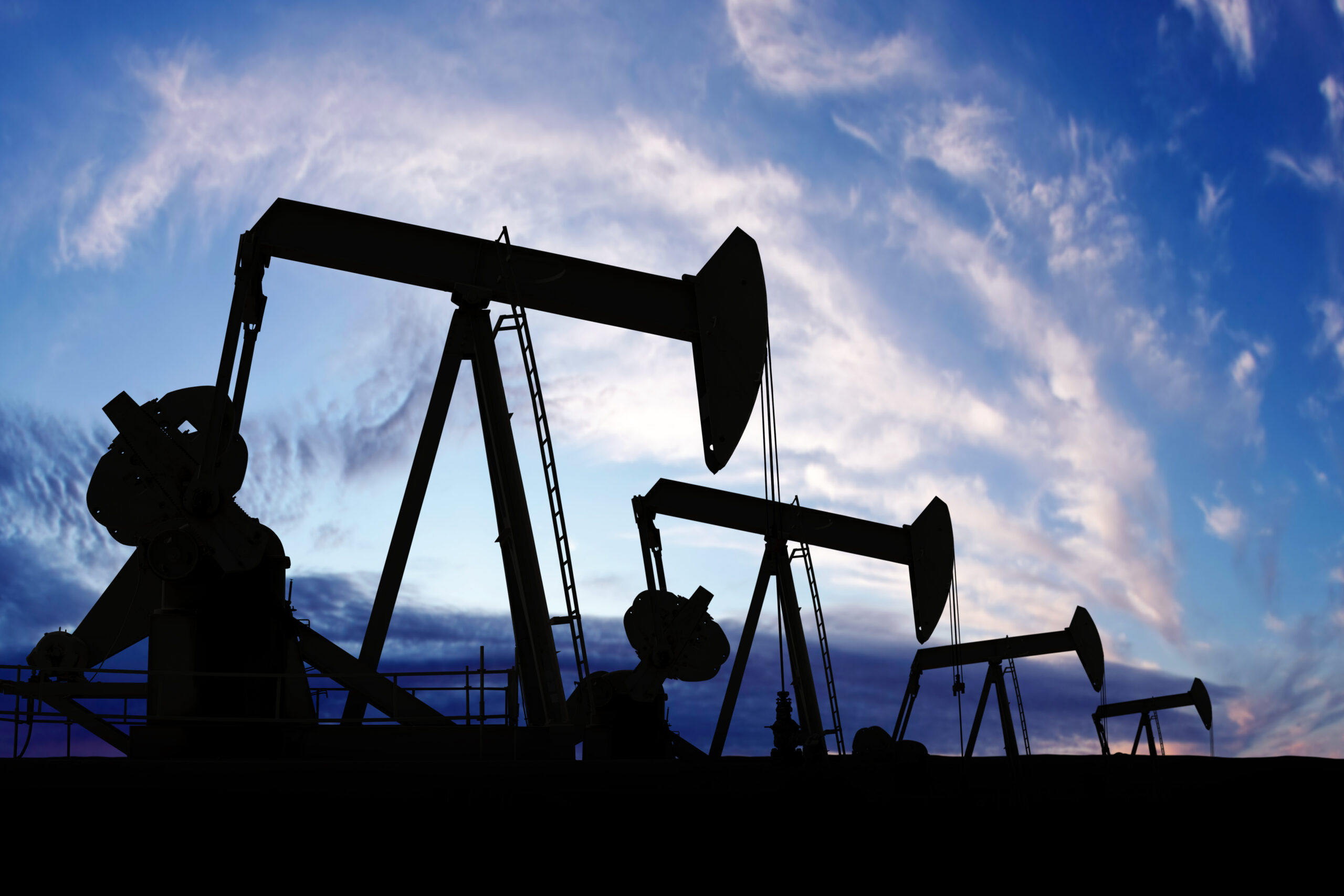

Oil companies ExxonMobil, Empire Petroleum and their subsidiaries engaged in accounting fraud that could cost the state nearly $200 million, a lawsuit filed in New Mexico District Court alleges. If successful, plaintiffs say the case could change how old oil and gas assets are sold, leading to fewer orphan wells in the future.
The case stems from the sale of several hundred old wells from ExxonMobil subsidiary XTO Energy to Empire Petroleum subsidiary Empire New Mexico in 2021. The suit alleges the fraud occurred when the two companies “massively” undervalued the debt obligations inherent in the sale — namely, the eventual well cleanup costs — violating New Mexico’s Fraud Against Taxpayers Act.
The plaintiffs claim the undervaluation led Empire Petroleum to take on wells it would never realistically have the money to plug, immediately making the company insolvent and at risk of bankruptcy.
Join our email list to get the stories that mainstream news is overlooking.
Sign up for Capital & Main’s newsletter.
“Orphan” wells have no known or solvent owner. In New Mexico, the state is the final stop for these wells on state and private lands (the federal government is responsible for those on federal and tribal lands), making it responsible for the expensive plugging and remediation costs. The plaintiffs contend this was a likely goal of the transaction. In a report released last year, the state’s Legislative Finance Committee said New Mexico is already liable for more than $200 million in cleanup costs for the orphaned wells currently on its books.
It is what’s known as a Qui Tam suit, a case brought by individuals on behalf of a government while first giving that government the chance to prosecute the suit. If it declines, the plaintiffs move forward with the case. The suit was filed last August and was under seal until last week as the New Mexico Attorney General’s office reviewed it. The Attorney General’s office did not explain why it did not take the case itself.
ExxonMobil declined to respond and Empire Petroleum did not respond to requests for comment for this story.
XTO was one of the state’s top-five oil and gas producers in 2025. Its parent ExxonMobil is the title sponsor of the Albuquerque International Balloon Fiesta, one of the state’s biggest tourist draws. Empire New Mexico landed at 60th among oil and gas producers last year.
The case was brought by Theron Horton, a forensic data analyst from Taos, New Mexico, and Greg Rogers, a corporate and environmental lawyer and former CPA from Broomfield, Colorado. They claim it is the first of its kind and represents a possible precedent for how states or even individuals could prosecute suspect oil and gas well transfers in the future. Instead of relying on state or federal laws governing oil and gas industry operations, the case latches onto accounting violations, switching the argument from oilfield rules to bookkeeping standards.
Beyond the potential cost to taxpayers, unplugged orphan wells can put people living nearby and the environment at risk by leaking natural gas, crude oil or other toxic chemicals onto the ground, into the air or into waterways.
“I care about people, the earth and societal justice,” said Horton. “It is critical that each of us do everything we can to stop the tsunami of corruption that threatens the very existence of our country.”
“I find environmental accounting fraud particularly immoral,” said Rogers. He said he studied environmental law while working for energy giant Enron’s primary law firm. More recently, he has been a fellow at and adviser to the Master of Accounting program at the Judge Business School at the University of Cambridge in England. “If I lack the courage to call this out no matter the odds, no one else will, and taxpayers, citizens and landowners will pay the price,” he said.
The plaintiffs argue that the $17.8 million price tag for the well transfer didn’t properly account for the eventual cleanup costs of the hundreds of low-producing and moribund wells that were sold, or the fact that nearly all of the wells are old and nearing the end of their producing lives, with an average age of over 63 years. The plaintiffs claim that the two companies, through XTO Energy and Empire New Mexico, agreed to value the eventual, obligatory cleanup costs — known as asset retirement obligations — at roughly $6.1 million. Horton and Rogers claim that figure should be nearly 33 times that amount, or $199 million.
“Either the assets are worth a lot more than they say they’re worth,” Rogers said, “or they’re discounting the [asset retirement obligation] based on the likelihood that they’ll never have to pay it.”
In their suit, Rogers and Horton claim that the sale follows a common game plan. When profits drop at still-active wells, larger companies will often sell them to smaller companies that try to wring further profits through lower overhead costs or stimulating wells to produce more oil and gas. Those small companies sometimes sell the wells to ever-smaller companies until production no longer covers operating expenses and a company is left with an inventory of low- and nonproducing wells without the financial means to plug them, ending in bankruptcy.
In a separate but similar case, New Mexico is suing three Texas oilmen for fraud in a scheme to dump unprofitable wells on the state through a series of shell companies and bankruptcies. The wells and people involved were originally uncovered in reporting by ProPublica and Capital & Main.
Rogers said the ultimate goal of his case is to toughen things like bonding regulation so low-producing wells are plugged instead of being sold to undercapitalized, smaller companies.
These kinds of sales “are the first link in a chain that can end in abandoned and orphaned wells that pollute the climate and harm people living nearby,” said Gabe Pacyniak, a lawyer and professor at the University of New Mexico School of Law. Pacyniak is also the primary faculty supervisor of the school’s natural resources and environmental law clinic.
“If companies are lying about how much it would actually cost to plug and clean up their oil and gas infrastructure during these sales, then they are setting up the government and taxpayers to be stuck with the bill,” he said.
Horton said that for years he and Rogers have run a self-developed set of analyses on oil and gas production companies, primarily in Colorado, California and New Mexico, searching for cases that could result in bankruptcies that leave behind scores of abandoned wells. When they examined the collection of old wells in the XTO-Empire transfer, Horton said he saw “a screaming target.”
“You can tell when a company is buying wells that have such low production levels that they’re effectively not economic,” Rogers said. “They couldn’t pay for their own funeral at the time of the transaction.”
The suit contends Empire’s own financial disclosure shows the oil company didn’t have the financial strength to pay for the eventual remediation of the wells it was buying.
“It’s often a smart legal strategy to follow the money. … Focusing on fraud in the sale is easier than looking at the status of each well,” Pacyniak said. “It also sends a message to companies that they can’t get away with trying to dump their wells without fully accounting for the cost of the inevitable and necessary cleanup.”
Rogers said the key to unlocking the size of the alleged fraud came from recent reports by New Mexico agencies stating how much they pay to plug and remediate orphan well sites. It’s become a growing issue from California to Pennsylvania. New Mexico is the nation’s No. 2 oil-producing state and the No. 3 producer of natural gas. That production flows from more than 50,000 active oil and gas wells, mostly in the state’s portion of the Permian Basin, one of the most productive oil basins in the world.
In its 2022 year-end filing with the Securities and Exchange Commission, Empire Petroleum reported that the sale came with a $6.1 million asset retirement obligation. That works out to $9,100 per well in cleanup and remediation costs for the 670 wells in the sale. But in its 2023 Annual Report, the New Mexico Oil Conservation Division placed its state-wide average plugging and remediation costs at around $214,000 per well.
In their suit, Horton and Rogers accounted for the wells being in a more expensive part of the state and used a per-foot basis to estimate the eventual plugging and remediation costs at an average of $236,000 per well. A 30% contingency fee bumped the per-well cost to $306,000. Another 23 wells that are plugged but still need further remediation were factored at $50,000 each, the low end the state pays for that work, adding another $1,150,000 to the count. In the end, they claim the full asset retirement obligation should have been $199,576,929.
Meeting that mark might be difficult. Empire Petroleum is a publicly traded company and, according to its annual Security and Exchange Commission filings, its only recent profitable year was in 2022. Over the past three years it recorded total net losses of $100 million while the total asset retirement obligations it did record — while much lower than the numbers Rogers and Horton calculated — continued to rise and its long-term debt more than tripled. The company’s stock price plunged in that timeframe, losing nearly 90% of its value since its peak price four years ago.
According to production figures filed with New Mexico’s Oil Conservation Division, Empire New Mexico reported selling 17% less oil and 18% less natural gas to market in 2025 than in 2022.
Many of the company’s oil and gas wells produce little, if anything at all. While 375 Empire New Mexico oil and gas wells are listed as “active” on the state’s Oil Conservation Division website, only 302 were recorded pulling up anything in January 2026, the last month for which full production numbers are available. Sidney Hill, public information officer with the New Mexico Energy, Minerals and Natural Resources Department, said that 306 of the company’s wells are “stripper wells” producing less than the equivalent of 10 barrels of oil a day over the course of a year. He said about 28,000 New Mexico wells fit that description last year. Such low production indicates the wells are nearing the end of their economic lives.
In total, the wells brought in oil and gas worth roughly $2 million on the open market that month, without factoring in operating costs like debt payments, transportation or well maintenance.
* * *
In 2024, the Interstate Oil and Gas Compact Commission tallied 142,000 known orphan wells across 29 states. Those states estimated there are another 250,000 to 740,000 wells that are undocumented or only partially documented by regulatory agencies. On the Navajo Nation, for example, chemical-laden, undocumented wells dot the landscape after a century of oil and gas drilling in the region.
New Mexico has 1,035 orphan wells on its books now, according to Hill. Another 1,400 wells are essentially awaiting paperwork to join the roster and 3,000 more will likely soon join those, according to last year’s Finance Committee report. It went on to estimate that without major changes in bonding and transfer practices, the state could be on the hook for somewhere between $700 million and $1.6 billion in cleanup costs in the coming years.
The costs of orphan wells don’t stop at financial consequences. A 2022 overview of nearly three dozen scientific studies of orphan wells by HEI Energy documented air, surface and subsurface contamination from methane, petroleum byproducts and well wastewater. In a different project, HEI Energy funded a monitoring station that found extreme levels of air pollution from oil and gas facilities around Loving, in New Mexico’s portion of the Permian Basin.
“There’s an easy answer to this,” Rogers said. “If you really want to get this problem solved, you just require the operator to put up a full-cost bond.”
Financial assurance bonds are the primary way governments try to indemnify themselves against orphan well costs. In theory, if a company goes bankrupt, the state can claim the company’s bonds to cover cleanup. In practice, it rarely works that way.
For example, Oil Conservation Division records show that Empire New Mexico meets New Mexico’s bonding requirements, but those bonds are worth only enough to clean up about five wells at the state’s average cost.
New Mexico’s bond requirements are so low that sometimes the state doesn’t bother to collect them.
“The juice is not worth the squeeze,” said Ben Shelton, the deputy secretary of the New Mexico Energy, Minerals, and Natural Resources Department, in a legislative committee hearing last year. “I’m not going to send one of my three attorneys … on a two-month goose chase for a $50,000 bond — it’s just not worth the state’s taxpayer dollars.”
The Oil Conservation Division taps the state Reclamation Fund to pay for its orphan well cleanup projects. To cover the growing number of those wells on state books, a bipartisan bill that passed earlier this year increases and eventually channels all of the state’s oil and gas conservation tax into the fund for eight years. According to figures from the New Mexico Taxation and Revenue Department, that will divert tens of millions a year that previously had gone to the state’s General Fund.
Kyle Tisdel, senior attorney with the Western Environmental Law Center, said that’s a positive move for well cleanup but only addresses part of the issue. Without higher bonding requirements, the fund could create a disincentive for industry to plug wells at all. Companies could wait and “just turn their wells over to the state because the reclamation fund’s going to pay for it,” he said.
His group, along with nine others, has petitioned the Oil Conservation Commission to create rules to increase bonding amounts, tighten inactive well rules and strengthen well transfer rules. The case began in June, 2024, and will have its next hearing on April 9.
“There’s no incentive right now for companies to pay out of pocket for those plugging costs,” he said. “It works for industry, but it doesn’t work for the public. It doesn’t work for the taxpayers.”
Case in point: In a 2023 settlement, New Mexico agreed to plug and remediate 299 nonproducing wells owned by Ridgeway Arizona, with the company reimbursing the state $30,000 a month until the bill is paid. At the time, state regulators said that bill could top $30 million, creating an 83-year payment window. The agreement also waived more than $270,000 in fines for operational violations at the company’s facilities.
Rep. Matthew McQueen, a Democrat from Galisteo who’s running for state land commissioner, has tried for years to fix the orphan well issue through new legislation. His proposal in 2025, which didn’t pass, was to ask the industry to police itself.
“The way we do that is we say, You’re free to transfer these wells, but you don’t get to transfer the liability,” he said. Under McQueen’s proposed law, if a company down the ownership chain goes bankrupt, the state would go back up the chain until it found a solvent company to pay for plugging and remediation. The federal government already has this tool, and last year the Bureau of Land Management used it to get four different companies to pay the costs on 23 orphaned wells they had sold years earlier but were eventually abandoned in the San Juan Basin in New Mexico’s northwest corner.
“All these things would be easier if just the responsible parties stepped up and did the right thing,” McQueen said. “And of course they’re not going to do that out of the goodness of their heart. They’re going to do that if that’s our statutory framework.”
He said it would be simpler for everyone in the end. “You don’t have to go through all of this rigamarole. You don’t have to do the complicated transactions. You don’t have to do the corporate shell game. You can just do the right thing,” he said. “Transfer the well if you need to, but make sure that you have a good transferee.”
Copyright 2026 Capital & Main


-
 Column - State of InequalityMay 21, 2026
In California Governor’s Race, Xavier Becerra Walks Away From Single-Payer
-
 Latest NewsMay 11, 2026
Inside the Texas Water Crisis Pitting Residents Against Industry
-

 Latest NewsMay 22, 2026
Where California’s Gubernatorial Candidates Stand on Climate and Taking Big Oil Money
-
 Latest NewsMay 15, 2026
California Hazardous Waste Rules Criticized as Years Late and ‘Polluter-Friendly’
-

 Latest NewsMay 12, 2026
Government Fails to Provide Adequate Interpreter for Deaf Ukrainian Asylum Seeker
-
 The SlickMay 20, 2026
70-Foot Wastewater Geyser Reflects New Mexico’s Latest Oilfield Challenge
-

 Latest NewsMay 13, 2026
While Pentagon Spends Billions on War, Military Families Say They’re Getting Short-Changed
-

 Column - State of InequalityMay 14, 2026
The Real Stakes Behind California’s Billionaire Tax Fight: Health Care Access