


Immigration has never been more in the national spotlight, with Republican presidential candidates histrionically claiming most of those who cross the Mexican border are rapists and murderers, while calling for everything from mass deportations to the building of a massive wall with Mexico. Politicians and citizens are also debating how best to deal with Syrian refugees fleeing their war-torn country.
But there’s a border story the majority of Americans are not hearing about.
Over the last two years, more than 100,000 unaccompanied minors — from those under 18 years old to as young as 6 — have crossed the border trying to escape the violence that plagues their home countries of El Salvador, Honduras and Guatemala. You won’t find this mass exodus mentioned in stump speeches or discussed by pundits on the 24/7 news channels.
Herself the daughter of Cuban refugees, CalArts teacher/playwright Marissa Chibas is trying to do something about that.
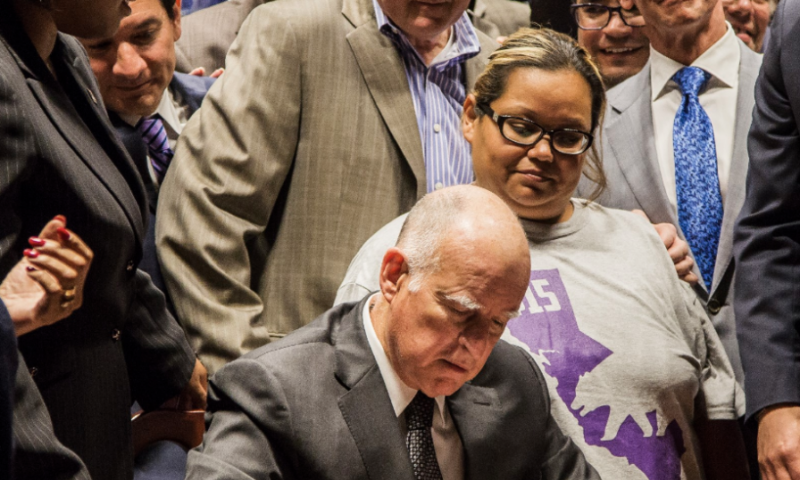
The placards stacked outside the Ronald Reagan State Building said it all: “We Did It!” The hundreds of low-income workers who had just carried those signs had come to downtown Los Angeles Monday morning to celebrate “it” – the passage of a $15 an hour state minimum wage. The mood was jubilant, almost delirious, in anticipation of Governor Jerry Brown’s arrival to sign the measure, known as Senate Bill 3.
To be clear: The new wage law does not mean fast-food workers, janitors, in-home caregivers or others are about to jump from earning $10 an hour to $15. Come January 1, 2017, people earning the current minimum wage will move to a $10.50 hourly wage. The following January, it will go up to $11, not reaching $15 until 2022 (2023 for workers employed in companies with 25 or fewer workers). But along the way, workers who previously had to get sick on their own time will be given three paid days off – a big boost for their health and the well-being of both the people they work with and serve.
» Read more about: Sweet 15: Governor Signs $15 an Hour Minimum Wage Bill »
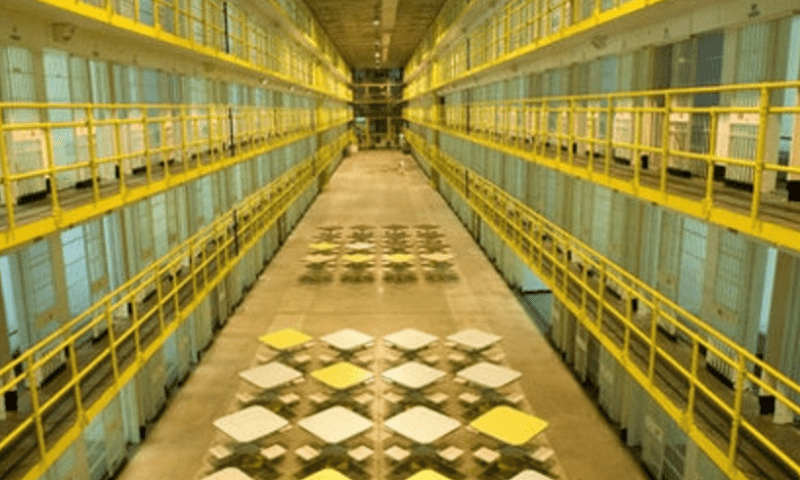
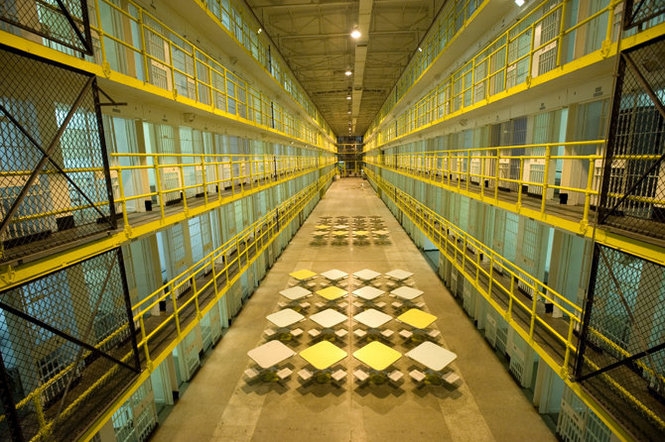
Remember when maggots were found in potatoes about to be served at a Michigan prison? That was just the tip of the iceberg.
A new report released this week details widespread cost-cutting by the food service company Aramark, whose contract was terminated by that state last year. Kitchens were not only unsanitary but dangerous. The company hired inexperienced staff, allowing prisoners to steal makeshift weapons and control the lunch line. Food shortages were especially common.
Michigan eventually replaced Aramark with a new contractor, but the report comes to an unambiguous conclusion: The underlying problems that ended the contract are “likely to resurface under any contract relationship.”
This is because, in a drive for profits, private corrections companies like Aramark routinely cut corners to lower costs. In private prisons, this drive often leads to more prison violence, lawsuits and staff turnover.
» Read more about: Hell’s Kitchens: Privatized Prison Mess Halls »


I met Brian Smith and his grandmother Jean on a Sunday morning in South Los Angeles. Brian was a recent graduate of the International Brotherhood of Electrical Workers Local 11’s “boot camp” training program designed to prepare new members for the rigors of the trade. I had first come across Brian at the Wilshire Grand Center construction site as he waited for an elevator so he could move his cart of materials to a higher floor. It was only his third day on the job – he seemed enthusiastic but unsure of what the future held.
Brian told me that a union electrician from the neighborhood had come to his home in his off time to help his grandmother with some wiring. Brian, who had been working as a marketer in the music industry, was looking for something more stable – a career he could depend on. The Local 11 electrician invited him to look into his trade.
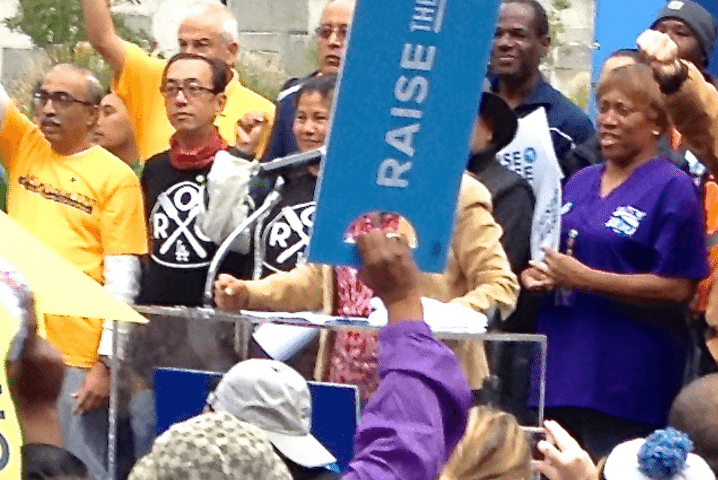

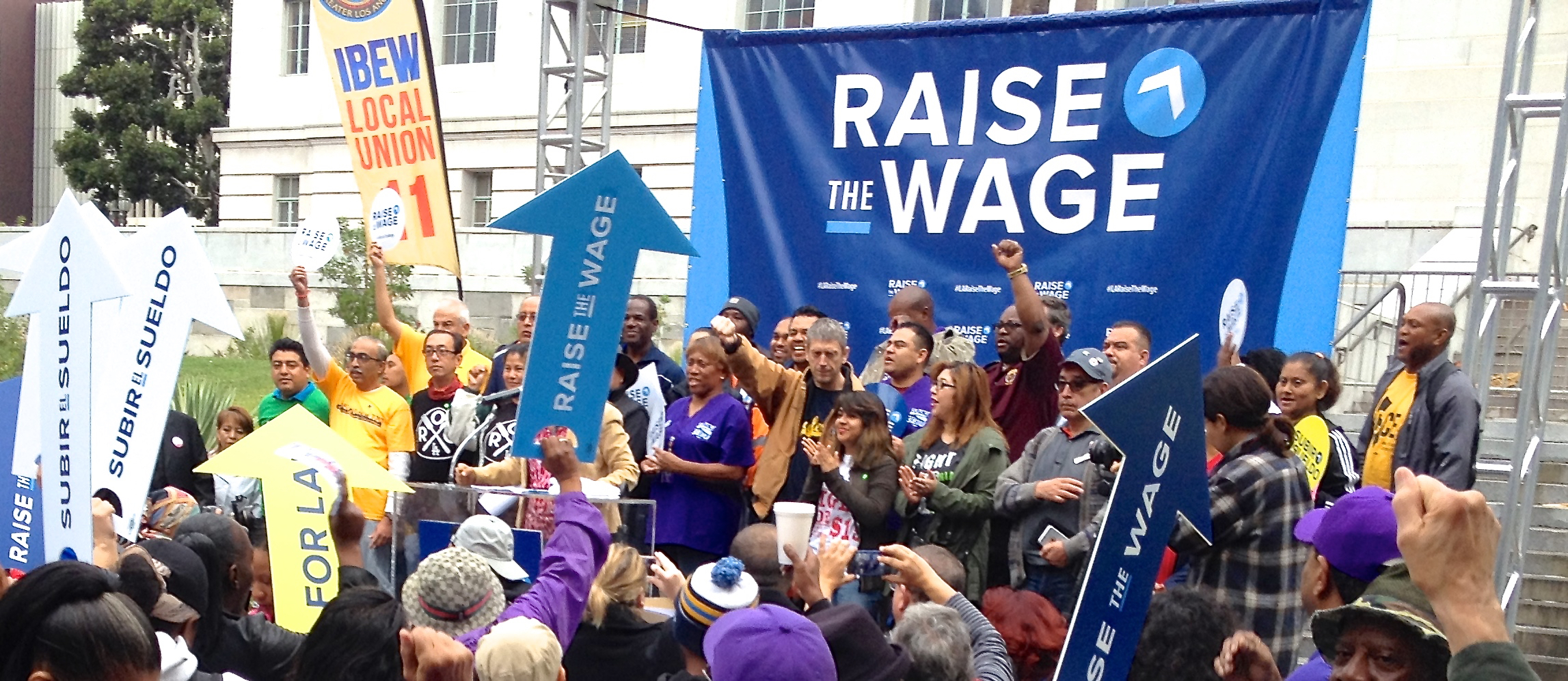
Barring an unexpected reversal of fortune, California is on track to become the first state to officially raise its minimum wage to $15 an hour. News first emerged on March 26 of an agreement with Governor Jerry Brown and leading Democratic legislators to raise the wage from its current $10 hourly mark to $10.50 beginning January 1, 2017, followed by continuous upticks that will result in the wage leveling off at $15 an hour by 2022. (Businesses employing fewer than 26 workers would get an extra year to institute the increases.)
After that the minimum can rise – but not fall – according to inflation. The agreement includes a provision giving workers three days of paid sick leave annually; it also permits California governors to freeze the wage in times of extreme economic downturn.
The movement toward a $15 wage has not followed a straight line,
» Read more about: Historic Minimum Wage Raise on California’s Horizon »
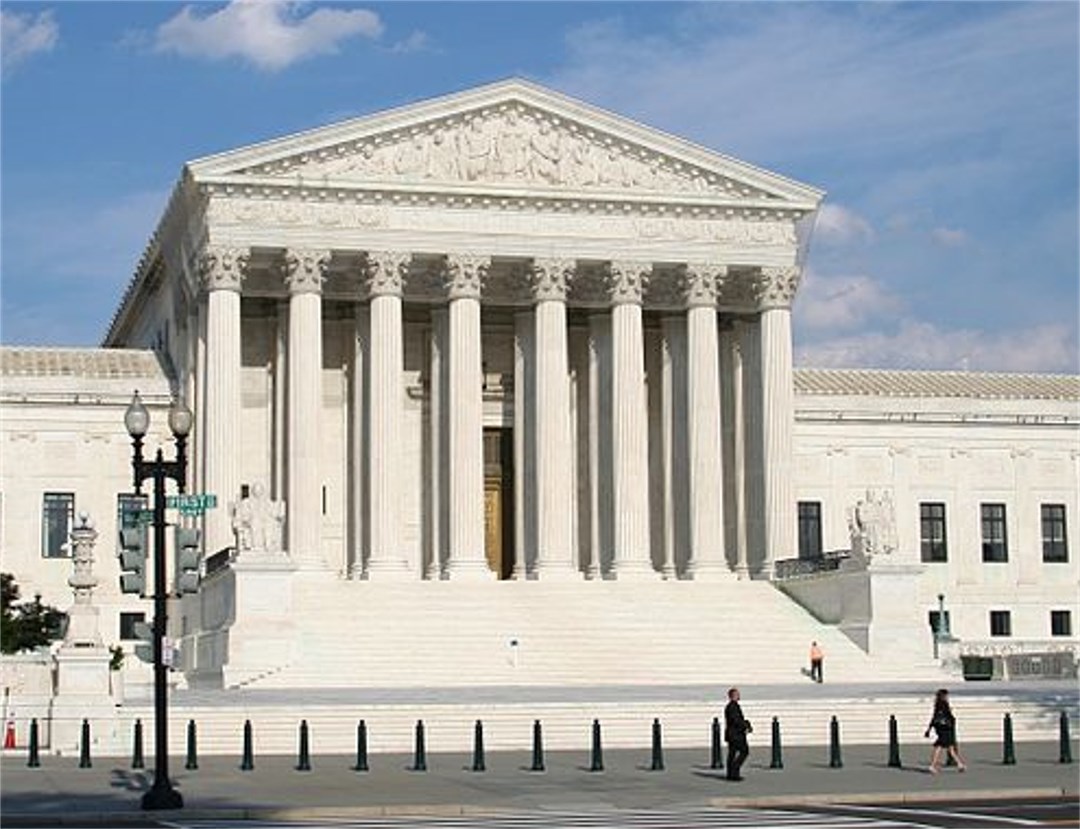
This morning the U.S. Supreme Court announced a 4-4 tie vote on Friedrichs v. California Teachers Association, a lawsuit in which Rebecca Friedrichs, an Orange County public school teacher, and other plaintiffs sought to deny teachers unions the ability to collect from their members “fair share” fees for collective bargaining. Because of the high court deadlock, the case, widely backed by ultra-conservative and right-to-work groups, reverts to a lower-court ruling in favor of the teachers unions.
This outcome of the closely watched suit, which could have crippled public employee unions, had been expected following the February 13 death of conservative Associate Justice Antonin Scalia. (Note: The CTA is a financial supporter of Capital & Main.)
» Read more about: Breaking News: Split Supreme Court Vote Sinks “Friedrichs” »



A report released March 15 by the University of California, Los Angeles’ Center for Civil Rights Remedies revealed jaw-dropping figures about school discipline at charter schools.
During the 2011-12 academic year—the first year charter schools were required by the federal government to report school discipline data—black students were four times as likely to be suspended from charter schools as white students. And of the 5,250 charter schools studied, 235 suspended more than 50 percent of their enrolled students with disabilities.
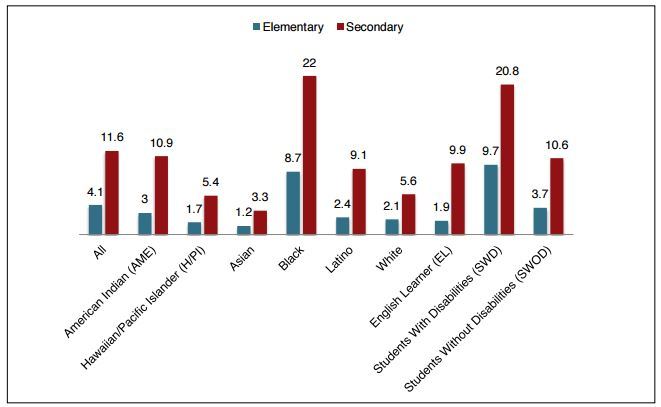
National Average Suspension Rates for Charter Schools at Elementary and Secondary Levels, by Subgroup, 2011-12
We should be deeply troubled by these statistics at any public school, charter or not. But there’s a crucial difference between charter and traditional public schools: Despite being publicly funded, many charter schools are managed by private groups unaccountable to the public.
» Read more about: Charter Schools Have a “Discipline” Problem »
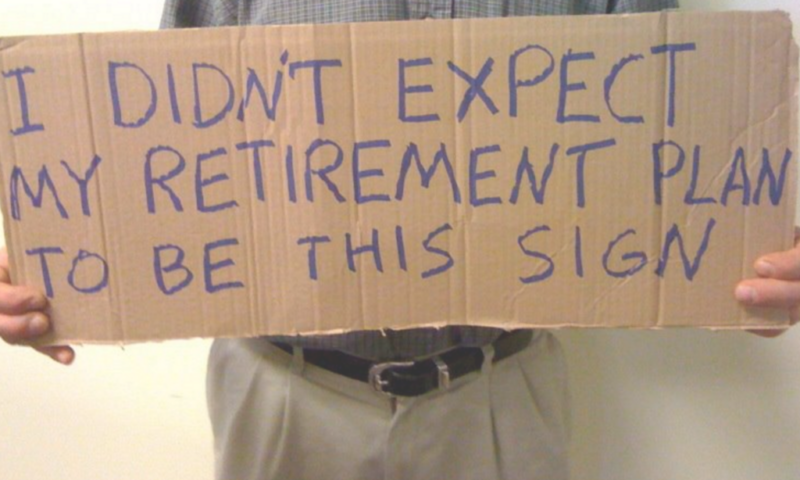
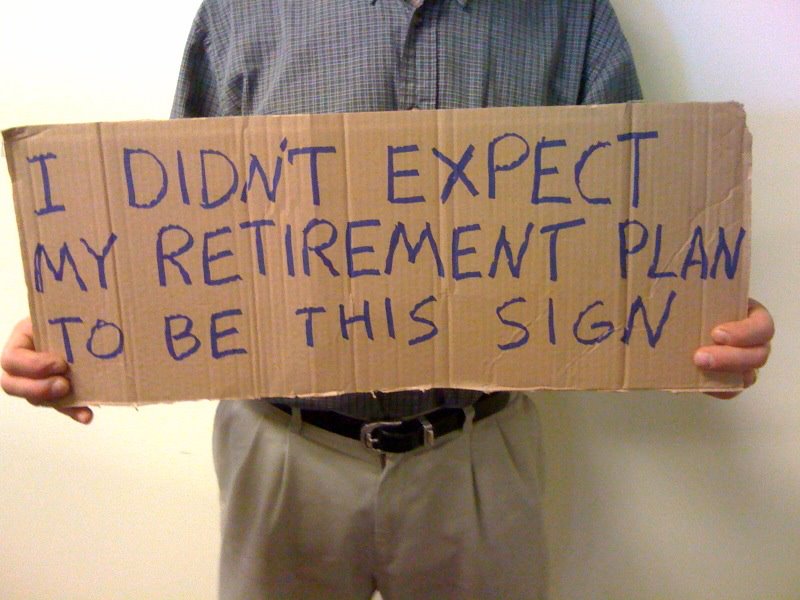
Within the next 20 years, the number of Californians beyond retirement age will increase by two-thirds, to 12 million. Many of them — half, by some estimates — will have saved less than they need to subsist on after they stop working, leaving them no choice but to either work until the end of their lives if they can, or live out the rest of their years in or near poverty.
Some of those seniors of tomorrow, no doubt, were during their working lives too short-sighted to invest in their employers’ 401(k) plans, or to open Individual Retirement Accounts (IRAs) on their own. Or they might have been struggling to support families, pay back student loans or were so chronically underemployed that saving money for retirement was out of the question.
See Also — Retirement: A California Mirage?
In 2012, state legislators recognized this looming problem of the future elderly poor and wrote the California Secure Choice Retirement Savings Trust Act,
» Read more about: Retirement Board Facing Critical Pension Decision »



More than seven million people—over one-fifth of California’s population—work without a path to retirement. They have neither a 401(k) — the so-called “roller-coaster plan” tied to the stock market — nor a traditional pension that was once considered a worker’s right and which is now a rare species outside of government employment or the public education system.
There is nothing that legally compels a typical American employer to offer any kind of retirement plan to employees. But the average Social Security recipient earns about $15,600 per year in retirement benefits — a near-poverty income in the 21st century.
See Also: Retirement Board Facing Critical Pension Decision
That could change for Californians when state Senate President Pro Tem Kevin de Leon’s “California Secure Choice’’ retirement savings plan takes effect. Meanwhile, as one union official put it, “Many employers’ retirement plan for their workers is that they work until they die.” Or,



While the media distract us with the shinier attractions of the presidential-candidate road shows, the dirty work of politics continues in the shadows. I do not mean to diminish the importance of who gets elected or even nominated, but the secret and behind-the-scenes work often makes for decisions that change public policy in favor of the rich and powerful. Those shifts impact our lives in a big way, as two recent examples in California illustrate.
Most recently, the South Coast Air Quality Management District (AQMD) upended its mission to clean our air. First the old Democratic majority opposed its staff’s recommendation for tougher rules that would govern the fossil-fuel industry. They watered them down. Then two months later, and with an even more pro-business Republican majority, the board went into closed session and fired its long-time executive officer. Praised by environmentalists, even though they often disagreed with him,
» Read more about: California’s Air and Coast: A Buyer’s Market »