Environment
On the Trail of Trash: Tracking Our Disposable Society


Every few days I drag my trash and recyclables out to the big gray dumpster and blue bin in the back of my apartment complex. The materials get picked up, the bins emptied, and they’re out of sight and out of mind. But where does it all go? Few of us actually know where our piles of trash and recyclables end up, with whom they come into contact and whom they impact along the way. While it may seem as though our trash magically disappears each week after the point of collection, it often ends up burned or buried near schools or homes in our city – or it may take a long journey, ending up outside of our communities, regions, state or even country.
The first step in raising our consciousness about our trash problem is to track where our waste goes. Trash | Track, a project out of MIT that builds on previous work of the SENSEable City Lab and is inspired by the NYC Green Initiative, is using sensors and mobile technologies to do just that. Seeking to understand the “removal chain,” Trash | Track tagged thousands of pieces of trash and tracked their journeys from curbside to final destination. Through real-time visualizations, the project tracked 3,000 trash objects as they embarked from Seattle, traveling to neighboring counties and states within a few days, with some objects heading cross-country over multiple weeks.
Watching the map as the thousands of lines representing Seattle trash crisscross and seem to expand endlessly, I can’t help but visualize what this must look like when it’s happening in every community across the nation. By making this invisible industry visible, Trash | Track is helping bring our trash problem out of the shadows and into public awareness. As we begin to visualize the scale, scope and impact of the banana peel tossed into the trash can, the packaging thrown into the dumpster or the glass bottle deposited in the blue bin, it becomes increasingly clear that this is a problem we can no longer afford to ignore.

-
 Column - State of InequalityMay 21, 2026
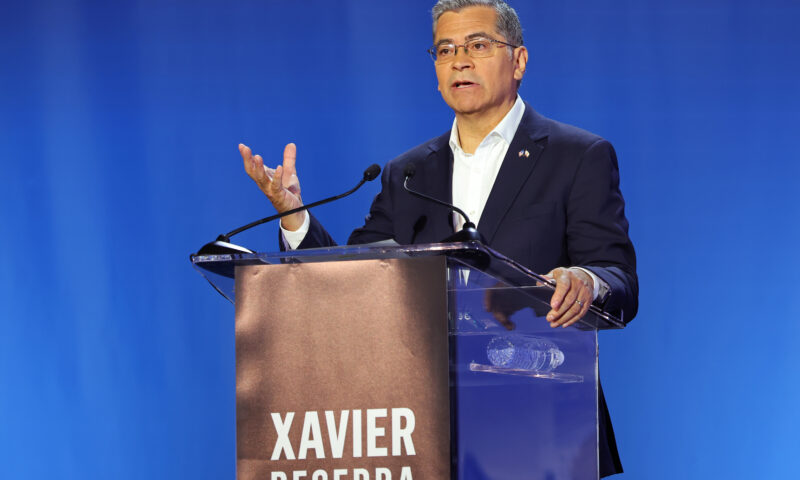
In California Governor’s Race, Xavier Becerra Walks Away From Single-Payer
-

 Latest NewsMay 22, 2026
Where California’s Gubernatorial Candidates Stand on Climate and Taking Big Oil Money
-
 The SlickMay 29, 2026
Feds to Open Tens of Thousands of Acres of Colorado Wilderness to Oil Drilling
-
 Deadly Dust: The Silicosis EpidemicMay 27, 2026
California Moves to Ban Quartz Countertop Fabrication to Combat Silicosis Epidemic
-
 Latest NewsMay 26, 2026
Conditions at California ICE Detention Centers Are Getting Worse, Inspections Find
-
 Imperial DivideJune 3, 2026
California’s Lithium Valley Dreams Meet Reality at the Only Restaurant in Town
-

 Column - State of InequalityMay 28, 2026
Top Democratic Candidates Agree on Housing Urgency, Not the Fix
-

 Latest NewsJune 1, 2026
Deep Cuts to Civilian Support Staff for Families of Deployed Marines Raise Concerns