Column - State of Inequality
Lawsuits Push Back on Trump’s Attack on Child Care
Unions, small businesses, states sue to stop the administration from punishing blue states by withholding $10 billion in funding.
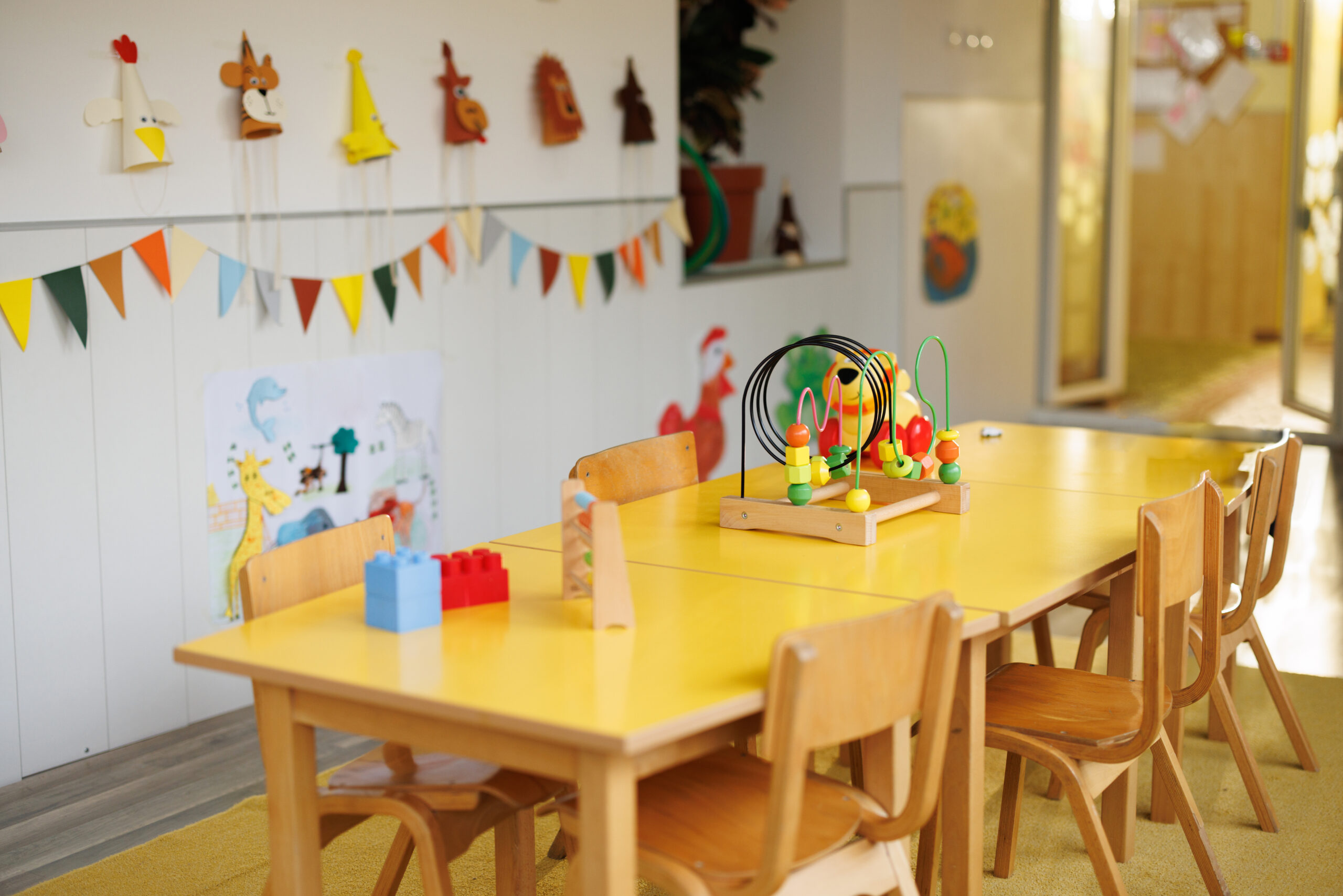

How many court actions does it take to stave off a Trump-led fiscal attack on a state he considers too blue? The answer may be unknowable. But in the case of an attempt to freeze billions of dollars in federal funds that help kids and their families, including those in California, it is at least two.
At stake is roughly $10 billion spread across five states, an estimated $5 billion of that in California alone. The money funds programs that allow the states to subsidize some of the costs of child care for struggling families who qualify, enabling those parents to go to work or school.
In other words, it’s a basic support program. But in early January, the federal Department of Health & Human Services announced that it had frozen the funding for such programs in five — and only five — states: California, Colorado, Illinois, Minnesota and New York. All five states voted Democratic in each of the past five presidential elections.
In making the announcement, HHS cited concerns about “widespread fraud and misuse of taxpayer dollars” in state-administered programs that use the federal funds. But the department provided no examples or even suggestions of such fraud.
Still, the seemingly arbitrary funding freeze required action. First, the attorneys general of the five affected states secured a temporary restraining order to prevent HHS from immediately blocking the flow of funding. And on Jan. 23, a coalition of unions and small businesses filed an ambitious lawsuit in California declaring that the federal department’s actions are both procedurally unlawful and a violation of the First Amendment rights of workers and officials in the affected states — essentially, an argument that children and workers in blue states are being punished for not supporting Trump more fervently.
“Cutting funding for child care and other family assistance is cruel, reckless and, most importantly, illegal,” California Attorney General Rob Bonta said in a statement on Jan. 9. Bonta’s office has filed 54 lawsuits against President Donald Trump’s administration in the first full year of Trump’s second term. “We won’t stop until we block this unlawful funding freeze permanently,” Bonta added.
That’ll take time, money and resources. The same goes for the lawsuit filed by the unions and business interests. And all of it is simply to ensure that critically needed, kid-centered programs continue to receive the funding they were already counting on for this year.
* * *
Subsidized child care in California was already in an uncertain place. Even though Gov. Gavin Newsom had promised to continue an expansion of the program that began on his watch, his budgets haven’t funded that growth for the past two years. The upshot is that while almost 370,000 California children are enrolled in subsidized care, the number of those who actually qualify is closer to 2.1 million, and stories abound of families stuck on waitlists for years.
The need is acute. According to the Public Policy Institute of California (PPIC), the median cost of full-time child care in the state runs from $9,000 to $24,000 a year, a staggering range. A recent Los Angeles Times report put the median cost in Los Angeles County at $1,209 a month in a family child care home setting and $1,818 at a child care center.
The PPIC estimates that California’s child poverty rate would drop 12% if there was enough subsidy money to cover the eligible families of preschoolers alone.
State and federal funds, along with county money (in some cases) and paying families, help keep child care businesses running, often in complicated and paperwork-intense combinations. With HHS threatening to withhold the federal piece, “It’s basically like Jenga,” said Stacy Lee, senior managing director of early childhood for the California-based advocacy group Children Now. “You’re pulling out a block, and hoping the rest will stay in place.”
It’s not a small block. The federal funding, which essentially arrives via three different programs, “is at least a third” of the state’s budget for subsidized child care, Lee said. The programs are the Child Care and Development Fund, which subsidizes child care for children from low-income families; the Temporary Assistance for Needy Families program, which provides cash assistance and job training; and the Social Services Block Grant, a smaller fund that provides money for a variety of programs.
If the federal funding blockade is allowed to stand, many child care centers would face immediate questions about whether they could afford to continue paying their workers or even stay open — decisions that would affect paying and subsidized families alike.
Between Trump’s attacks on federal funding in general and the HHS freeze on the five states last month, child care center administrators, operators and employees in California have been skittish for most of the past year. “It’s a sustained level of anxiety for providers,” Lee said. “The system overall is just very fragile, and we’re talking about young children here.”
* * *
And that’s the big picture. The consequences of what Trump sees as a squabble with blue-state officials will ultimately land on low-income and working-poor families, who didn’t pick the fight and don’t want any part of it. Going to court, as tedious and costly as it is, may be the only way to prevent that from happening.
Bonta and the other state attorneys general filed suit in the Southern District of New York to gain the restraining order and attempt to overturn the HHS action. The other case, filed in the Northern District of California, covers much of the same ground, arguing the illegality of the federal action on its face — but it also seeks relief on behalf of union members and small businesses who either administer, operate or work at child care programs and would be affected.
The suit, filed in part by the American Federation of State, County and Municipal Employees and the Service Employees International Union, alleges that HHS “decided to cut off this crucial funding to punish disfavored states, [its] perceived enemies, and political opponents.” (Disclosure: Both unions are financial supporters of Capital & Main.) It notes Trump’s lengthy history of openly discussing his desire to punish states that don’t align with him politically, and it makes its case for relief not only on the basis that HHS is exceeding its authority in an “arbitrary and capricious” manner, but also under the right to free expression guaranteed in the First Amendment.
Both suits are proceeding. Neither outcome feels certain. And it’s not overstating the case to say that the future of subsidized child care in California rides on the results.
Copyright 2026 Capital & Main



-
 Imperial DivideJune 3, 2026
California’s Lithium Valley Dreams Meet Reality at the Only Restaurant in Town
-

 Column - State of InequalityJune 4, 2026
California’s Economy Runs on Labor Trump Wants to Deport
-

 Featured VideoJune 5, 2026
At This New Mexico Park, Mountain Bikers Pedal Amid Hundreds of Oil Wells
-
 Latest NewsJune 9, 2026
Ousted by the Trump Administration, U.S. Immigrants Remain Locked up in African Kingdom
-
 The SlickJune 10, 2026
Data Centers Are on the Ballot — This Pennsylvania Candidate Won Her Primary Keeping Them Top of Mind
-

 Latest NewsJune 8, 2026
The Glacier May Be Gone, but the Love Isn’t
-
 Latest NewsJune 12, 2026
California Town Lets Private ICE Detention Centers Police Themselves
-
 Column - State of InequalityJune 11, 2026
County Tax Measures Show Limits of Local Responses to Medicaid Cuts