
Stranded
Giving Up on the Dream: Asylum Seekers Try Other Options in Mexico
Many migrants who were hoping to reach the U.S. are now stuck in a backlog with Mexico’s refugee agency; others are going home.

This story is the third in a three-part series.
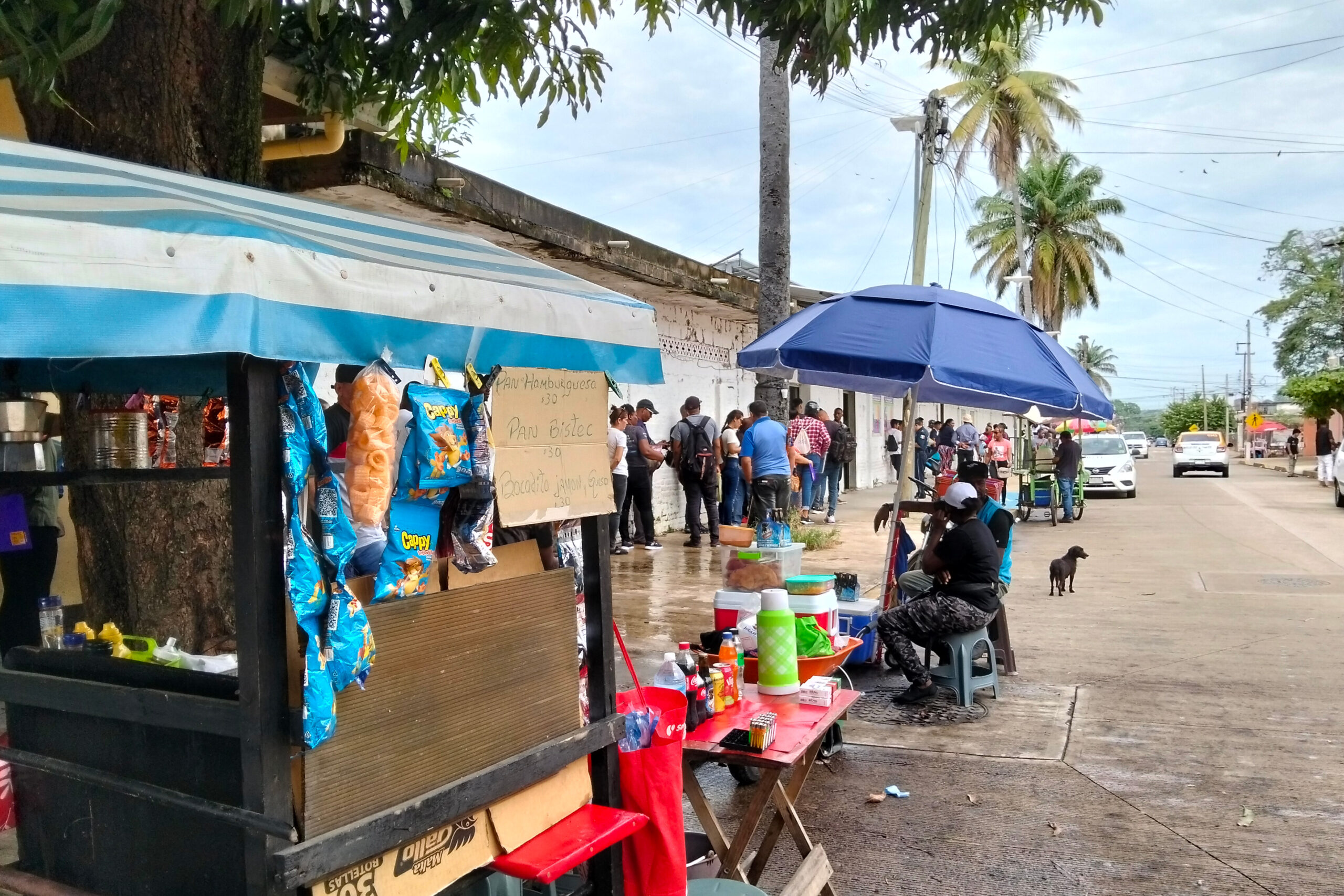
The line of people outside the office for Mexico’s refugee agency formed before 7 a.m., stretching down the sidewalk on a September morning in Tapachula, a small city near the border with Guatemala.
“Strong Cuban coffee!” a woman advertised in Spanish, walking up and down the line.
Haitian women sat across the street selling pastries from large, plastic tubs.
As 9 a.m. approached, the line continued to grow, each new arrival verifying they had found the end of the queue.
Mostly a mix of Haitians, Cubans and Venezuelans, those standing in line were all there to sign in — to prove to the Mexican government that they hadn’t left Tapachula, that they were waiting as instructed for the government to process their asylum applications. They said they had to return and sign in again roughly every two weeks.
When asked how long they’d been waiting in Tapachula, they answered with the number of times they’d come to sign in. A Cuban man who had arrived about three months ago was on his second signature. A Venezuelan woman had signed in 11 times, and two Cuban men said they’d come to sign in nearly 20 times.
None of the asylum seekers interviewed by Capital & Main were willing to be identified because of their uncertain, vulnerable situations.
The two Cuban men who’d been in Tapachula roughly a year seemed resigned to their indefinite waits.
“When God says,” one of the men responded when asked when his final appointment would happen.
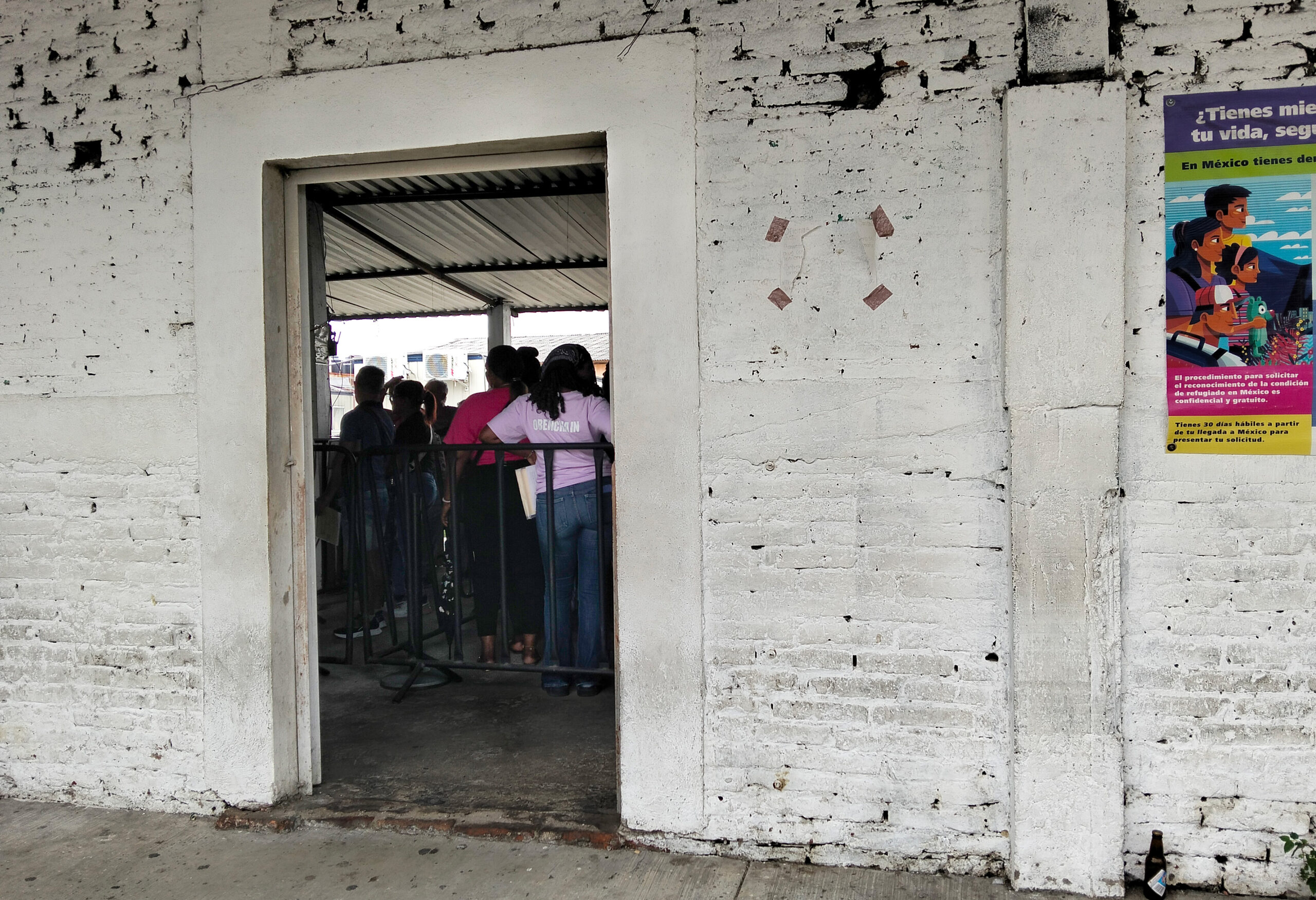
A doorway to the Mexican refugee agency in Tapachula shows lines continue inside the building.
Since President Donald Trump came back into office and shut down a phone application called CBP One that, under the Biden administration, was the only way to request protection in the U.S., migrants in Mexico have had to recalculate their plans.
Some have continued on to the U.S. anyway, crossing the border without permission — the only way left to gain access to U.S. soil and possibly request protection — and risking deportation without any review of their cases. Others have opted to go back to their home countries or to pursue asylum claims in Canada or Europe.
The people waiting outside the refugee agency in Tapachula were among those who chose a third option, to try to start their lives over in Mexico. COMAR, as the refugee agency is known, has not yet released data about asylum applications in 2025, but organizations including Asylum Access Mexico, Coalition for Humane Immigrant Rights and Instituto para las Mujeres en la Migración have reported long wait times for processing.
The Trump administration’s cuts to foreign aid slashed COMAR’s budget, one of the reasons for the increased waits, according to the human rights organizations.
The U.S. State Department would not comment on the record, but responded with a statement from an unnamed spokesperson:
“In managing U.S. foreign assistance funding, the State Department puts the American people first and ensures every hard-earned taxpayer dollar spent is justified by a concrete benefit to U.S. national interests,” the statement said.
Because of the administration’s cuts, many of the organizations that helped migrants in Mexico have also lost funding and either closed or cut staff, according to Miguel Hernández, head of the Tapachula office for the Coalition for Humane Immigrant Rights, or CHIRLA.
“Those who stayed trapped in Mexico face a rather broken refugee system,” Hernández said.
Migrants are also still arriving in Tapachula, said Joselin Zamora of Centro de Derechos Humanos Fray Matías de Córdova, a human rights nonprofit that helps migrants in Tapachula.
“They haven’t stopped arriving because the reasons they left their countries haven’t disappeared,” she said.
Requesting Protection in Mexico
To apply for asylum in Mexico, migrants first go to the COMAR office and give their information. Workers tell them to wait for an email with appointment details. The entire process is supposed to take about a month and a half, Zamora said, but in reality, it’s much longer.
The wait for just the initial email can take one to four months, Zamora said. From there, asylum seekers often wait about a year for an interview to determine their eligibility. In the meantime, COMAR requires them to check in periodically and sign in to prove they’re still waiting.
Those needing interviews in languages other than Spanish take the longest, Zamora said, because of limited interpretation resources for the interviews.
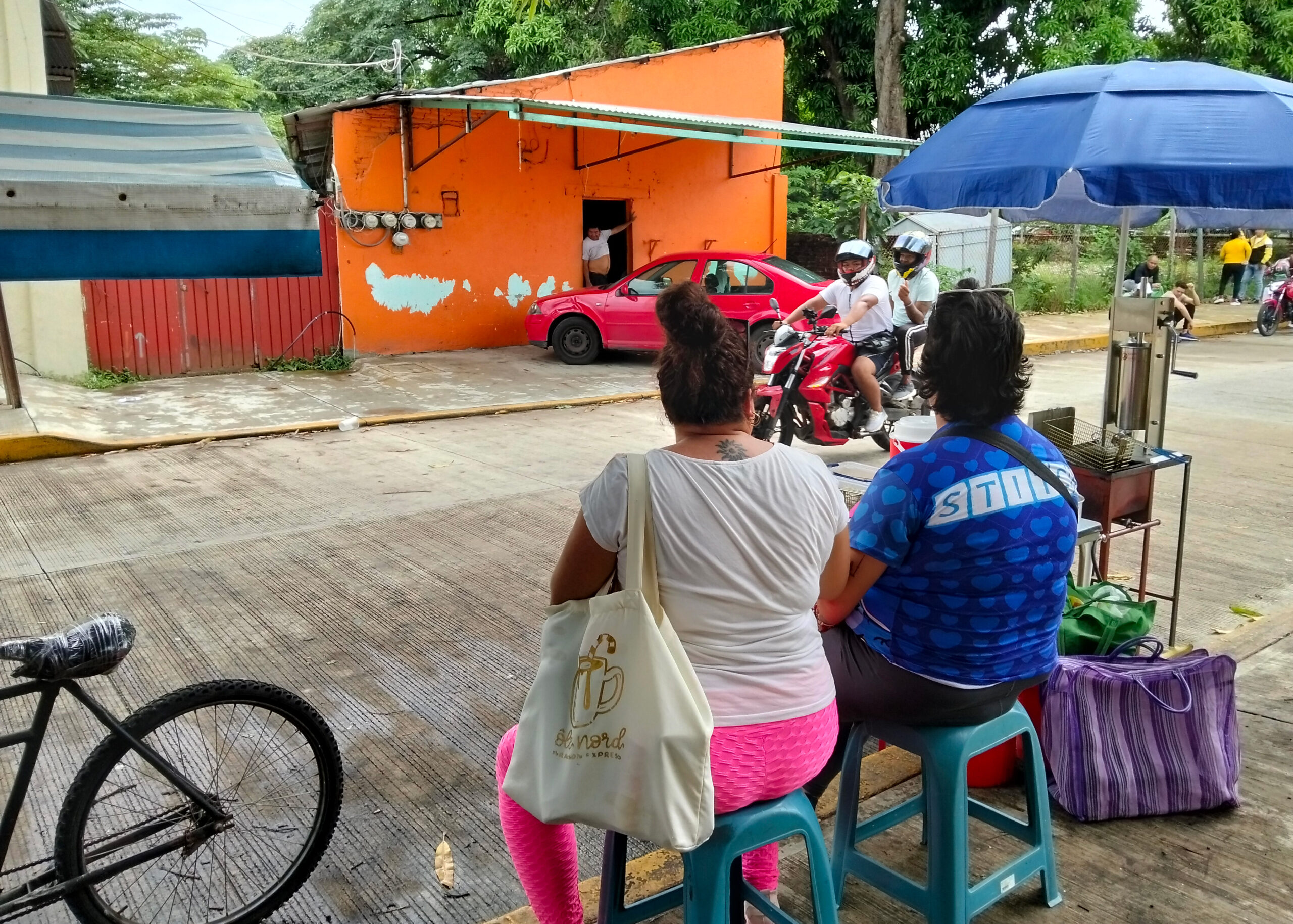
Cuban asylum seekers sell coffee on the sidewalk outside the COMAR office in Tapachula.
For several years, the office has received more applications than it has the resources to complete. More people turned to the Mexican asylum process during the Biden administration because the U.S. government pressured Mexico to stop migrants from heading north, and completing at least part of the process at the time allowed for safer passage through the country.
Now, for many, it’s the only way to avoid deportation to places where they fear for their lives.
The two Cuban women selling coffee that September morning said they’d been in Tapachula since January, and that after Trump came into office, they decided to apply for asylum in Mexico.
From February through September, they signed in at the COMAR office 17 times, they said.
They said they weren’t allowed to leave the state of Chiapas, where Tapachula is located, until they finished the process and had received refugee status. They said they struggled to find work to make ends meet in Chiapas, one of the poorest states in the country.
Every morning, they arrived outside the COMAR office before 7 a.m. to sell coffee and fried food — chicken croquetas, churros and Cuban tamales — to those waiting in line. They said they stayed until either they sold out or there were no more people in line.
What they made from the breakfast sales wasn’t enough to pay rent, they said, so they were constantly looking for other ways to make money.
Hernández said that the cost of living in Tapachula has increased significantly in the past couple of years.
“They can’t get dignified work,” he said of the asylum seekers still stuck there.
A Haitian woman who had lived in Chile before coming north to Mexico sold drinks next to the Cuban women. She hadn’t been able to sell much, she said.
“Life is really difficult,” the woman said in Spanish.
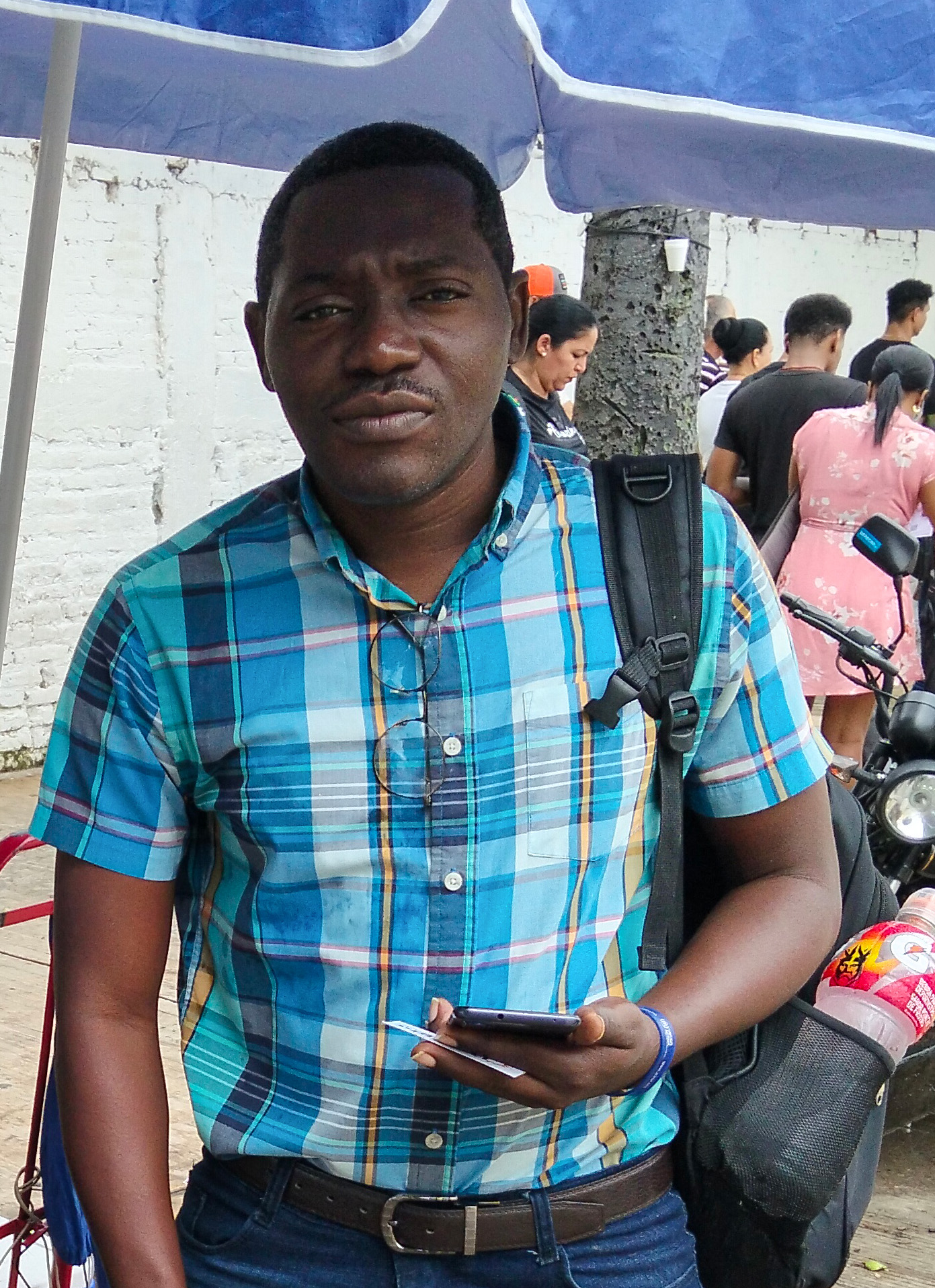
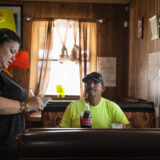
Job, an asylum seeker from Haiti.
She worried about being able to take care of her daughter. They had been waiting nine months — or 15 signatures — she said.
A Haitian man named Job stood talking with her. He said that Haitians, in particular, struggle in Tapachula. Over time, as the town became a migrant hub, a place some called a prison city for migrants, many locals discriminated against arriving Haitians.
“We’re looking for life, and there isn’t life really,” Job said in Spanish.
He said he’d been an English and Spanish teacher in Haiti before bandits took control, and he had to leave.
‘Nothing Is Impossible’
A little after 9 a.m., the COMAR line started to move, guided by federal police, who instructed people to put their phones away and take off hats, glasses and headphones as they entered. Many carried stacks of documents in colorful, plastic folders.
The line wound through crowd control fencing to the back of a long room.
A man on a megaphone inside the office informed those in line that their next appointment to sign in would be in two weeks at a new location. Workers at two desks called people up one-by-one from the line to check in.
As the morning wore on, the people still in line outside the building shifted to the shade to avoid the heat of the sun.
The Venezuelan woman who had already signed in 11 times stood toward the back of the line. She said she still hoped to go to the U.S. one day.
“I think that’s the dream of everyone that’s here,” she said in Spanish.
She had crossed through the Darién Gap, a notorious jungle that separates Colombia and Panama that in recent years became a common migrant path north.
She said she had been willing to risk her life taking that route toward the hope of a better future, but she did not want to risk her family. She hoped to be able to bring her adult children, ages 27, 20 and 19, to Mexico once she finished the asylum process there.
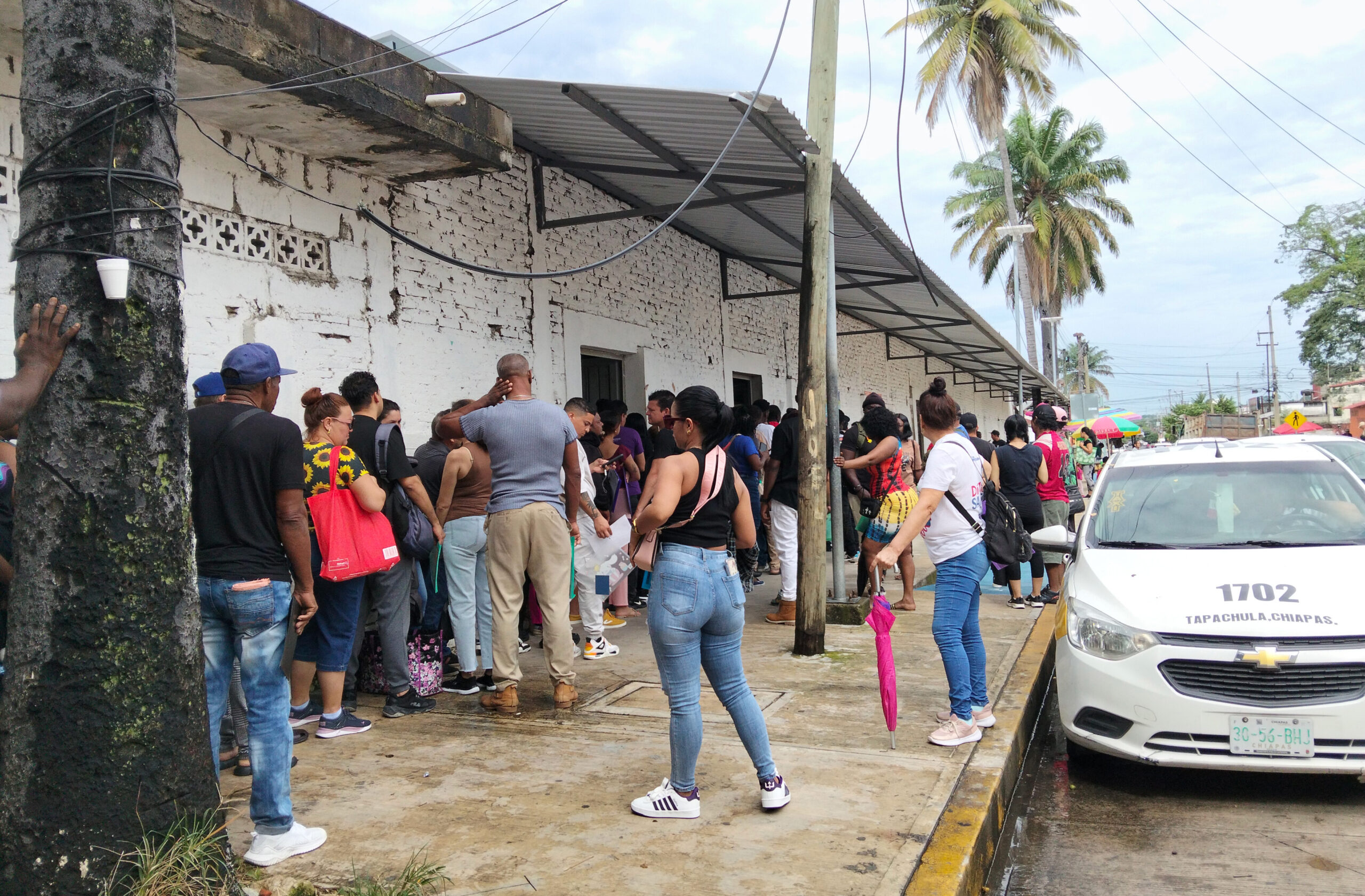
The line outside the COMAR office in Tapachula.
A Cuban man who stood behind her in line had left his 5-year-old son and wife back home. He traveled from Cuba to Nicaragua and then north through Central America. He, too, hoped to obtain Mexican residency and bring his family to join him.
Both the Venezuelan woman and Cuban man said they had worked in the medical field before deciding they needed to flee their countries because of the political situations there.
They weren’t sure if they would be able to get relicensed in Mexico.
“It’s starting over from zero,” the Venezuelan woman said, “but nothing is impossible.”
Going Home
That same week, in an upscale neighborhood in Mexico City, a group of Venezuelans stood in line outside a building with a different purpose — they were trying to go back to their home country.
They were waiting at the Venezuelan embassy to get help to go home. Those with passports could buy plane tickets home, but otherwise they had to request safe passage, the only alternative without taking the risky journey through the Darién Gap a second time.
After seeing that path for themselves as they traveled north, those waiting outside the embassy said they didn’t want to repeat their experiences. They were also afraid of staying longer in Mexico — several said they had been victims of kidnapping or other violence against migrants.
“Here, everything is a fight,” one Venezuelan woman said in Spanish.
Another woman said she’d come north looking for freedom, education for her children, access to health care and work to be able to support family members still in Venezuela. She was worried about starting over back home.
“But we’ll be in known territory,” she said in Spanish.
They were staying in a shelter in Mexico City while they waited for approval of their safe passage requests, she said.
This process, too, was backlogged, according to Gretchen Kuhner, co-founder and director of Instituto para las Mujeres en la Migración, or IMUMI. Several faded pieces of paper with QR codes offering information about lists for passports or safe passage requests, relics of that backlog, were still taped to the wall outside the embassy in late September.
But the people waiting that afternoon said they expected to finish the process in a matter of weeks now that fewer people were applying.
A couple waiting for their safe passage documents said they had CBP One appointments to request asylum at the U.S.-Mexico border for Jan. 26, but the Trump administration cancelled the program days before their scheduled date. They said traveling through Mexico was even worse than the Darién Gap, and because of that, they wanted to go home by plane.
They had taken a bus to Mexico City, they said, and Mexican police strip searched them on the way, looking for money.
“It was horrible,” the wife said. “They abuse you as a migrant.”
They were afraid of going back to Venezuela, but more afraid of staying, they said. They couldn’t find enough work to take care of their basic needs, and schools wouldn’t accept their children because they are not Mexican, they said.
“Our dream was to arrive in the United States, but we couldn’t,” the husband said.
Now, he’s not sure if he would want to live in the U.S. anyway. He’d seen videos online of immigration officials making violent arrests.
“I prefer to be free,” he said.
Copyright 2025 Capital & Main.
This story was supported with a Charles M. Rappleye grant via the Los Angeles Press Club.
Photos by Kate Morrissey.



-

 Column - State of InequalityMay 21, 2026
In California Governor’s Race, Xavier Becerra Walks Away From Single-Payer
-

 Latest NewsMay 22, 2026
Where California’s Gubernatorial Candidates Stand on Climate and Taking Big Oil Money
-
 The SlickMay 20, 2026
70-Foot Wastewater Geyser Reflects New Mexico’s Latest Oilfield Challenge
-
 The SlickMay 29, 2026
Feds to Open Tens of Thousands of Acres of Colorado Wilderness to Oil Drilling
-
 Latest NewsMay 18, 2026
Budget Cuts Threaten Program That Doubles Food Dollars for Californians in Need
-
 Deadly Dust: The Silicosis EpidemicMay 27, 2026
California Moves to Ban Quartz Countertop Fabrication to Combat Silicosis Epidemic
-
 Latest NewsMay 26, 2026
Conditions at California ICE Detention Centers Are Getting Worse, Inspections Find
-
 Imperial DivideJune 3, 2026
California’s Lithium Valley Dreams Meet Reality at the Only Restaurant in Town