
Labor & Economy
A Matter of Public Health: Medical Community Speaks Out for Parental Leave
Debate about parental leave has long focused on the benefits for working families and the supposed costs to employers. But more fundamentally, ensuring that new parents have the support and time they need to bond with their children is essential to public health and to infant development.

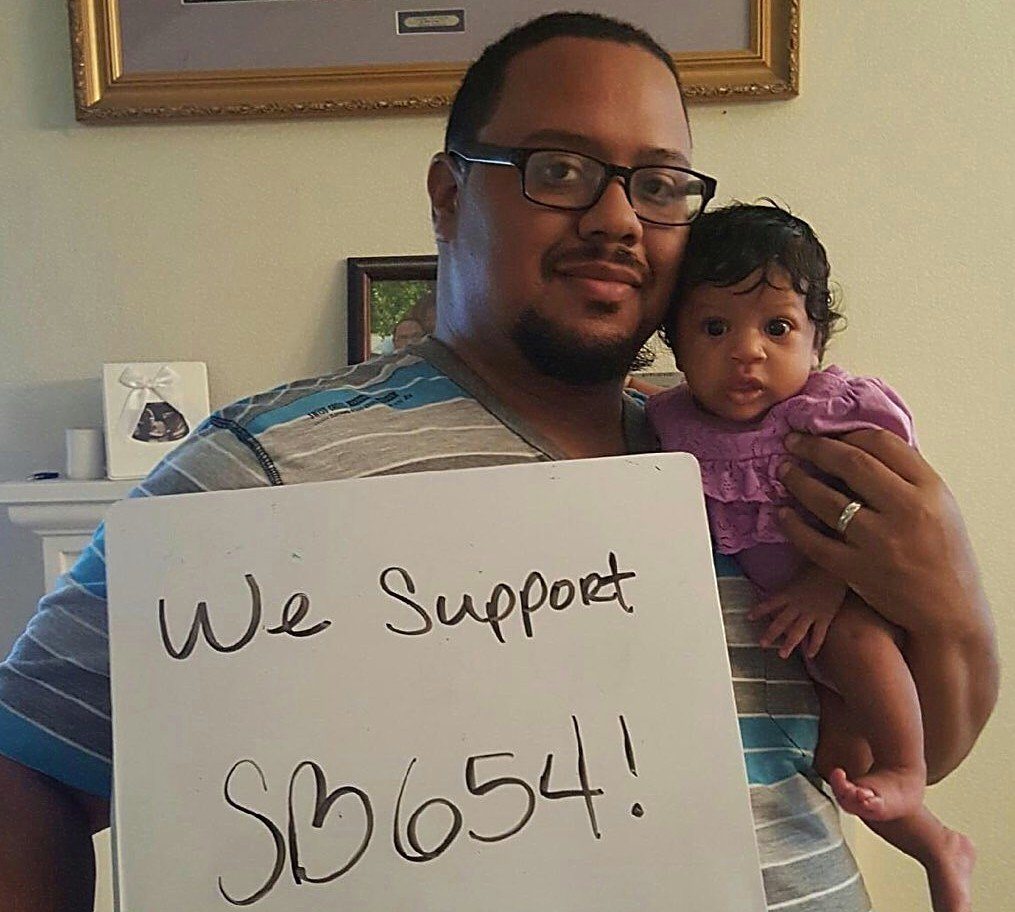
Debate about parental leave has long focused on the benefits for working families and the supposed costs to employers. But the question of paid parental leave is more fundamental than that.
Ensuring that new parents have the support and time they need to bond with their children is essential to public health and to infant development.
All other industrialized countries — in fact, all other nations aside from Papua New Guinea, according to the International Labor Organization — recognize this and require some form of paid parental leave. California does offer six weeks of Paid Family Leave that workers fund through payroll deductions. But only people who work for large employers have their jobs protected if they take parental leave; that shuts out more than 40 percent of the workforce.
California’s state legislature is seeking to close this crucial gap with the New Parent Leave Act (SB 654), which it sent to Gov. Jerry Brown this month with unprecedented bipartisan support. Senate Bill 654, introduced by Sen. Hannah-Beth Jackson (D-Santa Barbara), would extend job security to up to 2.7 million more workers by including employers with 20 or more employees, down from the current minimum of 50.
The medical community is coming together to urge Gov. Brown to act — because paid parental leave is a health issue.
Sixteen health organizations, including the American Academy of Pediatrics-California, and more than 120 individual health professionals signed a letter this week asking him to sign the bill. Individual physicians also wrote the governor personally. They include Curtis Chan, medical director for maternal and child health at the San Francisco Department of Public Health; and Paul Chung, Chief of General Pediatrics at the University of California, Los Angeles’ David Geffen School of Medicine and Mattel Children’s Hospital, where he’s an associate professor. And Chan and Chung are urging their colleagues to sign on.
“This isn’t some moral debate about human rights, or whether we compare poorly with other industrialized nations,” Chung told us. “This is about clear empirical evidence showing that the health and well-being of parents and their children — the present and future of our state’s economic productivity — are improved by job-protected, paid parental leave.”
To be clear, there is an overabundance of evidence that both children and families benefit — in the short term and over the rest of their lives — if new parents can take paid leave without fear of losing their jobs:
- Women who take parental leave breastfeed longer: California’s Paid Family Leave program doubled the median duration of breastfeeding for all new mothers who used the benefits. And breastfeeding leads to lower rates of infant infections, illnesses, asthma, obesity and sudden infant death syndrome (SIDS), according to the U.S. Surgeon General.
- New parents who take leave are more likely to bring their children to infant well visits and ensure they get the vaccinations they need.
- Mothers who take parental leave are less likely to experience depression, both postpartum and over the course of their lives. And they see greater wage growth later in their careers and higher employment rates.
- Fathers who take parental leave are more engaged with their newborns, also promoting greater gender equity, at home as well as at work, and improving health and development outcomes for children.
- Babies thrive in nurturing homes, and with more neuronal connections being made than at any other time in life, the environment of infants and children can have lifelong effects.
Signing the New Parent Leave Act could change millions of lives, improve families’ health and well-being, and help lead a nationwide effort to expand family leave.
Sharon Terman is a senior staff attorney with Legal Aid Society-Employment Law Center, which helped write and advocate for SB 654.
Anda Kuo is a professor of pediatrics and director of the Child Health Equity Collective at the University of California, San Francisco.



-

 Column - State of InequalityMay 21, 2026
In California Governor’s Race, Xavier Becerra Walks Away From Single-Payer
-

 Latest NewsMay 22, 2026
Where California’s Gubernatorial Candidates Stand on Climate and Taking Big Oil Money
-

 The SlickMay 29, 2026
Feds to Open Tens of Thousands of Acres of Colorado Wilderness to Oil Drilling
-
 Deadly Dust: The Silicosis EpidemicMay 27, 2026
California Moves to Ban Quartz Countertop Fabrication to Combat Silicosis Epidemic
-

 Latest NewsMay 26, 2026
Conditions at California ICE Detention Centers Are Getting Worse, Inspections Find
-

 Imperial DivideJune 3, 2026
California’s Lithium Valley Dreams Meet Reality at the Only Restaurant in Town
-

 Column - State of InequalityMay 28, 2026
Top Democratic Candidates Agree on Housing Urgency, Not the Fix
-

 Latest NewsJune 1, 2026
Deep Cuts to Civilian Support Staff for Families of Deployed Marines Raise Concerns