Environment
Warming Globally, Acting Locally

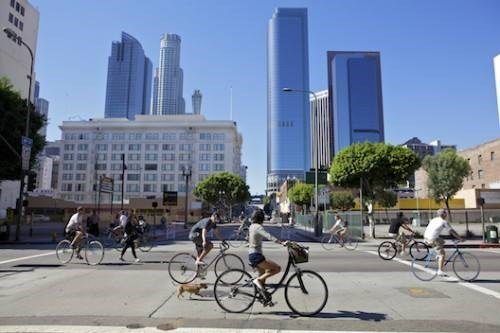
Have you ever felt paralyzed by the apocalyptic projections of global warming? Have you walked away from a presentation, article or news report feeling despair about the heating of our planet? You’re not alone. Amongst young Americans polled, global warming is a major worry.
The fear is good and warranted; the despair and paralysis are not. According to Jonathan Parfrey of the L.A.-based nonprofit, Climate Resolve, climate change needs to be seen as a local issue that people can address and do something about. And he has many ideas about how that can be done.
“L.A. has a spectacular climate,” says Parfrey, “we all love it. That’s why we’re here.” But global warming can hurt our city by impacting the things we care most about — including our health, food and water supply, property values, air quality and fire safety.
What’s called the “urban heat island effect” — those aspects of urban life that trap heat and raise our local temperature — can be addressed in part through requiring cool roofs that reflect rather than absorb heat, replacing dark asphalt with light pavement, and planting many more street trees and shade barriers.
Roofs cover 20 percent of L.A.’s landmass; paved streets, highways and playgrounds, 40 percent. Changes in these two areas, along with the cooling available through natural plantings, could significantly lower local heat levels.
Water is another fearsome topic for Angelenos suffering through the third year of a massive drought. We’ve all heard the charge that Los Angeles is the state’s water hog, importing 89 percent of our water from elsewhere (including the eastern and western Sierras, whose snowpack is shrinking due to global warming, and the Colorado River Aqueduct).
Parfrey suggests that even with the worst projections on snowpack loss, L.A. would still get its water, but get it earlier and faster. Yet our current water systems are built for slower, drawn out water release. If we are serious about addressing future water use, in addition to stiff water conservation and reuse measures, we have to re-plumb our state’s water system. We must invest resources in the state and local water infrastructure, expanding storage and building in smart capacities such as water monitors. In the process we’ll be creating jobs for Californians.
Even the threat of wind-driven wildfires, according to Parfrey, suggests that local action is needed. With temperatures rising, there will be fewer Santa Ana wind conditions (caused by the collision of cold air masses), a good thing; but at the same time the fire season will take place in Southern California all year round. Our city must look at land use and insurance reform, discouraging building in fire-prone areas, and improved stewardship of our local forests.
The future can look bleak, depending on how you approach it. With a look at Climate Resolve’s list of suggested actions, policies and initiatives at the local level at climateresolve.org, we can take charge of our city’s future and protect what we love about living here.
(Photo: Climate Resolve)

-

 Column - State of InequalityMay 21, 2026
In California Governor’s Race, Xavier Becerra Walks Away From Single-Payer
-

 Latest NewsMay 22, 2026
Where California’s Gubernatorial Candidates Stand on Climate and Taking Big Oil Money
-
 Latest NewsMay 15, 2026
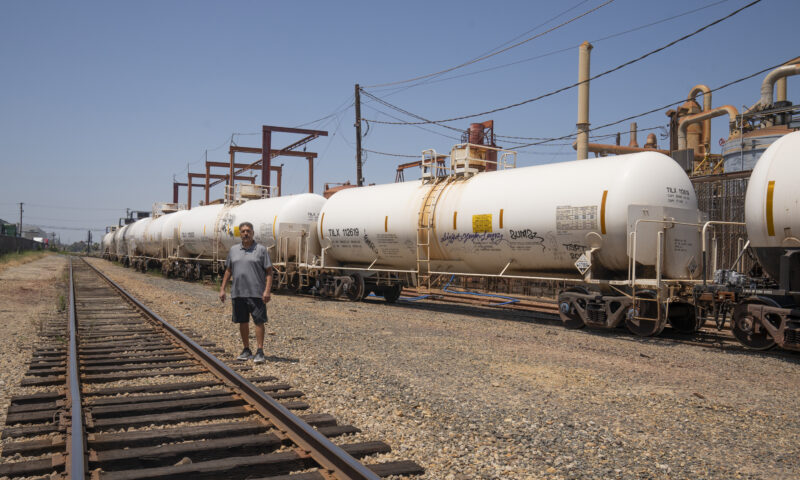
California Hazardous Waste Rules Criticized as Years Late and ‘Polluter-Friendly’
-
 The SlickMay 20, 2026
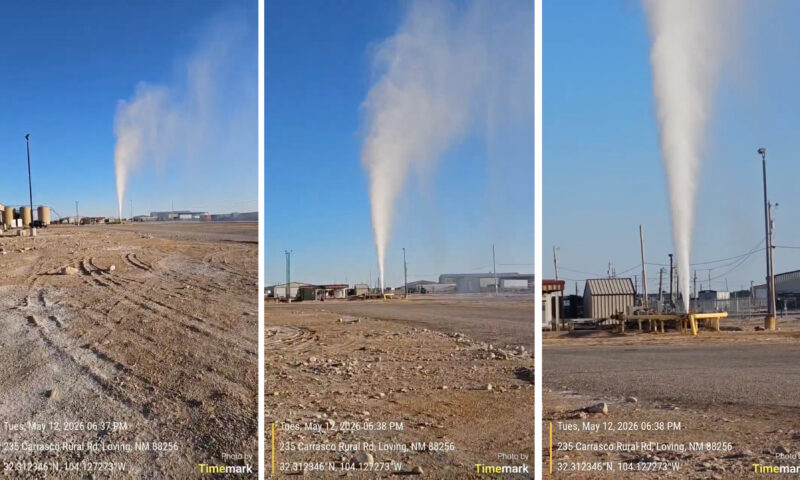
70-Foot Wastewater Geyser Reflects New Mexico’s Latest Oilfield Challenge
-
 The SlickMay 29, 2026
Feds to Open Tens of Thousands of Acres of Colorado Wilderness to Oil Drilling
-

 Column - State of InequalityMay 14, 2026
The Real Stakes Behind California’s Billionaire Tax Fight: Health Care Access
-
 Latest NewsMay 18, 2026
Budget Cuts Threaten Program That Doubles Food Dollars for Californians in Need
-
 Deadly Dust: The Silicosis EpidemicMay 27, 2026
California Moves to Ban Quartz Countertop Fabrication to Combat Silicosis Epidemic