The Slick
The One Big Beautiful Prediction: The Energy Transition Is Still Alive
Trump has attacked renewable power from every angle, but energy justice scholar Sanya Carley envisions an affordable green future.
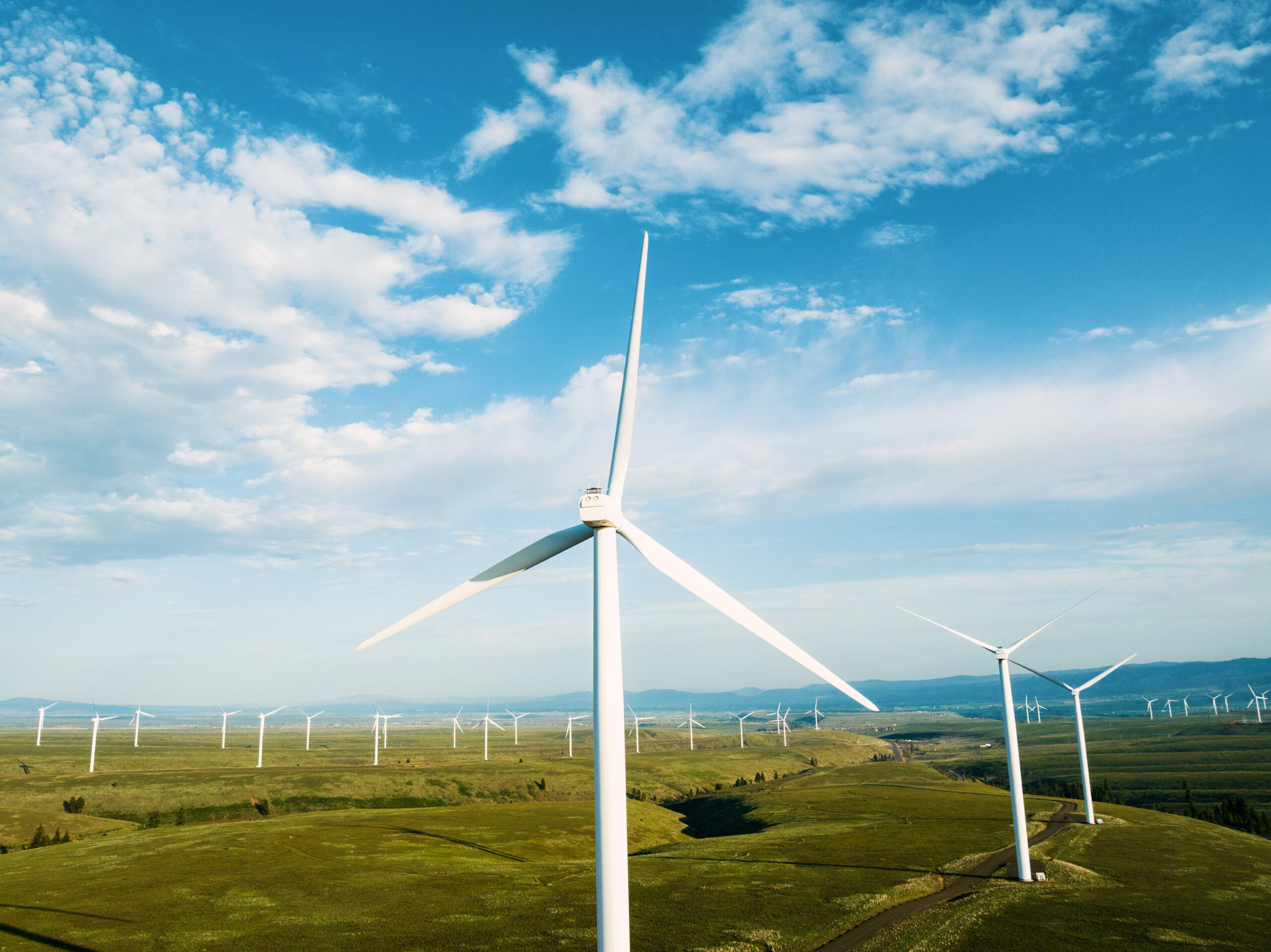

Three weeks after the Nov. 5, 2024, election that ushered President Donald Trump back into power, Sanya Carley, the faculty director of the Kleinman Center for Energy Policy at the University of Pennsylvania, and co-author of the book Power Lines: The Human Costs of American Energy in Transition, penned an op-ed in the Philadelphia Inquirer with a series of predictions that proved to be prophetic.
On his campaign promise to “drill, baby, drill,” she forecasted, “President Trump will prioritize executive orders — likely in his first few days in office — that open more federal lands to oil and gas leasing and reduce the permitting and other regulatory requirements associated with drilling and extraction operations.”
In a matter of months, that came true, as did her premonition that Trump would “introduce an executive order early in his term seeking to slow or delay the permitting process for offshore wind projects,” and eliminate the Biden-era Justice40 initiative that sought to ensure 40% of federal climate investments go to communities overburdened by pollution.
The months that followed have been marked by a slew of attacks on renewable energy from all angles and across multiple agencies and branches of government. A year into Trump’s second presidency, Capital & Main caught up with Carley to discuss what’s happened, her predictions and how they’ve played out. A scholar of energy justice and the energy transition, Carley said the whiplash of the last year has undoubtedly hurt consumers and decarbonization efforts alike. But, she said, she’s certain “the energy transition is still underway.”
This interview has been edited for clarity and brevity.
Capital & Main: Before we discuss the year since Jan. 20, 2025, I want to start by backing up even further, to November of 2024 with your op-ed in the Inquirer. Your predictions came true with startling accuracy. Take me back to that time.

Sanya Carley.
Sanya Carley: Well, exactly as predicted, he did, in fact, issue a number of executive orders. That is the tool that he used previously in the first Trump administration — a series of executive orders. I would call it the administrative presidency — relying very heavily on executive force. What’s really quite interesting this new time is it’s an administrative presidency on steroids. The use of a slew of executive orders, just a bombardment of them, but accompanied with emergency declarations, and using these emergencies to be able to use regulatory and policy tools that he might not have been able to otherwise, that might have needed to be approved by Congress.
And that’s also at the same time that there were so many federal employees that were laid off, so people that were administering many of these programs disappeared. And so it was much more, I would argue, than the first presidency, executive orders, accompanied with these other things. Trump has put a lot of judges in place. And as a result, those items that end up in the courts, of which there are many, there are now more judges that are deciding in favor of Trump than there were previously. So those are the kind of elements of this all happening at once.
It seems like the administration has taken an all-hands-on-deck approach to halting the clean energy transition — between executive orders, orders from agency heads and Trump signing bills sent to him by Congress. The administration has gutted agencies, repealed tax credits and grants and ordered certain renewable projects closed and other fossil fuel ones to stay open. Have any of these deregulatory mechanisms been more impactful than others?
The repeal of [core components of] the [Inflation Reduction Act] in the One Big Beautiful Bill Act is probably the most impactful. There were so many prongs. There were so many efforts embedded within the IRA focused on clean energy development, but also job development and creation and justice elements, and all of those have been affected by the pullback of the IRA programs.
You mention the energy emergency declaration. It’s interesting because, when the administration issued this, scholars and environmentalists quickly debunked it, pointing to record fossil fuel production. But an energy affordability emergency is now taking shape, and that has largely been spurred by the growth of data centers. Efforts to dismantle clean energy development don’t seem to be doing much to help it. What kind of emergency do you think is really happening?
I think the emergency in the Trump administration’s mind is that we’re headed on a track towards a clean energy transition, and we need to shift. I think the emergency in the minds of the majority of Americans is that we have an affordability crisis. The two are kind of colliding, and so a lot of the chaos that the Trump administration is creating in the energy industry is leading to abandoned projects, it’s leading to situations where power plants are being forced to run even though they’re not economically efficient or economically appropriate to run, and demand is going up significantly from data centers.
But the administration has essentially done everything it can to remove any guardrails for the development of these data centers and to encourage fossil fuel growth at the same time, and so as a result, there will be a lot more investment in fossil fuels going forward to provide for these data centers. And all of these things will add costs, so they will contribute to the affordability crisis.
Just to be very concrete, forcing a coal power plant to stay online adds significant costs to ratepayers in any given location surrounding these plants.
What do these costs look like? I’m thinking of the Eddystone power plant near Philadelphia that was slated to retire in May before the administration ordered it to stay open.
It’s either passed to the consumers directly as a rider or a charger, which is essentially just a very direct cost to cover something that’s spread across all of the customers, or as a result of costs going up for the utility company, they go to the Public Utility Commission and ask for a new rate case so that they can raise rates. And what we’re seeing happening right now is rate cases are proliferating, and energy bills just continue to go up. Energy prices have risen on average 30% over the past five years across America — faster than the rate of inflation.
A lot of your work focuses on the human costs of the energy transition. Were there any mistakes that the Biden administration made in ushering in a renewable energy era that we could now learn from?
There are plenty of places where the Biden administration, through the Inflation Reduction Act and the Infrastructure Act, made great progress in thinking about humans and thinking about justice issues in particular. One example is tax credits for electric vehicles and changing the eligibility requirements. This just helps those low-income customers that wouldn’t have been able to afford an electric vehicle or didn’t have the tax liability to be able to recover some of those credits. So it’s an example of taking an existing policy and tweaking it a little bit so that it’s more inclusive and thereby reaches a broader population.
And now, we’re in a moment of whiplash. Many deregulatory steps from the administration have been met by legal challenges, so we’ve been in a limbo on many fronts for a while. What impact is that having on the overall energy transition?
Well, the whiplash and the route to litigation is very consistent with the first Trump administration. So we’re seeing common threads. Even just this week, there’s some early thinking that the repeal of IRA funding that went to blue states was illegal and that those funds need to be reinstated. What is the consequence of the whiplash? The energy transition is still moving forward. We are still seeing significant solar development. We are still seeing significant clean energy development, distributed energy resources, all of these things are moving forward.
The energy transition is still underway, but the whiplash has very serious implications for our economy and for the investment culture of America. No new company is going to want to move to America right now and try to build offshore wind. The political environment is way too uncertain. Nobody wants to enter all of these legal battles.
Now, what are the implications for local communities? I’ve written before on the whiplash for coal communities. Coal communities will vote in their best interest, which is to keep coal operations running, even if they desire to have a different future, because that’s the future that they’ve had, and that’s their economic stability. With these kinds of monoeconomies, there’s very little other opportunity for growth. Having this kind of back and forth between administrations of closing all coal plants versus forcing them to stay online, forcing more production, it’s just incredibly difficult for them to kind of think about their long-run trajectory.
It’s hopeful to hear your reminder that the energy transition hasn’t been halted completely. How would you define the last year in the context of decades of change?
If you think of a graph, we’ve seen some plateaus, but I don’t anticipate the plateaus will decline. I anticipate that it’s a plateau to bear through the current political and legal environment before all of these technologies can continue to accelerate. I mentioned solar before. Solar has still been on a phenomenal growth trajectory, especially across the entire world. Again, it’s the leading source of growth in the energy industry in the United States. I think in the next year we might see some challenges with solar, just because the [One Big Beautiful Bill Act] repealed the Investment Tax Credit and Production Tax Credit [for wind and solar], and so as a result, anything that wasn’t already in development by the end of this year will no longer have access to those credits. So we’ll probably see a plateau there, or at least a slowing down of the growth of solar. Generally, we’re still very consistent trend wise.
So, how pessimistic should we feel?
I think we should not be pessimistic. I think we should be optimistic. I think where we can be pessimistic, one, is around the general use of policy and regulation in a way that’s kind of inconsistent with our democratic system, and not knowing what that could lead to in the future. And then, two, is the affordability crisis. That is not brought on by the energy transition, but it is very strongly connected to the policy and regulation of this administration.
So, addressing that challenge going forward, that is something that we can be pessimistic about, but we also need to think very deeply about opportunities for change in the industry. It could be rate reform, thinking about alternative rate design. It could be creating alternatives to certain kinds of markets that are in place, rethinking capacity markets. Another one is a virtual power plant. What kind of stipulations do we want to put on data center growth? These are all the kinds of questions that we need to face right now as we’re addressing affordability challenges.
Copyright 2026 Capital & Main



-
 The SlickMay 29, 2026
Feds to Open Tens of Thousands of Acres of Colorado Wilderness to Oil Drilling
-

 Deadly Dust: The Silicosis EpidemicMay 27, 2026
California Moves to Ban Quartz Countertop Fabrication to Combat Silicosis Epidemic
-
 Latest NewsMay 26, 2026
Conditions at California ICE Detention Centers Are Getting Worse, Inspections Find
-
 Imperial DivideJune 3, 2026
California’s Lithium Valley Dreams Meet Reality at the Only Restaurant in Town
-

 Column - State of InequalityMay 28, 2026
Top Democratic Candidates Agree on Housing Urgency, Not the Fix
-

 Latest NewsJune 1, 2026
Deep Cuts to Civilian Support Staff for Families of Deployed Marines Raise Concerns
-
 Column - State of InequalityJune 4, 2026
California’s Economy Runs on Labor Trump Wants to Deport
-
 The SlickJune 5, 2026
At This New Mexico Park, Mountain Bikers Pedal Amid Hundreds of Oil Wells