
Deadly Dust: The Silicosis Epidemic
California Could Be the First State to Ban Quartz Countertops
A governor-appointed state board weighs whether to ban the use of engineered stone to protect workers from a deadly lung disease.
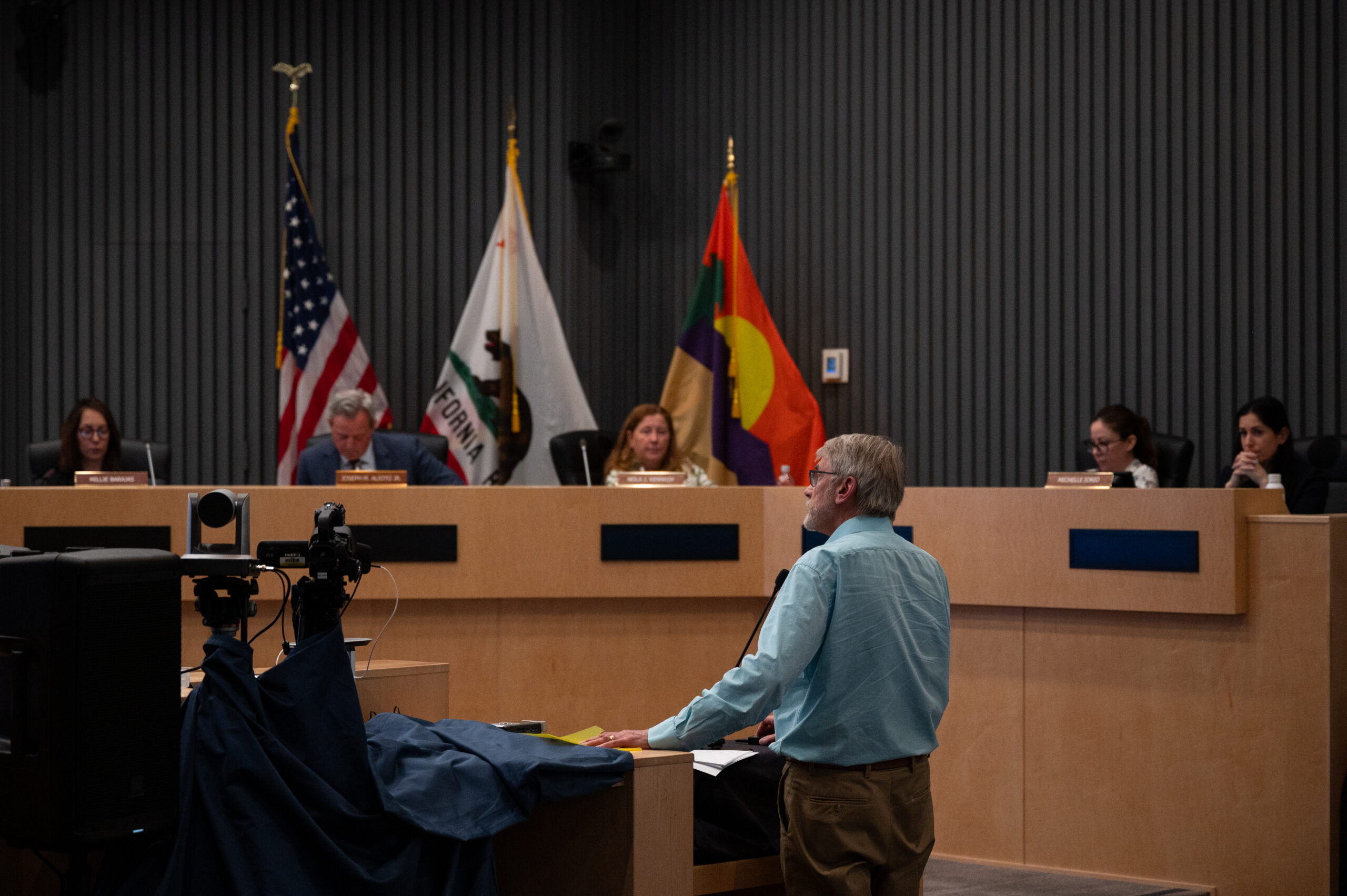

California could be the first state to ban the sale and installation of engineered stone, also known as quartz, as state regulators try to stem a growing silicosis epidemic among stone fabrication workers.
The occupational lung disease has killed 30 fabrication workers and sickened more than 550 in the state since 2019, according to the California Department of Public Health.
A new state law that took effect Jan. 1 imposes tougher rules on the shops that cut, grind and polish the engineered stone used in kitchen and bathroom countertops. But health experts said it doesn’t go far enough to prevent workers from dying.
A petition was filed in December by the Western Occupational & Environmental Medical Association (WOEMA), a nonprofit representing occupational medicine physicians and other health and safety experts in seven Western states. It said that engineered stone containing more than 1% crystalline silica is too toxic to fabricate and proposed that state officials follow the lead of Australia, which became the first country to ban engineered stone in 2024 after facing a similar health crisis.
But the proposal faces an uncertain future. Despite garnering the support of medical experts, public health officials and workers, it faces stiff opposition from the industry, including manufacturers who have argued that their costs would rise if they were forced to switch to safer alternatives.
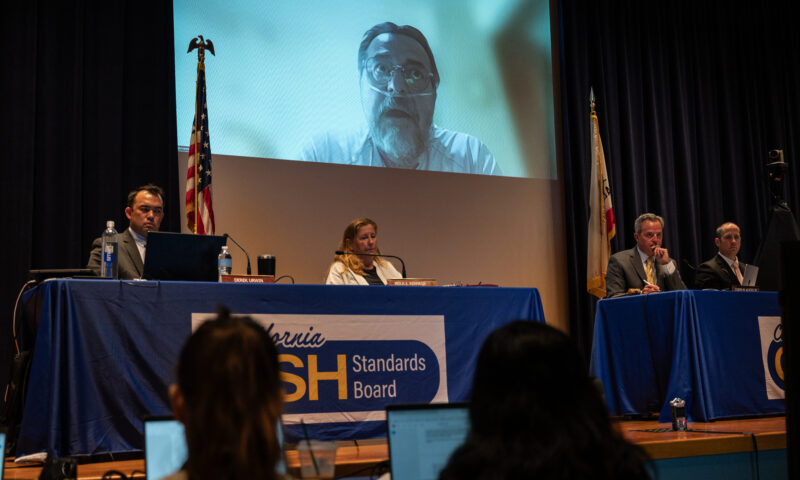
The proposed ban’s fate, and that of scores of California workers, rests in the hands of the California Occupational Safety & Health Standards Board, a seven-member governor-appointed panel of experts that determines workplace standards in the state.
The board is expected to decide whether to reject or accept the proposed ban at a public hearing later this month in Los Angeles.
Medical experts said a ban is necessary to respond to a worsening public health crisis.
“While we wait, while we talk about it, people are getting sick and dying,” said Dr. Robert Blink, an occupational medicine physician and former president of WOEMA. He urged regulators to act quickly to “stop future exposure and prevent more cases.”
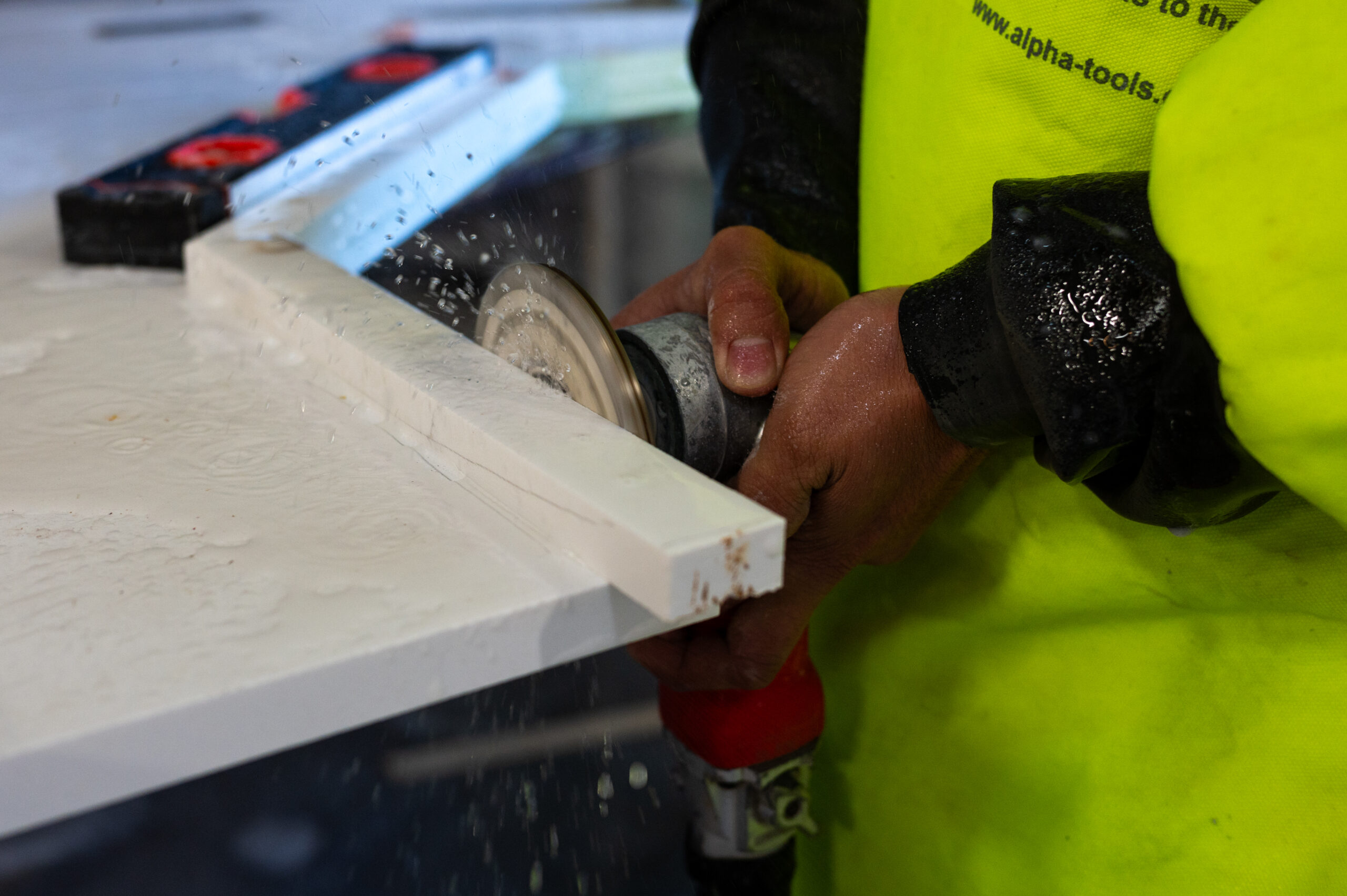
A worker uses a hand tool to grind engineered stone at a fabrication shop.
Workers who fabricate engineered stone slabs can inhale dust containing tiny crystalline silica particles that tear and scar their lungs, making it extremely difficult to breathe. In California, that workforce is made up mostly of young Latino men, many of them undocumented immigrants.
There is no cure for silicosis; the only treatment is supplemental oxygen and, eventually, a risky and expensive lung transplantation, which medical experts said may only prolong life by an average of six years.
After working as a stone fabricator for 16 years and being diagnosed with silicosis, Oscar, 46, received a double lung transplant.
“I think that if I hadn’t had the transplant, I wouldn’t be here to tell the story. Because in the end, I couldn’t even breathe with the oxygen,” Oscar said in Spanish. He spoke on condition that he be identified only by his first name to protect his privacy.
“At no point did we know that those materials caused silicosis,” he added. “But I think that as long as those materials exist, there will always be people willing to work with them, and people will always keep getting sick.”
Are Stricter Regulations Enough?
The new California law bans the dry cutting of engineered stone and mandates the use of wet cutting methods, ventilation and respirator masks. But many public health officials said that’s not enough and that engineered stone is too toxic to work safely with, even under the state’s tougher standards.
“Engineered stone is definitely much more toxic to work with than natural stone,” Blink said, citing its higher silica content (over 90%) compared to natural stones such as marble and granite. The crystalline silica powder, mixed with other polymers and resins to bind it, generates an even more toxic nano-sized dust when cut, he added.
“In order to work with the material safely, you would have to wear a class A hazmat suit,” Blink said, “and you simply can’t work the artistic corners of the material for your kitchen while wearing a space suit.”
Public health officials said the best way to protect workers from a toxic material is to eliminate it or substitute it with a safer option. It’s a more effective safeguard than workplace controls or personal protective equipment requirements, which may reduce the risks but do not get rid of them entirely, they added.
Since Australia banned the material, Blink said, manufacturers switched to producing amorphous silica stone slabs, a much safer option composed of ground glass.
But industry representatives are pushing back on the proposed ban in California, claiming quartz can be safely fabricated when following safety measures of the state’s Division of Occupational Safety and Health, or Cal/OSHA.
Cambria, the nation’s largest engineered quartz manufacturer, has blamed noncompliant fabrication shops for the growing silicosis epidemic in California.
“The ban proposed by WOEMA will not effectively address the cluster of silicosis cases in Southern California. It will not stop the unsafe shops from operating and endangering their workers,” said Rebecca Shult, Cambria’s chief legal officer, at a Cal/OSHA meeting in March.
Micah Aberson, a Cambria spokesperson, said the company “is committed to promoting the health and safety of all workers in the stone fabrication and installation business” through education, safety warning labels and by advocating for “stronger compliance and enforcement of safety regulations, along with the prosecution of reckless employers.”
Medical, health and safety experts said most shops cannot afford the expensive equipment needed to protect workers from contracting silicosis when fabricating engineered stone, rendering California’s current rules impractical and insufficient.
What’s Next?
In a series of hearings over the last six months, the California Occupational Safety & Health Standards Board has heard presentations and other testimony from industry representatives, manufacturers, health experts and workers.
It remains unclear how the independent, governor-appointed board might vote on the matter. Gov. Gavin Newsom’s office did not answer Capital & Main’s questions about his position on the proposed ban.
Members of the board have publicly expressed concern over the rising number of silicosis cases in the state, but none of the five current appointees have made it clear in public remarks in recent months whether they support a ban on engineered stone. Capital & Main reached out to the board for comment.
“I don’t know how we fix this problem,” board member Nola J. Kennedy said at a public hearing in March.
“As an industrial hygienist, I do believe the material can be worked with safely, but as someone who sits here and listens to testimony, I believe it’s not being worked with safely,” Kennedy said.
Board Chair Joseph Alioto Jr., whom Newsom appointed in 2023, said at a hearing in February that the state should focus on enforcement following the passage of SB20, which increased penalties for workplace violations, and suggested partnering with local law enforcement agencies and district attorneys.
In a letter later that month, the board urged district attorneys in the seven counties that account for 95% of silicosis cases in California to criminally prosecute fabrication shops that are dry cutting in violation of the new state law.
“With an estimated 1,400 stone fabrication shops in the State, the regulatory bodies alone cannot feasibly enforce these regulations with the power and urgency needed to save lives,” the Feb. 27 letter said. “You can play an enormously important role by prosecuting and deterring the violations that are killing Californians.”
Even if the Occupational Safety & Health Standards Board approves a ban on engineered stone, the decision would initiate a rulemaking process that could take years before the ban is fully implemented. In the meantime, health experts said they expect silicosis cases to keep rising.
“Banning it won’t take care of it today. It’ll take several years to actually execute and implement,” board member Chris Laszcz-Davis said at a public hearing in April. “What do we do in the interim to make sure that this doesn’t continue?”
Regardless of the board’s decision, Blink said consumers and designers have an opportunity to push the industry to adopt alternative amorphous silica stone slabs, which are already available in California.
At the April hearing, he urged the board not to waste this opportunity to protect workers: “Why are we continuing to allow this inherently toxic material to endanger and damn our workers to unhealthy lives and early deaths?”
Copyright 2026 Capital & Main.
Photos by Semantha Raquel Norris.
This story has been updated to include comment from a Cambria spokesperson.



-
 The SlickMay 29, 2026
Feds to Open Tens of Thousands of Acres of Colorado Wilderness to Oil Drilling
-
 Deadly Dust: The Silicosis EpidemicMay 27, 2026
California Moves to Ban Quartz Countertop Fabrication to Combat Silicosis Epidemic
-
 Latest NewsMay 26, 2026
Conditions at California ICE Detention Centers Are Getting Worse, Inspections Find
-
 Imperial DivideJune 3, 2026
California’s Lithium Valley Dreams Meet Reality at the Only Restaurant in Town
-

 Column - State of InequalityMay 28, 2026
Top Democratic Candidates Agree on Housing Urgency, Not the Fix
-

 Latest NewsJune 1, 2026
Deep Cuts to Civilian Support Staff for Families of Deployed Marines Raise Concerns
-
 Column - State of InequalityJune 4, 2026
California’s Economy Runs on Labor Trump Wants to Deport
-
 The SlickJune 5, 2026
At This New Mexico Park, Mountain Bikers Pedal Amid Hundreds of Oil Wells