
Latest News
ICE Has Arrested Dozens of Delivery Drivers at the Gates of a San Diego Military Base
Advocates warn immigrants to avoid military bases when working for apps like Uber, Lyft and DoorDash.
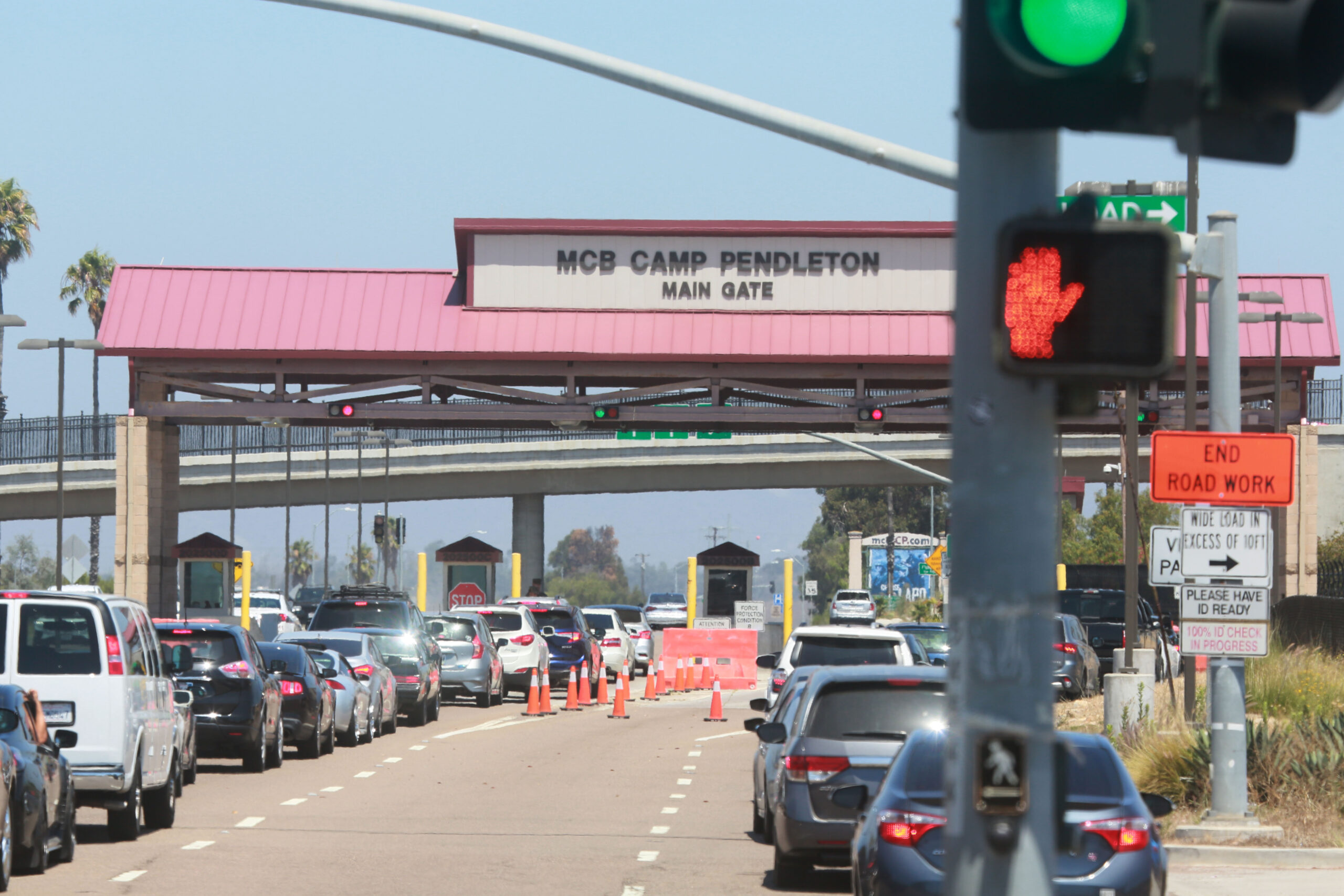

Assim Alkhawaja decided to start driving for rideshare apps to supplement his income while he worked to get a coffee shop business up and running in Oceanside, California.
Roughly two months later, when Alkhawaja was dropping off two Marines at the nearby military base Camp Pendleton, he ended up being arrested by Immigration and Customs Enforcement officers and sent to Otay Mesa Detention Center in San Diego.
Join our email list to get the stories that mainstream news is overlooking.
Sign up for Capital & Main’s newsletter.
While undocumented people have long avoided military bases because of the possibility of deportation, a pilot program launched last year at Camp Pendleton is trapping people with temporary permission to be in the U.S. so that officers can send them to immigration detention facilities and try to convince them to agree to deportation. According to local attorneys, Alkhawaja is among dozens of people detained by ICE at the gates of the U.S. Marine Corps base even though they had temporary permission to be in and work in the U.S.
“It’s a business,” Alkhawaja said. “This is what I found out in the detention center. We are just numbers that generate income to big corporations.”
Many of those detained were working for rideshare or delivery apps, including Uber, Lyft, DoorDash, GrubHub and Roadie. Those apps require proof of authorization to work in the U.S. Camp Pendleton, the largest Marine base on the West Coast, has a “Rideshare Programs Statement of Understanding” that allows rideshare drivers, including those for Uber and Lyft, to come onto base to pick up passengers.
But according to attorney Brian McGoldrick, who has worked on more than a dozen of these cases, military police at the gates of the base will call ICE on any driver who is not a U.S. citizen or green card holder — even if the person has temporary permission to be in the country. His clients told him that they had been able to pick up or drop off passengers or make deliveries at other military installations around San Diego County without issue.
In May 2025, Camp Pendleton announced an “interagency security initiative” in which ICE officers perform identity checks on people arriving at the gates to the base.
The base’s announcement said the initiative was “designed to deter unauthorized installation access by foreign nationals and reinforce layered base defense strategies in alignment with national security objectives.”
The announcement says that the government will evaluate the program for effectiveness and scalability, meaning that it could spread to other military bases around the country. Marine Corps bases in Quantico, Virginia, and in Hawaii are also participating.
But, McGoldrick said, federal judges have found repeatedly in habeas corpus cases that his clients were wrongfully detained at the Oceanside, California, base.
“I haven’t had a single judge say that the authorities on Camp Pendleton have the right to hold them and that ICE has the right to cart them off to detention and keep them there,” McGoldrick said.
“That’s what I find astounding,” he said. “Over and over and over again, the district court rules that this detention that’s happening on Camp Pendleton is a violation of due process, but they just keep doing it because most people don’t have an attorney that can get them out.”
A spokesperson from Camp Pendleton deferred to ICE when Capital & Main asked about the situation. ICE did not respond to a request for comment.
McGoldrick said some of his clients have had their cars impounded if they didn’t have someone who could retrieve the vehicles from the base. At least one of the drivers was held in custody for so long that the fees to get the car back were more than the car was worth, the lawyer said. Many have also struggled to pay rent and other bills because of the lost work time — in addition to the added costs of being detained such as food at the commissary and phone calls.
That happened to Jean, a Haitian man who asked not to be fully identified due to his ongoing vulnerable situation, after ICE detained him at Camp Pendleton while delivering a package through the app Roadie. He said he lost his delivery truck to repossession after he couldn’t make payments while in custody for three months. Now, he said, he is out of work and struggling to take care of his wife and children.
“Inside Otay Mesa, everyone knows how it is,” he said in Spanish. “It’s a hell.”
Jean said many of the people held at the detention center with him were also rideshare and delivery drivers.
He, too, sees what happened to them as part of a business, noting the money he spent on phone calls and messages to his family, food and water at the facility commissary.
“Everything, everything, everything costs money,” Jean said. “The more time you spend inside, the more money they make.”
McGoldrick said that people wrongfully detained by ICE don’t have much recourse for compensation.
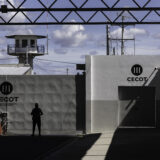
CoreCivic, the private prison company that operates Otay Mesa Detention Center, said that it does not receive revenue from commissary or phone call purchases. A separate company contracts with ICE for phone service at the facility.
Brian Todd, spokesperson for CoreCivic, said that money from the commissary goes to a fund “designated for the purchasing of items directly benefitting detainees and offsetting expenses associated with the provision of commissary services.”
Todd called complaints about the facility’s conditions baseless.
“CoreCivic has no role in determining who is detained, where they are placed, or when they are released,” Todd said. “Any claim otherwise, or that such decisions are made by the government to benefit CoreCivic, is false and defamatory.”
Alkhawaja has also struggled financially, but because an attorney was able to get him out of custody quickly and his family received support from community members, in some ways he is one of the luckier ones.
Alkhawaja is Palestinian with Saudi Arabian citizenship. He spent time in the U.S. studying on a student visa before going back to Saudi Arabia to work. His sister is a U.S. citizen, and he used to come visit her from time to time.
During a visit to his family in Oceanside, he learned that the Saudi government had targeted him for his political opinions and applied for asylum.
“I know if I go back, I will be risking my life,” Alkhawaja said. “There is no law over there that can protect you.”
Because he entered with a visa, the asylum application was pending with U.S. Citizenship and Immigration Services rather than immigration court.
He said that when he pulled up to the Camp Pendleton gate in mid-February, ICE officers seemed to have set up an office in the guardhouse.
He said the officers took his driver’s license, debit cards, work permit and even his Costco card. Some of them he never got back, he said.
Officers placed him in five-point shackles that connected his wrists, waist and ankles with chains and then drove him in a van to the federal building in downtown San Diego, where the agency has holding cells in the basement. On the drive, he said, the officers blasted country music that glorified America.
At the federal building, an officer pressured him to leave the U.S. voluntarily, he said. He said the officer didn’t seem to care about his asylum case or the details of what had happened to him back in Saudi Arabia.
When Alkhawaja declined to leave the country, ICE sent him to Otay Mesa Detention Center.
About a week later, a lawyer managed to get a bond hearing for Alkhawaja, and after his family and community members paid a $10,000 bond to ICE, the agency released him with an ankle monitor, he said.
“It’s so dehumanizing,” he said.
Alkhawaja also had to find and pay a new lawyer to take on his asylum case now that it has moved from U.S. Citizenship and Immigration Services to immigration court. He said he is grateful to the community members who helped his family come up with the money.
After he gets his coffee shop fully operational, Alkhawaja said he would like to teach communications, education or Middle Eastern studies at a university. He taught communications back in Saudi Arabia.
Copyright 2026 Capital & Main


-

 Column - State of InequalityMay 21, 2026
In California Governor’s Race, Xavier Becerra Walks Away From Single-Payer
-
 Deadly Dust: The Silicosis EpidemicMay 6, 2026
California Could Be the First State to Ban Quartz Countertops
-

 Latest NewsMay 1, 2026
In One of L.A.’s Food Deserts, ‘Hands That Harmed Are Now Hands That Heal’
-

 Column - State of InequalityApril 30, 2026
Don’t Call It Upward Mobility If People Still Can’t Afford to Live
-

 Latest NewsMay 5, 2026
Fire Recovery Could Wipe Out Altadena’s Affordable Rentals
-

 Latest NewsMay 11, 2026
Inside the Texas Water Crisis Pitting Residents Against Industry
-

 Column - State of InequalityMay 7, 2026
California Lawmaker Proposes Fix to Blunt Loss of Food and Health Aid
-
 Latest NewsMay 8, 2026
Salvadoran Man Says He Suffered Stroke While Awaiting Deportation to Torture Prison