
Column - State of Inequality
The Least-Bad Option: A County Sales Tax to Save California Health Clinics
Bay Area and L.A. residents weigh a regressive fix as funding cuts threaten basic care for the uninsured.
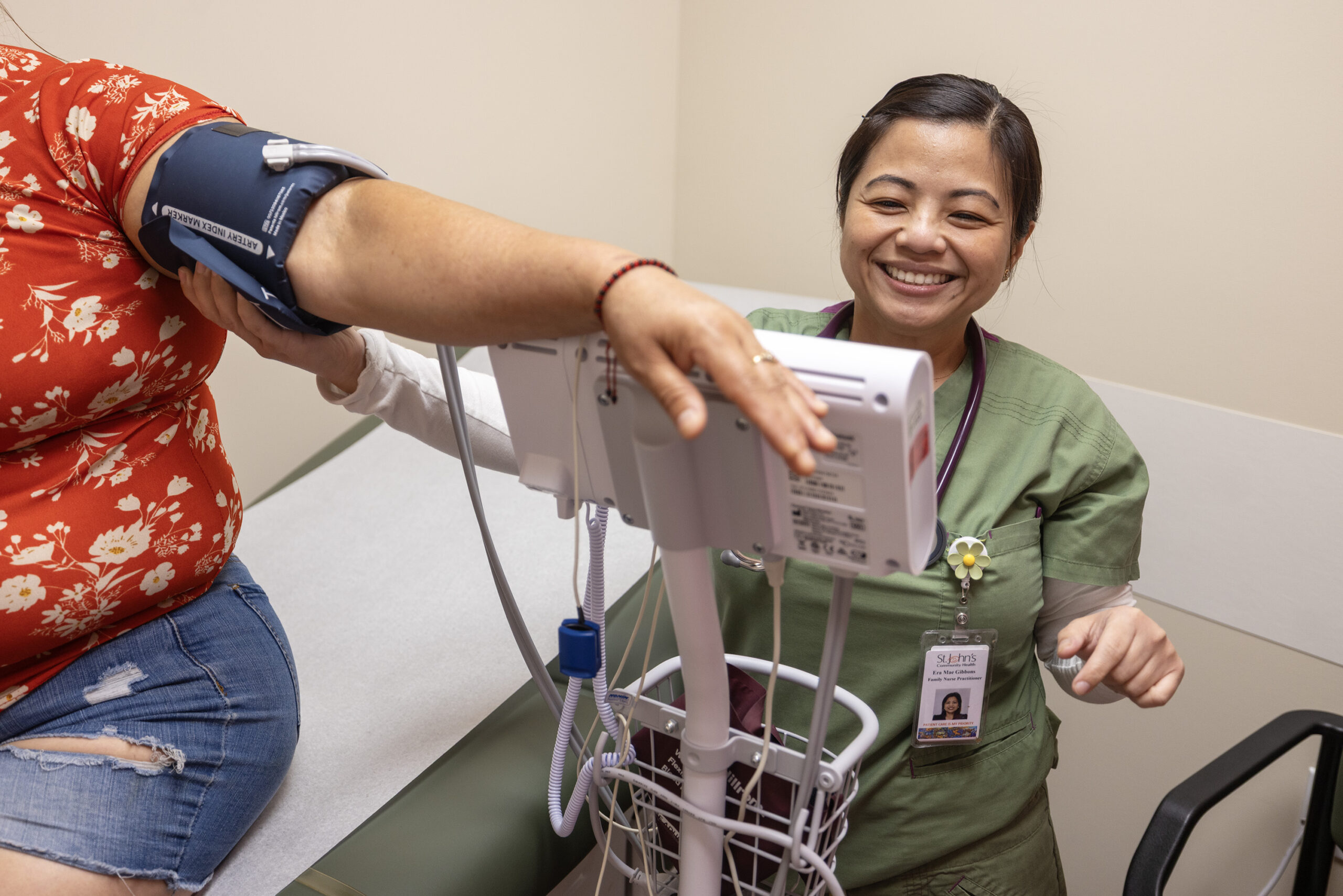

There are valid reasons to dread another sales tax hike in Los Angeles County, and Mitesh Popat has heard most of them.
But Popat, CEO of the Venice Family Clinic, also understands the stakes better than most. His organization, and others like it that form the foundation of the safety-net health system in greater Los Angeles, are bracing for the kind of financial storm — from both state and federal health care funding cuts — that hasn’t been seen in recent memory.
Absent a new revenue source, and quickly, the fallout could be catastrophic at the county level: a severe reduction in these clinics’ ability to provide care for the hundreds of thousands of patients, mostly low income or indigent, who come through their doors every year.
Join our email list to get the stories that mainstream news is overlooking.
Sign up for Capital & Main’s newsletter.
The Republican-led Congress, at President Donald Trump’s behest, is severely reducing federal Medicaid funding and making it harder for many people to qualify for the low-cost care. California Gov. Gavin Newsom, meanwhile, is stripping coverage from undocumented residents in Medi-Cal (the state’s version of Medicaid) as one way of dealing with persistent budget deficits.
“It’s a bit of a hurricane analogy,” Popat told Capital & Main. “You might try to hunker down, but is the hurricane ever going to stop? I don’t know — and that’s the problem. So instead, we have to learn to swim through it, how to grab a canoe and rescue people.”
Thus, Venice Family Clinic, along with St. John’s Community Health and numerous other clinics and coalitions, is supporting the proposed tax increase, on which Los Angeles County residents will vote June 2. The temporary, five-year measure would raise the county sales tax to an eye-gouging 10.25%, and in cities that add local taxes, it’ll be higher still. It’s also a regressive tax, meaning that lower-income residents will feel its sting in ways that more monied households won’t.
What it would achieve, though, could keep clinics open at a time when they’re likely to be desperately needed: an estimated $1 billion a year in new tax revenue to be used specifically for county health services. Those programs generally care for the county’s poorest residents, including many of the immigrant workers who prop up the Los Angeles economy but often lack health insurance: service workers, construction workers, gardeners, cooks and more.
“This is an imperfect solution,” said Popat, whose organization is already in belt-tightening mode, including a hiring freeze on all but the most medically essential positions. “It’s meant to be kind of a Band-Aid or a transition [to other funding]. But right now, it is necessary.”
And it’s going to keep happening in California.
* * *
In fact, it already is happening. Voters in the Bay Area’s Contra Costa County are being asked to approve a 0.625% sales tax increase (⅝ of a cent per dollar spent) in June to make up for huge anticipated federal funding cuts to Medicaid. Last December, voters in Santa Clara County passed the same size increase.
In each case, the counties are trying to stave off as much damage as possible to their health care systems, particularly the safety-net and emergency care systems that so many low-income people rely on. Those programs are under siege.
Not only is Newsom’s administration defunding Medi-Cal coverage for undocumented residents, but Popat said the state’s reimbursement rate to clinics for treating a range of people with “unsatisfactory immigration status” (UIS) will drop precipitously this summer. So-called UIS health care, which includes those on temporary visas (like some students), those with pending visa applications and certain undocumented young adults in the DACA program, is exclusively funded by the state.
“We haven’t seen the fee schedule yet, but I’m estimating that it’s going to be about a 10x reduction in the reimbursement we get for UIS,” Popat said. Venice Family Clinic serves about 45,000 patients a year, 87% of whom live at or below the federal poverty level and 80% of whom rely on Medi-Cal for their coverage.
And all of this comes before the true storm hits in 2027, when federal funding for Medicaid is slashed and new work and legal residency requirements for enrollees kick in. California could lose as much as $30 billion a year in federal Medi-Cal funds through the Donald Trump-directed cuts, and the state’s strained budget can do little to backfill that loss.
Some states have begun searching for broad-based tax solutions, like the millionaire tax just voted in by lawmakers in Washington and California’s own proposed Billionaire Tax Act, which still has to qualify for the November ballot and faces certain legal challenges should it ultimately pass. But those measures are generally meant to protect statewide services. In the meantime, individual counties have decided to act to preserve health care on local levels.
Jim Mangia is president and CEO of St. John’s Community Health, which serves nearly 145,000 patients a year through its 28 community health centers and five mobile clinics, most in Los Angeles County. Mangia said that the sales tax measure won’t be the last of its kind to appear on a ballot in California.
“I anticipate — and hope — that other counties and cities use [the L.A. County measure] and other legislation like it to put together similar efforts,” Mangia said. “The federal health care cuts have the potential to decimate health care systems across the country.”
* * *
There is no question that the effects of state and federal funding reductions will be severe in California, with low-income residents losing health coverage in massive numbers.
Nearly 3 million fewer Californians will be enrolled in Medi-Cal by 2028, according to a recent analysis by the UC Berkeley Labor Center and the UCLA Center for Health Policy Research. Many of those will be people who struggle to understand the new federal work requirements, get lost in mounds of red tape, get thrown off of coverage by the state because of their documentation status or forget that they now have to requalify for benefits every six months instead of once a year.
Some areas, like Los Angeles, will feel the effects more acutely because of a higher proportion of immigrant residents and workers, said Miranda Dietz, director of the Health Care Program at the UC Berkeley Labor Center. The report’s county-by-county breakdown estimates a 1.1 million dropoff in Medi-Cal enrollees in Los Angeles County, by far the largest number in the state.
“Some folks will find coverage through their employer or a family member’s employer, but there will be a lot more uninsured,” Dietz said. And county health systems — clinics — are one place uninsured people turn to for help when they get sick.
Financially, fewer enrollees and lower reimbursement rates could be catastrophic for local clinics that treat Medi-Cal and uninsured patients, like Venice Family Clinic and St. John’s Community Health. Between those reductions and the federal funding cuts, a crisis of health coverage is already building.
Los Angeles County is already there. The county’s Department of Public Health announced in early March that it has closed seven of its 13 full-service public health clinics.
The idea of increasing the sales tax doesn’t thrill anyone. As Los Angeles County Supervisor Holly Mitchell said after the board approved putting the measure on the June ballot, “There really are no other viable and timely options. Trust me, I looked high and low.”
The immediate alternative, though, is reduced or suspended operations at clinics and health centers at a time when they are likely to be desperately needed by the county’s poorest, a growing group that includes documented and undocumented immigrants alike, as well as U.S. citizens. “We’re going to stay and battle, and do the best we can with what we have,” Popat said. It may ultimately fall to local voters to help with that battle.
Copyright 2026 Capital & Main



-

 Column - State of InequalityJune 4, 2026
California’s Economy Runs on Labor Trump Wants to Deport
-

 Featured VideoJune 5, 2026
At This New Mexico Park, Mountain Bikers Pedal Amid Hundreds of Oil Wells
-

 Latest NewsJune 9, 2026
Ousted by the Trump Administration, U.S. Immigrants Remain Locked up in African Kingdom
-
 The SlickJune 10, 2026
Data Centers Are on the Ballot — This Pennsylvania Candidate Won Her Primary Keeping Them Top of Mind
-
 Latest NewsJune 12, 2026
California Town Lets Private ICE Detention Centers Police Themselves
-

 Latest NewsJune 8, 2026
The Glacier May Be Gone, but the Love Isn’t
-
 Column - State of InequalityJune 11, 2026
County Tax Measures Show Limits of Local Responses to Medicaid Cuts
-

 The SlickJune 16, 2026
Why Coal Will Lead to More Deaths in Colorado