
Column - California Uncovered
From Invisibility to Inclusion: A ‘Generational Shift’ on Menopause Care
Menopause is an inevitable life stage for women, but many don’t receive adequate medical care. New California legislation aims to expand access, but excludes millions on Medi-Cal.
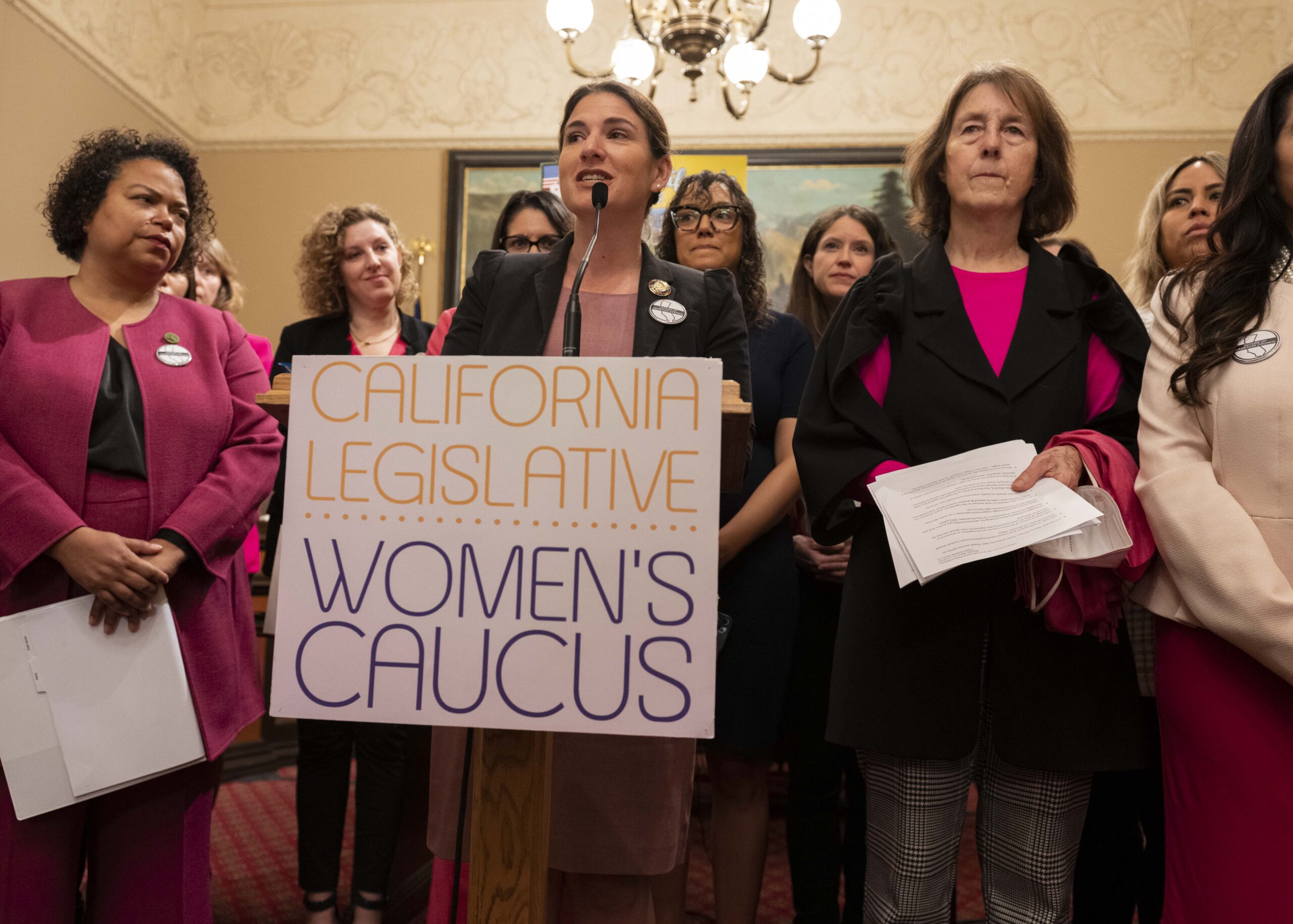

In recent years, Gov. Gavin Newsom twice vetoed legislation designed to improve menopause care, citing cost and insurance coverage concerns. Now, he’s proposing to spend millions on some of those same priorities — educating doctors, informing patients and expanding treatment access for a biological transition that affects roughly half of all Californians yet is often endured with little guidance or treatment.
If approved by the Legislature as part of the budget process, the $3.4 million budget proposal could begin to address longstanding gaps in critical care for women, advocates say, at least for those who don’t rely on government-funded health care.
The proposal would, among other changes, require menopause screening for all women beginning at age 40; force health plans to expand coverage of FDA-approved menopause treatments “as medically necessary”; provide $3.4 million for menopause services, education and awareness programs; and allow clinicians to receive continuing education credit for completing menopause training.
Join our email list to get the stories that mainstream news is overlooking.
Sign up for Capital & Main’s newsletter.
It’s striking that an inevitable phase of life for California women still requires legislative mandates to ensure needed coverage, care and training. Menopause is universal — yet in practice it remains underrecognized, undertreated and inconsistently covered.
Supporters see the legislation as part of a broader cultural shift — one that recognizes menopause as a significant life stage with serious health consequences if left untreated. For patients navigating symptoms ranging from insomnia and hot flashes to cardiovascular risk and cognitive disruption, the proposal signifies validation and a path to care that has been fragmented.
“It should be treated like a big deal because it’s a big freakin’ deal,” said Janet Lee-Ortiz, a Los Angeles middle school teacher who started to have symptoms and felt herself changing about a year ago. “I’m in the middle of trying to figure it out and I really feel alone, navigating it by myself.”
In October, when Newsom vetoed a bipartisan bill that sought to make similar changes, he expressed support for improved care but cited cost concerns. He directed state agencies to explore alternatives through the budget process. That led to the latest proposal, which, he said in a statement last month, “will expand access to essential, evidence-based care in a way that’s affordable and fiscally responsible.”
The author of two of those recent bills, Assemblymember Rebecca Bauer-Kahan (D-Orinda), supports the budget proposal and said it’s “going to lead to healthier, happier and longer lives for women.”
But she also recognizes that not everyone will benefit. That’s because the proposal for screenings and expanded coverage of specialized treatments does not apply to Medi-Cal, the state’s health insurance program for low-income residents. This is more than an oversight — it’s a significant equity issue given that the population of 7.6 million women and girls served by Medi-Cal is disproportionately Latina and Black.
“That is a gaping hole in this, just so we are clear,” Bauer-Kahan said. “That will be one of the next fights.”
* * *
Menopause occurs by definition after a woman has gone 12 consecutive months without a menstruation cycle, though the transition typically begins years earlier in perimenopause. During this phase, fluctuating hormone levels can produce symptoms including hot flashes, brain fog, joint pain, fatigue, irregular periods, mood swings and insomnia.
Studies have found that menopause affects a woman’s long-term health because the sudden drop in estrogen is associated with cardiovascular disease, cognitive impairments and dementia.
Addressing these issues can require hormone replacement therapy, which provides supplemental estrogen and other hormones that have decreased in the body, to help women manage their symptoms. These and other treatments are essential for women who go on to live more than 40% of their lives after their last period, said Dr. Rajita Patil, assistant clinical professor in the Obstetrics and Gynecology Department at UCLA Health and director of the Comprehensive Menopause Program.
“This is an opportunity to best optimize long-term health and make sure they have optimal longevity,” said Patil, who supports the budget proposal and testified in support of Bauer-Kahan’s bill.
For years, menopause occupied a paradoxical place in American medicine — universal yet invisible.
For Bauer-Kahan, 47, the policy arose from personal experience.
“It started by being a perimenopausal woman who couldn’t get care,” she said. “I was going through this and started talking to friends and others about it, and I realized it was more pervasive than I previously understood.”
Experiencing severe brain fog, she sought care from multiple doctors who reassured her nothing was wrong, leaving her worried about early onset Alzheimer’s because of intense forgetfulness. Relief came only after visiting a menopause specialist.
“He sent me a questionnaire that was pages long about my symptoms, and I was tearing up,” she said. “When I finally got the care I needed, it was game changing. I feel like myself again.”
This attention to menopause is unfolding alongside growing nationwide attention to the experience and a willingness by prominent women, such as former first lady Michelle Obama, to share their own experiences with menopause and hormone therapy.
Patil credits a widely read 2023 New York Times Magazine article about menopause, which outlined the controversial history of hormone therapy, with amplifying a public conversation about menopause.
In addition, Oprah Winfrey has hosted several menopause-focused conversations with celebrities and doctors, including a podcast last year with Dr. Sharon Malone, a well-known menopause expert. And actor Halle Berry — a longtime advocate who supported Bauer-Kahan’s legislation — pivoted her health-focused site Respin Health to focus on perimenopause and menopause to support women navigating midlife health.
“It’s a generational shift,” said Bauer-Kahan. “We were raised to make a lot more noise.”
Yet the daily reality of what patients experience in the health care system often lags behind that visibility. Women describe feeling dismissed — getting a message that they just have to endure it — and cycling through providers without getting answers.
“There is exponential demand for care that should have been there in the first place,” Patil said. “Doctors are not really trained for this kind of care.”
The lack of training about menopause and an unfortunate miscommunication about an early study on hormone replacement set menopause care back decades, Patil said.
In the late 1990s, hormone therapy was becoming more widely used. But in 2002 its use declined sharply after findings from the Women’s Health Initiative suggested hormone therapy increased certain health risks for women such as cancer and heart disease. The study was broadly reported and scared physicians and patients. While the study and the reaction was criticized by researchers and providers and later refuted, it reshaped practice and perception and left women in the dark about their options.
Insufficient training for physicians hasn’t helped. Many providers receive only a brief menopause lecture in medical school if at all, Patil said, while Bauer-Kahan pointed out that a majority of women seeking care do not receive appropriate treatment. A study from the AARP Public Policy Institute released last year found that only about one-fifth of women receive menopause treatment while women of color are much less likely to receive treatment.
Patil herself pursued additional training eight years ago after repeatedly feeling unable to answer patient questions.
“I went and got trained and was blown away by how much I was ignoring and wasn’t doing,” she said.
Patil became the only certified menopause provider at UCLA and launched a menopause program that now has more than a dozen trained providers. She is also expanding the model to other University of California medical centers, with previously allocated state funding.
* * *
For Patil, the proposed changes to insurance would save hours spent appealing coverage decisions and would benefit patients who need specialized treatment plans.
Although most insurers cover basic hormone replacement therapy, patients and physicians say insurers often deny other types of treatments, which can restrict access to specialized treatments for patients with complex health issues such as a history of breast cancer.
Newsom’s proposal stops short of eliminating utilization review — the process insurers use to approve or deny services and treatment — but directs insurers to rely on clinical guidelines from associations such as the Menopause Society.
“We don’t want the utilization company to tell us what route to use,” Patil said. “It’s shared decision-making between the patient and the provider.”
If the proposal is adopted, the state should quickly revisit the exclusion of Medi-Cal. Women who rely on Medi-Cal should not have to wait for equal coverage or access, Bauer-Kahan said.
This is a clear equity concern: Medi-Cal enrollees are disproportionately women of color, and research from the Study of Women’s Health Across the Nation, shows Latina and especially Black women often enter menopause earlier and experience more severe symptoms for years longer than white and some Asian women.
“There are real racial equity issues built in,” Bauer-Kahan said. “How do you get everybody in the doors to be treated, how do you make it more equitable for everybody?”
She said initiatives like this one often start with private insurance and then expand to public programs once costs become more clear.
The budget proposal’s provisions “focused on expanding coverage and supporting education and outreach apply only to commercial health plans; Medi-Cal managed care plans are specifically exempted from those sections, including the training provisions,” Tony Cava, spokesman for the Department of Health Care Services, which oversees Medi-Cal, said in an email.
* * *
Nationally, California is lagging. Last year, nearly two dozen states saw more than 50 menopause-related bills introduced and eight of them became law in states like Oregon, Washington and Rhode Island, according to Let’s Talk Menopause, a nonprofit that works to educate and advocate for women. The new laws focus on a range of services including expanded coverage for certain treatments and more education for providers.
So far, there is no organized opposition to the budget proposal, a California Health and Human Services Agency spokesperson said, but previous bills did encounter opposition from the California Association of Health Plans and other medical organizations.
One of the most commonsense parts of the proposal is the requirement that every woman be screened at age 40 for menopause symptoms and be given information about menopause. That simple change could help normalize talking about the condition, even though it will not include women who rely on Medi-Cal under the proposal.
For Lee-Ortiz, the increased awareness that could result from the bill might have shortened nearly a year of needless confusion.
A year ago, her symptoms — hot flashes, insomnia, fatigue and brain fog — began. One day she couldn’t remember the word toes, so she said “fingers on your feet” to her son.
But Lee-Ortiz said that compared to all of the information women receive when pregnant the void about menopause is shocking. She likens the menopause silence to the post-partum experience, having a miscarriage and losing her second child to stillbirth.
“You must suffer silently so no one else is inconvenienced,” she said about losing her second son. “I feel the same kind of shock with perimenopause. The only support I got was talking to people my age and talking about hot flashes.”
Typically, she said, she could handle enormous responsibilities at work and home.
“Now I feel like I can barely juggle super basic things,” said Lee-Ortiz, who started to experience perimenopause and received a new ADHD diagnosis at around the same time.
Patil said many of her patients describe similar disruptions.
“They are at the peak of their careers and responsibilities,” she said. “And all of a sudden this biological shift happens and it rocks their equilibrium.”
California’s effort may focus on the details of insurance rules and training requirements, but for many women navigating symptoms today, the most meaningful outcome could be recognition and support.
Copyright 2026 Capital & Main


-

 Imperial DivideJune 3, 2026
California’s Lithium Valley Dreams Meet Reality at the Only Restaurant in Town
-

 Latest NewsJune 1, 2026
Deep Cuts to Civilian Support Staff for Families of Deployed Marines Raise Concerns
-

 Column - State of InequalityJune 4, 2026
California’s Economy Runs on Labor Trump Wants to Deport
-

 Featured VideoJune 5, 2026
At This New Mexico Park, Mountain Bikers Pedal Amid Hundreds of Oil Wells
-

 The SlickJune 10, 2026
Data Centers Are on the Ballot — This Pennsylvania Candidate Won Her Primary Keeping Them Top of Mind
-

 Latest NewsJune 9, 2026
Ousted by the Trump Administration, U.S. Immigrants Remain Locked up in African Kingdom
-

 Latest NewsJune 12, 2026
California Town Lets Private ICE Detention Centers Police Themselves
-

 Latest NewsJune 8, 2026
The Glacier May Be Gone, but the Love Isn’t