
The Slick
Colorado’s Oil and Gas Industry Is Vastly Underestimating Methane Emissions
Watching from the sky, researchers find planet-warming pollutants leaking into the atmosphere are undercounted by at least two times.
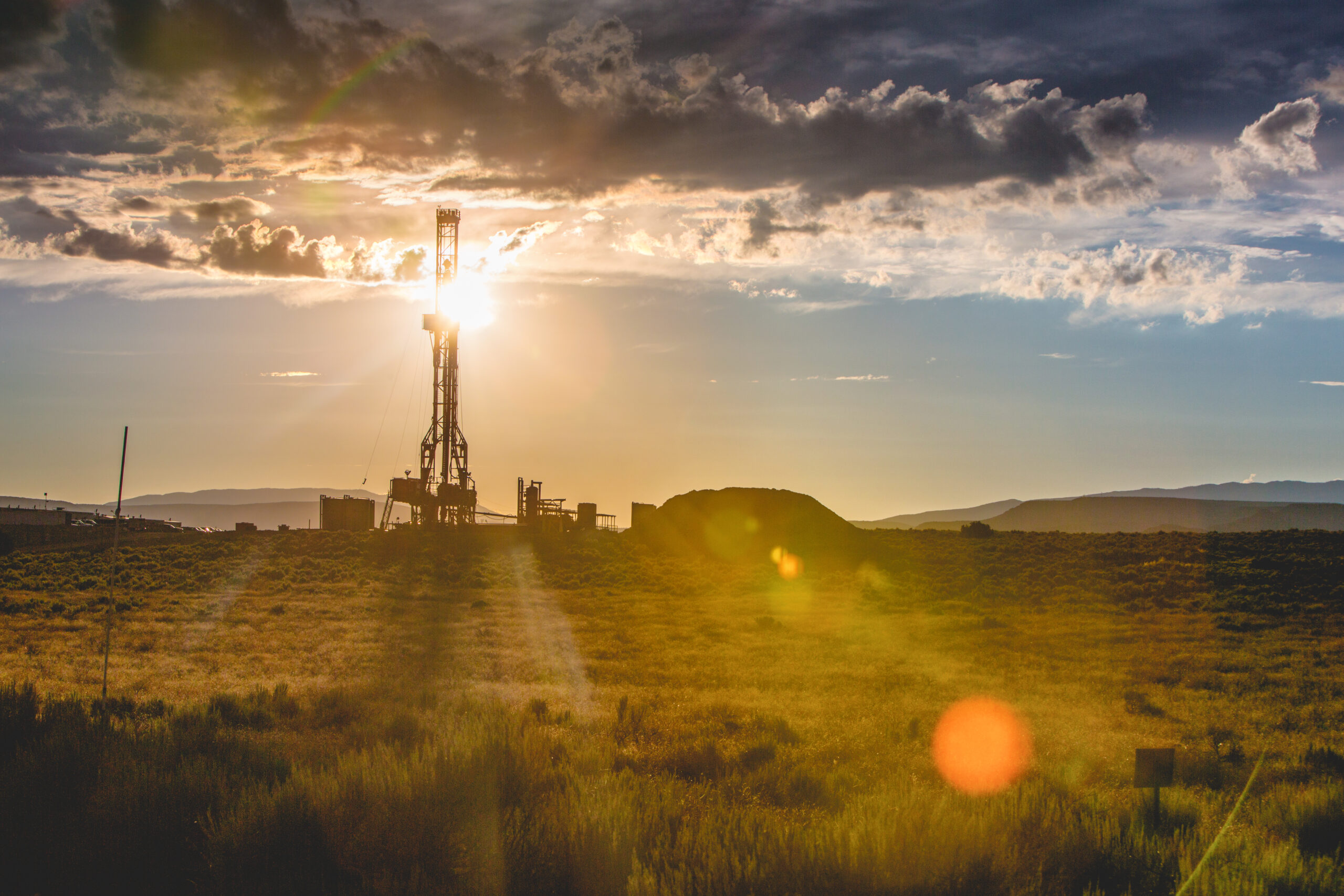

A unique aerial measurement campaign found that emission inventories compiled by energy companies to account for planet-warming methane leaking from equipment on Colorado oil and gas production sites undercount such pollutants by at least two times.
Results from the $3.25 million project, led by a team of university researchers and the Colorado Department of Public Health and Environment, provided officials for the first time with a more complete picture of the invisible pollutant emitted from well pads. Fossil fuel extraction is the state’s second-largest source of methane pollution, which has a global warming potential roughly 80 times that of carbon dioxide during a 20-year period.
The data is important to provide a baseline from which regulators can hold companies accountable for complying with laws that require them to significantly reduce methane emissions from pipes, compressors, tanks and other equipment. It’s also valuable to the oil and gas industry: Researchers notified companies when they saw leaks during overflights of targeted facilities.
Join our email list to get the stories that mainstream news is overlooking.
Sign up for Capital & Main’s newsletter.
The campaign showcased the expertise of the Methane Emissions Technology Center, a one-of-its-kind facility in Fort Collins that lost about one-third of its staff after the Trump administration cancelled $324 million in federal funding it was promised. Colorado’s attorney general joined those of a dozen other states, including California, on Feb. 18 in filing suit against the U.S. Department of Energy, claiming the decision to terminate $8 billion in nationwide energy awards directed by Congress is unlawful.
An accurate methane inventory for oil and gas producers is essential to ensure the state meets its greenhouse gas reduction goals, said Stefanie Shoup, deputy director of regulatory affairs at the state’s public health department. This roadmap requires the industry to achieve a 36% reduction in greenhouse gases by 2025 and a 60% decrease by 2030.
“We needed to make sure we were picking up all the things we were missing,” added Shoup, who said that project data showed that historical models energy companies used to calculate methane emissions need to be recalibrated.
“We are seeing methane being undercounted — we want to try to true that up now,” she said.
To do so, officials rely on what’s known as an “intensity factor,” or the difference between what companies estimated and what investigators found using aerial survey measurements.
Concentrations of methane, the main component of natural gas, are at an all-time high in the world’s atmosphere. Reducing this pollutant is the quickest way to slow planetary warming that causes more intense and extreme weather, droughts and wildfire, scientists agree. Fossil fuel extraction is the nation’s second-largest methane emitter after agriculture.
Colorado led the country in enacting rules in 2014 that required oil and gas companies to install equipment to reduce leaks on production sites, routinely inspect sites for leaks and, when they are discovered, fix them within days. Today, only a handful of states, including California, Alaska, New Mexico and Pennsylvania, have similar rules.
And it’s working: In Colorado, the fossil fuel sector is projected to meet, or even exceed, its greenhouse gas reduction requirements for 2025 and 2030, according to a 2025 Greenhouse Gas Inventory update. The full inventory through the end of last year will be released in late 2027, according to state health department officials.
Meanwhile, federal clean air standards that required companies to limit methane leaks, venting and flaring, are on hold. The Trump administration in November extended compliance deadlines for rules by 18 months.
The decision endangers public health, because the rules would also reduce toxic compounds emitted with methane that can cause cancer, according to the Environmental Defense Fund. It also affects companies’ bottom lines. Failure to fix such leaks led companies to waste $3.5 billion in natural gas in 2023 alone, the nonprofit found.
In Colorado, state officials continue to refine methane reduction standards. In 2023, regulators approved rules designed to provide an accurate ratio of a facility’s emissions over the amount of fuel produced. To calculate this figure, public health officials designed an aerial field study with researchers from University of Texas at Austin, Colorado State University and the Colorado School of Mines.
Known as the Colorado Ongoing Basin Emissions Study, the project was designed to ground truth the accuracy of methane emissions records kept by operators. Such inventories, which companies must file with the state each year, are calculated using direct measurements from production facilities.
Sensors mounted on aircraft and a satellite measured methane emitted by 11,000 facilities operated by a dozen companies in several phases between May 2024 and February 2025. The aerial technology detected about 2,000 emissions in 30,000 individual facility scans.
The production sites were derived from a randomized sample meant to represent all facility types in the state, said Anna Hodshire, an assistant professor in systems engineering at Colorado State University. Companies weren’t given notice of overflights and results were anonymized.
Most of the emissions discovered by technology mounted on a Bridger Photonics aircraft, which can detect as little as several pounds of gas emitted per hour, were small and complied with state and federal emissions rules, added Hodshire, who led the project and works with the Methane Emissions Technology Center.
“They do tend to assign emissions to the equipment level with reasonable accuracy,” she added, saying that researchers worked with oil and gas companies to determine if there was an explanation for emissions.
Sensor technology operated on aircraft by Insight M, and by GHGSat satellites, flew higher and recorded emissions at the facility level. These firms scanned more facilities, making them more likely to catch large, rare emitters, researchers wrote in a 68-page June report.
All three companies took measurements in Colorado’s largest oil and gas-producing basins, the Piceance on the Western slope of the Rocky Mountains, and the Denver-Julesburg, on the Eastern plains encompassing Denver. Investigators found several reasons why traditional on-the-ground emissions’ inventories underestimate pollutants.
Researchers noted that “large, rare emissions are difficult to capture in brief measurement campaigns, which means emission factors used in inventories do not adequately represent the full distribution of emission sources.”
The team compiled data from each of the three measurement companies, which used “different sensor technologies and detection methodologies to quantify methane emissions,” and compared emissions reported to state officials with this data, according to the June findings. Measurements allowed investigators to develop emissions profiles for each facility down to the source level, said Hodshire, the Colorado State University assistant professor.
“We are creating measurement-informed inventories to create evidence of how much methane isn’t necessarily being reported in the traditional inventory,” she added. “It’s not necessarily because operators are trying to get away with something, it’s because a traditional inventory only knows how much you tell it.”
Researchers used the results to devise an “intensity factor” required by state rules. This factor, which will be adjusted annually, represents the difference between what operators estimated and what investigators found in aerial survey measurements.
For 2026, oil and gas operators will be required, according to these calculations, to increase their emissions inventories by 2.2 to 2.7 times, depending on the basin they are in, said Shoup, from the state’s public health department.
“This definitely puts a lot of pressure on operators to reduce their emissions,” she added.
To calculate next year’s “intensity factor,” Hodshire and her team asked the state’s Energy and Carbon Management Commission for funding to reconcile differences between measurement models used in the first part of the methane campaign.
The first phase of the campaign relied on two models that used different methods. One, employed by Hodshire at the methane emissions testing center, combined emissions inventories filed with the state and overflight data. And a second, created by the Colorado School of Mines, used only measurement data and supplemented it with emissions recorded by continuous monitors on production sites.
The Colorado State University model found emissions were underreported by a factor of about 1.2, while the School of Mines model calculated the difference to be a factor of 3.08.
The energy agency voted in November to allocate $820,072 for the second phase of the project. The scope of work is scaled down, Shoup said, because of the federal funding cancellations made by the Trump administration that were allocated to fund sweeping measurement campaigns planned by the methane emissions testing facility.
The cuts represented about half of the more than $600 million for 38 Colorado-affiliated projects that were cancelled by the U.S. Department of Energy in October. U.S. Sen. Michael Bennet’s office said that the legislator, who is running for governor this year, is “pursuing all legislative options to ensure these funds are not cancelled.”
About $325 million in federal grants allocated to projects at the methane testing facility would have allowed oil and gas operators and sensor technology companies to refine methane leak detection equipment and conduct tests to understand the scope of such emissions.
Finding and fixing such leaks is “incredibly tricky,” said Shoup, and tests conducted at the Fort Collins facility are important to confirm that fast-evolving sensor technology is accurately quantifying emissions.
The facility’s work is so intertwined with a fossil fuel industry objective to reduce gas leaks, so it can save money by selling that gas, that an energy trade group touted its efforts with CSU researchers on its website.
“METEC has been a critical partner in helping the industry to collaborate on the best ways to reduce emissions,” wrote the Environmental Partnership, referring to the university’s Methane Emissions Technology Centers. The partnership is affiliated with the American Petroleum Institute, an industry trade association.
One of the terminated grants would have helped fund equipment and training for smaller companies. Many companies that belong to the partnership operate in Republican-led states.
The methane testing center has “heard nothing” on the status of its awards — “no official cancellation, no status updates, etc.,” wrote Dan Zimmerle, the facility’s director, in an email. The only information he’s received is the grants are on “the lists” of cancelled projects circulating in D.C., he added.
The fossil fuel industry and mostly state partners stepped in to initiate projects, “which extended key areas of the cancelled projects,” according to the methane testing facility’s January newsletter. Core functions, such as testing, field campaigns and research, continue at a “scaled down basis,” the update said. Still, the center has lost about one-third of its staff capacity through a combination of layoffs, reassignments and personnel departures.
Even though the methane testing center remains “open for business,” the newsletter said, “Essentially all public interest research work — developing research projects of broad interest to stakeholders — has been discontinued, with little likelihood of restarting soon.”
Copyright 2026 Capital & Main



-
 The SlickMay 29, 2026
Feds to Open Tens of Thousands of Acres of Colorado Wilderness to Oil Drilling
-
 Imperial DivideJune 3, 2026
California’s Lithium Valley Dreams Meet Reality at the Only Restaurant in Town
-

 Column - State of InequalityMay 28, 2026
Top Democratic Candidates Agree on Housing Urgency, Not the Fix
-

 Latest NewsJune 1, 2026
Deep Cuts to Civilian Support Staff for Families of Deployed Marines Raise Concerns
-

 Column - State of InequalityJune 4, 2026
California’s Economy Runs on Labor Trump Wants to Deport
-
 The SlickJune 5, 2026
At This New Mexico Park, Mountain Bikers Pedal Amid Hundreds of Oil Wells
-
 Latest NewsJune 9, 2026
Ousted by the Trump Administration, U.S. Immigrants Remain Locked up in African Kingdom
-
 The SlickJune 10, 2026
Data Centers Are on the Ballot — This Pennsylvania Candidate Won Her Primary Keeping Them Top of Mind