Latest News
Trump’s War on ICE-Fearing Catholics
A president with strong Christian support is driving an aggressive crackdown on immigrants who are disproportionately Catholic. How is this playing out in the pews?
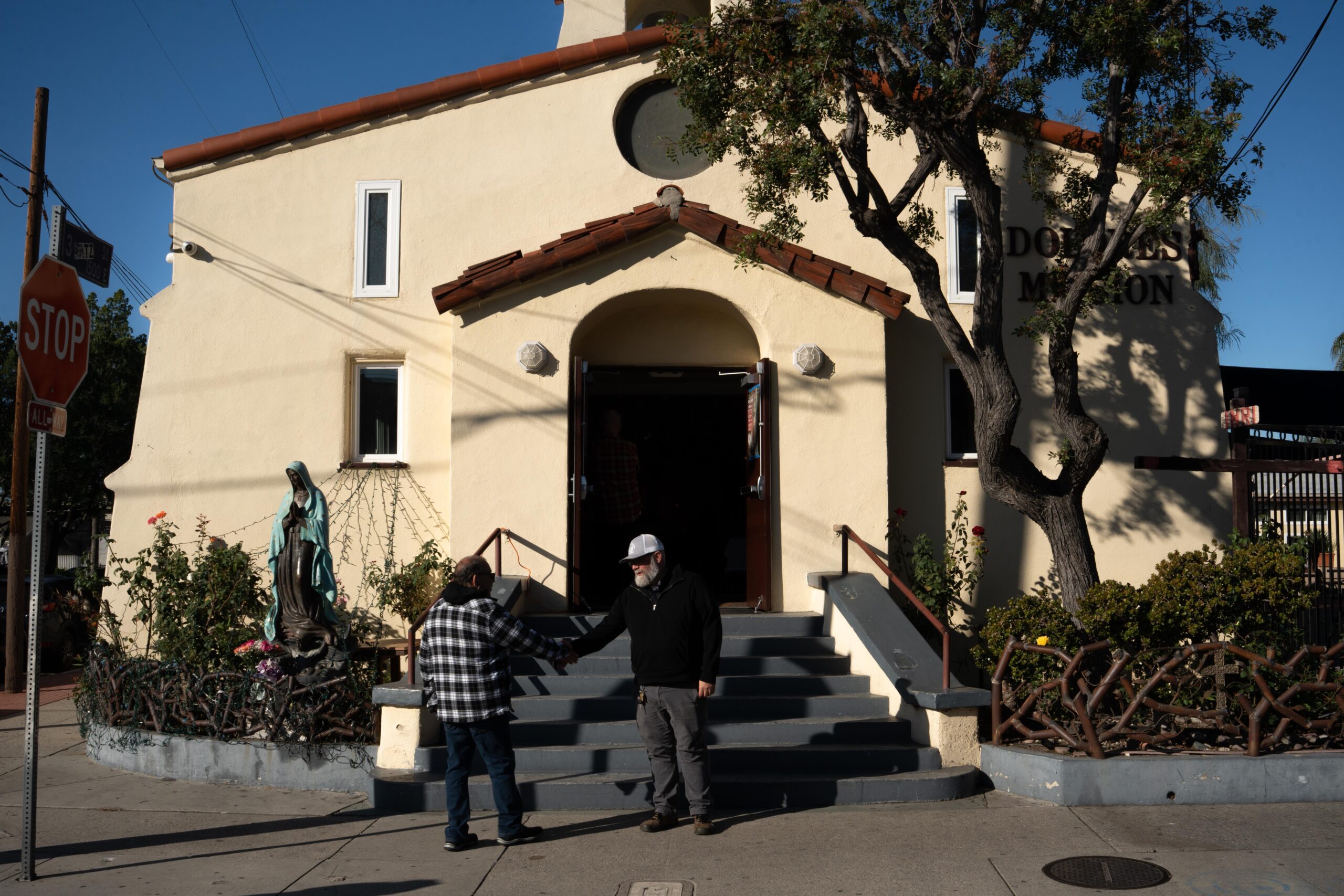

To outside observers, parishioners at the Dolores Mission Church in Los Angeles might seem less pious this year. In the summer, attendance at the Catholic church plummeted, according to the Rev. Brendan Busse, Dolores Mission’s pastor, who said the pews were about half as full as usual.
The disappearance of a substantial portion of the faithful was not altogether surprising: It came just days after the Department of Homeland Security launched immigration raids across the city in June — followed by others around the country — at the behest of President Donald Trump.
Almost immediately, social media feeds and then television news reports brought the initial immigration raids to life: Masked federal agents tackled and arrested Latinos in parking lots, on street corners and at workplaces. Those detained looked like they could be part of Dolores Mission’s overwhelmingly-Latino parish.
Dolores Mission is in L.A.’s Boyle Heights neighborhood, an unmistakably Mexican American area where vibrant Chicano murals adorn public walls, music from Jalisco often rings out in Mariachi Plaza and 93% of residents are Hispanic or Latino.
Following the raids, some Boyle Heights residents were afraid to leave their homes. Many worried that they too might get swept up by one of the armed government agents roaming their neighborhoods, grabbing people off the streets and forcing them into unmarked vehicles.
That fear was compounded when it became clear that immigrants were being transported to far-off detention centers that have racked up human rights complaints — including places such as the so-called Alligator Alcatraz in the Florida Everglades and the much-criticized prison camp at Guantánamo Bay, Cuba.
The impression of being under siege in Boyle Heights speaks to a larger disconnect in heavily Latino and predominately Catholic communities across the country.
Despite winning 55% of Catholic voters in the 2024 presidential election, Trump’s approach to immigration enforcement has disproportionately affected many Catholic communities and organizations around the country. It has also resulted in sudden drops in church attendance, according to Catholic officials in various parishes.
That may be because even though Catholics represent fewer than 20% of U.S. adults, they make up 61% of the population at risk of deportation, according to a March report by the Center for the Study of Global Christianity at Gordon-Conwell Theological Seminary, the National Association of Evangelicals, the United States Conference of Catholic Bishops and World Relief. In 2022, about 43% of U.S. Hispanic adults considered themselves Catholic, according to Pew Research Center.
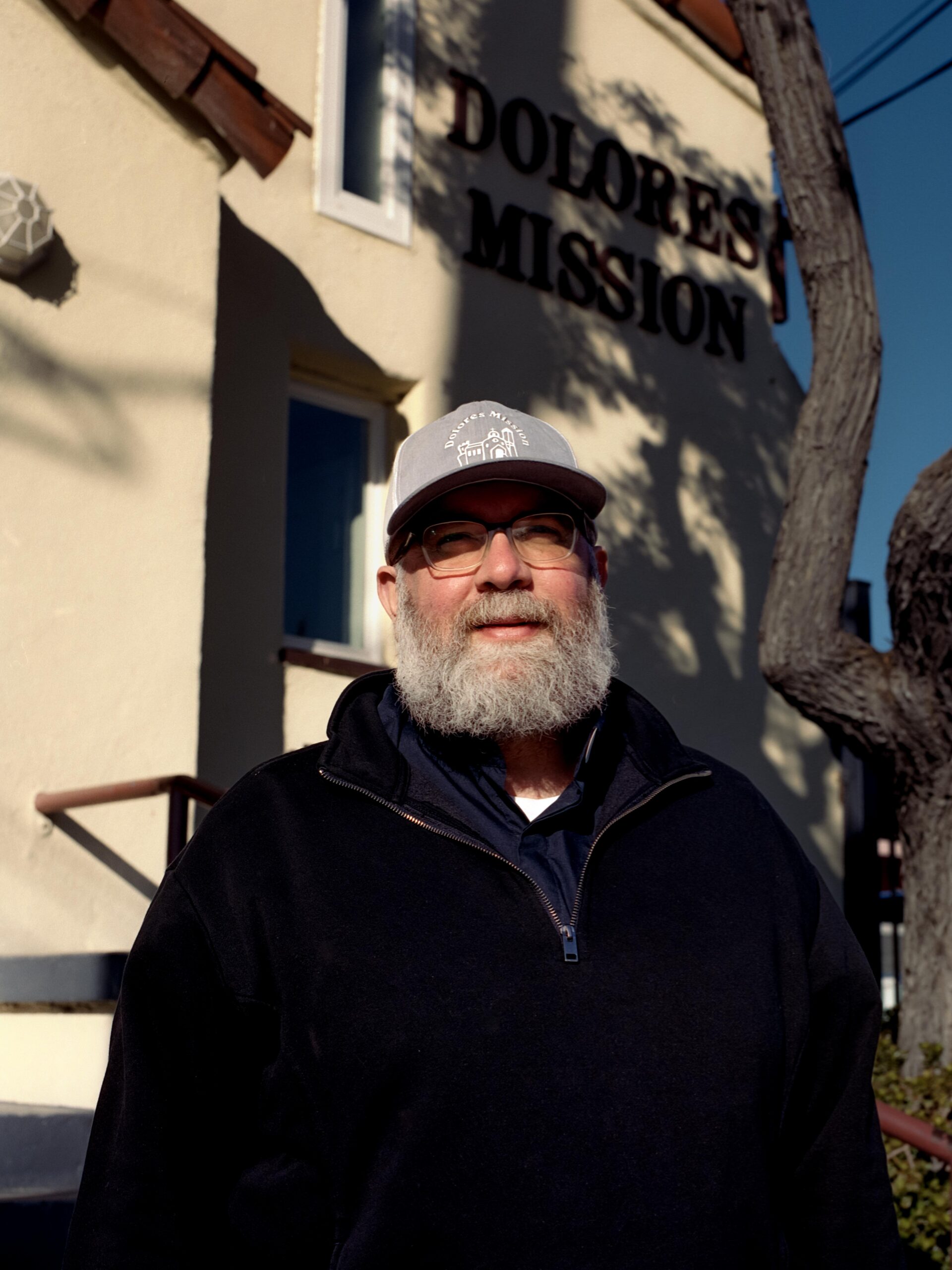
Rev. Brendan Busse stands outside his church after leading a Spanish-language Mass.
In the months after the raids began, multiple Dolores Mission congregants told Capital & Main that their friends or family members were detained by DHS and later deported.
Among them were two nephews of Dolores Mission’s pastoral assistant; they didn’t return home from their work as gardeners one day, Busse said.
By the time church members tracked them down days later, they were at separate ICE detention centers in California, and were later deported to their home country of Guatemala, according to the pastoral assistant who asked to remain anonymous out of fear of being targeted by authorities. DHS did not respond to Capital & Main’s questions regarding both nephews’ detainment and deportation.
“Everybody here, no matter who they are, has felt the impact of fear and anxiety that has kept people from feeling safe in the streets,” Busse said.
In response to questions from Capital & Main about the impact of immigration enforcement on Catholic communities across the country, Tricia McLaughlin, the DHS assistant secretary for public affairs, said that “lawbreakers should unquestionably be living in a climate of fear and anxiety that they will be caught and sent home,” meaning the countries in which they were born.
Mass Deportations
A news release on the DHS website claimed that as of Oct. 27, the agency had carried out more than 527,000 deportations during Trump’s second term.
According to the Council on Foreign Relations, the vast majority of deportation flights during the first several months of 2025 were to countries whose populations are predominantly Catholic, such as Mexico, Honduras, Guatemala and El Salvador.
The sometimes violent tactics used to detain and later deport immigrants have convinced some to abandon the United States. That includes Juan González, a longtime Catholic resident of Southern California who attended St. Andrew Church in Pasadena and earlier this year chose to move back to his home country of Mexico after three decades.
As for church attendance, Boyle Height’s Dolores Mission is far from the only heavily Latino parish to see faltering numbers as a result of immigration enforcement.
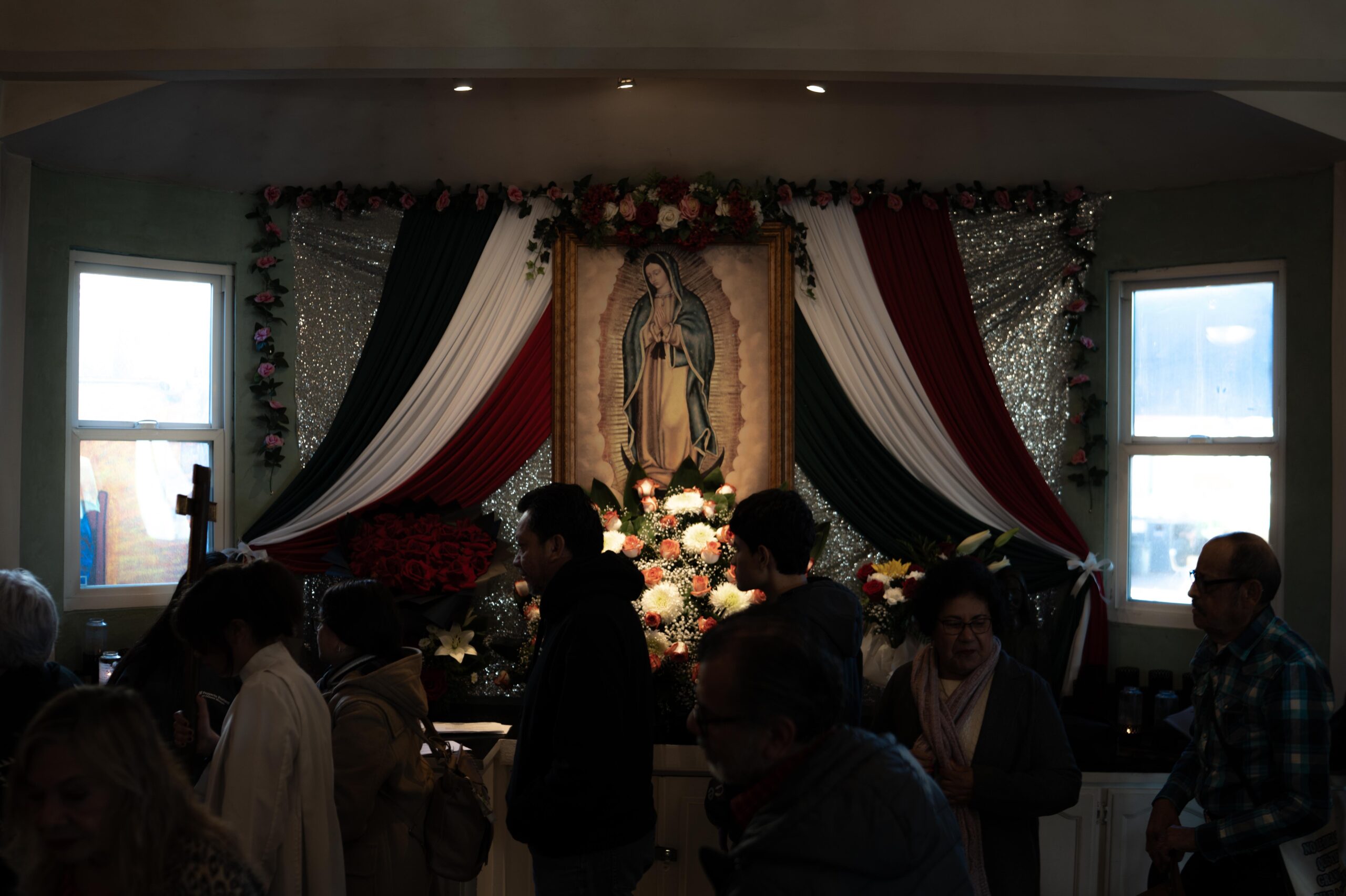
Parishioners walk past a shrine depicting the Virgin of Guadalupe in Dolores Mission Church.
In Chicago, the Rev. Carmelo Mendez, pastor of St. Oscar Romero Parish on the city’s South Side, told NPR in November that attendance at Mass had fallen by 40% since enhanced immigration enforcement operations began in the city in September.
In Washington, the Rev. Emilio Biosca Agüero, pastor at Shrine of the Sacred Heart, estimated that one out of five parishioners had stopped going to Mass after federal agents were deployed on the city’s streets, the Religion News Service reported in August.
At St. Thomas Mission in Brownsville in Texas’s Rio Grande Valley, the Rev. Joel Flores told the New York Times that he too has seen a significant drop in the size of his flock in recent months.
The climate in California’s Southland is such that Bishop Alberto Rojas excused parishioners in the Diocese of San Bernardino from Mass if they feared immigration enforcement.
McLaughlin, who has spoken about her own Catholic faith, said that “ICE does not raid churches” but added that the Trump administration will “not tie the hands” of federal agents, clarifying that “there may be a situation where an arrest is made” inside of a church.
In Southern California, Christmas parades and other events have been canceled for fear of ICE raids targeting Latinos. Dolores Mission Church alone canceled numerous gatherings — including an annual community volunteer picnic, a women’s conference and a series of public religious services called “Misas del Barrio” (Neighborhood Masses) — to protect the community.
Parishioner Alejandra Benavides summed up the situation as she sees it: “Immigration enforcement is kicking our ass and breaking our hearts.”
Cafeteria Catholics
Trump has claimed to “stand for everything … that the church stands for,” and has selected Catholics to some of the nation’s most powerful positions: Vice President JD Vance, Secretary of State Marco Rubio, CIA Director John Ratcliffe, press secretary Karoline Leavitt, border czar Tom Homan and Health and Human Services Director Robert F. Kennedy Jr.
In January, Vance, who converted to Catholicism in 2019, defended the Trump administration’s deportation policy by invoking a Catholic theological concept called “ordo amoris” (Latin for order of love), asserting that people should love their families before loving strangers. The claim was quickly rebuked by Pope Francis, who wrote that true ordo amoris is discovered by meditating on love “open to all, without exception.”
In February, soon-to-be Pope Leo also publicly challenged Vance’s interpretation, sharing an article titled “JD Vance is wrong: Jesus doesn’t ask us to rank our love for others” on his X account.
A recent survey conducted by the right-wing Catholic media organization EWTN News and conservative pollster RealClear Opinion Research found that 54% of Catholic voters surveyed supported “the detention and deportation of unauthorized immigrants on a broad scale.”
In contrast, many Catholic leaders now say that some of the administration’s policies — such as the targeting of immigrants and the defunding of humanitarian programs — run directly counter to deeply held Catholic teachings.
“What they confused for Christianity is a white nationalist vision of racial purity and national purity that should be called out by anybody of faith as a real heresy,” Dolores Mission’s Busse said.
Good Works
Catholic organizations that have long mobilized to support vulnerable communities, including immigrants, have in some cases ramped up such efforts in response to Trump’s policies.
The U.S. Conference of Catholic Bishops, hardly known for liberal beliefs when it comes to issues like abortion and same-sex marriage, seemingly stayed the course when the the nation’s bishops elected conservative Archbishop Paul S. Coakley as their new president in November.
But nearly all of those same bishops — 96% of those who voted in a fall assembly — took aim at the Trump administration’s immigration policies in a Special Message, the first such message it has agreed upon in more than a decade. In it, the bishops called for an end to Trump’s “indiscriminate mass deportation” and “dehumanizing rhetoric and violence.”
“To our immigrant brothers and sisters, we stand with you in your suffering, since, when one member suffers, all suffer (cf. 1 Corinthians 12:26),” the statement said. “You are not alone!”
The conference also praised and encouraged many activist Catholics to continue their work on behalf of immigrants.
The Archdiocese of Los Angeles, the largest in the country, is also trying to adapt.
Isaac Cuevas, the archdiocese’s director of immigration and public affairs, said parishioners who normally run food pantries are now combating hunger by delivering food to the homes of immigrants who are too afraid to go out in public.
The archdiocese has also provided court accompaniment training to about 180 priests, deacons and religious sisters. The hope, Cuevas said, is that by accompanying immigrants to court hearings, judges, bailiffs and clerks “all understand that that moral presence is there,” and that legal officials will be “as graceful as they can when dealing with these cases.”
Despite such actions, some Catholics feel the church has not taken a courageous enough humanitarian stand to protect immigrants.
Silvia Muñoz, who runs the department of social action at the Pedro Arrupe Jesuit Institute in Miami, is trying to pick up the slack.
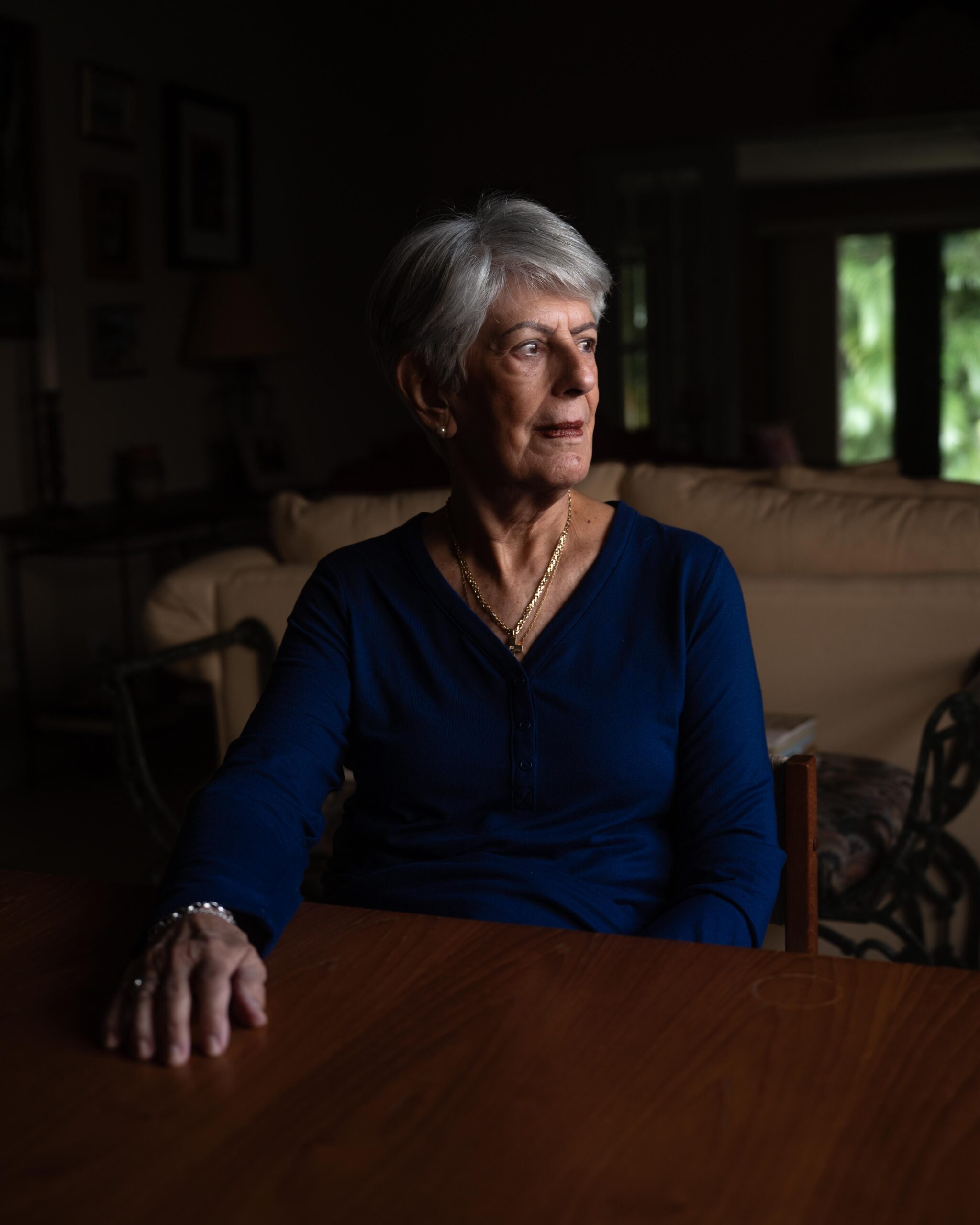
Silvia Muñoz sits at home in Doral, Florida.
“I’m in contact with other Catholic women who are as passionate about the rights of immigrants as myself, to try to do something in South Florida to wake up a silent church,” Muñoz said.
Every Wednesday, Muñoz, who arrived in the United States as a Cuban refugee in 1961, joins other activists outside the ICE detention center in Miramar, Florida, to accompany immigrant families as they wait to learn the fates of their loved ones.
Muñoz has also attended interfaith vigils in front of Alligator Alcatraz — where Amnesty International has accused guards of subjecting detainees to cruel treatment “which may amount to torture,” such as confining shackled prisoners to an outdoor cage smaller than a standard dryer for hours — calling for operations at the site to be halted.
DHS did not respond to Capital & Main’s request for comment on alleged abuse at Alligator Alcatraz.
Despite being 79, Muñoz said, “I cannot sit at home and do nothing. I believe this is a calling from God that I, even at my age, need to do.”
On Nov.13 — the feast day for St. Francis Xavier Cabrini, the patron saint of immigrants — Muñoz helped organize a procession and prayer service in front of the immigration courthouse in downtown Miami.
That event was part of a national day of action spearheaded by the Ignatian Solidarity Network, a nonprofit Catholic organization dedicated to social justice advocacy.
Christopher Kerr, executive director of the network, told Capital & Main that the purpose of his organization’s public advocacy events is to “demonstrate that the church stands with immigrant people and that our faith, to be Catholic, is to uphold the dignity and humanity of immigrant people.”
Kerr said the gatherings are increasingly important now that the Trump administration has drastically cut funds that many Catholic organizations and institutions relied on to facilitate humanitarian services such as refugee resettlement.
On the first day of his second term, Trump suspended the U.S. Refugee Admissions Program — which just last year awarded the U.S. Conference of Catholic Bishops and its affiliates more than $62 million — and froze its funding. The move forced hundreds of layoffs of church employees and halted humanitarian services such as housing assistance and migrant child foster care for thousands of refugees across the country.
Trump later allowed his then-special adviser Elon Musk’s Department of Government Efficiency to dismantle the U.S. Agency for International Development. That action decimated Catholic Relief Services, which was the largest recipient of USAID funds, receiving about half of its $1.5 billion annual budget from the agency.
“The Trump administration has … reduced the funding so drastically that none of the organizations that were settling refugees are really able to sustain their operations,” Kerr said.
People in the Pews
At Dolores Mission Church, Busse said the pews have been fuller recently.
December — with Advent, the Feast of Our Lady of Guadalupe and Christmas — is usually the busiest time of the year. But he said he sees increased attendance as more than just a sign of a loyal flock.
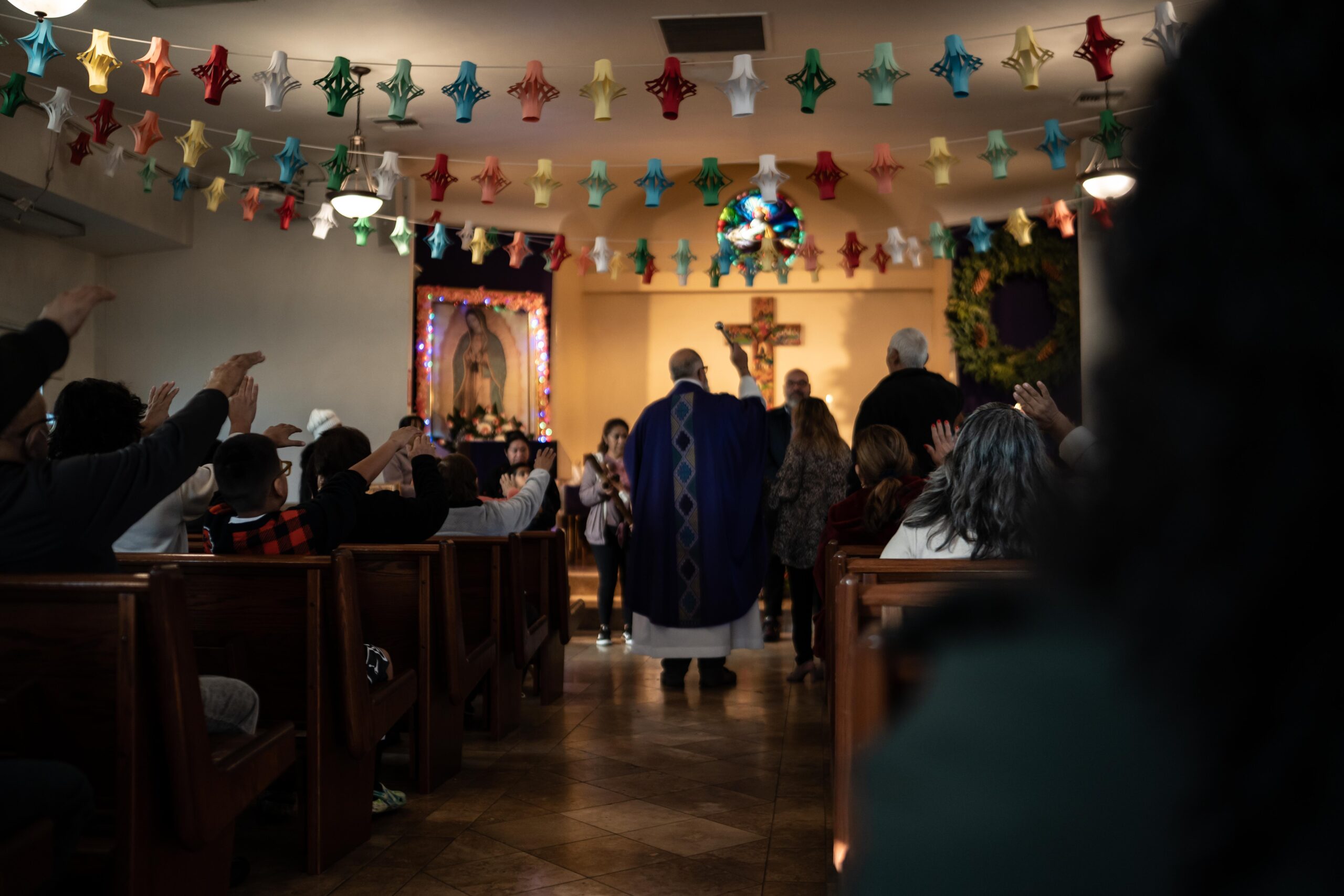
Busse leads a well-attended Mass during Advent — the period leading up to Christmas.
To Busse, a well-attended church is its own defense against the immigration enforcement activities that he said many local Catholics are enduring like “a terror campaign.”
“When people are together, there’s less fear,” Busse said. “When a community actually shows up, the [ICE activity] falls apart” — not just because it becomes harder to carry out on a logistical level, but also because the community’s solidarity shows that the enforcement actions are clearly against the will of the people.
For Busse, protecting immigrants is one of the most foundational manifestations of his faith.
“It’s not an exaggeration to say that Catholics fundamentally believe that God’s self is kind of an immigrant, that the act of hospitality, of welcoming others in our homes and in our hearts is the central precept of Christianity and the Catholic faith,” Busse said. “It’s not just a nice thing to care for immigrants, it’s really the most sacred thing we can do.”
Copyright 2025 Capital & Main.
Jeremy Lindenfeld is a California Local News Fellow.
All photos by Jeremy Lindenfeld.



-
 The SlickMay 29, 2026
Feds to Open Tens of Thousands of Acres of Colorado Wilderness to Oil Drilling
-
 Deadly Dust: The Silicosis EpidemicMay 27, 2026
California Moves to Ban Quartz Countertop Fabrication to Combat Silicosis Epidemic
-
 Latest NewsMay 26, 2026
Conditions at California ICE Detention Centers Are Getting Worse, Inspections Find
-
 Imperial DivideJune 3, 2026
California’s Lithium Valley Dreams Meet Reality at the Only Restaurant in Town
-

 Column - State of InequalityMay 28, 2026
Top Democratic Candidates Agree on Housing Urgency, Not the Fix
-
 Latest NewsJune 1, 2026
Deep Cuts to Civilian Support Staff for Families of Deployed Marines Raise Concerns
-
 Column - State of InequalityJune 4, 2026
California’s Economy Runs on Labor Trump Wants to Deport
-
 The SlickJune 5, 2026
At This New Mexico Park, Mountain Bikers Pedal Amid Hundreds of Oil Wells