Column - State of Inequality
Trump’s Deportation Crackdown Is Hurting Tourism
Fear of aggressive deportation raids is deterring foreign visitors, leading to a reduction in hours for workers and lost revenue.
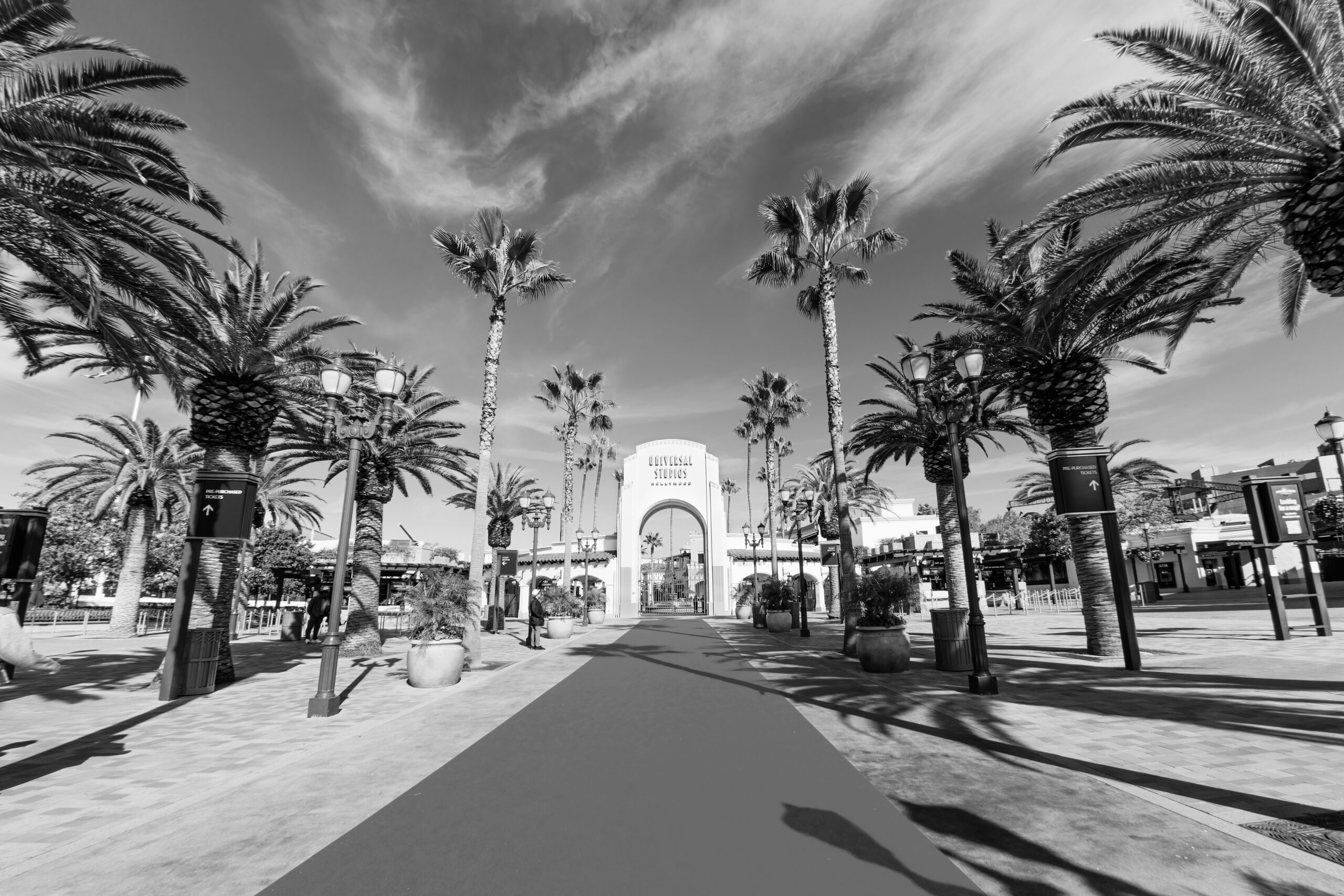

At the Universal Studios Hollywood theme park near Los Angeles, food service worker Sam Nassar doesn’t need a corporate earnings call to know that tourism is down, including among international visitors. He can see it inside the park — and in his schedule and paycheck.
“Since the start of last year, we’ve definitely seen a huge dip in attendance,” said Nassar, 39, who works primarily at the Wizarding World of Harry Potter area of the park. “My hours have been cut anywhere from 30% to 50%.”
Nassar has used a second job as an in-home caregiver to make ends meet, but he wonders about the year to come. And while a downturn in a theme park can be attributable to any number of factors, the decline of international visitors, he said, is noticeable.
“I’m not sure if they’re afraid to come [to the United States] or if it’s a financial situation, but we’ve definitely felt it,” Nassar said. “It’s hard to know what we as a country look like to the rest of the world right now.”
In addition to its human horrors, the Trump administration’s assault on immigrants living in the U.S. is having a chilling effect on people traveling here from outside the country. International travel to the U.S. is in a certifiable freefall, with nine straight months of decline in foreign visitors versus the year before.
At a time when global tourism is growing, the U.S. experienced a 6% decrease in foreign visitors in 2025 and was the only country to see international visitor spending fall off — a staggering $12.5 billion projected downturn in revenue. California wasn’t spared; after enjoying a 10% increase in 2024, its international visitor count declined in 2025.
Put simply, President Donald Trump’s anti-immigrant policies have made it less likely that people from other countries want to visit here, let alone leave their tourism dollars in the States. That will affect both large corporations and their individual workers, said Heidi Shierholz, president of the Washington, D.C.-based Economic Policy Institute.
“We can see the moral and ethical reprehensibility of what is going on, and that is the first concern,” said Shierholz, a former chief economist at the U.S. Department of Labor. “But it is also just terrible economics.”
Last summer, the Economic Policy Institute estimated that Trump’s plan to deport as many as a million immigrants per year during his term would lead not only to 3.3 million fewer employed immigrants over four years, but also to 2.6 million fewer employed U.S.-born workers — the ripple effect of a damaged job market.
That is one of two primary ways that Trump’s policies are hammering California, one of many states that rely on immigrant workers to fill a huge portion of service-related jobs in the state. The other is more straightforward: a decline in tourism, which produces about $157 billion in visitor spending each year.
The travel industry organization Visit California projected last October that international visits to the Golden State would drop by less than a percent for the whole of 2025. But two months later, foreign travel for December dropped by 7.2% compared to 2024. Canadians’ continued repudiation of Trump, combined with discomfort over his immigration and border policies, led to a nearly 20% decline in visitors from that country alone.
Where does such a dropoff show up? Fewer hotel stays, fewer theme park visits, less restaurant and retail revenue — all of the categories normally pumped up by tourists, including those from other countries.
A recently released national report brings the topic into focus. The administration’s anti-immigrant policies, the union UNITE HERE contends in the report, “are making the U.S. inhospitable — putting our nation’s spot as the No. 1 global tourism economy in jeopardy.”
UNITE HERE represents about 300,000 workers nationally, more than 32,000 of them in California and Arizona, mostly in hospitality-related jobs in hotels, casinos, airports and food service companies. (Disclosure: The union is a financial supporter of Capital & Main.) Its report found that hotel revenue in the U.S. is almost flat, growing at its slowest rate ever apart from the pandemic and select recessionary periods.
The report focused on tourism-heavy locales like Miami, where the stripping of work authorization for many employees has left remaining workers to take on extra responsibilities and employers to dole out increasing amounts of overtime despite a decline in international visitors. It also cited federal Bureau of Labor Statistics data showing that nationally, there were 98,000 fewer people employed in leisure and hospitality jobs in December 2025 versus one year before.
“Across the board, the U.S. hospitality industry is suffering because of Trump’s immigration policies and ongoing political vitriol,” the authors of the report wrote. “These have upended the industry on multiple fronts, resulting in fewer visitors, fewer available workers, and a hotel industry in which only luxury properties can thrive.”
The administration’s raids on immigrants have led to a deep sense of unrest among potential international visitors, including for the highest-profile events. The FIFA World Cup, the most prestigious soccer tournament on the globe, is set for this summer in the U.S., Canada and Mexico. But some officials of the sport have loudly debated whether to recommend that people — or even teams — come to the States.
“It is clearly time to at least discuss a boycott,” Oke Goettlich, a member of the German Football Association’s executive board, told the sports site The Athletic in January. “We do not know yet how the coming months will unfold. Right now, Germany’s Foreign Office has issued travel advisories for parts of the United States. We are seeing people die on the streets as a result of actions by immigration enforcement — ICE.”
The World Cup is just one example of the potential for Trump’s policies to decimate economic plans, but it’s a big one. California is a significant stakeholder in the World Cup, with 14 matches scheduled to be played in the state. The tournament by definition is a major international draw.
Estimates in 2024 suggested the state might reap a $1.2 billion financial windfall from the tournament, split roughly in half between Northern California and Southern California. But those estimates assumed a huge influx of international visitors — the exact people who’ve been coming in smaller numbers over the past year.
It’s too soon to know how that will play out. But on the subject of Trump’s immigration policies, two things already seem clear: The raids are weakening the employment pool, especially in U.S. service industries; and tourism is taking a brutal hit. For California and other tourism-dependent economies, that is an emergency siren wailing loudly.
“Going through 2024, even 2023, we felt like things were finally picking up from the pandemic and were kind of going back to normal a little bit,” said Nassar, the Universal theme park worker. “But this past year has been another huge dip downward.”
Copyright Capital & Main 2026



-

 The SlickMay 29, 2026
Feds to Open Tens of Thousands of Acres of Colorado Wilderness to Oil Drilling
-
 Deadly Dust: The Silicosis EpidemicMay 27, 2026
California Moves to Ban Quartz Countertop Fabrication to Combat Silicosis Epidemic
-
 Latest NewsMay 26, 2026
Conditions at California ICE Detention Centers Are Getting Worse, Inspections Find
-
 Imperial DivideJune 3, 2026
California’s Lithium Valley Dreams Meet Reality at the Only Restaurant in Town
-

 Column - State of InequalityMay 28, 2026
Top Democratic Candidates Agree on Housing Urgency, Not the Fix
-

 Latest NewsJune 1, 2026
Deep Cuts to Civilian Support Staff for Families of Deployed Marines Raise Concerns
-

 Column - State of InequalityJune 4, 2026
California’s Economy Runs on Labor Trump Wants to Deport
-

 The SlickJune 5, 2026
At This New Mexico Park, Mountain Bikers Pedal Amid Hundreds of Oil Wells