
California Expose
In Black and White: Strip Club Approved for Tax Credits

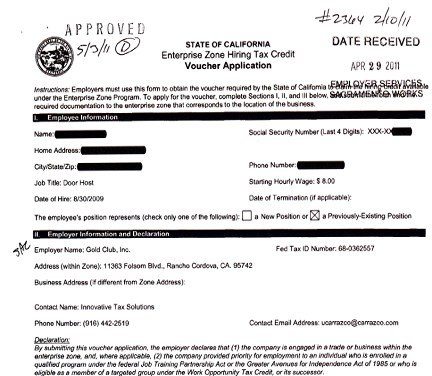
California’s controversial $700 million enterprise zone program has long been shrouded in secrecy. But now Frying Pan News has obtained documents showing that the Rancho Cordova strip club Gold Club Centerfolds has been approved for enterprise zone tax credits. The documents show that the gentlemen’s club has received credits worth up to $37,440 apiece for nine employees — sales associates, door hosts and security officers — who are paid from $8 to $9.25 an hour.
See Gold Club Centerfolds’ tax credit documents here.
The documents reflect only a portion of all approvals for Gold Club Centerfolds. The approvals were granted by Sacramento’s enterprise zone manager and came in 2011. The documents were obtained by the California Labor Federation under a public records request. The labor federation also requested records to see if another Rancho Cordova strip club, Déjà Vu Showgirls, has similarly been approved for tax credits, but that request has not been granted and officials have not provided those records.
[Update, May 31: Documents received by Frying Pan News confirm that Déjà Vu Showgirls was also approved for tax credits for at least 13 employees under the program.]As Frying Pan News reported May 28, Gold Club Centerfolds and Déjà Vu Showgirls were just two businesses applying for the enterprise zone tax credits. The article also reported that the program — which is supposed to spark investment in economically distressed areas and create jobs — has resulted in the loss of well-paying union jobs, rewarded employers for moving from one location to another and helped companies in well-off areas, including San Francisco’s Financial District and the corporate center of downtown Los Angeles.
“I’m reading the article about the strip clubs and it just amazes me,” state Senator Jerry Hill (D-San Mateo) told Frying Pan News. “How can you determine if a program works, how it’s being used or abused if you don’t know where the money’s going and who’s getting it? That’s in Rancho Cordova, but what about downtown San Francisco or South of Market [San Francisco] or downtown Los Angeles? Where’s the money going there, and how much do they need it for economic development in those areas? I would think not much.”
Hill has proposed legislation to reform the program and make it more transparent.



-

 The SlickMay 29, 2026
Feds to Open Tens of Thousands of Acres of Colorado Wilderness to Oil Drilling
-
 Imperial DivideJune 3, 2026
California’s Lithium Valley Dreams Meet Reality at the Only Restaurant in Town
-

 Latest NewsJune 1, 2026
Deep Cuts to Civilian Support Staff for Families of Deployed Marines Raise Concerns
-

 Column - State of InequalityJune 4, 2026
California’s Economy Runs on Labor Trump Wants to Deport
-

 The SlickJune 5, 2026
At This New Mexico Park, Mountain Bikers Pedal Amid Hundreds of Oil Wells
-
 The SlickJune 10, 2026
Data Centers Are on the Ballot — This Pennsylvania Candidate Won Her Primary Keeping Them Top of Mind
-

 Latest NewsJune 9, 2026
Ousted by the Trump Administration, U.S. Immigrants Remain Locked up in African Kingdom
-
 Latest NewsJune 12, 2026
California Town Lets Private ICE Detention Centers Police Themselves